Colonial Houses, an official Colonial Williamsburg Hotel
Colonial Houses sits inside the Historic Area of Colonial Williamsburg, where eighteen restored 18th-century structures function as working accommodations rather than museum exhibits. Staying here places guests within the physical fabric of one of America's most studied living-history sites, sleeping in buildings that predate the republic. It occupies a distinct tier among Williamsburg hotels: architecture as the amenity.
Pearl is the En Primeur Club membership app — saves, bookings, and concierge access live there. Same editors, same standards.
- Address
- 136 Francis St E, Williamsburg, VA 23185, USA
- Phone
- +1 844 280 4578
- Directions
- Get directions
 Saves & bookings on Pearl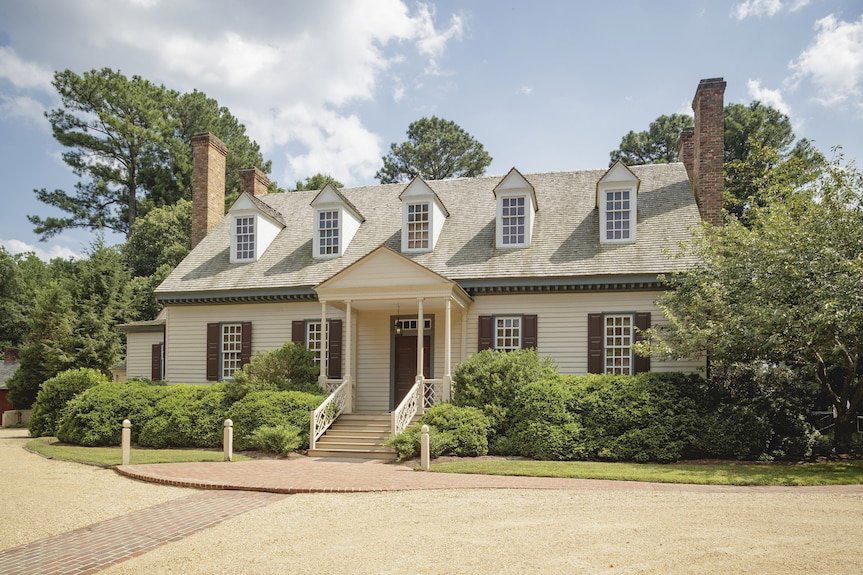
Sleeping Inside American History: What Colonial Williamsburg's House Hotels Actually Offer
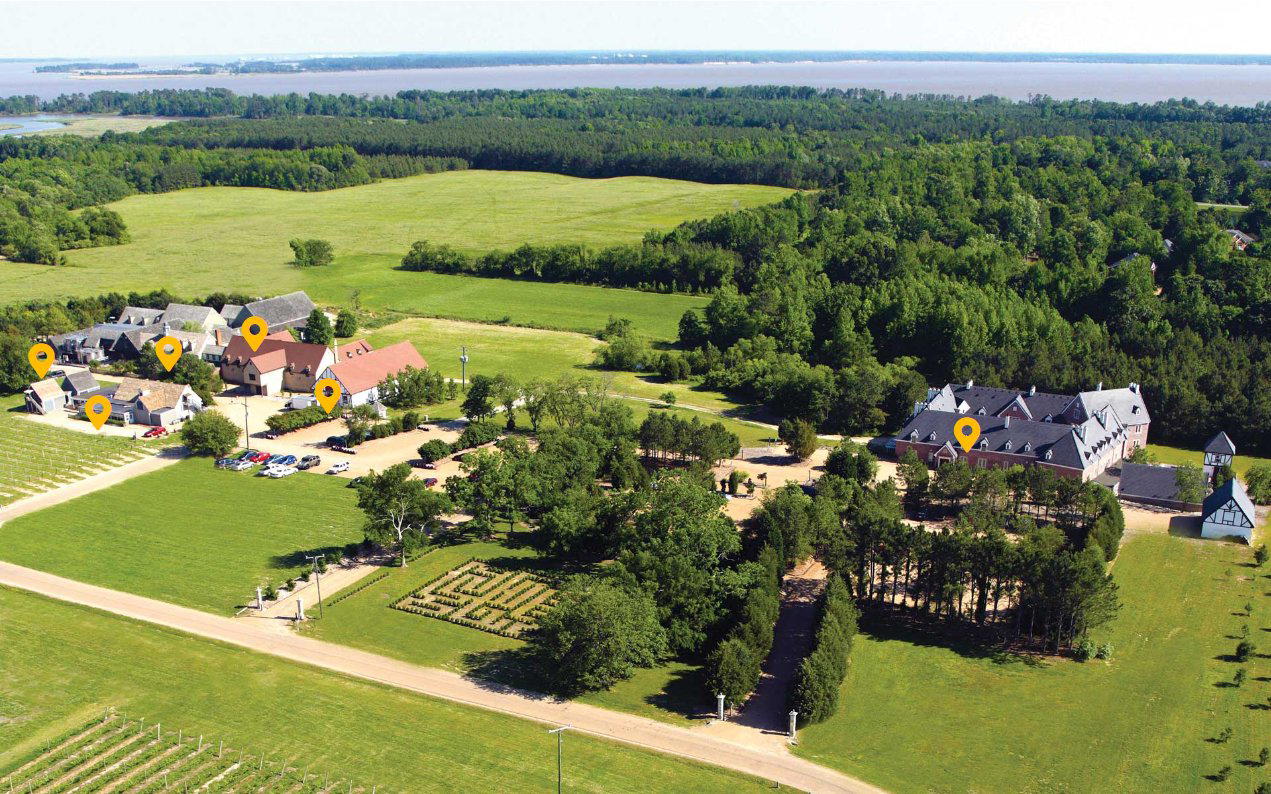
Most hotels in heritage destinations sit adjacent to the history. Colonial Houses is a 3-star hotel in Williamsburg, Virginia: the accommodation is the artifact. The property comprises eighteen historically restored buildings spread across the Colonial Williamsburg Historic Area on and around Francis Street, each one a discrete structure with its own architectural character, original construction date, and relationship to the broader 18th-century streetscape. Guests do not observe the living-history site from a lobby window, they unlock the door and step into it.
That distinction matters more than it might first appear. The American colonial preservation movement has produced many interpretive environments, but few where overnight guests actually sleep in the restored fabric. Colonial Williamsburg's approach to the Colonial Houses positions them as functional historic structures rather than themed facsimiles. For architectural and design tourists, that framing is the entire argument for choosing it over the more conventional hotel formats available elsewhere in Williamsburg.
The Architecture: Eighteenth-Century Virginia in Operational Form
Virginia's colonial building tradition drew on English Georgian precedent filtered through local materials and craftsman availability. Brick was the prestige material for public and prosperous private structures; timber-frame construction with clapboard cladding was common for smaller domestic buildings. The Colonial Houses portfolio spans both, meaning guests can choose between staying in a substantial Georgian brick structure or a more modest wooden dwelling, a decision that carries genuine architectural weight, not just aesthetic preference.
Colonial Williamsburg's restoration work is among the more documented historic preservation programs in the United States. The project set methodological standards that influenced American preservation practice for decades. The physical structures guests now sleep in are the product of that extended scholarly effort, making the buildings themselves a form of institutional credential. Staying in the Historic Area is, in part, staying inside one of the longest-running preservation projects in American history.
Individual houses vary considerably in scale, period detail, and setting. Some sit on prominent corners of Duke of Gloucester Street and its cross streets, with direct views of major Colonial Williamsburg landmarks. Others occupy quieter garden positions that reinforce the domestic scale of 18th-century Virginia life. The variation is not incidental, it reflects the actual social and economic diversity of colonial Williamsburg's original residential fabric, which the restoration program attempted to represent honestly.
Where Colonial Houses Sits in Williamsburg's Hotel Market
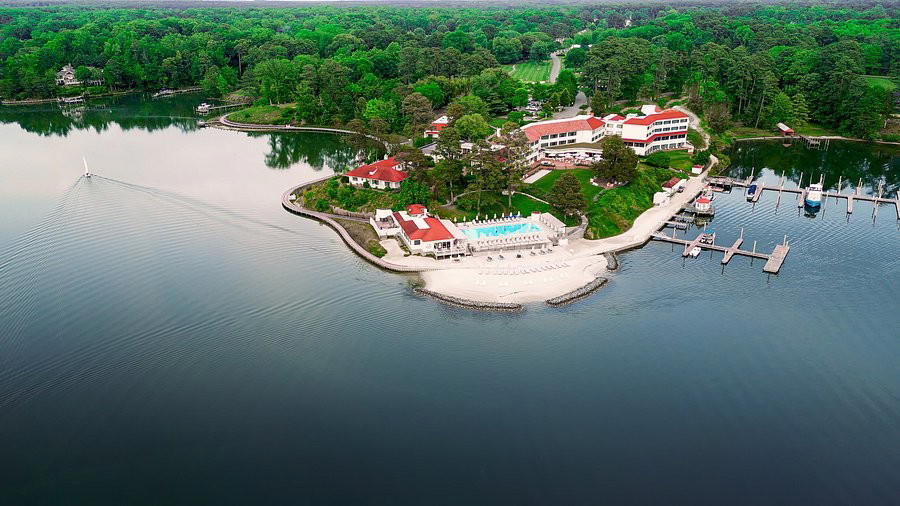
Williamsburg's hotel offering splits along a clear axis: conventional hospitality formats (chain hotels, resort properties near Busch Gardens, the Historic Area's own conventionally structured options) on one side, and architecturally specific heritage accommodation on the other. Colonial Houses occupies the heritage end of that spectrum, and within that niche, it has no direct local competitor. The Williamsburg Inn offers the Historic Area's most formal luxury hotel experience in a mid-20th-century Colonial Revival structure, while the The Tides Inn represents the region's classic waterfront resort tradition. Colonial Houses occupies a different position entirely: scattered buildings, no central lobby experience, and architecture as the primary offering.
Properties like Troutbeck in Amenia or Post Ranch Inn in Big Sur also use historically or architecturally significant structures, but their appeal is landscape-integrated rather than urban-historical. The Colonial Houses model is closer to European heritage accommodation, where sleeping in a structure of genuine antiquity is itself the proposition, more analogous in spirit to a converted palazzo than a resort cabin. American travelers accustomed to that European format will find Colonial Houses the closest domestic equivalent at this scale.
Chicago Athletic Association in Chicago works its historic athletic club bones into its identity. The Fifth Avenue Hotel in New York City and Aman New York in New York City both treat architectural heritage as a central part of their positioning. Colonial Houses is making a similar argument at a completely different price tier and in a completely different American context, colonial rather than Gilded Age, civic preservation rather than adaptive reuse.
Practical Considerations for Booking Colonial Houses
Because Colonial Houses functions as an official Colonial Williamsburg hotel, reservations connect guests to the broader Colonial Williamsburg infrastructure: access to the Historic Area's programming, dining at the taverns that operate within the same preservation zone, and the logistical benefit of sleeping inside rather than commuting to the site. For visitors whose itinerary centers on the Historic Area itself, this proximity removes the friction that even a short drive introduces when operating on an interpretive site's schedule.
Room selection matters here in a way it rarely does at conventional hotels. Choosing a house means choosing an architectural type, a position within the Historic Area's geography, and a scale of accommodation. Visitors prioritizing period detail and authentic domestic proportions should research individual structures before booking rather than treating room categories as interchangeable. Some houses accommodate families or groups in multiple-room configurations; others are more intimate. The Colonial Williamsburg Foundation's own reservation channels provide granular house-level information.
Seasonal timing shapes the experience considerably. Colonial Williamsburg's programming calendar is dense in spring and autumn, with living-history demonstrations, special events, and cooler temperatures that make the outdoor streetscape more comfortable. Summer brings higher visitor volumes and Virginia's characteristic humidity. December programming around colonial holiday traditions is a specific draw for travelers interested in 18th-century material culture. The physical buildings read differently across seasons, brick absorbs and radiates summer heat in ways that are historically authentic but practically relevant to packing decisions.
For travelers building a wider Virginia itinerary, Colonial Williamsburg sits within reach of Richmond, the Northern Neck, and the broader Chesapeake Tidewater region. Those assembling longer East Coast heritage circuits might pair this stop with architecturally significant hotel experiences elsewhere: Raffles Boston in Boston to the north, or properties further afield like Badrutt's Palace Hotel in St. Moritz for an international counterpoint in preserved historic hospitality. For those extending into the American West or resort markets, the range of architecturally considered properties spans from Amangiri in Canyon Point to Ambiente, A Landscape Hotel in Sedona, Amangani in Jackson Hole, and Bernardus Lodge & Spa in Carmel Valley. Additional reference points for heritage-adjacent resort experiences include Auberge du Soleil in Napa, Hotel Bel-Air in Los Angeles, Four Seasons at The Surf Club in Surfside, Kona Village, A Rosewood Resort in Kailua Kona, Little Palm Island Resort & Spa in Little Torch Key, SingleThread Farm Inn in Healdsburg, 1 Hotel San Francisco in San Francisco, Alpine Falls Ranch in Superior, Sage Lodge in Pray, Canyon Ranch Tucson in Tucson, and Aman Venice in Venice.
At-a-Glance Comparison
Comparable venues nearby, for context on price, style, and recognition.
| Venue | Cuisine | Price | Awards | Notes |
|---|---|---|---|---|
| Colonial Houses, an official Colonial Williamsburg HotelThis venue — the venue you are viewing | Authentic colonial revival architecture in restored 18th-century buildings | $$$ | 3-Star | Not listed |
| The Tides Inn | Waterfront resort with nautical charm and renovated accommodations | $$$ | 4-Star | Irvington |
| Williamsburg Inn | Regency-style historic luxury resort | $$$$ | 4-Star | Colonial Williamsburg |
| Hilton Norfolk The Main | Modern luxury hotel blending upscale classic feel with lively social spaces | $$$ | 4-Star | Downtown Norfolk |
| Graduate by Hilton Richmond | Vintage-themed boutique hotel celebrating local university and sports heritage | $$$ | 4-Star | Downtown |
| AC Hotel Reston | Urban design hotel in a mixed-use town center, geared toward business and lifestyle travelers. | $$$ | 3-Star | Reston Town Center |
Continue exploring
More in Williamsburg
Hotels in Williamsburg
Browse all →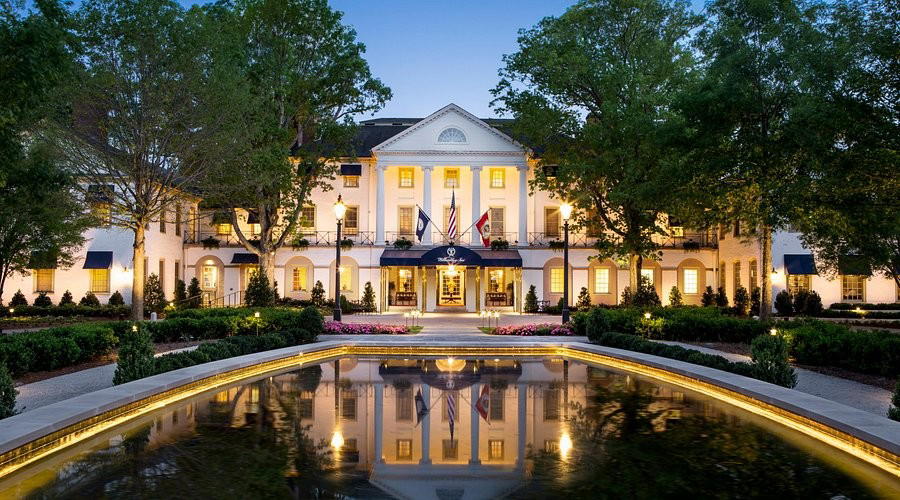
Bars in Williamsburg
Browse all →
Restaurants in Williamsburg
Browse all →
At a Glance
- Classic
- Historic
- Cozy
- Elegant
- Romantic Getaway
- Family Vacation
- Weekend Escape
- Historic Building
- Garden
- Wi Fi
- Pool
- Spa
- Fitness Center
- Concierge
- Garden
- Wi Fi
- Pool
- Spa
- Fitness Center
- Concierge
Cozy and charming 18th-century colonial atmosphere with canopy beds, crackling fireplaces, warm woods, and historic furnishings evoking the 1760s.