Our verdict
Inside Chungking Mansion's labyrinthine first floor, Sher-E-Punjab holds its ground as one of Tsim Sha Tsui's long-established Indian restaurants, drawing a mixed crowd of travellers, South Asian residents, and budget-conscious locals. The setting is no-frills, the prices reflect that, and the kitchen operates with the kind of unpretentious consistency that glossier venues rarely match.

Pearl is the En Primeur Club membership app — saves, bookings, and concierge access live there. Same editors, same standards.
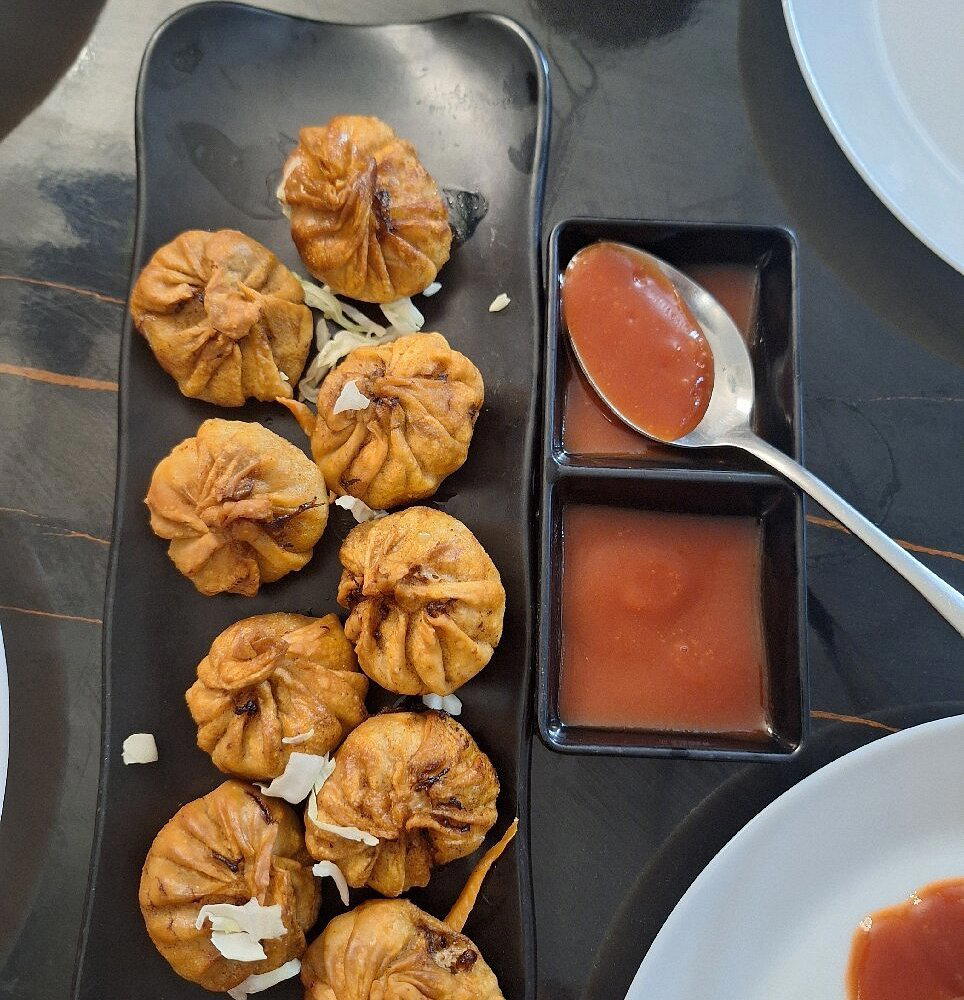
The menu
What to order
- Butter Chicken
- Chicken Thali
- Chicken Biryani
- Garlic Naan
Chungking Mansion and the Indian Dining Scene It Built
Few addresses in Hong Kong carry as much cultural density as 36-44 Nathan Road. Chungking Mansion — the block-wide commercial and residential complex that rises above Tsim Sha Tsui's main retail artery — has functioned for decades as the city's most concentrated node of South Asian food, budget accommodation, and informal trade. The building's ground and first floors house a rotating cast of curry houses, guesthouses, and provision shops that collectively serve one of Hong Kong's most overlooked dining communities: the Subcontinental diaspora that has made the neighbourhood its commercial and social centre since the 1960s.
Sher-E-Punjab occupies Shop 102 on the first floor of this complex, and understanding what that address means is the first step toward understanding what the restaurant does and who it does it for. This is not a venue that competes with the Michelin-starred Indian kitchens found elsewhere in the region, nor does it aspire to. It sits in a different tier entirely, one defined by accessibility, familiarity, and the kind of daily-use reliability that regulars prize over occasion dining.
The Building as Context
Arriving at Chungking Mansion from Nathan Road, the transition is abrupt. The street-level arcade, dense with money changers, phone accessory stalls, and persistent touts, gives way to lifts and staircases that serve a vertical city within a city. The first floor brings you into a different register: narrower corridors, the smell of cardamom and fenugreek competing with the building's general density, signage in Urdu, Hindi, Punjabi, and Cantonese. The sensory environment is the context, not the backdrop.
For Indian dining in Hong Kong, this matters. The Chungking corridor represents a tradition of South Asian food provision that predates the city's current wave of chef-driven Indian restaurants by several decades. Where venues in Central or Wan Chai position Indian cuisine as premium or fusion-adjacent, the Mansion's establishments have historically served the community that brought the food here in the first place. That gives places like Sher-E-Punjab a different kind of authority, not culinary innovation, but cultural continuity.
For comparison, Hong Kong's more formally recognised dining addresses tell a different story: Amber and Caprice operate at the top of the French fine dining tier, while 8 1/2 Otto e Mezzo Bombana and Ta Vie anchor the city's Italian and Japanese-French categories respectively. Forum holds the Cantonese end of the prestige tier. None of these venues share a competitive frame with Sher-E-Punjab, they exist in entirely different registers of purpose and price.
The Team and the Floor
In the absence of confirmed chef or front-of-house data, what can be observed about the operational character of Chungking Mansion restaurants generally is instructive. The establishments that survive here long enough to build name recognition do so through consistency of kitchen output and the kind of front-of-house familiarity that comes from staff who know the regular crowd. In dense, community-serving environments like this one, the relationship between kitchen and floor tends to be more integrated and informal than in brigade-structured fine dining kitchens, there is no separate sommelier tier, no tasting menu architecture, no pacing protocol managed by a maître d'. The dynamic is simpler and more direct: kitchen produces, floor serves, guest returns.
That operational simplicity is not a limitation, it is a design feature of the format. The collaborative pressure in a kitchen like this falls on maintaining consistent output across a broad menu at volume, rather than on technical refinement of individual courses. Regulars at this price tier are calibrating for reliability and value, not for experimentation. The team that holds that standard across years earns a different kind of trust than the one that earns a star.
Indian Dining Across Hong Kong's Outer Districts
Sher-E-Punjab is not the only destination in Hong Kong's wider dining geography that rewards going beyond the Central and Wan Chai circuit. Habib's Indian and Middle Eastern Food in Kwun Tong addresses similar community demand on the east side of Kowloon. Further afield, the city's district-level dining spans everything from Block 18 Doggie's Noodle in Yau Tsim Mong to Chin Sik in Tsuen Wan and Lei Garden in Sha Tin. The pattern across these venues is consistent: neighbourhood-specific function, community loyalty, and pricing that reflects local rather than tourist-tier economics.
Chungking Mansion itself is part of a broader story about Hong Kong's willingness to contain multitudes within a single address. The Former Jumbo Floating Restaurant in Aberdeen is another landmark that embedded itself in the city's collective restaurant memory through context as much as cuisine. Both sites remind visitors that the city's dining culture has always run on more than fine dining alone.
Planning a Visit
Shop 102 sits on the first floor of Chungking Mansion, accessible via the building's lifts or internal staircases from the Nathan Road entrance. The area is walkable from Tsim Sha Tsui MTR station in under five minutes. Given the building's compressed layout and the number of food options on its various floors, it is worth knowing your destination before entering rather than browsing. Peak meal times, particularly evenings, can see the floors more congested, so earlier sittings tend to involve less wait time. Pricing at this tier and location is typically among the most accessible in Hong Kong's Indian dining category, though specific current prices are not confirmed.
For a broader view of where Sher-E-Punjab fits within the wider city dining context, our full Hong Kong restaurants guide maps the city's dining across price tiers and neighbourhoods. Other venues worth noting in the broader Kowloon and island circuit include Enchanted Garden Restaurant in the Islands district, Hoi Tin Garden in Tuen Mun, King of Soybeans in Wong Tai Sin, AMMO in Central and Western, and Le Salon de Thé de Joël Robuchon at ifc mall. For international reference points on what kitchen-floor team dynamics look like at the highest level, Le Bernardin in New York City and Lazy Bear in San Francisco represent the opposite end of the formality spectrum.
Frequently asked questions
Where do I go for Sher-E-Punjab?
Sher-E-Punjab is located at shop no 102, 91-92, 1/F, Chungking Mansion, 36-44 Nathan Rd, Tsim Sha Tsui, Hong Kong, Hong Kong.
Is Sher-E-Punjab in Chungking Mansion worth visiting for Indian food compared to other Hong Kong options?
Chungking Mansion has operated as Hong Kong's most concentrated South Asian dining address for decades, and Sher-E-Punjab at Shop 102, 1/F is part of that established fabric rather than an outlier within it. For comparison, Indian restaurants in Central or Wan Chai tend to target a corporate lunch crowd with corresponding price points; the Chungking Mansion operators on Nathan Road, Tsim Sha Tsui historically serve a different market at lower price thresholds. If the priority is proximity to subcontinental cooking in an unglamorous, functional setting, this part of Kowloon delivers in a way that Hong Kong Island does not.
What's the best way to book Sher-E-Punjab?
Shop 102 is reached via the lifts or internal staircases from the 36-44 Nathan Road entrance in Tsim Sha Tsui. Arriving off-peak — mid-afternoon or early evening on a weekday — gives the clearest run at a table without the building's busiest foot traffic.
How It Stacks Up
| Venue | Cuisine | Price | Awards | Notes |
|---|---|---|---|---|
| Sher-E-PunjabThis venue — the venue you are viewing | Authentic Indian & Punjabi | $10–20 | Not listed | Not listed |
| Ta Vie | Modern French-Japanese Fine Dining | $300–500 | 3 Michelin Stars · World's 50 Best #68 | Japanese - French, Innovative |
| 8 1/2 Otto e Mezzo Bombana (Hong Kong) | 3 Michelin-Star Italian Fine Dining | $200–300 | 3 Michelin Stars · World's 50 Best #94 | Italian |
| Estro | Modern Neapolitan Italian | $150–200 | 1 Michelin Star · World's 50 Best #32 | Wine Bar, Italian |
| Feuille | Modern Vegetable-Forward French | $200–300 | 1 Michelin Star · World's 50 Best #93 | French Contemporary |
| Mono | Modern Latin American Fine Dining | $150–200 | 1 Michelin Star · World's 50 Best #46 | Latin American |