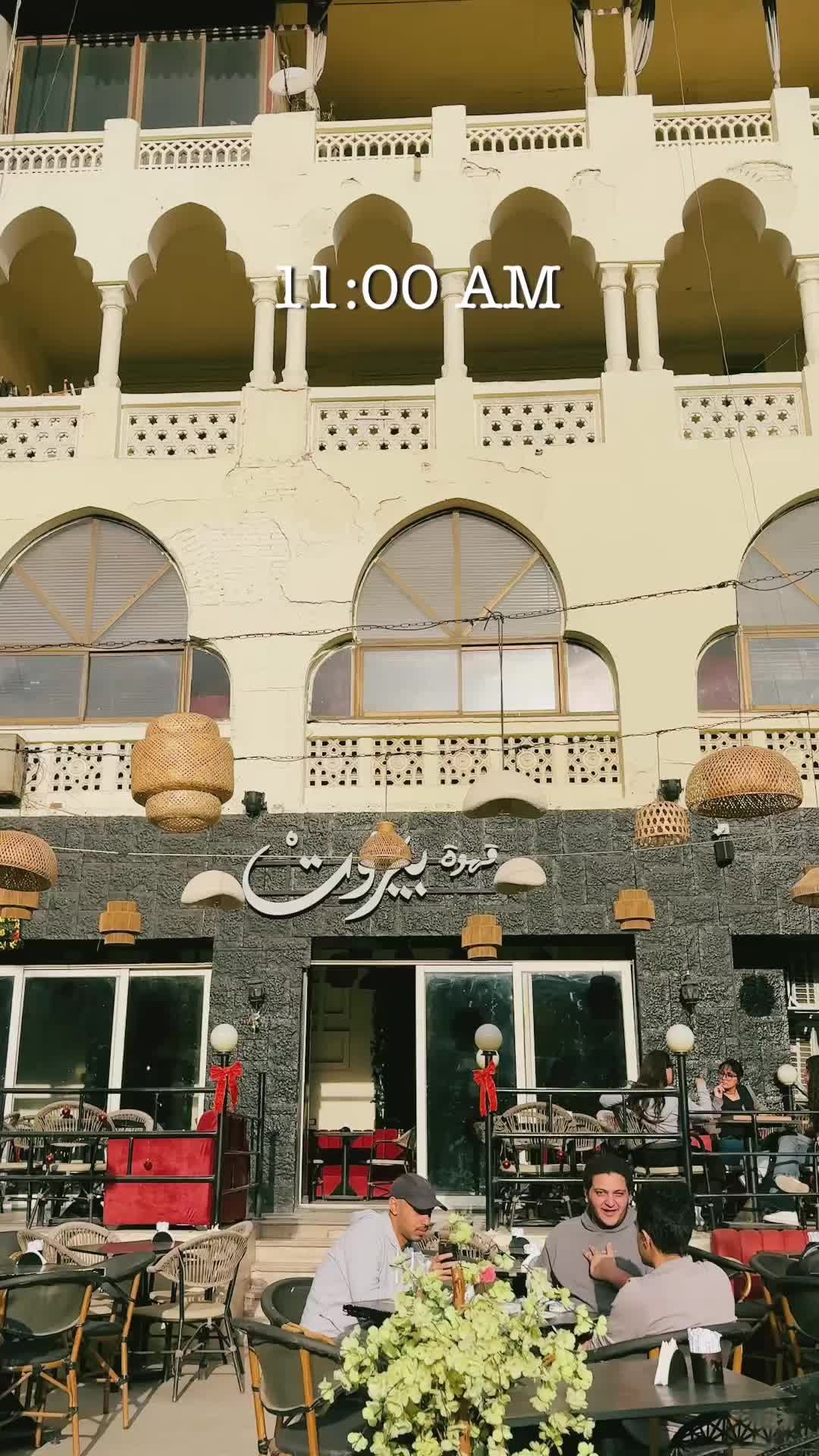
مطعم بيروت ♡ Beirut Restaurant
Our verdict
Beirut Restaurant brings Lebanese culinary tradition to Hafar Al Batin's Almasif district, serving a city where sit-down dining options are still finding their footing. The address on Almasif street places it within reach of the city's residential core. Specific menu details, pricing, and hours are best confirmed directly before visiting.

Pearl is the En Primeur Club membership app — saves, bookings, and concierge access live there. Same editors, same standards.
- Address
- الامير نايف, Almasif, Hafar Al Batin 39913, Saudi Arabia
- Phone
- +966535402100
- Hours
- Mon–Thu 12 PM–12:30 AMFri 12:30 PM–12:30 AMSat–Sun 12 PM–12:30 AM
- Website
- beirutksa.foodics.online
- Directions
- Get directions
- Booking
- Book on the venue's website
The menu
What to order
- Lentil Soup
- Tabbouleh
- Hummus
- Fried Kibbeh
- Fattah Hummus
Lebanese Cooking in Saudi Arabia's Eastern Interior
Hafar Al Batin sits in the northeastern corner of Saudi Arabia, closer to the Kuwaiti border than to the kingdom's main dining capitals. It is not a city that appears on most regional food itineraries, and that absence shapes the dining options available here. In a city of this scale and geography, Lebanese cuisine occupies a particular position: it is familiar enough to draw regular patronage, yet distinct enough from the local Saudi table to signal a specific kind of occasion. Beirut Restaurant, addressed on Almasif street in the Almasif district, operates within that context.
Lebanese cooking has long functioned as a kind of shared culinary grammar across the Arab world. Mezze formats, wood-grilled proteins, slow-cooked legumes, and herb-forward salads translate well across regional palates, which is part of why Lebanese restaurants are among the most distributed dining formats across Saudi cities. For a reference point on how the broader Saudi dining scene is evolving, our full Hafar Al Batin restaurants guide maps what is available across the city's neighbourhoods.
What Lebanese Sourcing Tradition Looks Like on the Plate
The ingredient logic behind Lebanese cooking is worth understanding on its own terms, separate from any particular venue. The tradition draws heavily on legumes, particularly chickpeas and fava beans, on fresh parsley and mint in volume rather than as garnish, on tahini as a base rather than a condiment, and on lamb and chicken prepared over live fire or slow-braised. In the Lebanese kitchen, the sourcing of raw material matters because the preparations are often simple enough that ingredient quality is visible. A fattoush depends on the tomato. A hummus reads through the chickpea. There is nowhere to hide a mediocre ingredient behind a complex sauce.
In the context of Hafar Al Batin, where supply chains serving smaller cities in the northeastern region are more constrained than those feeding Riyadh or Jeddah, this sourcing logic takes on additional weight. Restaurants in secondary Saudi cities operate with different logistical realities than their counterparts in the main urban centres. Comparing the ingredient access available to a venue like Aseeb in Riyadh or Kuuru in Jeddah with what a northeastern city restaurant can consistently source illustrates how geography shapes menus in ways that never appear on the menu itself.
Lebanese restaurants operating outside Beirut and outside Lebanon's immediate diaspora hubs typically adapt sourcing to local availability while holding to core technique. The mezze spread, the grill station, and the bread oven remain constants. What varies is the freshness cycle of produce, the availability of specific cuts, and whether the kitchen can source the small details, dried herbs, pomegranate molasses, sumac, that make the difference between a dish that reads Lebanese and one that merely approximates it.
The Setting and Atmosphere
The Almasif district gives Beirut Restaurant a residential-adjacent position, which in a city like Hafar Al Batin tends to mean a clientele composed largely of local families and regular neighbourhood visitors rather than transient diners or business travellers. That dynamic typically produces a different kind of atmosphere than a venue positioned near a commercial strip or a hotel zone. Family-oriented dining in Saudi Arabia's smaller cities tends to prioritise generous portions, familiar flavours, and a pace that accommodates groups eating together over time rather than in sequence.
What can be observed from the address and city context is that this is neighbourhood dining at a scale that matches the city itself. For the kind of destination-level restaurant experiences that involve confirmed interior design choices and documented critical assessment, venues like Banyan Tree AlUla in AlUla or Khayal Restaurant in Jeddah operate in a different tier entirely. Beirut Restaurant belongs to the register of reliable local dining, which in a city with limited dining infrastructure is a category worth taking seriously on its own terms.
How This Fits the Hafar Al Batin Dining Scene
Across Saudi Arabia's secondary cities, the dining landscape has historically been anchored by a handful of formats: shawarma and quick-service operations, family restaurants with broad Middle Eastern menus, and a small number of sit-down establishments offering more defined cuisine. Venues like Shawarmer in Shaqra or بروست طازة in Taif represent the quick-service end of that spectrum. Beirut Restaurant positions itself at the sit-down, defined-cuisine end, which in a city the size of Hafar Al Batin gives it a relatively specific role in the local dining ecosystem.
The broader Saudi dining scene, particularly in its major cities, has shifted considerably over the past several years, with new formats and more demanding ingredient standards entering the market. That shift is easier to observe in Riyadh, Jeddah, and Khobar, where venues such as Takara in Khobar or yello in Ad Diriyah reflect a different level of investment and editorial attention. Hafar Al Batin operates at a remove from those currents, which makes a consistent Lebanese kitchen a more substantial offering locally than it might appear by comparison to the capital's dining calendar.
For additional context on how smaller-city Saudi dining compares to international benchmarks, the gap is considerable. Reference points like Le Bernardin in New York City, Atomix in New York City, or Lazy Bear in San Francisco exist in an entirely different tier of sourcing investment, critical infrastructure, and dining culture. That comparison is not a criticism of Beirut Restaurant; it is an honest calibration of what kind of dining this is and what it is built to do.
Planning Your Visit
Beirut Restaurant is located on Almasif street in the Almasif district of Hafar Al Batin, postal code 39913. Pricing and booking format are similarly unconfirmed. In Saudi Arabia's smaller cities, walk-in dining remains the norm for family restaurants, but confirming availability for larger groups ahead of time is always worth a direct call.
Frequently asked questions
Would Beirut Restaurant be comfortable with kids?
Beirut Restaurant's residential-adjacent position in the Almasif district of Hafar Al Batin suggests a neighbourhood-oriented clientele, which in Saudi Arabia's secondary cities typically means family dining is the norm rather than the exception. Lebanese cuisine's shared-plate tradition — mezze spreads, grilled meats, flatbreads — tends to suit mixed-age tables well.
What's the overall feel of Beirut Restaurant?
The Almasif district address places the restaurant in a residential-leaning part of Hafar Al Batin, a city in the far northeastern corner of Saudi Arabia closer to Kuwait than to Riyadh or Jeddah. That geography tends to produce a local, repeat-visitor atmosphere rather than a tourist-facing one. Lebanese restaurants operating in this format across the region generally lean toward casual sit-down dining built around communal meals.
What do regulars order at Beirut Restaurant?
Lebanese cooking in this context typically centres on mezze staples — hummus, tabbouleh, fattoush — alongside grilled meats and fresh-baked bread, which are the anchoring categories of the Levantine tradition. Visiting in person or contacting the restaurant directly will give the clearest picture of the current menu.
Is Beirut Restaurant one of the few dedicated Lebanese options in Hafar Al Batin?
Hafar Al Batin's dining scene has historically been anchored by shawarma counters and quick-service formats, making a sit-down Lebanese restaurant a less common format for the city. The Almasif district location on Prince Nayef Street puts it within a residential corridor that serves a largely local clientele.
A Quick Peer Check
| Venue | Cuisine | Price | Awards |
|---|---|---|---|
| مطعم بيروت ♡ Beirut RestaurantThis venue — the venue you are viewing | Traditional Lebanese | Not listed | Not listed |
| تكية - TAKYA | Saudi Arabian | Not listed | Not listed |
| Aseeb | Authentic Najdi Cuisine | $30–50 | Michelin Plate · World's 50 Best #39 |
| Kuuru | Nikkei (Japanese-Peruvian Fusion) | Not listed | Michelin Plate · World's 50 Best #6 |
| Marble | American Steakhouse | $150–200 | World's 50 Best #12 |
| Myazu | Contemporary Japanese Fusion | $200–300 | World's 50 Best #45 |
Details
- Family
- Casual Hangout
- Standalone
- A La Carte
- Cold Drinks
- Hot Drinks
Current opening hours
- Monday
- 12 PM–12:30 AM
- Tuesday
- 12 PM–12:30 AM
- Wednesday
- 12 PM–12:30 AM
- Thursday
- 12 PM–12:30 AM
- Friday
- 12:30 PM–12:30 AM
- Saturday
- 12 PM–12:30 AM
- Sunday
- 12 PM–12:30 AM
Hours can change for holidays and private events. Last verified .