
Tabelog 100 #30
Our verdict
Seiyo Ryori Ten Escoffier gives Tsukuba a serious yoshoku reference point: Japanese-style Western cooking rather than imported European dining by imitation. Its 2025 Tabelog 100 selection for Yoshoku East puts it in a regional conversation where demi-glace, frying technique, wine service, and local suburban hospitality matter as much as formal ceremony.

Pearl is the En Primeur Club membership app, where members save venues, book tables and use the concierge.
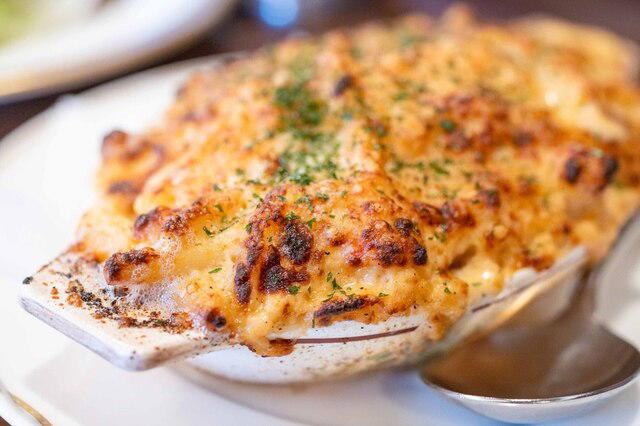
Approaching a local restaurant in Tsukuba changes the terms of a meal before the first plate arrives. Tsukuba is not built around the compressed dining theatre of central Tokyo; its better meals often sit in local pockets, with regulars and a slower rhythm shaped by residents, workers, researchers, and weekend groups. That setting suits yoshoku, a cuisine that has always been less about spectacle than translation: Western forms absorbed into Japanese habits of rice, sauce, texture, portion, and season.
Seiyo Ryori Ten Escoffier belongs to that tradition rather than only the stricter European categories that dominate many city guides. The name nods to classical Western cooking, but the category signal is more important: yoshoku is Japan’s long-running negotiation with Europe at the table. It is where Western-style sauces, fried dishes, gratins, croquettes, omelette rice, hamburger steak, and similar comforts can sit comfortably in the same mental map, not as nostalgia alone but as a durable restaurant language. In Ibaraki, that language also fits a strong agricultural backdrop: vegetables, pork, rice, eggs, and dairy from the wider region give this style of cooking a practical frame, even when individual sourcing is not itemised dish by dish.
Yoshoku in Tsukuba works because the city eats beyond genre labels
Tsukuba’s dining culture is more mixed than its science-city reputation suggests. The city has cafés, casual rooms, family restaurants, and more planned dining options, often serving a clientele that moves between everyday lunches and considered dinners without treating either as second class. That pattern helps explain why yoshoku remains persuasive here. It is European in outline, Japanese in appetite, and flexible enough for weekday dining as well as a composed meal.
The 2025 Tabelog Hyakumeiten recognition gives Seiyo Ryori Ten Escoffier a useful credential because the list does not measure luxury alone. It rewards restaurants that define a category in practice. For a regional yoshoku restaurant, that means consistency across sauces, frying, stewing, rice compatibility, and pacing. A Tabelog score of 3.54 is not a Tokyo hype number; in this category, outside the capital’s reservation economy, it reads as a sign of sustained local confidence rather than viral heat.
Compared with Tsukuba peers such as ラ・スタッラ, La Ciccia, and Trattoria Pizzeria Amici, the appeal is not about chasing the same dining cues. Compared with another local name such as La Cote d'Azurl Honten, the meal is framed around savoury Western-Japanese comfort with more dining-room structure. The distinction matters for travellers: yoshoku is not a fallback when sushi, kaiseki, or ramen are off the table. It is one of the clearest ways to understand how Japan made imported cuisine domestic.
Ingredient logic matters more than chef mythology
Yoshoku lives or dies on ingredients that can withstand sauce and heat. This is not the cuisine of raw-product minimalism. It asks whether onions have been cooked long enough, whether meat carries a sauce rather than disappearing under it, whether egg and dairy bring softness without weight, and whether a plate makes sense with rice as naturally as with bread. In a region like Ibaraki, where agriculture sits close to the dining room, that ingredient logic has an advantage over more decorative forms of Western cooking.
The restaurant’s category also points to a more adult version of the genre. Yoshoku can be treated as family comfort food, but a focused dining-room setting shifts the frame toward a meal that can handle richer sauces and longer conversations. That is a different proposition from the faster café-and-lunch circuit around the city. It also separates the format from quick morning or snack-led routines, where convenience and timing carry more of the experience.
For visitors using Tsukuba as more than a transit stop, the smarter reading is to treat this as part of a local food map rather than a single destination meal. Other Tsukuba dining rooms show how broad the city’s everyday range can be, from casual plates to more composed meals. Yoshoku sits between those poles: more structured than a diner, less doctrinaire than formal European dining, and grounded in a Japanese idea of satisfaction.
How to place it in a Tsukuba itinerary
The practical case is simple: Seiyo Ryori Ten Escoffier is listed in Tsukuba with a Tabelog budget of Dinner: JPY 4,000 - JPY 4,999; Lunch: JPY 2,000 - JPY 2,999. That places it in a useful middle register for travellers who want a planned meal without turning the evening into a luxury exercise. The category is clear enough for diners seeking yoshoku, while the European signal keeps the experience legible for visitors unfamiliar with the genre.
Transport also shapes the experience. The restaurant is in Tsukuba, and that city placement is part of the point. Tsukuba rewards diners who move beyond a single station-front checklist, particularly for genres that depend on repeat local use rather than tourist turnover. Build in enough time around the meal, and treat the visit as part of understanding how the city eats rather than as a quick box to tick.
Use the wider city guides to build the day around it: Our full Tsukuba restaurants guide, Our full Tsukuba hotels guide, Our full Tsukuba bars guide, Our full Tsukuba wineries guide, and Our full Tsukuba experiences guide. For a broader Japan comparison set, the contrast is useful across formats: other dining rooms in Japan and abroad show how Japanese dining categories travel, translate, or hold their ground, while Seiyo Ryori Ten Escoffier makes the case for a local Tsukuba expression of the yoshoku tradition.
The editorial takeaway is not that Seiyo Ryori Ten Escoffier is a substitute for formal European dining. It is more interesting as yoshoku with regional credibility: a place where Western technique has been absorbed into Japanese restaurant culture deeply enough that the category no longer needs apology.
Frequently asked questions
Can I bring kids to Seiyo Ryori Ten Escoffier?
Seiyo Ryori Ten Escoffier is a Tsukuba yoshoku and European restaurant. For family planning, confirm current seating and child policies directly with the restaurant before visiting.
What kind of setting is Seiyo Ryori Ten Escoffier?
It is a restaurant in Tsukuba serving yoshoku and European dishes. Tabelog Hyakumeiten recognized it in 2025, a useful marker for its local standing.
Is Seiyo Ryori Ten Escoffier more mid-range or high-end?
Pricing at Seiyo Ryori Ten Escoffier is listed as Dinner: JPY 4,000 - JPY 4,999; Lunch: JPY 2,000 - JPY 2,999.
What is Seiyo Ryori Ten Escoffier known for?
Seiyo Ryori Ten Escoffier is known as a Tsukuba yoshoku and European restaurant with 2025 Tabelog Hyakumeiten recognition and a listed Tabelog score of 3.54.
How It Stacks Up
Comparable venues by cuisine and price in the same metro.
| Venue | Cuisine | Price | Awards | Notes |
|---|---|---|---|---|
| Seiyo Ryori Ten EscoffierThis venue (the venue you are viewing) | Classic Yoshoku (Japanese Western‑style) | $30–50 | Tabelog 100 #30 | Not listed |
| Tsukuba Ramen Onimonogatari | Japanese Ramen | $10–20 | Tabelog 100 #20 | Bampaku Kinenkoen |
| Sichuan Mararajusshoku | Sichuan Hotpot | $20–30 | Tabelog 100 #9 | Tsukuba |
| Ramen Kinoko | Japanese Ramen | $1–10 | Tabelog 100 #48 | Inaoka |
| Sumibi Hamburger steak Nikuyaki Tei | Charcoal-grilled Japanese Hamburg & Beef Tendon Curry | $10–20 | Tabelog 100 #51 | Tsukuba |
| Bon Gout | Basque & Spanish Bistro and Wine Bar | $30–50 | Tabelog 100 #24 | Ninomiya |
Recognition history
Dated appearances from independent guides and award organizations, with the underlying list record or original source where available.
Tabelog 100 #30 · No. 30
Tabelog · Tabelog 100 - Yoshoku - EAST - 2025
Continue exploring
More in Tsukuba
Restaurants in Tsukuba
All restaurants in Tsukuba →


Bars in Tsukuba
Browse all →



Details
- Classic
- Cozy
- Date Night
- Business Dinner
- Family
- Casual Hangout
- Special Occasion
- Standalone
- A La Carte
A warm, quietly bustling house‑style restaurant with a nostalgic, classic yoshoku atmosphere and relaxed, unpretentious service.