
Tabelog 100 #38
Our verdict
Seijuken belongs to Tokyo’s old commercial sweet-shop tradition rather than the city’s dessert-as-spectacle circuit. Its reputation rests on Japanese traditional sweets and dorayaki, with Tabelog 100 selections for Tokyo wagashi in 2023 and sweets in 2022 and 2020, making it a serious stop for readers tracking everyday craft at modest spend.

Pearl is the En Primeur Club membership app, where members save venues, book tables and use the concierge.
The menu
What to order
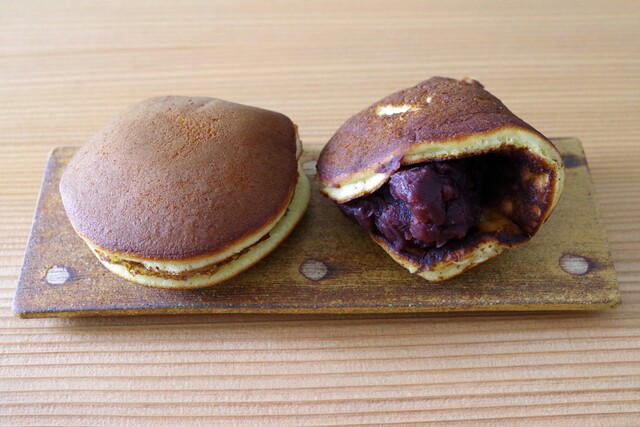
- Oban dorayaki (large)
- Koban dorayaki (small)
- Monaka
- Yokan
- Seasonal wagashi
Approaching a Tokyo wagashi shop is unlike entering a tasting-menu room. The cues are quieter: modest frontage, purposeful customers, sweets as daily craft rather than performance. Seijuken sits in that register in Tokyo, where everyday food traditions still operate alongside the city’s higher-gloss dining. Its appeal is not ceremony, but the compressed discipline of a category Tokyo takes seriously: Japanese traditional sweets, especially dorayaki, bought more as an errand than an occasion.
That distinction matters. Tokyo dining is often read through counters, queues and polished restaurants, but wagashi has its own hierarchy, less tied to dinner theatre. Recognition comes from repetition, consistency and a public that knows a casual impulse sweet from one deliberately sought out. Seijuken’s inclusion in Tabelog’s 2023 selection for Japanese traditional sweets and dorayaki places it in that exacting local conversation. Its Tabelog score of 3.77 is another signal: in Japan’s user-review culture, that number carries more weight than on looser platforms.
Tokyo wagashi without the theatre of a destination dessert room
Visitors can misread wagashi if they expect richness, plating and long table time. The Japanese tradition works through seasonality, tea culture, gifting, texture and restraint; in Tokyo, it is also everyday luxury below fine-dining scale. Seijuken belongs to that compact economy. Its category, Japanese traditional sweets and dorayaki, sets the frame: not a borrowed pastry salon or novelty cafe, but a specialist counter where a narrow sweet vocabulary carries the reputation.
The comparison with restaurant-led spending is instructive. In the same broad Tokyo dining field, Yakiniku Akami Nikugatou Ningyouchou honten, Ino Cantonese Nihonbashi Takase, Katsu Yoshi and Ogawa represent a different kind of decision: a planned meal rather than a brief sweet stop. Seijuken’s sub-1,000 yen pricing makes it its own category of visit: short stop, gift purchase, or sweet course outside lunch or dinner. Wagashi shops let travelers read local taste without committing a night to a reservation.
Dorayaki carries cultural weight beyond its simplicity. Two pancake-like rounds around sweet bean filling expose balance fast: batter, bean paste, sweetness, moisture and timing have little room to hide. The form is democratic yet demanding enough to sustain specialists. For readers used to Tokyo’s premium counters, this is the recalibration: not every serious food stop is expensive, seated or visibly chef-led.
Why Tokyo still matters for sweets
Tokyo has long supported commerce, craft shops and food businesses serving working locals as much as visitors. That context suits wagashi. The customer base can include office workers, households, gift buyers and regulars judging by habit, not novelty. A sweets shop here cannot rely on one dramatic flourish; it has to fit into the day.
Seijuken’s place in Tokyo’s sweets culture is small but telling. Tokyo food institutions often survive through practical continuity rather than picturesque staging; identity is carried by product, routine and the customers who return for both. For travelers, older Tokyo food culture is often best read this way: the exact address matters less than the pattern of use and the seriousness of a seemingly modest purchase.
The compact sweet-shop format shapes the encounter. There is less lingering, less staged hospitality, and more attention to the exchange and package. The room is not the whole experience; the city finishes it. A purchase can sit in a hotel room, train carriage, office visit, or on a park bench. That portability is central to wagashi’s urban role, especially where gifting and seasonality shape how food moves between people.
For a broader Tokyo food day, Seijuken works as counterpoint rather than meal replacement. Readers can pair traditional sweets with restaurants across the guide, from other Tokyo dining rooms to casual cafes and specialist counters. The point is contrast: grilled dishes, sweets, everyday meals and cafe culture explain Tokyo differently, while wagashi reveals the city’s shorter, more ritualized appetite.
A compact stop for readers who value category depth
The expectation should be precise: Seijuken is a specialist sweet stop with public recognition in Tokyo’s wagashi field, not a long-form restaurant. It is valuable for travelers who want to understand how a city eats between meals, not only chase high-spend reservations. The practical profile supports that reading: its public listing places it in Japanese traditional sweets and dorayaki, with a budget listed at the sub-1,000 yen level for lunch and no separate dinner budget provided.
Its best use is within a wider Tokyo food circuit. Because the spend is modest and the category is tightly defined, it fits a day without turning the schedule around one sweet purchase. The planning caveat is simple: traditional sweets are often best approached with some flexibility and earlier timing, especially when a particular item is the reason for the visit.
For more planning, use Our full Tokyo restaurants guide for dining, Our full Tokyo hotels guide for where to stay, Our full Tokyo bars guide for drinking, Our full Tokyo wineries guide for wine-focused planning and Our full Tokyo experiences guide for cultural routing. Japan-focused readers can also compare regional and overseas Japanese-adjacent formats through broader dining guides and unnamed specialist stops in other cities.
The editorial case is clear. Tokyo’s sweet culture is not a side note to its restaurant scene; it is how the city measures craft at daily scale. Seijuken earns attention by sitting in that modest but demanding lane, backed by Tabelog recognition in 2023 and a format that asks visitors to slow down for something small, structured and deeply local.
Frequently asked questions
What are the opening hours for Seijuken?
Current opening hours for Seijuken should be checked directly before visiting, as the provided venue data does not list a verified schedule.
What's the price range at Seijuken?
Pricing at Seijuken is listed as - JPY 999.
Where is Seijuken in Tokyo?
Tokyo.
What has Seijuken built its reputation on?
Seijuken has built its name on Japanese traditional sweets and dorayaki, backed by Tabelog recognition in 2023. Its listed Tabelog score is 3.77, which places it firmly within Tokyo’s serious sweets conversation.
Is Seijuken allergy-friendly?
Seijuken’s public category is Japanese traditional sweets and dorayaki. For allergy concerns, check ingredients directly with the shop before ordering, especially because recipes and fillings can vary.
Comparable Spots, Quickly
Comparable venues by price and recognition.
| Venue | Cuisine | Price | Awards | Notes |
|---|---|---|---|---|
| SeijukenThis venue (the venue you are viewing) | Traditional Japanese wagashi & dorayaki shop | $1–10 | Tabelog 100 #38 | Not listed |
| Arry 8Bites | Japanese Small Bites | Not listed | Not listed | Tokyo |
| Minna no Pan'ya | Traditional Japanese bakery | $10–20 | Tabelog 100 #33 | Chiyoda |
| Habutae Dango Honten | Traditional Japanese dango & wagashi teahouse | $1–10 | Tabelog 100 #22 | Arakawa |
| Jiman Kusamochi | Traditional Japanese wagashi & kusa mochi shop | $1–10 | Tabelog 100 #72 | Sumida |
| Oniyanma Nakameguro ten | Udon noodle bar | $1–10 | Tabelog 100 #52 | Meguro |
Recognition history
Dated appearances from independent guides and award organizations, with the underlying list record or original source where available.
Tabelog 100 #38 · No. 38
Tabelog · Tabelog 100 - Japanese traditional sweets / Japanese sweets cafe - TOKYO - 2023
Continue exploring
More in Tokyo
Restaurants in Tokyo
All restaurants in Tokyo →









Details
- Classic
- Well Known
- Solo
- Casual Hangout
- After Work
- Historic Building
- Standalone
- A La Carte
- Counter Dining
Current opening hours
- Monday
- 9 AM–5 PM
- Tuesday
- 9 AM–5 PM
- Wednesday
- 9 AM–5 PM
- Thursday
- 9 AM–5 PM
- Friday
- 9 AM–5 PM
- Saturday
- Closed
- Sunday
- Closed
Hours can change for holidays and private events. Hours as of .
A small, traditional Japanese confectionery shop with a simple, no-frills interior focused on takeaway service, evoking an old-school Edo-era atmosphere rather than a sit-down café.