SEIJI's OMAKASE by LITTLE TOKYO

Resy Best of the Hit List
Our verdict
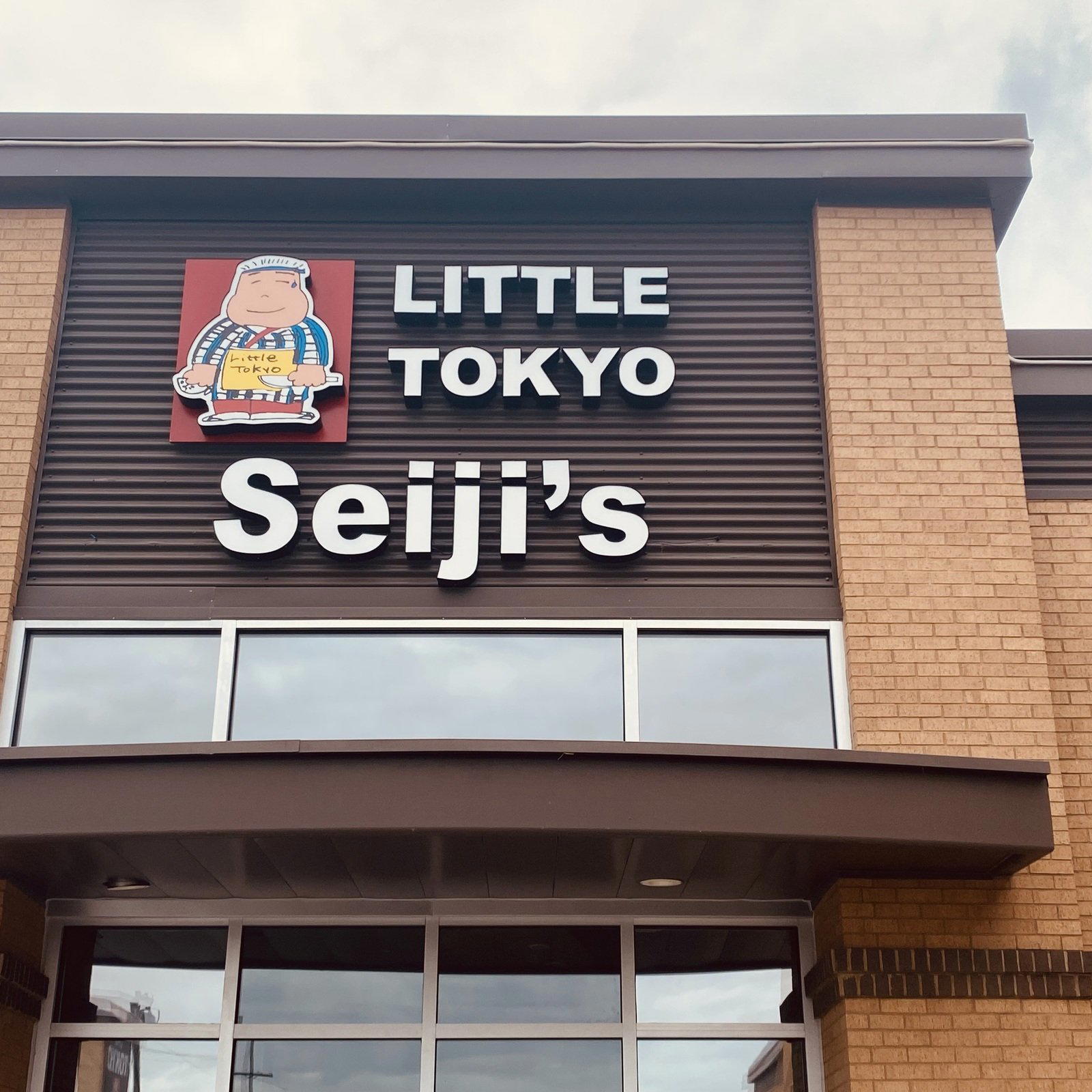
Omakase dining arrived in the New Orleans metro with serious intent at SEIJI's OMAKASE by LITTLE TOKYO, a Resy Best of the Hit List honoree for 2025 located on N Causeway Blvd in Metairie, Louisiana. The format places the kitchen firmly in control of the progression, asking guests to trust sourcing and sequence over personal preference, a discipline rare at this latitude.

Pearl is the En Primeur Club membership app, where members save venues, book tables and use the concierge.
The menu
What to order
- 4-course omakase
- 7-course kaiseki
- 8-course omakase
Omakase Comes to the Gulf Coast
The omakase format has, over the past decade, migrated steadily outward from its original strongholds in Manhattan, Los Angeles, and San Francisco. In cities where Japanese fine dining once meant a conventional à la carte menu and a broad sushi roll selection, counter-format omakase has quietly established footholds, not as novelty, but as a legitimate and considered mode of hospitality. Metairie, Louisiana sits just west of New Orleans across the Jefferson Parish line, and it is here that SEIJI's OMAKASE by LITTLE TOKYO has staked a claim in that expanding tier. A Resy Best of the Hit List recognition for 2025 places it in assessed company: Resy's Hit List is a nationally competitive curation, and landing on it from a suburban Louisiana address is a signal worth reading carefully.
The context matters. Louisiana's dining culture is among the most codified in the United States, governed by deep Creole and Cajun traditions that draw on French technique, West African seasoning, and the Gulf's extraordinary shellfish bounty. Fine-dining ambition in the metro has historically run through the New Orleans proper institutions, the kind of long-standing rooms documented in guides for generations. A counter-format Japanese restaurant earning national editorial recognition from Metairie represents something different: a shift in where serious food is appearing, and for whom.
The Logic of Omakase Sourcing on the Gulf
Omakase as a format is inseparable from its sourcing decisions. The kitchen, not the guest, chooses the progression, which means every course is a deliberate argument for a specific ingredient at a specific moment. At the highest tier of this format, as practiced at counters in New York (see Atomix in New York City for a parallel in the Korean tasting counter tradition, or Le Bernardin in New York City for the French seafood equivalent), sourcing is the editorial voice of the menu. The same discipline applies whether the counter seats eight or forty.
What makes Gulf Coast omakase genuinely interesting as a category is the proximity to one of the most productive fishing and aquaculture zones in North America. The Gulf of Mexico provides red snapper, speckled trout, oysters from Louisiana's coastal marshes, and blue crab in volume that the Pacific and Atlantic coasts cannot replicate. Whether a kitchen chooses to emphasize domestic Gulf product, fly in Japanese fish direct from Toyosu Market, or construct a deliberate dialogue between the two traditions is the central sourcing question that defines the character of any omakase program at this latitude. Farms like those that supply sourcing-led American restaurants, the model articulated most rigorously at operations like Blue Hill at Stone Barns in Tarrytown or Single Thread Farm in Healdsburg, point toward one approach; direct Japanese import supply chains point toward another.
For comparison, the most critically recognized omakase counters in the country, including operations in markets like Providence in Los Angeles and Addison in San Diego, distinguish themselves precisely on the sourcing rigor behind each course, not on theatrics or volume. The counter format demands it: with no menu to hide behind, every piece of fish is a direct statement.
Where This Sits in the Metro's Fine Dining Tier
Metairie's restaurant scene operates in the shadow of New Orleans proper, where names like Emeril's in New Orleans carry decades of institutional weight. But the suburban metro has developed its own dining identity, drawing residents who prefer to avoid the parking friction and tourist density of the Quarter and CBD. For the more nationally oriented comparison set, the progressive American tasting counter tier occupied by rooms like Lazy Bear in San Francisco, Alinea in Chicago, or The French Laundry in Napa, SEIJI's competes on format discipline and sourcing intent rather than on celebrity chef profile or decades of accumulated press. The Resy recognition suggests it is winning that argument in at least some editorial circles.
The address, 2300 N Causeway Blvd, places SEIJI's on the northern stretch of Causeway Boulevard, a commercial corridor that connects Metairie's residential neighborhoods to the Lake Pontchartrain Causeway. This is not a destination restaurant district in the conventional sense: it is a working suburban strip, which makes the omakase format's presence there more interesting, not less. Serious counter dining has a history of appearing in unlikely commercial real estate, a deliberate choice that keeps rent below what a high-profile address would demand, allowing more of the budget to flow toward product.
Planning a Visit
Given the Resy recognition and the format's inherent capacity constraints (omakase counters by definition seat limited guests per service), advance booking is advisable. The omakase model runs on fixed seatings and set progressions, which means late arrival affects the entire service rhythm, not just your own experience. Metairie is accessible from central New Orleans in under 20 minutes by car depending on traffic, and the Causeway Blvd corridor has parking infrastructure that downtown New Orleans cannot offer. For visitors building a broader Metairie itinerary, our full Metairie restaurants guide provides additional context on the metro's dining range, and our full Metairie hotels guide covers accommodation if you are staying in the parish rather than crossing back into the city. The Metairie bars guide, Metairie wineries guide, and Metairie experiences guide round out the picture for a fuller stay.
For regional context within the broader American fine dining circuit, the dining styles on offer at The Inn at Little Washington in Washington, Albi in Washington, D.C., and 8 1/2 Otto e Mezzo Bombana in Hong Kong each illustrate different points on the spectrum from regional sourcing to cosmopolitan technical ambition, the same spectrum SEIJI's is navigating from its Metairie counter.
Frequently asked questions
Would SEIJI's OMAKASE by LITTLE TOKYO be comfortable with kids?
Omakase counters are structured around a fixed, chef-directed progression that typically runs two hours or longer, with no à la carte options and limited flexibility mid-service. That format suits adults who can commit to the pace; most young children find it a poor fit. SEIJI's earned a spot on Resy's 2025 Hit List, which signals the kind of destination dining crowd that typically fills its seats.
What kind of setting is SEIJI's OMAKASE by LITTLE TOKYO?
The venue operates on the omakase counter model, meaning guests sit at a shared counter and eat what the kitchen sends, in the order the kitchen chooses. That format is inherently intimate and quiet by design. It sits on N Causeway Blvd in Metairie, positioning it as a fine-dining option in the New Orleans metro outside the French Quarter corridor.
Has SEIJI's OMAKASE by LITTLE TOKYO won any awards?
SEIJI's OMAKASE by LITTLE TOKYO has received recognition including: Resy Best of the Hit List (2025).
What's the best thing to order at SEIJI's OMAKASE by LITTLE TOKYO?
There is no ordering at an omakase counter. The menu is determined entirely by the kitchen for each service, which is the defining constraint of the format. What the kitchen sources and sequences on the night you attend is the meal. Resy's 2025 Hit List recognition suggests the kitchen's judgement has been worth deferring to.
Quick Comparison
| Venue | Cuisine | Price | Awards | Notes |
|---|---|---|---|---|
| SEIJI's OMAKASE by LITTLE TOKYOThis venue (the venue you are viewing) | Omakase & Kaiseki | $150–200 | Resy Best of the Hit List | Not listed |
| Le Bernardin | French Seafood Fine Dining | $300–500 | 3 Michelin Stars · World's 50 Best #13 | French, Seafood |
| Atomix | Modern Korean Tasting Menu | $300–500 | 2 Michelin Stars · World's 50 Best #7 | Modern Korean, Korean |
| Lazy Bear | Modern American Tasting Menu | Not listed | 2 Michelin Stars · World's 50 Best #25 | Progressive American, Contemporary |
| Alinea | Avant-Garde Molecular Gastronomy | $300–500 | 2 Michelin Stars · World's 50 Best #37 | Progressive American, Creative |
| Masa | Seasonal Hokkaido Tempura Omakase | $150–200 | Tabelog 100 #34 | Sushi, Japanese |
Recognition history
Dated appearances from independent guides and award organizations, with the underlying list record or original source where available.
Resy Best of the Hit List
Resy
Continue exploring
More in Metairie
Restaurants in Metairie
All restaurants in Metairie →
Bars in Metairie
Browse all →
Details
- Intimate
- Elegant
- Sophisticated
- Special Occasion
- Date Night
- Celebration
- Chefs Counter
- Open Kitchen
- Standalone
- Sustainable Seafood
- Omakase
- Tasting Menu
- Counter Dining
Current opening hours
- Monday
- Closed
- Tuesday
- Closed
- Wednesday
- 11 AM–2 PM, 6–10 PM
- Thursday
- 11 AM–2 PM, 6–10 PM
- Friday
- 11 AM–2 PM, 6–10 PM
- Saturday
- 11 AM–2 PM, 6–10 PM
- Sunday
- 11 AM–2 PM, 6–10 PM
Hours can change for holidays and private events. Hours as of .
Intimate and refined with a minimalist aesthetic; the small sushi bar and limited seating create an exclusive, chef-focused dining experience.