Bayou Wine Garden
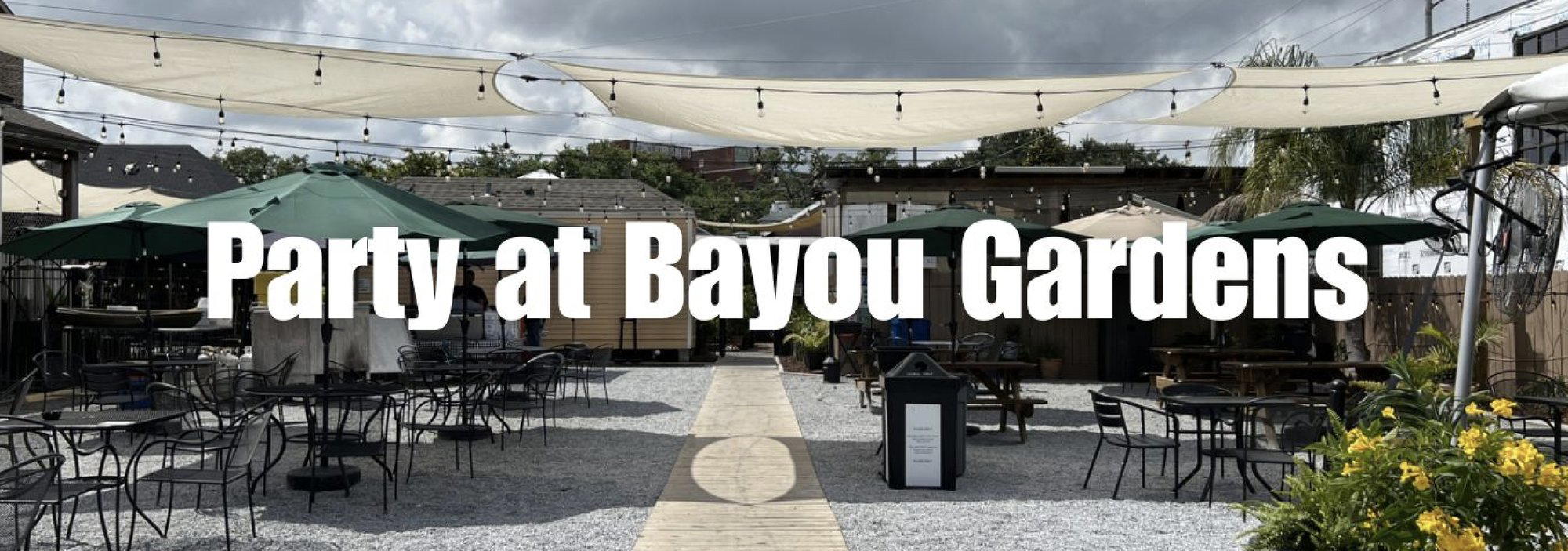
A neighbourhood wine bar on N Rendon Street that sits squarely in the Mid-City tradition of low-key, high-curiosity drinking. Bayou Wine Garden draws from a wine list that rewards the exploratory drinker, set against a backdrop that trades the French Quarter's performance for something quieter and more lived-in. It occupies a distinct niche in New Orleans' increasingly serious wine culture.

Pearl is the En Primeur Club membership app — saves, bookings, and concierge access live there. Same editors, same standards.
- Address
- 315 N Rendon, New Orleans, LA 70119
- Phone
- (504) 826-2925
- Hours
- Mon–Thu 3 PM–12 AMFri 3 PM–1 AMSat 12 PM–1 AMSun 12–10 PM
- Website
- bayoubeergarden.com
- Directions
- Get directions
Mid-City After Dark: Where New Orleans Pours Without the Theatre
New Orleans has a complicated relationship with the idea of the quiet drink. The city's bar culture is calibrated toward spectacle — brass bands on Frenchmen Street, the neon blur of Bourbon, the theatrical cocktail programs at places like Jewel of the South and Cure, which have collectively shifted the city's cocktail reputation into nationally competitive territory. Against that backdrop, the wine bar format occupies a smaller, more deliberately understated niche. Bayou Wine Garden, at 315 N Rendon in Mid-City, belongs to that niche.
Mid-City is not a neighbourhood that courts visitors the way the Quarter or the Marigny does. It runs on local rhythms: the foot traffic from the Bayou St. John corridor, the after-work crowd from nearby medical institutions, the residents who moved here specifically because it is not the Quarter. A wine bar planted in this context sends a clear signal about its intended audience. This is a place for people who want to drink well without narration.
The Environment: Garden, Not Gallery
The physical setting does most of the editorial work at Bayou Wine Garden. The name is descriptive rather than decorative: there is actual outdoor garden space, which in New Orleans' subtropical climate functions as the main event for much of the year. From roughly October through April, when evening temperatures drop into the sixties and low seventies, an outdoor wine bar in this city is a specific pleasure that no interior room can replicate. The air carries something specific here — the faint humidity that never fully leaves, the smell of night-blooming jasmine that runs through Mid-City gardens, the ambient sound of the neighbourhood doing its ordinary business.
That seasonal rhythm matters when planning a visit. The summer months in New Orleans are not hostile to outdoor drinking so much as they require a different calculation: heat indexes above 100°F and evening thunderstorms are standard from June through September. The garden format works differently in those months, and the experience shifts accordingly. Arriving in the fall or late winter, when the city is at its most comfortable and its cultural calendar is fullest, gives the setting its leading context.
Wine Culture in a Cocktail City
New Orleans' drinking identity has been defined, for most of its modern history, by spirits. The Sazerac, the Vieux Carré, the Hurricane, the city's canonical drinks are all cocktail formats, and the bar program infrastructure has followed that logic. Places like Beachbum Berry's Latitude 29 and 2 Phat Vegans represent the breadth of that culture, from tiki precision to neighbourhood accessibility. Wine has historically played a supporting role in this city's drinking narrative, appearing on restaurant lists rather than as the primary subject of a dedicated space.
That's changing, and Bayou Wine Garden sits inside that shift. Across American cities, wine bars have split into two recognisable formats: the retail-facing shop with pour-your-own or staff-guided tasting, and the hospitality-first bar that happens to stock wine seriously. The distinction matters because the experience is fundamentally different. A retail-led format prioritises education and acquisition; a hospitality-led format prioritises atmosphere and the pleasure of being served something well-chosen. Both can coexist in the same room, but the balance shapes what a visit feels like.
This broader trend toward dedicated wine drinking spaces has produced some of the more interesting bar programs in American cities over the last decade. Kumiko in Chicago and ABV in San Francisco represent the technically rigorous end of that spectrum, where wine and spirits programs are designed with the same precision applied to tasting menus. Allegory in Washington, D.C. and Bar Leather Apron in Honolulu show how hospitality-forward programs can build depth without sacrificing atmosphere. Bayou Wine Garden operates at the neighbourhood scale of that conversation, where the ambition is calibrated differently but no less intentionally.
Within New Orleans specifically, the wine bar category is thin relative to the cocktail category. That thinness is itself a data point. A city with this many serious restaurant wine programs, from the French Quarter to Uptown, has the demand base to support dedicated wine-drinking spaces; it simply hasn't produced many that operate as destinations in their own right. Bayou Wine Garden occupies that gap in Mid-City, a neighbourhood that has enough density and resident purchasing power to sustain it without depending on tourist traffic.
Compare this to the cocktail bar tier in the same city. Cure and Jewel of the South operate with named bartenders, editorial recognition from national publications, and booking windows that reflect their status. Julep in Houston and Superbueno in New York City show how the cocktail bar format has developed credentialing systems across American cities that wine bars are only beginning to build. The Parlour in Frankfurt illustrates how the wine bar format operates in a European context where the category is older and more institutionally embedded. Bayou Wine Garden is working in a different register: the neighbourhood wine garden, which values ease and atmosphere over program architecture.
Planning the Visit
Mid-City sits roughly between the French Quarter and the lake, accessible by the Lafitte Greenway bike path and by car from most central New Orleans neighbourhoods. The address at 315 N Rendon places it within the residential grid north of Canal Street, away from the concentrations of tourist infrastructure that define the Quarter and the Warehouse District. Getting here requires either a short drive or a ride-share; it is not a walk from most hotel clusters, which is precisely the point. The neighbourhood rewards the decision to make the trip.
New Orleans hospitality venues have adjusted operating schedules frequently in recent years, and what was accurate in one season may not hold the next. The practical architecture of a visit here is best confirmed close to arrival.
City Peers
| Venue | Cuisine | Price | Awards |
|---|---|---|---|
| Bayou Wine GardenThis venue — the venue you are viewing | Not listed | $30–50 | Not listed |
| Jewel of the South | New American | Not listed | World's 50 Best #6 · James Beard Award Outstanding Bar #1 |
| Beachbum Berry's Latitude 29 | Not listed | $30–50 | World's 50 Best #80 · Top 500 Bars Best Bars #244 |
| Cure | Not listed | $30–50 | World's 50 Best #21 · James Beard Award Outstanding Bar Program |
| Cane & Table | Not listed | $30–50 | Top 500 Bars Best Bars #288 |
| The Carousel Bar | Not listed | $30–50 | Food & Wine Top 10 US Hotel Bars #3 · Top 500 Bars Best Bars #280 |
Continue exploring
More in New Orleans
Bars in New Orleans
Browse all →
Restaurants in New Orleans
Browse all →
Details
- Rustic
- Cozy
- Lively
- Casual Hangout
- Group Outing
- After Work
- Date Night
- Special Occasion
- Garden
- Courtyard
- Beer Garden
- Standalone
- Seated Bar
- Outdoor Terrace
- Lounge Seating
- Communal Tables
- Conventional Wine
- Craft Beer
- Punch
- Classic Cocktails
- Garden
Current opening hours
- Monday
- 3 PM–12 AM
- Tuesday
- 3 PM–12 AM
- Wednesday
- 3 PM–12 AM
- Thursday
- 3 PM–12 AM
- Friday
- 3 PM–1 AM
- Saturday
- 12 PM–1 AM
- Sunday
- 12–10 PM
Hours can change for holidays and private events. Last verified .
Rustic-chic neighborhood spot with warm, inviting atmosphere featuring lush vegetation, fountains, and a covered outdoor deck overlooking a courtyard.