In the Hocapaşa district of Fatih, Şehzade Cağ Kebap is one of Istanbul's few addresses dedicated to the Erzurum tradition of cağ kebap, where horizontal spit-roasted lamb is sliced to order onto skewers and served without ceremony. The format is specific, the sourcing regional, and the experience anchored in a culinary practice that predates the vertical döner by centuries.
Pearl is the En Primeur Club membership app — saves, bookings, and concierge access live there. Same editors, same standards.
- Address
- Hoca Paşa, Hocapaşa Camii Sok. No:6 D:4, 34110 Fatih/İstanbul, Türkiye
- Phone
- +90 212 520 33 61
- Website
- sehzadecagkebap.com
- Directions
- Get directions
 Saves & bookings on Pearl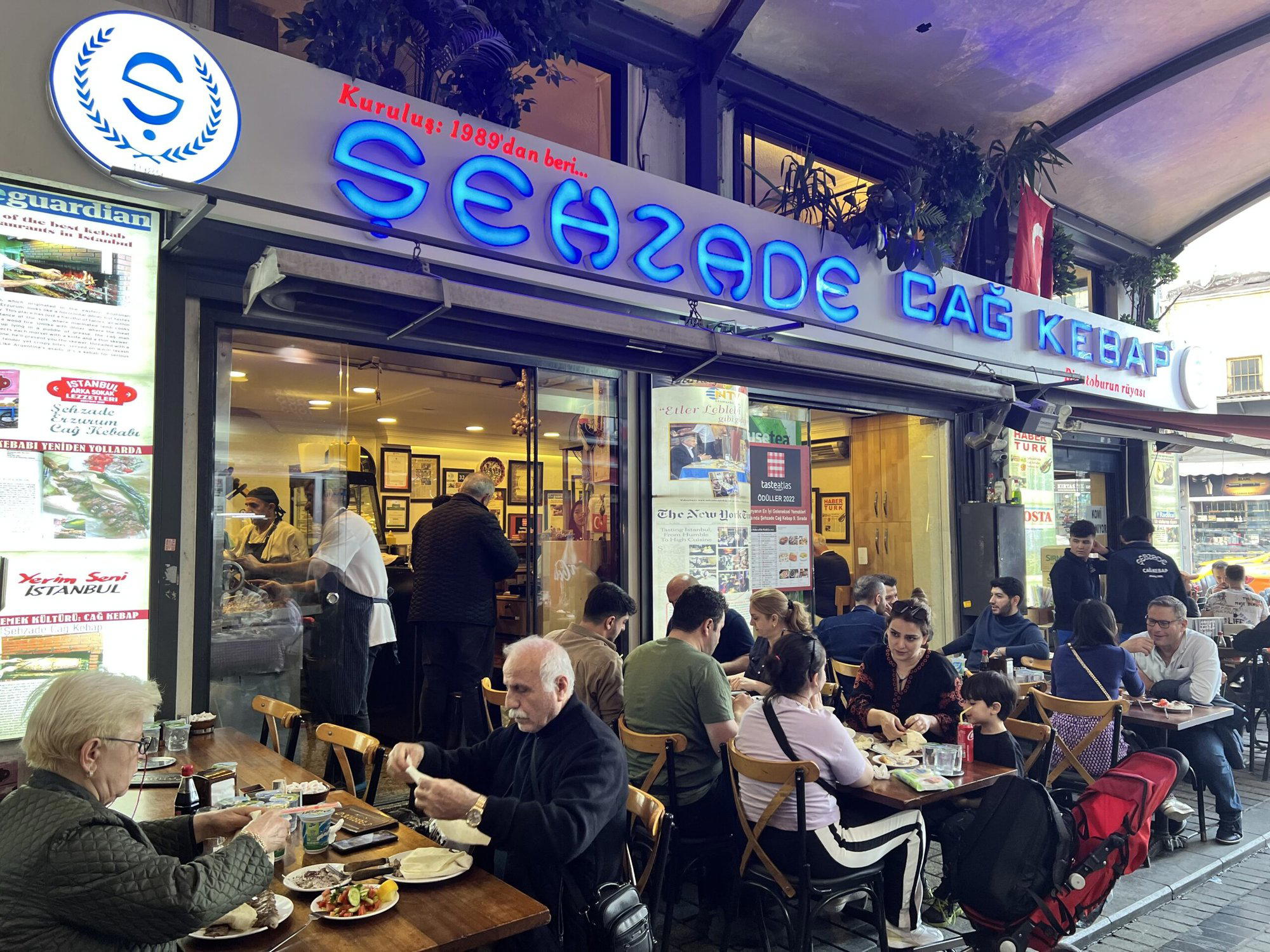
A Spit-Roasting Tradition Older Than the City's Modern Appetite
Fatih's streets around Hocapaşa hold a particular kind of Istanbul dining that the city's contemporary restaurant scene rarely replicates: unmediated, technique-driven, and almost indifferent to trend. The neighbourhood sits close to Sirkeci station, and the foot traffic is a mix of commuters, traders, and travellers passing through one of Istanbul's oldest urban corridors. It is precisely this context, unglamorous and functional, that frames what Şehzade Cağ Kebap does. While modern Turkish restaurants at the ₺₺₺₺ tier, like Turk Fatih Tutak, Mikla, and Neolokal, are reinterpreting Anatolian ingredients through contemporary frameworks, Şehzade operates in the opposite direction: no reinterpretation, no plating theatre, just a centuries-old technique executed at street level.
The Cağ Kebap Tradition and Its Anatolian Roots
Cağ kebap is an Erzurum specialty, originating in eastern Anatolia, and it holds a legitimate claim to being the precursor of the vertical döner that became Turkey's most exported food format. The distinction is structural. Where döner rotates vertically and is shaved downward into flatbread, cağ kebap is stacked on a horizontal spit and carved laterally onto individual skewers, one portion at a time, to order. The lamb is marinated simply, and the cooking is slow. Each skewer arrives at the table still on the metal spit, typically accompanied by thin lavash, raw onion with sumac, and green pepper. There is no sauce. There is no garnish designed for visual effect. The format is its own argument for restraint.
In Istanbul, this tradition exists at a remove from its Erzurum source, which means quality varies considerably. The better operations maintain the horizontal spit, use lamb rather than mixed meat composites, and resist the pressure to adapt the dish toward faster, cheaper formats. Şehzade Cağ Kebap, located on Hocapaşa Camii Sokak in Fatih, sits within this specific, smaller tier of Istanbul addresses that take the discipline of the original format seriously. For a broader view of Istanbul's dining range, from this register through to contemporary fine dining, see our full Istanbul restaurants guide.
Setting and Approach
The address is a fourth-floor space in a working district building, reached by stairs rather than elevator, with a layout that communicates function over comfort. This is not incidental to the experience: cağ kebap culture in Erzurum exists in similar workmanlike rooms, and the physical environment at Şehzade reflects that inheritance. The absence of design gestures is itself a signal about where the kitchen's priorities lie. Compare this register to Arkestra or Casa Lavanda, where setting is a deliberate component of the proposition, and the contrast clarifies what Şehzade is and is not trying to do.
The room fills quickly at lunch, which remains the primary cağ kebap service window across Turkey. The tradition is not an evening format: the spit runs through the midday hours, and the leading portions go early. Arriving late in the lunch service risks a diminished cut, which is the single most consequential piece of timing intelligence for any visitor. Elsewhere in Turkey's regional dining scene, the same lunchtime discipline applies to wood-fired preparations at places like Kokorecci Asim Usta in Bornova and the rural meyhane format at Aravan Evi in Ürgüp.
Drink, Accompaniment, and the Question of a Wine List
Editorial angle of cellar depth and sommelier expertise is, by definition, not the frame through which cağ kebap culture operates. No horizontal-spit lamb house in the Erzurum tradition maintains a wine program, and Şehzade Cağ Kebap is no exception to that pattern. The drink at this register is ayran, the cold salted yoghurt drink that cuts through lamb fat with more efficiency than any beverage pairing a sommelier could construct. This is not a limitation of the venue. It is a coherent cultural logic: cağ kebap was never designed to sit alongside a wine service, and any attempt to graft one on would misrepresent the tradition entirely.
For Istanbul dining that does engage seriously with wine, the reference points are elsewhere in the city. Neolokal and Mikla both maintain curated lists with Anatolian producers alongside international selections. Internationally, the contrast is sharper still: Le Bernardin in New York City and Lazy Bear in San Francisco represent the format where beverage programs are a primary editorial subject in their own right. Şehzade occupies a different axis entirely, where the drink exists to serve the protein, not the other way around.
Regional Comparisons and Where This Fits in Turkish Dining
Turkey's regional food traditions remain underrepresented in the country's fine dining conversation, which continues to concentrate critical attention on Istanbul's contemporary modernist restaurants. Şehzade Cağ Kebap is part of the corrective to that: a discipline brought from eastern Anatolia into the city and maintained largely intact. Similar regional-to-urban transplant quality operates at different registers across Turkey. Along the coast, Maçakızı in Bodrum anchors Aegean seafood culture, while Narımor in Izmir represents the western Aegean produce tradition. In Cappadocia, Nahita Cappadocia in Nevsehir and Aravan Evi draw from Central Anatolian pantry depth. What connects these operations is a geographic specificity: the sourcing, the technique, and the format are products of a particular landscape rather than of a restaurant trend.
Farther south, seafood operations like Poyraz Sahil Balık Restaurant in Beykoz, Mezegi in Fethiye, and Ahãma in Göcek occupy an equivalent regional-specialist register for Aegean and Mediterranean catch. Agora Pansiyon in Milas and Divia by Maksut Aşkar in Marmaris sit at different points on the quality-and-formality spectrum. In each case, the regional anchor is the editorial argument, not the interior design or the tasting menu format.
Planning Your Visit
Şehzade Cağ Kebap is located at Hocapaşa Camii Sokak No:6, fourth floor, in Fatih. The venue is accessible on foot from Sirkeci station and within walking distance of the Sultanahmet area. Given the lunchtime-forward nature of cağ kebap service, arrival before 1 p.m. is advisable. No website or phone number is currently listed through public records, which means walk-in is the practical approach. The pricing sits at a fraction of Istanbul's contemporary fine dining tier, making it one of the city's more accessible high-quality protein experiences by cost. No dress code applies, and the format is self-evidently casual.
At a Glance
- Lively
- Classic
- Casual Hangout
- Standalone
Current opening hours
- Monday
- 10 AM–10:30 PM
- Tuesday
- 10 AM–10:30 PM
- Wednesday
- 10 AM–10:30 PM
- Thursday
- 10 AM–10:30 PM
- Friday
- 10 AM–10:30 PM
- Saturday
- 10 AM–10:30 PM
- Sunday
- 11 AM–10 PM
Hours can change for holidays and private events. Last verified .
Know Before You Go
- Getting there
- Hoca Paşa, Hocapaşa Camii Sok. No:6 D:4, 34110 Fatih/İstanbul, Türkiye