Sasakura

Sasakura puts Karuizawa’s soba culture in a rural Oiwake frame, where buckwheat noodles matter less as a quick lunch than as a local expression of grain, water, and season. Its 2025 selection for Tabelog 100 Soba EAST gives the room a clear credential, but the appeal is quieter: a house-restaurant setting, accessible pricing, and a format built around soba rather than spectacle.
Pearl is the En Primeur Club membership app — saves, bookings, and concierge access live there. Same editors, same standards.
- Address
- 長野県北佐久郡軽井沢町追分655-3
- Phone
- +81267465577
- Website
- tabelog.com
 Saves & bookings on Pearl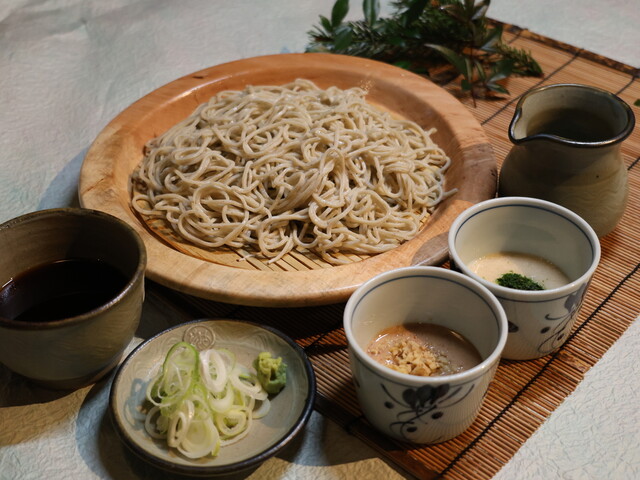
Oiwake feels different from central Karuizawa before the meal begins. The pace loosens, the road edges turn residential, and the dining room reads as a house restaurant rather than a polished resort address. That matters for soba. In Nagano, buckwheat is not decorative regional branding; it is one of the prefecture’s defining food languages, shaped by cool upland climate, clean water, and a long habit of treating noodles as a serious craft rather than a side dish.
Sasakura sits inside that tradition with a narrow focus: soba in Kitasaku-gun, served in a setting that suits the food’s rural logic. The restaurant’s 2025 selection for Tabelog 100 Soba EAST places it among a documented group of soba specialists across eastern Japan, a useful signal in a category where technique is often quiet and reputation travels through regulars before it reaches visitors. This is not the luxury-restaurant version of Karuizawa dining; it is a lower-priced, ingredient-led counterpoint to the area’s resort tables.
Buckwheat, water, and the Nagano argument for soba
Japan’s soba culture splits between city precision and rural provenance. Tokyo often prizes speed, lineage, and tightly edited counters; Nagano makes a stronger case for origin. The prefecture’s altitude and agricultural history give buckwheat a natural place at the table, and the meal is usually judged by restraint: noodle texture, aroma, dipping balance, and how little decoration gets in the way. In that context, a soba house in Oiwake does not need theatre. It needs consistency and a clear relationship to place.
The category also rewards attention to value. A serious soba meal can be modestly priced while still requiring skill, because the work sits in flour handling, water ratio, cutting, boiling, and timing. That is why Sasakura’s recognition is meaningful: Tabelog’s Soba EAST list does not simply mirror high-spend dining. It captures shops where a focused regional staple earns repeat attention. For travellers used to Karuizawa’s French, Italian, and hotel-led dining circuits, this is the corrective: a meal that explains the area through grain rather than through imported luxury cues.
Drinks stay within the Japanese register, with sake and shochu listed rather than a broad wine program. That pairing logic is practical. Soba’s bitterness and grain aroma can be flattened by heavy drinks; sake and shochu give the table a narrower, more culturally coherent range. The food category leads, the beverage list follows, and the result is a meal with a clear center of gravity.
A house-restaurant mood, not a resort dining room
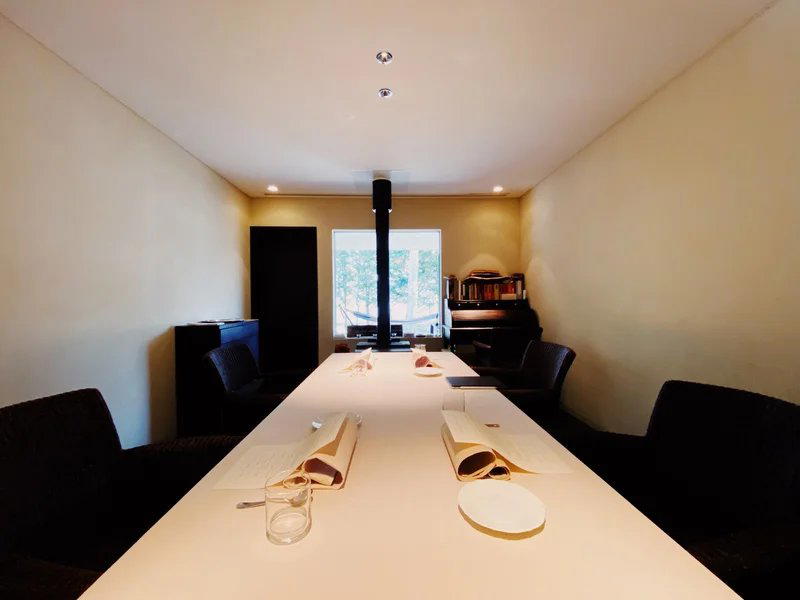
The room’s format reinforces the point. Seating includes tables and raised tatami-style areas, with a 35-seat capacity that makes the experience closer to a local soba stop than a private destination restaurant. Children are welcome, private rooms are not part of the format, and the restaurant is non-smoking. Those details say more than any decorative description could: this is a public, casual, family-usable room built around lunch-hour soba, not a hushed tasting-menu environment.
Kitasaku-gun’s dining map is broader than many first-time Karuizawa visitors expect. At one end, restaurants such as MODESTO operate in a far higher spend bracket, using European technique and longer-form dining to serve the resort market. At the other, soba houses preserve a local rhythm that can feel more revealing of Nagano than a white-tablecloth meal. Sasakura belongs firmly to the second camp, and that position is its strength. It gives visitors a way to eat locally without turning regional food into a performance.
For broader planning, the area rewards contrast. A Karuizawa day can move from soba to sweets, bread, or Western-style dining without leaving the district’s compact orbit: Chimoto Sohonten Karuizawa honten, French Bakery, and haluta bageri show the town’s older café-and-bakery current, while A Fenestella and Chinese Hanten Reisho point to the wider restaurant mix. For a city-level scan, use Our full Kitasaku-gun restaurants guide, with adjacent planning through Our full Kitasaku-gun hotels guide, Our full Kitasaku-gun bars guide, Our full Kitasaku-gun wineries guide, and Our full Kitasaku-gun experiences guide.
How to read the meal in Karuizawa terms
The right expectation is important. This is not a chef-biography restaurant, and the available public identity is not built around a named culinary author. The more useful reading is regional: soba as an ingredient system, Karuizawa as a resort town with local food underneath, and Oiwake as a quieter address where the meal feels less engineered for transit tourists. Opened in 2001, the restaurant has had time to become part of that local pattern, and the Tabelog 100 Soba EAST 2025 selection gives outsiders a clean reason to pay attention.
Logistics shape the experience without needing to dominate it. The restaurant is associated with Shinano Oiwake, sits off the central Karuizawa resort strip, and is more naturally approached as part of a daytime Oiwake plan than as a late-night dining anchor. Parking is part of the setup, but the surrounding residential roads make restraint important. Payment is handled in advance, and the restaurant does not accept credit cards, electronic money, or QR-code payments. Those constraints are common enough in rural Japan to be read as part of the category rather than as inconvenience.
Visitors building a wider Japan dining itinerary can use this meal as a useful contrast with urban and regional specialists elsewhere: -Grilled beef Sukiyaki- KAMAKURA TANUKIAN 鎌倉 たぬき庵 in Kamakura. 鮪と炭火焼き うお炭 秋葉原店 in Tokyo.cafe in Osaka.know in Kumamoto, (Shoku) Vietnam in Kawasaki, [Curry Senmon Ten] Maruyama Kyoju. in Sapporo, Jōdo Saké Bar in Los Angeles, and Onigiri Time in Pasadena. The point is not sameness; it is how focused formats reveal local priorities. In Oiwake, buckwheat carries that responsibility.
A Quick Peer Check
Comparable venues by cuisine and price in the same metro.
| Venue | Cuisine | Price | Notes |
|---|---|---|---|
| SasakuraThis venue — the venue you are viewing | Traditional soba restaurant | $$ | Not listed |
| The Cowboy House | American Steakhouse | $$ | Karuizawa Town, Kitasaku District |
| haluta bageri | Dining | Not listed | Kitasaku-gun |
| Kawakami An Honten | Japanese Soba | $$ | Karuizawa |
| Japanese cuisine Kasuke | Seasonal Japanese Kaiseki | $$$ | Kitasaku-gun |
| HELIOTROPE | Innovative Fusion Fine Dining | $$$$ | Karuizawa |
Recognition history
Dated appearances from independent guides and award organizations, with the underlying list record or original source where available.
Tabelog 100 #33 · No. 33
Tabelog · Tabelog 100 - Soba - EAST - 2025
Continue exploring
More in Kitasaku-gun
Restaurants in Kitasaku-gun
Browse all →
Hotels in Kitasaku-gun
Browse all →
Wineries in Kitasaku-gun
Browse all →
At a Glance
- Cozy
- Rustic
- Classic
- Family
- Casual Hangout
- Solo
- Group Dining
- Standalone
- Historic Building
- Sake Program
- Local Sourcing
A relaxed, non-smoking soba house with tatami and table seating, plenty of daylight, and a calm, spacious feel that fits the wooded, historic Oiwake post-town setting—comfortable for families and friends rather than formal dining.