
Saru Shokudo Honmachi honten sits in Osaka’s office-district yoshoku lane: Japanese-style Western cooking built for lunch breaks, beer, and practical appetite rather than ceremony. Its Tabelog 100 Yoshoku WEST 2025 selection, 40-seat format, counter seating, take-out service, and cash-only payment setup place it firmly in the everyday end of serious Osaka dining.
Pearl is the En Primeur Club membership app — saves, bookings, and concierge access live there. Same editors, same standards.
- Address
- 大阪府大阪市中央区備後町4-3-4 大阪タイガービル 1F
- Phone
- +81662333633
- Website
- saru-shokudo.com
 Saves & bookings on Pearl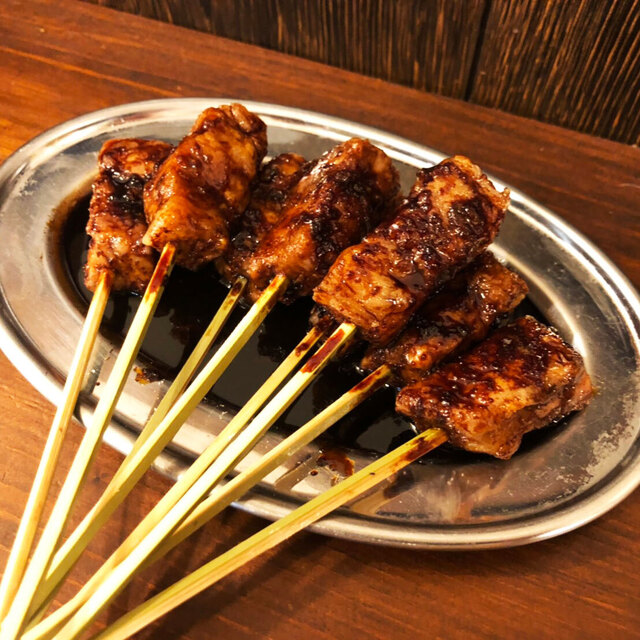
Honmachi changes at mealtimes: the office grid loosens, queues form outside compact dining rooms, and yoshoku, Japan’s long-running translation of Western comfort food, becomes a working-city ritual rather than nostalgia. In that setting, Saru Shokudo Honmachi honten fits a particular Osaka type: a lunch-and-after-work restaurant whose appeal is not ceremony, but familiar dishes executed consistently enough to draw repeat local traffic.
Visitors often misunderstand yoshoku as a soft landing between Japanese and Western food. In Osaka, it is a democratic category with its own grammar: tonteki, hamburger steak, beef cutlet, shrimp cream croquette, omelette dishes, rice, sauces, and beer. The genre rewards pacing as much as cooking. A proper yoshoku room must feed office workers quickly at midday, then loosen after dark. That dual identity explains why the city’s stronger examples feel less like theme restaurants than durable neighbourhood infrastructure.
Honmachi yoshoku, built around rice, sauce, and the office clock
The Honmachi location matters. This is not the theatrical food Osaka sells around Dotonbori, nor the tasting-menu economy across quieter central pockets. Honmachi is a commercial district, and its dining culture is shaped by time limits, repeat customers, and weekday logic. Yoshoku fits that pressure: Western-derived dishes made Japanese through rice, portion logic, and sauce work, not imported luxury cues.
Saru Shokudo Honmachi honten’s recognition on the Tabelog 100 Yoshoku WEST 2025 list gives the room an external marker, but the category is the real story. Tabelog’s Hyakumeiten selections tend to reward depth inside specific Japanese dining genres, not only high-ticket dining. For travellers using awards as shorthand, this is different from Michelin-style fine dining: it signals genre credibility, local demand, and consistency within a defined field.
The menu sits in the orthodox yoshoku register. Tonteki, hamburger steak, beef cutlet, shrimp cream croquette, dashimaki omelette, beer, sake, shochu, and wine all point to the form’s hybrid grammar. None of it needs reinvention. Osaka has enough experimental dining; this restaurant is judged by how clearly it serves the expectation people bring to the door.
Comparisons should be by use case, not status. In Honmachi and central Osaka, a traveller might bracket this meal against W. Bolero Oosaka honmachi ten for a lower-key café-and-sweets stop, BOTANI:CURRY for the city’s curry conversation, PAINDUCE Honten for bakery culture, or Spanish-leaning rooms such as gastroteka bimendi and ETXOLA for a different evening rhythm. Saru Shokudo Honmachi honten is not in those lanes. Its role is narrower and more Osaka-specific: the serious everyday yoshoku table.
A room for repeat appetite, not tasting-menu theatre
The format reinforces that role. A 40-seat room with counter seating, semi-private rooms, a non-smoking policy, and take-out service belongs to the city’s practical restaurant ecology. Counter seats suit solo diners, while semi-private rooms widen the use case for small groups. That combination is common in Japan but valuable for visitors because it lowers the friction around eating alone without reducing the meal to a snack.
Payment and access details also speak to the genre. Cash-only restaurants in Japan are not automatically old-fashioned; many are built around speed, low margins, and habitual local use. In yoshoku, the price-to-satisfaction equation is part of the tradition. The same logic applies to lunch selling out. In office districts, the meal period is compressed, not an all-day grazing window.
Osaka’s stronger casual restaurants expose a useful truth: informality is not the opposite of seriousness. A cafeteria classification can sit beside an award signal because the culture does not require white-tablecloth codes to validate craft. The same city that supports ambitious Italian rooms such as a canto (Italian) and tightly focused specialist counters also protects restaurants valued for repeatable comfort, local timing, and sharp execution inside a narrow brief.
For a broader Osaka itinerary, the restaurant works less as a destination meal than a calibration point. It clarifies how the city eats between prestige reservations: bakery mornings at 52CHO-ME BAKERY, pork buns from 551 Horai (551蓬莱), coffee or casual stops such as .cafe, and specialist pizza at 99 Pizza Napoletana Gourmet. The city’s dining intelligence is cumulative; the point is not one grand meal, but understanding how categories sit together.
Where it fits in an Osaka eating itinerary
The strongest reason to include this address is cultural, not decorative. Yoshoku tells a specific Japanese story: imported Western dishes domesticated through local taste, school-lunch memory, department-store dining, office lunch culture, and beer-hall appetite. Osaka gives that story force because it treats everyday eating with unusual seriousness. A restaurant does not need luxury language to matter here; it needs a clear role and the ability to hold it under pressure.
That makes the restaurant a counterweight to Osaka’s flashier dining images. Visitors often arrive thinking in takoyaki, okonomiyaki, sushi, or kaiseki. Yoshoku adds another layer: postwar modernity, urban work rhythms, and Western techniques absorbed so fully they read as Japanese comfort food. The award recognition sharpens the case, but the larger value is interpretive. Eat here to understand the city’s middle register, between convenience and occasion.
Readers mapping the rest of the trip can widen the frame through Our full Osaka restaurants guide, then place the meal alongside hotels, bars, wineries, and experiences via Our full Osaka hotels guide, Our full Osaka bars guide, Our full Osaka wineries guide, and Our full Osaka experiences guide. For cross-city context on how casual Japanese categories travel, compare it with [Curry Senmon Ten] Maruyama Kyoju. in Sapporo, [ki:] in Kyoto.know in Kumamoto, (Shoku) Vietnam in Kawasaki, -Grilled beef Sukiyaki- KAMAKURA TANUKIAN 鎌倉 たぬき庵 in Kamakura. 鮪と炭火焼き うお炭 秋葉原店 in Tokyo, Jōdo Saké Bar in Los Angeles, and Onigiri Time in Pasadena.
A Pricing-First Comparison
Comparable venues for cuisine and category context.
| Venue | Cuisine | Price | Notes |
|---|---|---|---|
| Saru Shokudo Honmachi hontenThis venue — the venue you are viewing | Not listed | $$ | Not listed |
| Watanabe Curry Umeda honten | Not listed | $$ | Kita, Japanese–Sri Lankan Curry House |
| Miyabi Tei | Kita, Japanese Teppanyaki | $$ | Not listed |
| Seoul | Not listed | $$ | Naniwa, Yakiniku (Japanese BBQ) with black wagyu beef |
| Udon Ubara | Tennōji, Japanese Udon | $$ | Not listed |
| Odashi to Spice Ganso Electroni Curry | Not listed | $$ | Miyakojima, Dashi-based Japanese Spice Curry |
Recognition history
Dated appearances from independent guides and award organizations, with the underlying list record or original source where available.
Tabelog 100 #8 · No. 8
Tabelog · Tabelog 100 - Yoshoku - WEST - 2025
Continue exploring
More in Osaka
Restaurants in Osaka
Browse all →




Bars in Osaka
Browse all →



Hotels in Osaka
Browse all →



Wineries in Osaka
Browse all →
At a Glance
- Cozy
- Classic
- Casual
- Casual Hangout
- Group Dining
- Solo
- Standalone
- Beer Program
A direct, cozy office-district diner atmosphere focused on fast, filling comfort food rather than fine-dining formality.