
Ikegami Seimensho belongs to Kagawa’s self-service Sanuki udon culture rather than Japan’s formal restaurant tier. The draw is the regional format: counter seating, quick daytime service, low spend, and recognition on Tabelog’s Udon Kagawa 100 list for 2024, making it a useful stop for understanding Takamatsu’s noodle identity.
Pearl is the En Primeur Club membership app — saves, bookings, and concierge access live there. Same editors, same standards.
- Address
- Japan, 〒761-1705 Kagawa, Takamatsu, 香川町川東下899−1
- Phone
- +81 87-879-2204
- Website
- sanuki-ikegami.com
 Saves & bookings on Pearl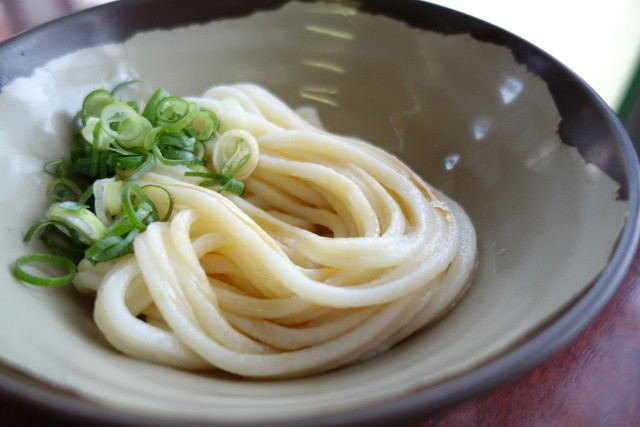
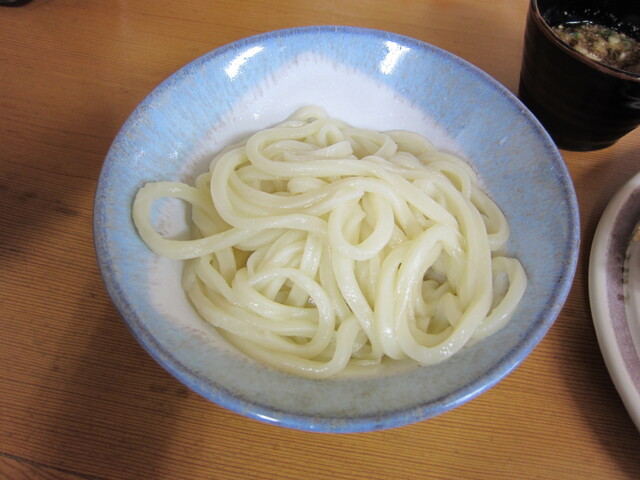
Approach a Kagawa udon shop and the cues are practical before decorative: a short service window, a line moving with local efficiency, and a room built around bowls rather than ceremony. That is the right frame for Ikegami Seimensho. Takamatsu’s noodle culture rests on wheat, broth, self-service rhythm, and repeat visits from people who treat udon as daily life, not on long tasting menus or polished dining rooms.
Kagawa is often called Japan’s udon prefecture because Sanuki udon is central to the region’s food identity, not because every shop follows one style. The local format rewards elastic noodles, clear broth or dipping sauce, and counter speed. In that context, a 40-seat house-style udon restaurant with counter seating belongs to a wider regional system: modest spend, focused menu category, fast turnover, and a clientele of solo diners, families, and friends.
Sanuki udon as a daytime ritual, not a destination tasting menu
The common visitor mistake is treating Kagawa udon like a conventional restaurant booking. A better comparison is a regional craft circuit. Shops open for a limited daytime run, bowls are priced for repetition, and the experience depends more on timing than formality. Ikegami Seimensho fits that tradition with udon as the category, take-out available, and a no-smoking room focused on quick eating rather than lingering service.
Recognition matters because Kagawa has a dense field of serious udon houses. Ikegami Seimensho was selected for Tabelog 100 - Udon - Kagawa - 2024, with a Tabelog score listed at 3.73. It also has listed selections for the Udon West 100 in 2022. Those markers do not make it luxury dining; they place it in a competitive local bracket where noodle texture, service flow, and consistency shape reputation.
Within Takamatsu, the price tier is part of the cultural argument. Many notable udon counters operate at sub-¥1,000 spend, and nearby comparisons show how compressed the category can be: Kuukai Bou, Matsubara, Udon no Den, and Marutani Seimen sit in the same low-spend band, while Honkaku Teuchi Moriya occupies a slightly higher listed range. The point is not thrift alone. Kagawa’s defining food tradition remains accessible in a way that Tokyo sushi, Kyoto kaiseki, or Osaka kappo rarely are.
For readers mapping the city through noodles, the nearby editorial thread continues through Azuma, Chikusei Honten, Furukawa Udon, and Furusato Udon. Together, they show why Takamatsu dining reads better as a sequence of specialist addresses than as one trophy table.
The room makes sense if the format is understood first
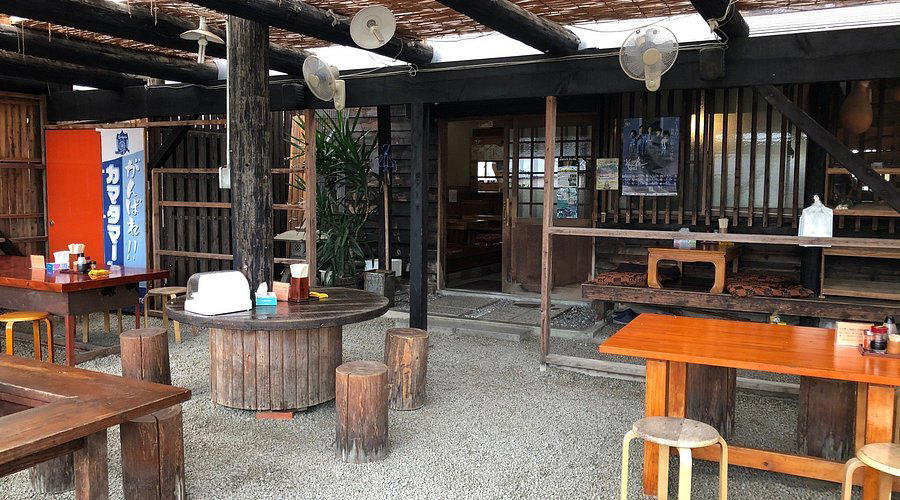
The restaurant’s appeal is tied to its house-restaurant setting and counter-based setup. Sanuki udon shops often collapse production, service, and eating into one visible loop. The room does not separate kitchen and guest like fine dining; it is built for a narrow task: order, collect, season or finish as required, eat, and move on.
The history adds weight without nostalgia. Opening on December 8, 1957 places it among the older names in the prefecture’s udon culture, and the 2007 relocation marks a modern chapter rather than a break from the category. For visitors, that longevity is useful: Kagawa udon is not a trend imported into Takamatsu, but a regional habit deep enough to support specialist lists, local rivalries, and repeat pilgrimages across the prefecture.
Practicality shapes the audience. Children are welcomed, private rooms are not part of the setup, and occasion notes skew toward family, solo, and friends rather than anniversary dining. Credit cards are not accepted, while electronic money and QR code payments are listed. Parking is unusually relevant because many serious udon shops are not centered on nightlife districts; the restaurant lists 45 parking spaces, suiting a noodle route by car better than a bar-led evening in central Takamatsu.
Reservations are unavailable, normal for a fast-moving udon address and revealing of the category’s logic. Plan around daytime appetite and queue tolerance, not table management. The experience is short, structured, and local in tempo.
How it fits into a Takamatsu food day
Takamatsu rewards days built around contrasts. Udon can anchor morning or lunch, then the city can widen into okonomiyaki, izakaya-style drinking, hotel lounges, or island-linked cultural plans. For another casual regional reference point, Fumiya Okonomiyaki Honten points to a different strand of city comfort cooking.
The broader planning lens sits in Our full Takamatsu restaurants guide, with sleep, drinking, and regional add-ons covered through Our full Takamatsu hotels guide, Our full Takamatsu bars guide, Our full Takamatsu wineries guide, and Our full Takamatsu experiences guide. The point is sequence: a serious udon stop works better in a day’s eating map than as a dressed-up evening plan.
For readers comparing Japan’s casual-specialist dining across regions, the same low-formality, high-specificity pattern appears in different forms at -Grilled beef Sukiyaki- KAMAKURA TANUKIAN 鎌倉 たぬき庵 in Kamakura. 鮪と炭火焼き うお炭 秋葉原店 in Tokyo.cafe in Osaka.know in Kumamoto, (Shoku) Vietnam in Kawasaki, and [Curry Senmon Ten] Maruyama Kyoju. in Sapporo. Outside Japan, Jōdo Saké Bar in Los Angeles and Onigiri Time in Pasadena show how Japanese food categories change once curated abroad rather than serving as everyday regional infrastructure.
The editorial read is simple: the restaurant refuses to inflate Sanuki udon into luxury performance. Its credibility comes from category focus, long operation, low spend, and recognition inside a prefecture where udon standards are unusually demanding. For Takamatsu, that is not a side note. It is the city’s food culture in working form.
A Pricing-First Comparison
Nearby venues at a similar price tier for orientation.
| Venue | Cuisine | Price | Notes |
|---|---|---|---|
| Ikegami SeimenshoThis venue — the venue you are viewing | Takamatsu, Sanuki Udon | $ | Not listed |
| Udonya Goemon | Not listed | $ | Takamatsu, Late-night Sanuki udon & black curry udon |
| Udon Shokunin Sanuki Men no Suke | Not listed | $ | Takamatsu, Traditional Sanuki udon and tempura |
| Teuchi Udon Hariya | Not listed | $ | Takamatsu, Traditional Sanuki Udon Counter |
| Fumiya Okonomiyaki Honten | Not listed | $ | Takamatsu, Okonomiyaki (Japanese savory pancakes) |
| Ueta Udon | Takamatsu, Sanuki udon shop | $ | Not listed |
Recognition history
Dated appearances from independent guides and award organizations, with the underlying list record or original source where available.
Tabelog 100 #77 · No. 77
Tabelog · Tabelog 100 - Udon - KAGAWA - 2024
Continue exploring
More in Takamatsu
Restaurants in Takamatsu
Browse all →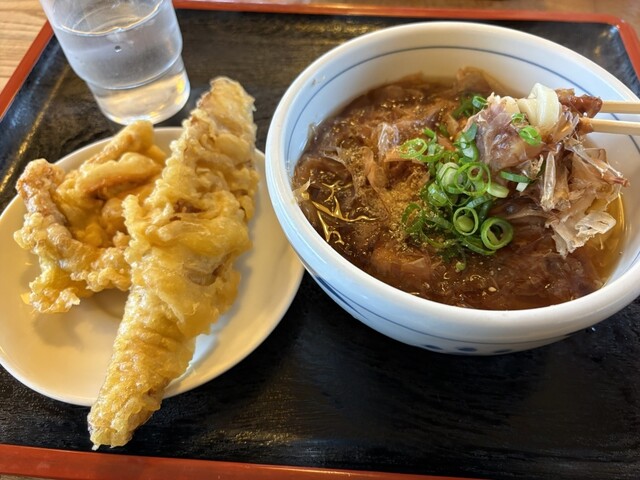

At a Glance
- Classic
- Cozy
- Casual Hangout
- Solo
- Family
- Group Dining
- Standalone
- Zero Proof
- Local Sourcing
Current opening hours
- Monday
- Closed
- Tuesday
- Closed
- Wednesday
- Closed
- Thursday
- 10:30 AM–2 PM
- Friday
- 10:30 AM–2 PM
- Saturday
- 10:30 AM–2 PM
- Sunday
- 10:30 AM–2 PM
Hours can change for holidays and private events. Last verified .
Casual, bustling udon-shop atmosphere centered on fast-moving noodle service rather than a formal dining room.