Sanka Udon Hangeshou

Tabelog 100 #37
Our verdict
Sanka Udon Hangeshou is a Nishinomiya udon house with Tabelog 100 Udon WEST recognition in 2024, following prior selections in 2018, 2020, and 2022. Its appeal sits in the Kansai tradition of wheat noodles as everyday craft rather than ceremony, with oyako-don and udon-suki broadening the table beyond a single-bowl stop.

Pearl is the En Primeur Club membership app, where members save venues, book tables and use the concierge.
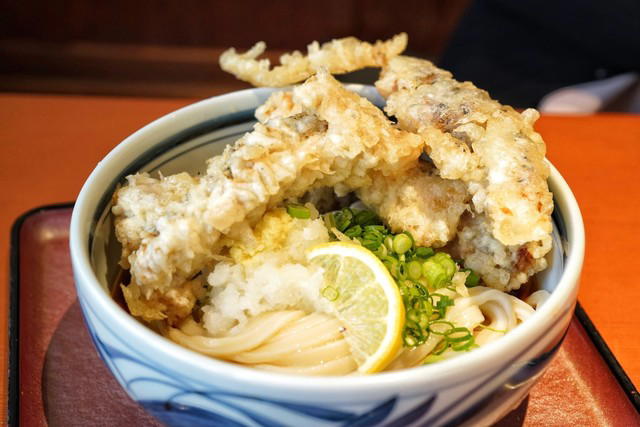
The menu
What to order
- Sanuki-style udon
- Oyako-don (chicken and egg bowl)
- Udon-suki hotpot
The approach to a serious udon shop is rarely theatrical. The signal is usually quieter: a focused menu orbiting wheat noodles and a crowd that treats lunch as a small test of texture rather than a pause between errands. In Nishinomiya, that matters. The city has enough everyday dining depth to reward value, speed, and exacting casual food, while keeping many neighborhood restaurants from becoming spectacle.
That is the useful frame for Sanka Udon Hangeshou. The restaurant is not part of Japan’s high-price tasting-menu economy; it belongs to the more revealing category of specialist shops where a listed budget of JPY 1,000 - JPY 1,999 can still carry real local authority. Its 2024 recognition through Tabelog Hyakumeiten places it inside a competitive udon field rather than a local-only comfort-food list. For travelers, that distinction is important: udon is not a downgrade from sushi or kaiseki, but a different grammar of precision.
Kansai udon, judged by restraint rather than ceremony
Udon culture often prizes balance over volume. The noodle matters, but so does the relationship between wheat, broth, seasoning, and pace. Some styles announce themselves through chew and density; others ask subtler questions about lift, warmth, and the way a bowl fits into daily life. Nishinomiya gives the genre a practical clarity: restaurants have to satisfy regulars, families, and noodle obsessives without turning the meal into a performance.
The category list here is telling: udon, oyako-don, and udon-suki. That combination points to a kitchen working within familiar Japanese lunch and dinner forms rather than chasing novelty. Oyako-don brings rice-bowl comfort into the same orbit as noodles; udon-suki gives the room a shared-table register. The thread is not luxury, it is command of the staples that diners scrutinize closely.
Recognition from Tabelog’s Hyakumeiten program carries particular weight in this field because noodle shops compete on repeat credibility. A score of 3.74 on Tabelog sits in a range that, in Japan’s user-review culture, usually signals more than casual popularity. The award context is also narrower than a generic restaurant ranking: this is an udon-specific recognition, so the comparison is against specialist noodle houses rather than unrelated fine-dining rooms.
A Nishinomiya room for regular meals, not destination theatre
The format reinforces that reading. Sanka Udon Hangeshou belongs closer to a serious neighborhood dining room than a chef’s-counter ritual, and its appeal is grounded in the ordinary usefulness of a focused udon shop. Those details say more about the experience than decorative adjectives would: this is a place where the craft is expected to carry itself without luxury staging.
In Nishinomiya, that kind of restaurant sits alongside a broad local food map. The city can support other dining rooms, bakery counters, sweets stops, and more formal Japanese meals without turning every address into a destination headline. The point is not variety for its own sake; it is that Nishinomiya’s dining identity is built from high-frequency local use, where bakeries, noodle shops, counters, and family restaurants all compete for repeat trust.
That context also explains the value of a specialist udon address with national-platform recognition. In a city with plenty of everyday dining choices, a noodle shop does not need international branding to matter. It needs a reason for residents to return and for visitors to make time for a focused meal. Sanka Udon Hangeshou has that signal through its 2024 Tabelog Hyakumeiten recognition, but its category remains grounded: wheat noodles, rice bowls, and udon-suki.
How to read it against Nishinomiya's casual dining tier
Nishinomiya’s casual restaurants cover a wide price and format spread, from quick noodle meals and bakery stops to higher-spend evening counters. Against that field, udon occupies a useful middle position: more structured than a snack, less expensive and less time-consuming than a larger dinner, and culturally deeper than its simplicity suggests. Comparison venues in the city underline the spread. Okonomiyaki Kitaro stays in the griddle-and-beer lane, Ramen Tanron Honten works the ramen end of the quick-meal spectrum, CONCENT MARKET points to the bakery economy, and Sumibi Kushiyaki Senmon Ten Toriten belongs to a different evening-spend bracket.
For a broader Nishinomiya plan, the useful move is to treat udon as the anchor rather than the afterthought. The full local map is worth scanning through Our full Nishinomiya restaurants guide, while adjacent planning pages cover Our full Nishinomiya hotels guide, Our full Nishinomiya bars guide, Our full Nishinomiya wineries guide, and Our full Nishinomiya experiences guide. Travelers building a wider Japan food itinerary can also compare regional everyday-food formats through other casual dining rooms, noodle counters, rice-bowl specialists, bakery stops, and bars in Japan and beyond.
The editorial read is clear: this is a specialist stop for understanding udon at a high local standard, not a venue to approach with fine-dining expectations. The evidence sits in the udon-specific recognition, the narrow category focus, and the restaurant’s everyday social use. For visitors, the reward is cultural scale. A bowl of udon in Nishinomiya can say as much about local taste as a far longer meal, provided the kitchen has the discipline to make simplicity count.
Frequently asked questions
What's Sanka Udon Hangeshou's location?
Nishinomiya.
What should I budget for a meal at Sanka Udon Hangeshou?
Pricing at Sanka Udon Hangeshou is listed as JPY 1,000 - JPY 1,999 JPY 1,000 - JPY 1,999 View spending breakdown.
Should I book Sanka Udon Hangeshou in advance?
Plan around a casual udon meal at Sanka Udon Hangeshou in Nishinomiya, with the listed budget at Dinner: JPY 1,000 - JPY 1,999; Lunch: JPY 1,000 - JPY 1,999.
What is Sanka Udon Hangeshou known for?
It is known for udon, oyako-don, and udon-suki, and it was selected for Tabelog Hyakumeiten in 2024. Its location is Nishinomiya.
Pricing, Compared
Comparable venues by cuisine and price in the same metro.
| Venue | Cuisine | Price | Awards | Notes |
|---|---|---|---|---|
| Sanka Udon HangeshouThis venue (the venue you are viewing) | Traditional Sanuki Udon & Oyako-don | $10–20 | Tabelog 100 #37 | Not listed |
| Okonomiyaki Kitaro | Okonomiyaki & Japanese Comfort Food | $10–20 | Tabelog 100 #89 | Nishinomiya, Okonomiyaki & Japanese Comfort Food |
| Honkaku Teuchi Iwashiya Nishinomiya ten | Traditional Japanese Udon | $1–10 | Tabelog 100 #53 | Nishinomiya, Traditional Japanese Udon |
| Ryoichi Yamauchi | Neighborhood bakery & bread shop | Not listed | Tabelog 100 #96 | / Kurakuenguchi area, Neighborhood bakery & bread shop |
| La Baguette de Paris YOSHIKAWA | French‑style bakery and sandwich shop | $1–10 | Tabelog 100 #61 | Kurakuenguchi, French‑style bakery and sandwich shop |
| Patissier Eiji Nitta | Not listed | $10–20 | Tabelog 100 #69 | Nishinomiya Kitaguchi, French-style patisserie and cake shop |
Recognition history
Dated appearances from independent guides and award organizations, with the underlying list record or original source where available.
Tabelog 100 #37 · No. 37
Tabelog · Tabelog 100 - Udon - WEST - 2024
Continue exploring
More in Nishinomiya
Restaurants in Nishinomiya
All restaurants in Nishinomiya →




Bars in Nishinomiya
Browse all →



Hotels in Nishinomiya
Browse all →



Wineries in Nishinomiya
Browse all →
Details
- Cozy
- Classic
- Solo
- Family
- Casual Hangout
- After Work
- Group Dining
- Standalone
- Sake Program
- A La Carte
- Counter Dining
- Sake
- Beer
A small, cozy neighborhood udon shop with a simple, stylish interior featuring counter seats, a central V-shaped communal table, and compact four-top tables; casual and welcoming for families and solo diners alike.