San Matteo Pizzeria e Cucina
A neighbourhood fixture on the Upper East Side's 2nd Avenue corridor, San Matteo Pizzeria e Cucina draws a loyal local following with its Italian cooking rooted in Southern Italian tradition. The room operates at the rhythm of a true regular's restaurant: familiar faces, consistent execution, and a menu that rewards repeat visits over single-occasion sampling.
Pearl is the En Primeur Club membership app — saves, bookings, and concierge access live there. Same editors, same standards.
- Address
- 1559 2nd Ave, New York, NY 10028
- Phone
- +12128612434
- Website
- sanmatteonyc.com
- Directions
- Get directions
 Saves & bookings on Pearl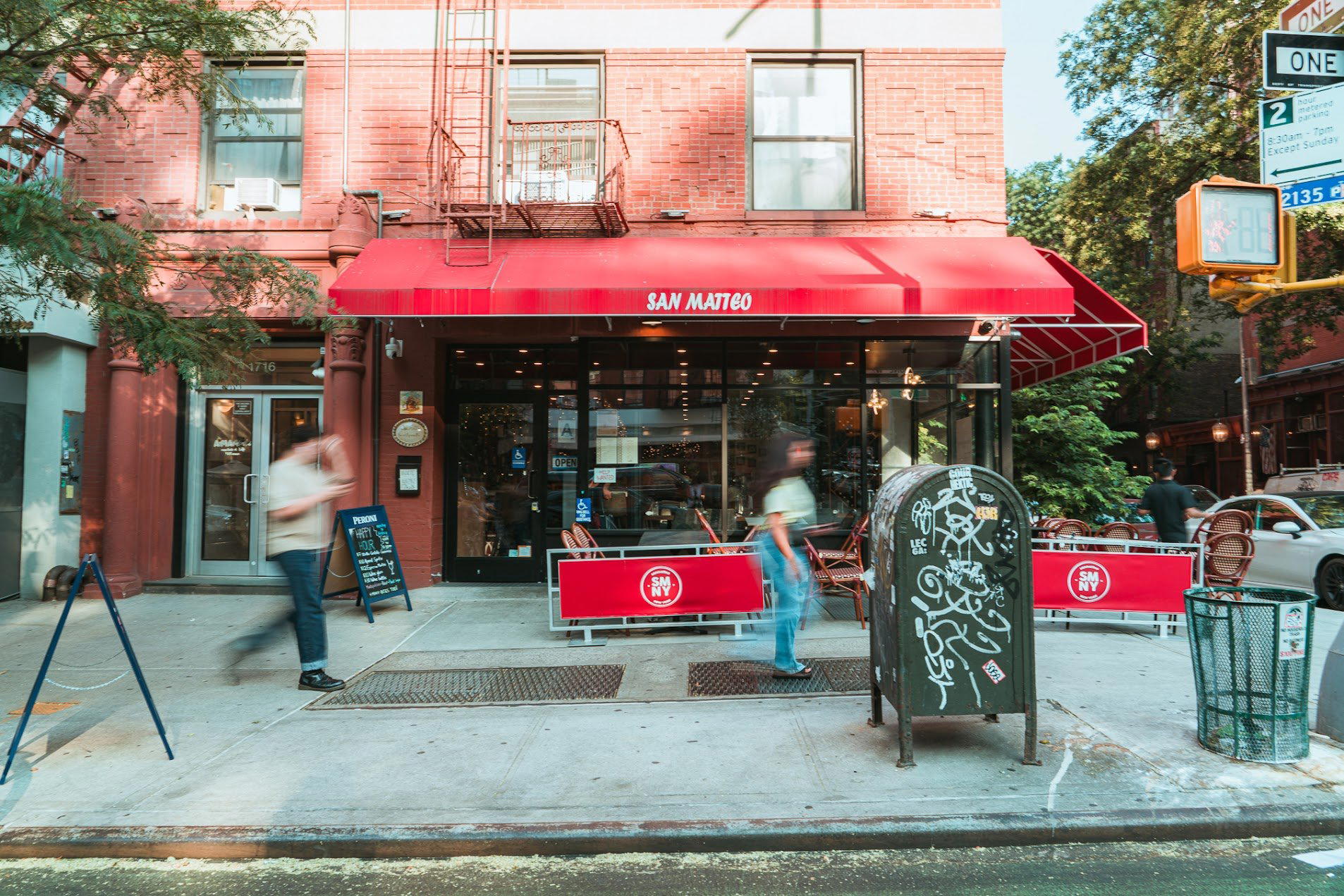
The Upper East Side's Italian Anchor
On the Upper East Side, the gap between destination dining and neighbourhood institution is wider than in most Manhattan ZIP codes. The blocks around 2nd Avenue in the 70s and 80s run on repeat business, residents who live within walking distance, eat on weekday nights, and judge a restaurant by its third visit rather than its first. San Matteo Pizzeria e Cucina, at 1559 2nd Avenue, operates firmly inside that logic. It occupies a different category entirely: the reliable, neighbourhood-scaled trattoria that earns its reputation over years of consistent cooking rather than a single season of critical attention.
New York's Italian dining tier is broadly understood. At the leading, you have tasting-menu format Italian rooms and the handful of fine-dining addresses that command $200-plus per head. Below that sits a large mid-market segment of red-sauce restaurants coasting on nostalgia. The more interesting question is what occupies the space between those poles: the pizza-forward Italian kitchens that take the cooking seriously without performing ambition for its own sake. That is where places like San Matteo find their footing, and where a loyal clientele tends to cluster most stubbornly.
What Keeps Regulars Returning
The case for a regular's restaurant is rarely made through headlines. It is made through the mechanics of a Tuesday night: the ease of getting a table without a reservation weeks out, the staff who recognise a familiar order, the menu that holds its shape across seasons rather than pivoting constantly to signal trend awareness. Regulars at neighbourhood Italian restaurants on the Upper East Side are not chasing the new. They are chasing the reliable, and reliability in pizza and cucina means dough handled consistently, sauce that doesn't overcorrect for sweetness, and a room that doesn't make you feel like an event.
The Southern Italian tradition, which anchors the bulk of New York's pizza heritage, prizes exactly these qualities. Neapolitan-style pizza in its classical form is judged on restraint: the char on the cornicione, the hydration of the dough, the balance between a minimal topping load and structural integrity at the centre. Regulars at pizza-forward Italian addresses in New York know what they are looking for in these parameters, and they return when the kitchen delivers them consistently across multiple visits. The contrast with the fine-dining circuit is instructive, the tasting-menu format at places like Atomix or Masa rewards a first or second visit with novelty and precision, but the neighbourhood trattoria rewards the tenth visit with familiarity and ease. Both are legitimate dining propositions, but they answer entirely different questions.
Across the broader American dining scene, the restaurants that build the deepest regular bases tend to share a structural similarity: moderate price points relative to their neighbourhood, a menu narrow enough to execute well rather than wide enough to cover every preference, and an ownership or management approach that prioritises consistency over reinvention. Similar patterns hold at well-regarded neighbourhood anchors in other cities, you see it at Bacchanalia in Atlanta, where a loyal local following pre-dates the broader national recognition, and at casual formats adjacent to destination restaurants in markets like San Francisco near Lazy Bear. The neighbourhood Italian restaurant in a high-income urban ZIP code is a specific species: it must be good enough to hold a informed local clientele against the gravitational pull of Manhattan's restaurant density, but grounded enough not to price or format itself out of the casual-dinner occasion.
The 2nd Avenue Corridor in Context
The stretch of 2nd Avenue running through the upper 70s and 80s is not a destination dining corridor in the way that the West Village or NoHo function. Its restaurant ecosystem serves primarily a residential population: younger professionals, established families, and long-term Upper East Side residents who largely eat local and leave the pilgrimage restaurants for special occasions. Italian food performs particularly well in this demographic context, it is a cuisine with broad cross-generational appeal, comfortable at both the quick-weeknight and the longer-weekend-dinner occasion, and it translates well to takeout and delivery, which matters on a corridor anchored by apartment buildings rather than hotels.
Within that context, San Matteo sits in the mid-tier of the local Italian offer. It is not competing with the prix-fixe Italian rooms that serve the expense-account circuit. Its competition is the other pizza-and-pasta addresses within a 10-block radius, and its regulars have almost certainly tried all of them. The fact that a neighbourhood restaurant builds a loyal base in this environment is itself a meaningful signal: the Upper East Side resident who has lived on the block for five years and keeps coming back is making a more considered endorsement than the first-time visitor leaving a review after a single visit.
Italian Pizza in New York: The Broader Tradition
New York's relationship with pizza is layered in a way that matters to understanding where a pizzeria lands in the local hierarchy. The city has its own codified style, the large, foldable, coal- or gas-oven slice, but the past two decades have brought significant diversification. Neapolitan DOC-style pizza, Sicilian thick-crust variants, and Roman pinsa formats all have established footholds. The pizzeria-e-cucina format, which pairs pizza with a broader Italian kitchen menu (pasta, secondi, antipasti), reflects Italian restaurant practice in Italy itself more closely than the American pizza-only model does. It allows a kitchen to serve a table where one diner wants pizza and another wants a pasta, which is commercially sensible and culturally more authentic to the Southern Italian trattoria model.
For comparison, the Italian format at the fine-dining end of the international spectrum, represented by addresses like 8½ Otto e Mezzo Bombana in Hong Kong or Alain Ducasse at Louis XV in Monte Carlo, bears almost no structural resemblance to the neighbourhood pizzeria. They are different instruments playing different repertoires. The neighbourhood trattoria answers the question of where a resident eats on a Wednesday. The destination room answers the question of where that same resident goes for an anniversary. San Matteo, by address and format, is clearly in the first category, and that is not a diminishment.
Addresses like Jungsik New York and Blue Hill at Stone Barns in the wider region represent the destination end of that range; San Matteo represents the other pole, where the cooking earns its keep through repetition rather than revelation.
Know Before You Go
- Address: 1559 2nd Avenue, New York, NY 10028
- Neighbourhood: Upper East Side, Manhattan
- Format: Pizzeria and full Italian kitchen (cucina)
- Leading for: Neighbourhood dinner, casual Italian, repeat-visit regulars
- Reservations: Contact the restaurant directly for current booking policy
- Getting there: The Q and 4/5/6 subway lines serve the Upper East Side; the 77th Street and 86th Street stations are the closest stops on the Lexington Avenue line
- Peer context: Sits in the mid-tier of Upper East Side Italian addresses, below destination fine-dining but above the generic red-sauce category
Recognition, Side-by-Side
Comparable venues nearby, for context on price, style, and recognition.
| Venue | Cuisine | Price | Notes |
|---|---|---|---|
| San Matteo Pizzeria e CucinaThis venue — the venue you are viewing | Neapolitan Pizzeria e Cucina | $$ | Not listed |
| Bicchiere | Northern Italian Wine & Pasta Bar | $$ | Upper East Side |
| Don Giovanni Ristorante | Traditional Neapolitan Pizza | $$ | Hell's Kitchen |
| Pastai | Southern Italian Pasta Bar | $$ | Chelsea-Hudson Yards |
| Taverna Di Bacco | Authentic Italian Trattoria | $$ | East Village |
| La Lanterna di Vittorio | Classic Italian Pizza and Lasagna | $$ | Greenwich Village |
Continue exploring
More in New York City
Restaurants in New York City
Browse all →
Bars in New York City
Browse all →
Hotels in New York City
Browse all →






At a Glance
- Rustic
- Cozy
- Casual Hangout
- Late Night
- Family
- Open Kitchen
Current opening hours
- Monday
- 4–10 PM
- Tuesday
- 4–10 PM
- Wednesday
- 4–10 PM
- Thursday
- 4–10 PM
- Friday
- 12–11 PM
- Saturday
- 12–11 PM
- Sunday
- 12–10 PM
Hours can change for holidays and private events. Last verified .
Rustic Italian with warm wood-fired oven glow and casual neighborhood feel.