
A 16-seat Kitashinchi hot-pot room with pork shabu shabu, Okinawan cooking, private-room options, and Tabelog 100 Hot Pot 2024 recognition. The appeal is the split personality: weekday lunch reads as controlled value in a business district, while dinner moves into a slower, drink-led Kitashinchi register.
Pearl is the En Primeur Club membership app — saves, bookings, and concierge access live there. Same editors, same standards.
- Address
- 大阪府大阪市北区曽根崎新地1-3-23 北新地FOODEARビル 2F
- Phone
- +81666168190
- Website
- okinawa-shabushabu.com
 Saves & bookings on Pearl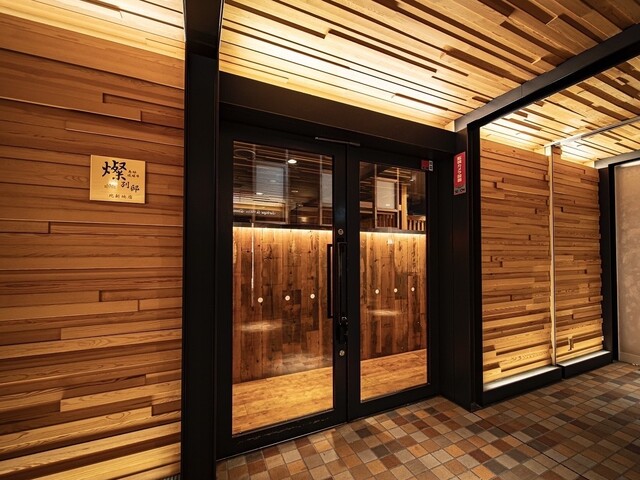
Kitashinchi has a particular after-dark texture: elevator lobbies, polished directories, private rooms behind quiet doors, and dining rooms built for conversations that do not travel. San Bettei Kitashinchi ten fits that geography. The room is small: 16 seats across a private room, semi-private room, and table seating, making it closer to a controlled hot-pot salon than a broad dining hall.
The cooking sits in a specific Osaka lane: pork shabu shabu, Japanese hot pot, and Okinawan cuisine, rather than the beef-heavy sukiyaki or kappo formats that dominate many nearby expense-account evenings. In a city where hot pot often swings between casual group food and premium beef theatre, an Agu-pork-led shabu shabu format gives the table a different rhythm: broth, sliced pork, dipping condiments, vegetables, drinks, repeat. The format rewards pacing over spectacle.
Kitashinchi hot pot with a daytime-versus-evening split
The useful way to read this address is through the lunch and dinner divide. Weekday lunch in Kitashinchi is tactical: offices, station access, and a compressed midday window shape the mood. Dinner is another city, with longer sittings, stronger drink lists, and a room structure suited to business dining or small celebrations. San Bettei Kitashinchi ten works across both registers, so its value changes by time of day rather than cuisine alone.
At lunch, pork shabu shabu here competes with efficient Osaka meals, from bakeries and cafés to Chinese, Italian, curry, and casual pork buns. Readers mapping that daytime spectrum can compare the lighter end of the city through .cafe, 52CHO-ME BAKERY, and 551 Horai (551蓬莱). These are not substitutes for shabu shabu; they show that Osaka lunch culture prizes speed, price discipline, and a clear reason to sit down. A hot-pot lunch has to justify the extra ceremony.
Dinner changes the competitive set. Kitashinchi has long been one of Osaka’s polished evening districts, and the room count here supports that use: a private room, semi-private seating, and separation for small groups. Against nearby formats such as Shin Chinese HARAKAWA Kitashinchi ten, il PePe, IAKU, Wagyu Matsushita Kamidoori ten, and Kitashinchi Okurano, this restaurant occupies a focused hot-pot lane rather than a broad fine-dining proposition. That makes it a sharper choice when the meal needs structure, warmth, and conversation instead of a long sequence of plated courses.
Okinawan inflection in a city that usually looks inward
Osaka is often discussed through takoyaki, okonomiyaki, kushikatsu, sushi counters, and kappo, but it also absorbs regional Japanese cooking with little fuss. Okinawan cuisine inside a pork shabu shabu restaurant gives the meal a southern accent without turning the room into a theme. The category tells experienced diners what to expect: pork as anchor, hot pot as format, and Japanese drinks that can carry delicacy and fat.
The drinks list reinforces the evening bias. Sake, shochu, wine, and cocktails are all offered, with particular attention to sake and wine. That breadth matters for shabu shabu because the table may move between lean broth, pork richness, vegetables, and sauces over a long sitting. Here, the drink decision is not decorative; it changes how the meal lands.
Recognition adds a hard signal. Selection for Tabelog 100 Hot Pot 2024 places San Bettei Kitashinchi ten in a national conversation around sukiyaki and shabu shabu specialists, not merely the local Kitashinchi grid. Tabelog scores can be conservative by international standards, so a 3.58 rating attached to a category award should be read as a meaningful Japanese-platform signal, not through the inflated scale common on global review sites.
The opening date also matters. A 2023 debut means this is not an old Osaka institution trading on memory; it is a recent entrant that entered a mature category and gained recognition quickly. For diners, that suggests a contemporary fit-out, reservation-aware operations, and a format tuned to current Kitashinchi expectations: compact, private when needed, and not built for anonymous volume.
How to place it within an Osaka dining itinerary
The restaurant makes most sense on an Osaka itinerary when lunch and dinner are treated as different tools. Lunch is for travelers who want a seated hot-pot experience without committing the whole evening. Dinner is for a slower Kitashinchi night, especially when privacy, drinks, and a contained room matter. The restaurant is not trying to cover every Osaka craving, and that restraint is useful.
For a broader city read, use Our full Osaka restaurants guide alongside Our full Osaka hotels guide, Our full Osaka bars guide, Our full Osaka wineries guide, and Our full Osaka experiences guide. The restaurant fits an Umeda and Kitashinchi day especially well: lighter breakfast or coffee, a controlled lunch if timing permits, then a dinner slot when the district takes on its natural role.
Osaka also rewards cross-category contrast. A traveler can place this hot-pot room beside 99 Pizza Napoletana Gourmet or a canto (Italian) to see how international formats operate in the city, then look beyond Osaka through -Grilled beef Sukiyaki- KAMAKURA TANUKIAN 鎌倉 たぬき庵 in Kamakura. 鮪と炭火焼き うお炭 秋葉原店 in Tokyo.know in Kumamoto, (Shoku) Vietnam in Kawasaki, [Curry Senmon Ten] Maruyama Kyoju. in Sapporo, [ki:] in Kyoto, Jōdo Saké Bar in Los Angeles, and Onigiri Time in Pasadena. The comparison is instructive: Japanese comfort formats travel widely, but Kitashinchi gives shabu shabu a particular adult polish.
The editorial call is simple. Choose lunch for value and efficiency; choose dinner for the room, drinks, and natural Kitashinchi tempo. The Tabelog 100 Hot Pot 2024 selection supplies external validation, but the stronger reason to go is how this small room clarifies a category that can otherwise feel generic: pork shabu shabu as a precise Osaka evening, not just a pot in the center of the table.
Awards and Standing
Comparable venues at a similar level for quick context.
| Venue | Cuisine | Price | Notes |
|---|---|---|---|
| San Bettei Kitashinchi tenThis venue — the venue you are viewing | Okinawan Shabu-Shabu & Sukiyaki | $$$ | Not listed |
| Kuma no Yakitori 106 | Members-only Yakitori Omakase | $$$ | Kita |
| Kitashinchi Yamagata Ya | Japanese Yakiniku | $$$ | Kita |
| Goichi Nishitenma ten | Yakitori Omakase | $$$ | Kita |
| Sumi Daruma | Seasonal Seafood & Yakitori Izakaya | $$$ | Kita |
| Matasaburo | Dry-aged Wagyu Steak & Yakiniku | $$$ | Sumiyoshi |
Recognition history
Dated appearances from independent guides and award organizations, with the underlying list record or original source where available.
Tabelog 100 #67 · No. 67
Tabelog · Tabelog 100 - Hot Pot - 2024
Continue exploring
More in Osaka
Restaurants in Osaka
Browse all →




Bars in Osaka
Browse all →




Hotels in Osaka
Browse all →



Wineries in Osaka
Browse all →
At a Glance
- Modern
- Intimate
- Sophisticated
- Cozy
- Elegant
- Date Night
- Business Dinner
- Group Dining
- Celebration
- Private Event
- Private Dining
- Standalone
- Design Destination
- Sake Program
- Beer Program
- Extensive Wine List
- Local Sourcing
A chic, adult-oriented hideaway with a modern sensibility, private rooms, and a calm, polished atmosphere designed for unhurried conversation.