
A Michelin Bib Gourmand recipient in 2024 and 2025, Sambongi Shoten operates in Kyoto's Kamigyo Ward as a mid-range izakaya where the charcoal grill anchors a deliberately cross-genre menu spanning Japanese, French, and Chinese cooking. Organic wines and warm sake complete a drinks list shaped around conviviality rather than ceremony.
Pearl is the En Primeur Club membership app — saves, bookings, and concierge access live there. Same editors, same standards.
- Address
- 478 Shincho, Kamigyo Ward, Kyoto, 602-0866, Japan
- Phone
- +81 75-255-2810
- Website
- sanbongi-shoten.com
- Directions
- Get directions
 Saves & bookings on Pearl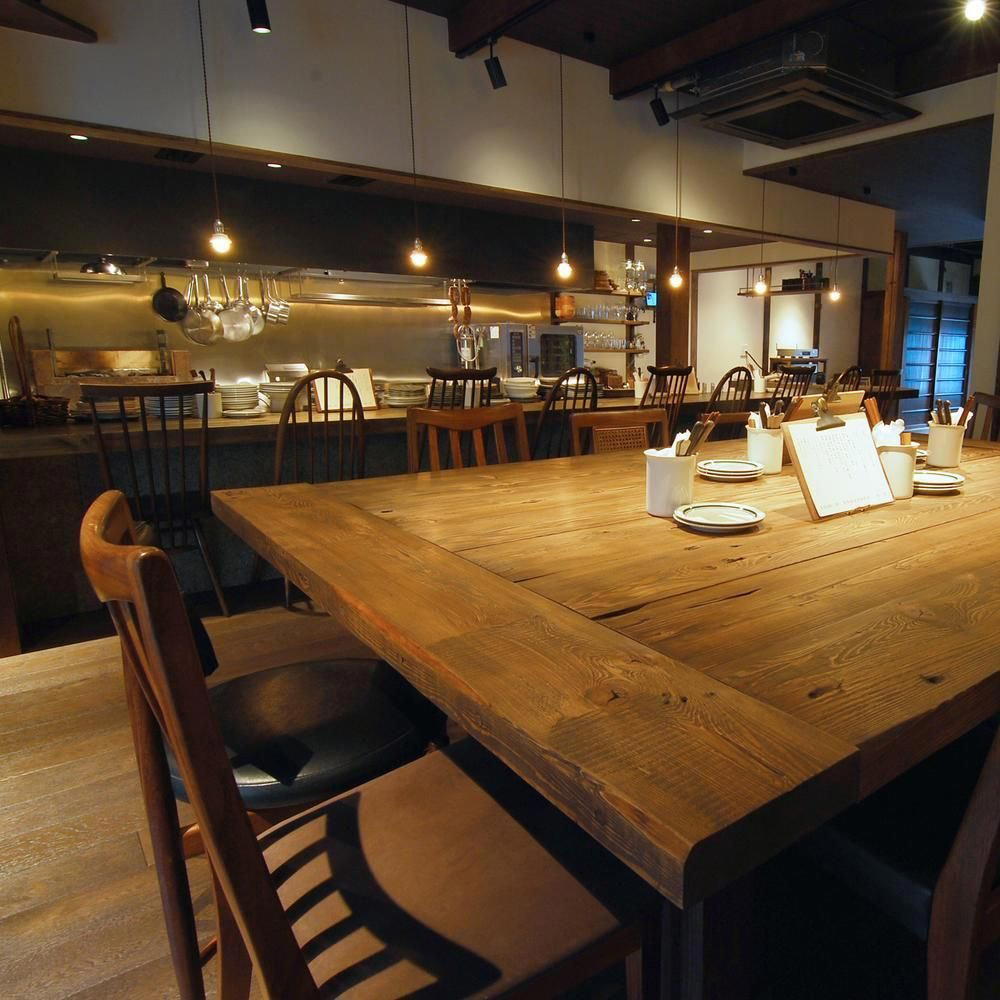
Where the Grill Does the Talking
Kamigyo Ward sits north of Kyoto's central grid, away from the tourist compression of Gion and Nishiki Market. On Sambongi-dori, the street itself gives Sambongi Shoten its name, and the second half, shoten, meaning shop, signals the operating principle: a place where you can find almost anything. That framing is not incidental. In Japan, the izakaya has always functioned as a social equaliser, somewhere colleagues decompress after work, friends settle into a long evening, and strangers share a counter with the easy familiarity that good drink and smoke tend to produce. Sambongi Shoten works within that tradition, then quietly sidesteps its genre boundaries.
The Izakaya as Social Architecture
The izakaya format has evolved considerably since its origins as a sake retailer that allowed drinking on the premises. Contemporary Kyoto operates across a wide spectrum, from the tourist-facing tachinomi bars around Pontocho to serious destination addresses that hold Michelin recognition. Sambongi Shoten occupies a specific position in that range: Bib Gourmand-recognised in both 2024 and 2025, priced at the ¥¥ mid-range tier, and structured around communal eating rather than the sequential formality of a kaiseki counter. Compare that positioning against Kyoto's upper tier, where addresses like Gion Sasaki or Ifuki operate at ¥¥¥¥ and demand a different kind of attention from the diner. The gap between those two registers is exactly where izakayas like this one function leading: no fixed ceremony, no prescribed pace, but no absence of seriousness either.
The social logic of the izakaya matters here. Dishes arrive when they are ready, the table accumulates small plates and skewers at its own rhythm, and the drinks keep pace with the conversation rather than the other way around. That format, compared with the structured progression of kaiseki or even the ordered arc of a tasting menu at somewhere like HAJIME in Osaka, is more improvisational. It asks more of the diner and gives more back in return.
The Charcoal Grill at the Centre
Menu at the restaurant deliberately refuses to anchor itself to one tradition. Japanese, French, and Chinese cooking all appear, which in a lesser kitchen would produce incoherence. What holds it together is the charcoal grill, which operates as the kitchen's organising logic rather than one station among many. Beef, duck, venison, and mutton pass through charcoal heat with what the venue describes as a delicately controlled flame, a claim that carries weight in the context of Japanese grill culture, where temperature discipline and proximity to heat are treated with the same rigour applied to knife work.
Charcoal grilling in Japan draws from multiple streams: the yakitori tradition, the robatayaki format common in Hokkaido, and the more refined binchotan-driven cooking associated with kaiseki-adjacent kitchens. The use of game proteins alongside beef pulls the grill program away from the standard izakaya repertoire, which tends toward chicken, pork belly, and seasonal vegetables. Venison and mutton in particular suggest a kitchen thinking about protein sourcing and flavour register beyond the defaults. For context on how Kyoto's dining scene handles cross-genre ambition at the mid-range tier, it is worth comparing the restaurant against Berangkat and Nonkiya Mune, both of which occupy adjacent positions in the city's informal dining spectrum.
The Drinks List as Editorial Position
An izakaya's drinks list is as much a statement of intent as its menu. At the restaurant, the wine program leans toward organic producers, and the sake selection focuses on bottles served warm. Both choices are worth reading carefully. Organic wine in a Kyoto izakaya context signals alignment with a younger generation of Japanese sommeliers and bar operators who have been reshaping the country's wine conversation since roughly 2015, prioritising natural fermentation and minimal intervention over brand recognition. That approach sits close to the sensibility found at Eitaroya and distinguishes the restaurant from the conventional izakaya where beer and high-ball whisky dominate without editorial curation.
The warm sake choice is equally deliberate. In Japan, the preference for atsukan, sake served at refined temperatures, fell out of fashion through the 1990s and 2000s as cold and room-temperature styles gained prestige. A list curated specifically around warm-service sake is a considered counter-position, one that suits the char-heavy grill menu and reinforces the comfort-over-ceremony register of the whole operation. For those building a longer Kyoto drinks itinerary, our full Kyoto bars guide covers the city's broader range of sake and wine destinations.
Kamigyo Ward and the Broader Kyoto Context
Kyoto's dining scene is too often reduced to its kaiseki axis, a set of formal Japanese restaurants operating at ¥¥¥¥ price points and requiring months of advance planning. That tier produces restaurants of genuine consequence, places like Nijo Aritsune and Komedokoro Inamoto, but it represents only one stratum of how the city actually eats. Kamigyo Ward's northern position places it closer to residential Kyoto than to the heritage-tourism corridor, and the izakayas and informal restaurants operating there tend to serve a local clientele first.
Planning Your Visit
Address: 478 Shincho, Kamigyo Ward, Kyoto, 602-0866, Japan. Cuisine: Izakaya, cross-genre menu with charcoal grill focus. Price range: ¥¥ (mid-range). Awards: Michelin Bib Gourmand 2024 and 2025.3 from 103 reviews. Dress: No confirmed dress code; smart-casual is consistent with the izakaya format at this price tier.
Price and Recognition
Comparable venues nearby, for context on price, style, and recognition.
| Venue | Cuisine | Price | Awards | Notes |
|---|---|---|---|---|
| Sambongi ShotenThis venue — the venue you are viewing | Kamigyō, Char-grill Izakaya | $$$ | Bib Gourmand | Not listed |
| Kikunoi Mugesambo | Shimogyō, Kaiseki Bento Cafe | $$$ | Bib Gourmand | Not listed |
| Vegan Ramen UZU | Nakagyō, Modern Vegan Ramen | $$$ | Bib Gourmand | Not listed |
| Torisho sai | Nakagyō, Premium Yakitori Omakase | $$$ | Michelin Plate | Not listed |
| COPPIE | Not listed | $$$ | Michelin Plate | Shimogyō, Modern Japanese Izakaya with Italian Fusion |
| Hiiragitei | Higashiyama, Kyoto Yakitori & Obanzai | $$$ | Bib Gourmand | Not listed |
Recognition history
Dated appearances from independent guides and award organizations, with the underlying list record or original source where available.
Michelin Bib Gourmand
Michelin
Michelin Bib Gourmand
Michelin
Michelin Bib Gourmand
Michelin
Continue exploring
More in Kyoto
Restaurants in Kyoto
Browse all →
Bars in Kyoto
Browse all →
Hotels in Kyoto
Browse all →
Wineries in Kyoto
Browse all →
At a Glance
- Cozy
- Intimate
- Solo
- Casual Hangout
- Open Kitchen
- Natural Wine
- Sake Program
- Natural Wine
Current opening hours
- Monday
- Closed
- Tuesday
- 5–11 PM
- Wednesday
- 5–11 PM
- Thursday
- 5–11 PM
- Friday
- 5–11 PM
- Saturday
- 5–11 PM
- Sunday
- 4–9 PM
Hours can change for holidays and private events. Last verified .
Cozy izakaya-style setting with counter seating and a focus on primitive grilling techniques.