Google: 4.7 · 777 reviews
Salt Shed

Salt Shed on Church Street sits opposite the Royal Pavilion and traces a direct line from Brighton's festival and market circuit to a permanent address. The kitchen centres on open-flame cooking, hand-shaped patties, and the stripped-back philosophy of fire, meat, and beer. It is a useful marker of how street-food culture graduates into bricks-and-mortar dining in a city that rewards exactly that kind of progression.
 Discover on Pearl
Pearl is the En Primeur Club membership app — saves, bookings, and concierge access live there. Same editors, same standards.
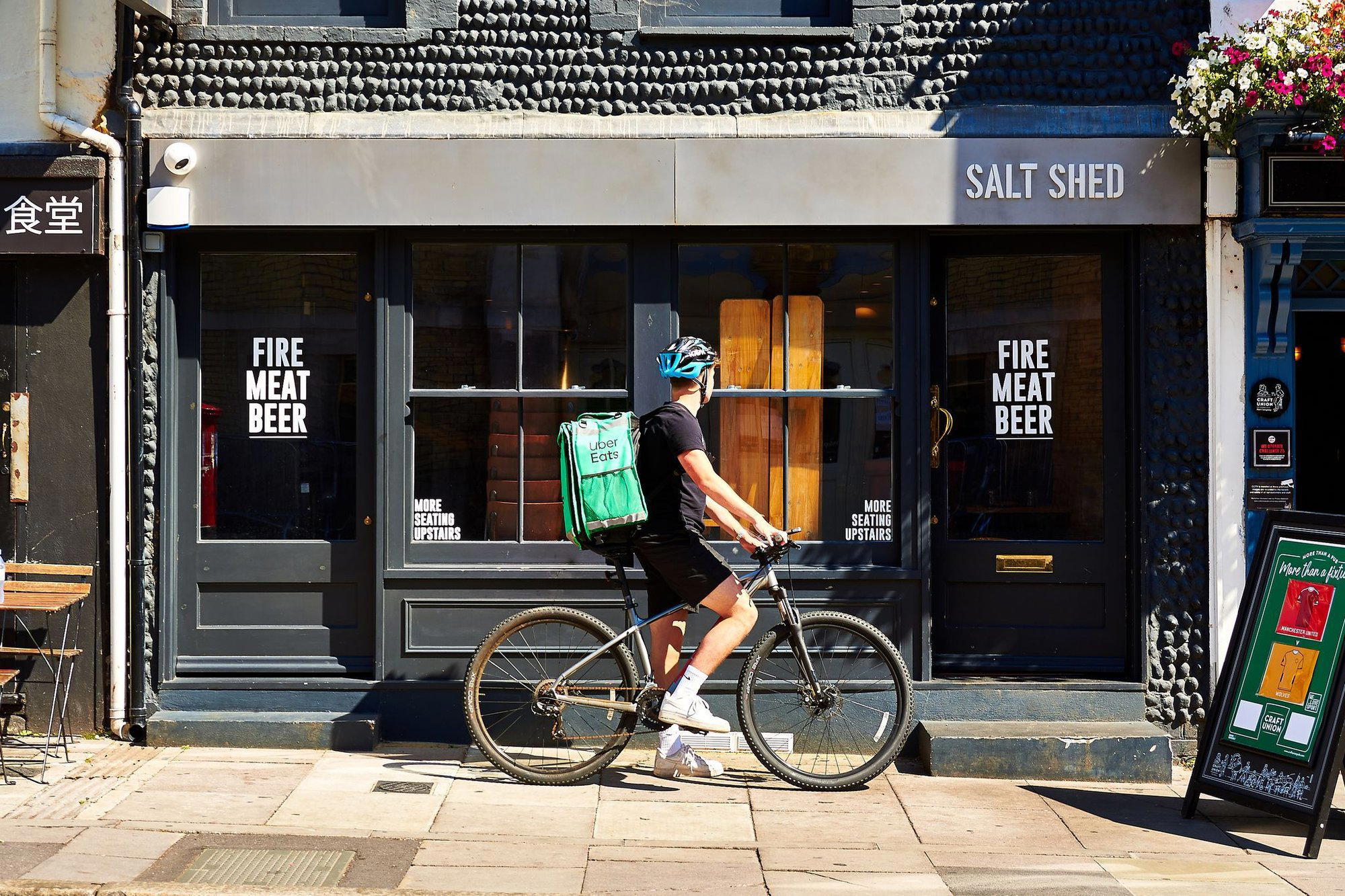
Fire on Church Street: What Salt Shed Represents in Brighton's Dining Progression
The building that houses Salt Shed sits on Church Street, directly opposite the Royal Pavilion, which means you arrive with a fairground confection of Regency domes at your back and the smell of woodsmoke ahead of you. That juxtaposition is not incidental. Brighton has long run two parallel food cultures: the heritage-formal and the aggressively informal, the latter drawing energy from the city's festival circuit, its street-food markets, and a population that treats eating outdoors in October as a point of local pride. Salt Shed belongs firmly to the second tradition, and its Church Street address is less a gentrification of that tradition than a consolidation of it.
Understanding Salt Shed means understanding how British barbecue culture has moved in the past decade. What once existed almost entirely in the realm of weekend pop-ups, converted shipping containers, and festival meadows has increasingly found permanent homes in city centres. That transition tends to preserve the directness of the format — open fire, short menus, communal seating — while adding the consistency that only a fixed kitchen allows. Salt Shed's own history follows that arc closely: from market and festival stalls to a full restaurant, arriving on Church Street as the Brighton flagship of an operation that built its reputation before it built its dining room.
The Sourcing Logic Behind Open-Flame Cooking
Barbecue at this level is an ingredient-first discipline in a way that more technically elaborate kitchens sometimes obscure. When the cooking method is a flame and the menu is built around meat, there is nowhere to hide a weak supply chain. The quality of the patty, the fat content, the grind, the way the beef responds to direct heat , these variables are audible in every bite in a way that a sauce-finished dish can conceal. Salt Shed's hand-shaped patties cooked over open flame sit inside a broader British conversation about sourcing transparency that has accelerated since the early 2010s, when a generation of chefs and operators began making supply chains a selling point rather than a backstage detail.
That conversation now runs across price tiers, from the fine-dining sourcing narratives you find at places like Moor Hall in Aughton or L'Enclume in Cartmel down to the casual end where Salt Shed operates. The commitment to hand-shaped, open-flame preparation signals a position in that conversation: that the ingredient and the technique carry the plate, and that intervention between source and fire should be minimal. It is a philosophy better suited to the burger format than almost any other, because the burger is a dish where sourcing quality is immediately legible to the person eating it.
Atmosphere as Part of the Offer
The interior retains the communal, street-food-adjacent energy that the operation brought in from its outdoor origins. Salt Shed describes its own register as fire-and-meat culture, and the shorthand it uses , fire, meat, beer , is an accurate summary of the experience's priorities. This is not a venue where the room aspires to formality, nor one where the service architecture mimics the conventions of fine dining. The distance between Salt Shed and, say, The Ledbury in London or Restaurant Andrew Fairlie in Auchterarder is not just one of price point but of intent: the communal table and the smell of the grill are as deliberately constructed as any tasting-menu choreography.
That directness tends to appeal across a wider demographic than tasting-menu formats, which is one reason the street-food-to-restaurant pipeline has proven commercially durable. The format is self-selecting in useful ways: you come because you want fire-cooked meat and a cold beer, and that expectation is met without complication. Brighton's dining scene, covered more broadly in our full Brighton restaurants guide, supports precisely this kind of confident informality alongside more technically ambitious kitchens. The two registers rarely compete directly; they serve different occasions and different appetites.
Context: Brighton's Casual-End Evolution
Brighton's food scene has shifted in a direction that rewards operators who come with a track record rather than a concept document. The city's market and festival infrastructure , events like Brighton Food Festival and the weekend market circuit , functions as a proving ground where formats are tested, audiences built, and supply relationships established before permanent premises are even considered. Salt Shed's path from stalls to Church Street is a case study in how that infrastructure works, and the Royal Pavilion location gives the resulting restaurant a footfall and visibility that reinforce the legitimacy earned in those earlier years.
Casual dining in Brighton has also benefited from the city's particular relationship with beer culture. The growth of independent breweries and taprooms across Sussex has created a pairing culture at the informal end of the market that supports a meat-and-beer positioning in ways that might not land as cleanly in other cities. For a broader look at where to drink around that scene, our full Brighton bars guide covers the relevant addresses. The city also warrants exploration beyond its restaurants, and both our full Brighton hotels guide and our full Brighton experiences guide are useful planning tools for a longer stay.
An Honest Assessment
The available evidence on Salt Shed includes a notable qualifier: the operation reached a quality ceiling during its time at Boxpark Shoreditch that the Brighton restaurant has not consistently matched. That kind of candid comparative note is worth taking seriously. It does not disqualify the venue from the recommendation set, but it does place it accurately within its own trajectory. The burger is a competent, pleasurable expression of open-flame cooking, and the Church Street address gives it the setting and footfall it needs to consolidate what the stall years built. Whether the kitchen closes the gap on its own earlier standard is an open question.
For context on what the highest tier of British restaurant cooking looks like, the contrast with The Fat Duck in Bray, hide and fox in Saltwood, or Midsummer House in Cambridge is instructive precisely because Salt Shed is not trying to occupy that space. Its peer set is the casual barbecue and burger category, and within that bracket it has the sourcing discipline and format clarity to make a credible case. If you are planning a broader itinerary that includes formal dining, Gidleigh Park in Chagford, Opheem in Birmingham, and Le Manoir aux Quat' Saisons in Great Milton all represent different registers of the same British dining conversation.
Planning Your Visit
Salt Shed sits at 111 Church Street, Brighton BN1 1UD, directly opposite the Royal Pavilion, which makes it direct to combine with an afternoon in the Lanes or North Lace. The location is walkable from Brighton station in under fifteen minutes. No booking information is publicly confirmed for the Brighton site, so arriving early , particularly on weekend evenings when the Church Street area draws consistent foot traffic , is the sensible approach. The format and price positioning make it a realistic option for most group sizes and compositions.
In Context: Similar Options
These are the closest comparables we have in our database for quick context.
| Venue | Cuisine | Price | Awards | Notes |
|---|---|---|---|---|
| Salt Shed | Salt Shed – Brighton The burger at Salt Shed is a tribute to bold grill craft an… | This venue | ||
| The Ledbury | Modern European, Modern Cuisine | ££££ | Michelin 3 Star | Modern European, Modern Cuisine, ££££ |
| Sketch, The Lecture Room and Library | Modern French | ££££ | Michelin 3 Star | Modern French, ££££ |
| CORE by Clare Smyth | Modern British | ££££ | Michelin 3 Star | Modern British, ££££ |
| Restaurant Gordon Ramsay | Contemporary European, French | ££££ | Michelin 3 Star | Contemporary European, French, ££££ |
| Dinner by Heston Blumenthal | Modern British, Traditional British | ££££ | Michelin 2 Star | Modern British, Traditional British, ££££ |
Continue exploring
More in Brighton
Restaurants in Brighton
Browse all →
Bars in Brighton
Browse all →
Hotels in Brighton
Browse all →
At a Glance
- Lively
- Trendy
- Energetic
- Casual Hangout
- Group Dining
- Celebration
- Open Kitchen
- Terrace
- Craft Cocktails
- Beer Program
- Waterfront
- Street Scene
Casual beachfront atmosphere with sunny outdoor patio seating, lively service, and a relaxed vibe enhanced by sea views and good music.