Sal's Pizza Store
This listing is retired after a June 2026 status audit found the place inactive at its stored address.
- Address
- 305 Court St, Brooklyn, NY 11231
- Directions
- Get directions
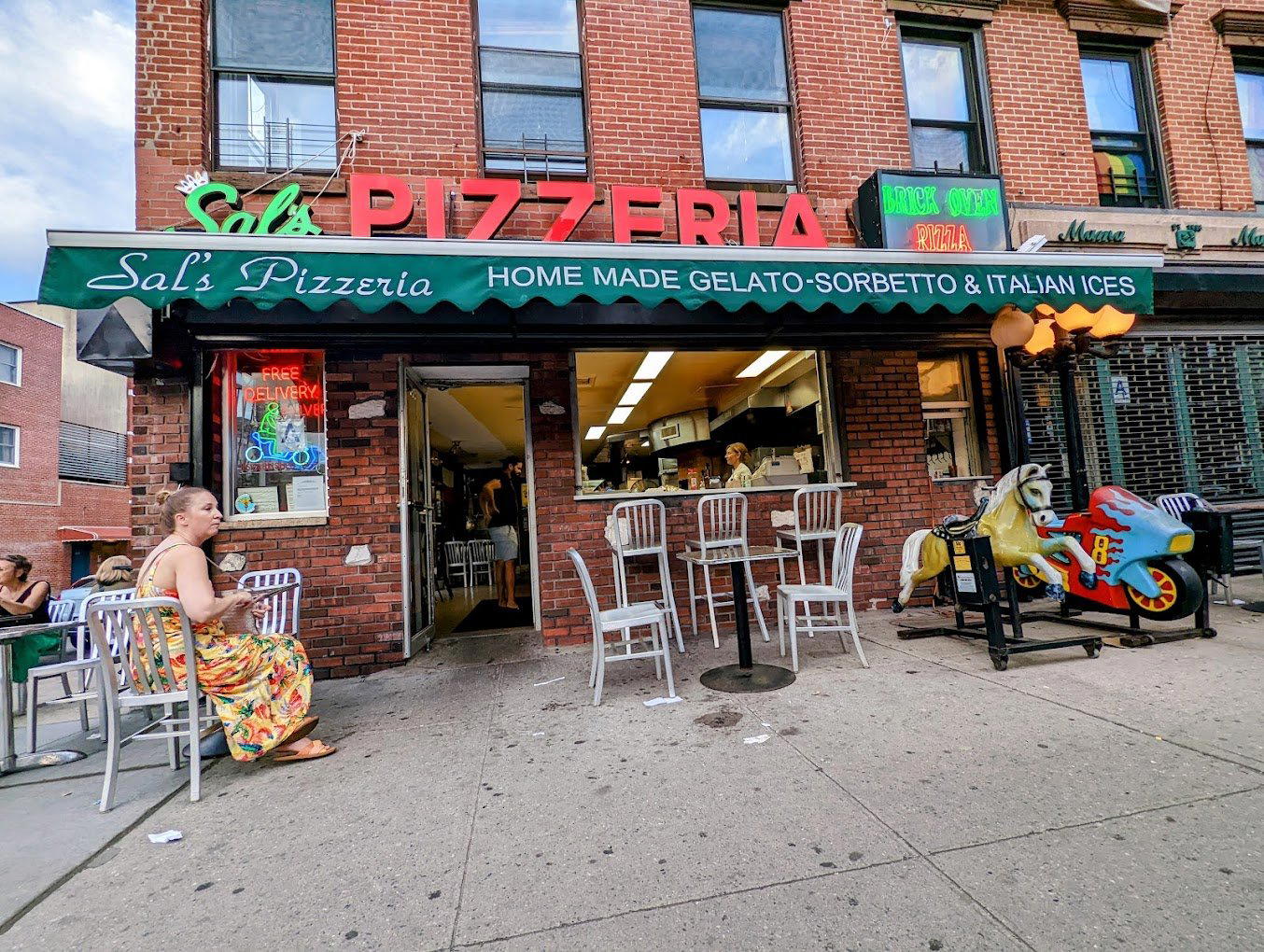
Court Street and the Brooklyn Slice Tradition
What there is, on streets like Court Street in Carroll Gardens, is a set of neighbourhood counters where regulars decide the verdict long before any critic arrives. Sal's Pizza Store, at 305 Court St, is a classic New York pizza counter in Brooklyn priced around $15 per person, and it sits inside that tradition: a neighbourhood fixture measured by the consistency of the product and the loyalty of the zip code around it.
Carroll Gardens is a useful lens for understanding what this kind of pizza counter represents. The neighbourhood spent decades as a working-class Italian-American enclave before gentrification accelerated in the 2010s. That demographic history matters for the food: the pizza shops that survived the transition did so because their product was already embedded in the street's daily rhythm. Newcomers arrive, assess the queue, and often defer to what the person ahead of them is ordering. That is the operating logic of a true neighbourhood slice shop, and it is distinct from the destination-dining model that defines somewhere like Le Bernardin or Masa across the river in Manhattan.
Where the Ingredients Come From, and Why That Matters
The ingredient-sourcing question sits at the centre of any serious pizza conversation in New York. The city's best-regarded slice shops have always operated on a version of the same principle: the quality of the dough, the tomato, and the cheese determines the ceiling of what a pizza can be, regardless of how the oven is managed or how long the cook has been behind the counter. New York's pizza identity was built partly on the mythology of local water — the mineral composition of the city's tap water credited, rightly or otherwise, with the particular texture of a properly made New York crust.
Beyond water, the sourcing chain for a Brooklyn slice shop runs through wholesalers serving the five boroughs, with a smaller tier of operators making direct relationships with regional dairy producers for their mozzarella or importing San Marzano tomatoes for the sauce base. These decisions are rarely announced on a menu board. They show up in the pull of the cheese, the acidity of the sauce, and whether the crust holds its structure under the weight of the toppings. At a neighbourhood counter like Sal's, those choices compound over years into a product the local customer base has come to expect. That calibration, the regulars knowing exactly what they are getting, is its own form of quality signal.
This sourcing-driven approach to pizza is less visible in the broader food media conversation than the farm-to-table sourcing frameworks applied at restaurants like Blue Hill at Stone Barns in Tarrytown or Single Thread Farm in Healdsburg, where supply chain transparency is central to the editorial identity. But the underlying discipline is not categorically different: both models assume that what goes into the product shapes what comes out.
Carroll Gardens in the Broader Brooklyn Context
Positioning Sal's within Brooklyn's food geography requires some precision. Court Street runs through a stretch of the borough that includes Carroll Gardens, Cobble Hill, and the edge of Boerum Hill, a corridor that has always supported a density of casual Italian-American food. The pizza counter here competes laterally with other neighbourhood establishments rather than vertically against destination restaurants. Its peers are defined by geography and price point, not by the kind of award architecture that places somewhere like Per Se or Atomix in a separate competitive tier entirely.
That lateral competition is actually instructive. In a borough with many pizza options, the shops that maintain a loyal local following do so through something other than novelty. The opening of a new wood-fired Neapolitan concept in the neighbourhood does not necessarily erode the customer base of an established slice counter, because the two are meeting different needs at different price points and different moments of the day. The slice counter serves the lunch rush, the late-evening walk-home, the casual weeknight. It is infrastructure as much as it is dining, which is precisely why the sourcing decisions behind it carry weight.
What Regulars Order
At a neighbourhood pizza counter of this type, the ordering pattern among regulars tends to cluster around the plain slice and the Sicilian, with pepperoni as the dominant add-on. These are not accidental preferences: they are a form of quality testing. A plain cheese slice strips the product to its components, dough, sauce, cheese, heat management, with nowhere to hide. The regulars who have been coming to a specific counter for years are, in effect, running a continuous informal audit of the kitchen's consistency. Any degradation in the tomato base or the cheese pull registers immediately to someone who has ordered the same slice two hundred times.
For visitors arriving from outside the neighbourhood, the same logic applies: order the plain slice first. It tells you more about the operation than any specialty topping combination will.
Getting a Spot: How the Counter Works
The walk-in, pay-at-the-counter format of a New York slice shop is the functional opposite of the reservation-dependent dining experiences that define New York's upper tier. There is no booking system, no waitlist, and the dress code is casual. Demand is managed in real time by counter turnover, which at a well-run slice shop is rapid by design. The comparison to a venue like Jungsik New York, where the tasting menu format creates a structured, appointment-based experience, is not a value judgment, it is a description of two entirely different operating models serving two entirely different functions in the city's food system. Brooklyn's pizza counters exist precisely because the city needs places where access is not gated by planning ahead.
Timing matters for a different reason at a slice shop: freshness of the slice. A counter that turns over its pies quickly serves a product at a different quality level than one where slices sit under a heat lamp for an extended period. Peak lunch hours and early evening tend to produce the recently baked product at a busy neighbourhood counter. That is the logistical intelligence that matters here, not a reservation window.
Style and Standing
Comparable venues nearby, for context on price, style, and recognition.
| Venue | Cuisine | Price | Notes |
|---|---|---|---|
| Sal's Pizza StoreThis venue — the venue you are viewing | Classic New York Pizza | $ | Not listed |
| Vinnie's Pizzeria | Classic New York Pizza | $ | Williamsburg |
| Botte Brooklyn | Roman-Style Italian Pizzeria & Trattoria | $$ | Downtown Brooklyn-DUMBO-Boerum Hill |
| Sofia's of Little Italy | Italian Trattoria | $$ | SoHo-Little Italy-Hudson Square |
| Concrete Sicilian Eatery | Authentic Sicilian Eatery | $$ | Bushwick (West) |
| PizzArte | Authentic Neapolitan Pizza | $$ | Midtown-Times Square |
Continue exploring
More in New York City
Restaurants in New York City
Browse all →
Bars in New York City
Browse all →
Hotels in New York City
Browse all →






At a Glance
- Classic
- Casual Hangout
- Family