Our verdict
Located on Rathausstraße in Hamburg's civic core, Salam sits within walking distance of the city's most concentrated stretch of fine dining. The address places it in direct conversation with Hamburg's broader restaurant scene, where Middle Eastern and North African dining traditions have carved a growing niche alongside the city's established European fine-dining circuit. A considered choice for visitors tracking the city's evolving culinary geography.

Pearl is the En Primeur Club membership app — saves, bookings, and concierge access live there. Same editors, same standards.
- Address
- Rathausstraße 12, 20095 Hamburg, Germany
- Phone
- +494940336539
- Hours
- Mon–Sat 11 AM–5 PMSun Closed
- Website
- salam-city.de
- Directions
- Get directions
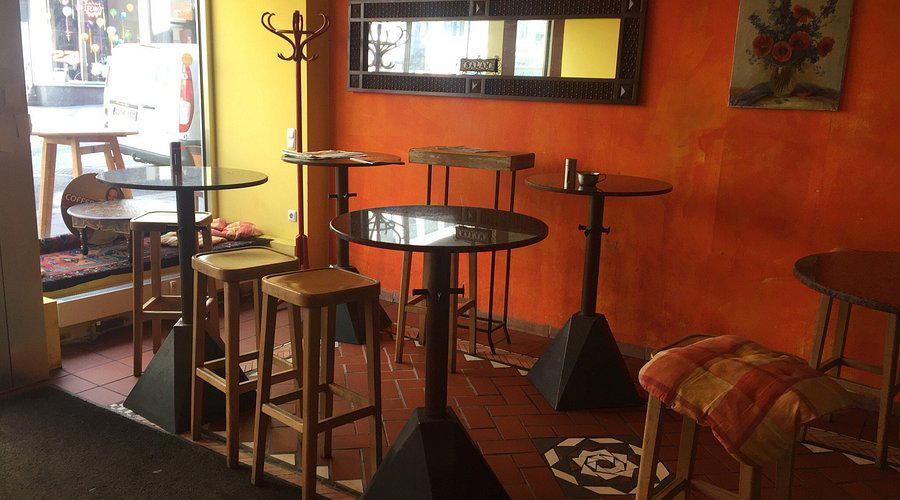
A Street That Signals Its Own Ambitions
Rathausstraße 12 is not a restaurant address that announces itself quietly. The street runs through the administrative and civic heart of Hamburg, flanked by the Rathaus and the Alster arcades, and the foot traffic here skews toward the purposeful rather than the accidental. Arriving at Salam, you are already inside one of the city's most legible neighbourhoods: sandstone facades, the low sound of the Alster's fountains carried on the wind, the particular grey-gold light that Hamburg produces in the late afternoon when cloud cover thins. The physical context sets a specific kind of expectation before a single dish arrives.
Hamburg's inner-city dining scene has consolidated around a handful of streets and micro-neighbourhoods over the past decade, with the area around the Rathaus and Jungfernstieg forming a distinct cluster. This is not the experimental fringe of the city, where concepts launch and close inside eighteen months. It is, instead, the part of Hamburg where restaurants tend to have made a considered bet on permanence. Salam's position on Rathausstraße places it inside that logic.
Where Salam Sits in Hamburg's Broader Dining Pattern
Hamburg's fine-dining circuit is anchored by a small number of establishments operating at the very best of the price and recognition hierarchy. Below that tier, a wider band of restaurants operates across modern European, Mediterranean, and creative formats, with venues like bianc, Lakeside, and 100/200 Kitchen each staking out distinct editorial positions within that band.
Salam's address and name both gesture toward a different tradition. The name carries clear associations with Arabic greeting culture and the broader hospitality ethos of the Levant and North Africa, regions where the act of receiving a guest is treated as something close to a moral obligation. In German cities, restaurants working within that tradition have tended to occupy either the very casual end (falafel counters, shawarma stands) or, in a smaller number of cases, a more considered middle register where technique and sourcing receive genuine attention. The question Salam implicitly asks of the Hamburg scene is which of those registers it inhabits.
For context on how cities elsewhere in Germany have handled the same question, it is useful to look at Berlin, where CODA Dessert Dining demonstrated that format innovation at a small independent scale can generate Michelin recognition. The pattern repeats across the country: in Wolfsburg, Aqua has built a three-star reputation through sustained technical discipline; in Munich, JAN has carved a distinct identity through a specific regional and philosophical lens. The broader German fine-dining circuit, which also includes Schwarzwaldstube in Baiersbronn, Vendôme in Bergisch Gladbach, ES:SENZ in Grassau, Victor's Fine Dining by Christian Bau in Perl, Waldhotel Sonnora in Dreis, Schanz in Piesport, and Bagatelle in Trier, rewards restaurants that commit to a clear identity rather than hedging across multiple audiences. That is the environment in which Salam competes for attention.
The Sensory Register of the Address
The editorial angle that matters most for a restaurant on this particular street is atmospheric coherence. The Rathaus quarter produces a specific sensory environment: the sound profile is urban but not aggressive, the light in summer arrives at a low angle through the arcade colonnades, and the street itself is wide enough that there is rarely the claustrophobia of Hamburg's narrower Altstadt lanes. A restaurant that understands its physical context uses these conditions rather than fighting them. The leading venues in this part of the city tend to create interiors that acknowledge the weight of the surrounding architecture without mimicking it, offering contrast rather than competition.
North African and Levantine restaurant traditions bring their own sensory vocabulary: warm spice notes that register in the approach before the menu is opened, lighting schemes that tend toward amber and low rather than the cool precision of Scandinavian-influenced interiors, the particular acoustic softness that comes from fabric-heavy rooms. Whether Salam deploys these conventions or works against them is, in the absence of detailed venue data, a question leading answered by visiting. What the address guarantees is a physical setting that rewards a considered response.
Planning a Visit: Salam in Comparison
Hamburg's inner-city restaurant cluster around Rathausstraße and Jungfernstieg is accessible via the U-Bahn lines serving Rathaus and Jungfernstieg stations, both within a short walk. The neighbourhood is also reachable from the main train station (Hamburg Hauptbahnhof) on foot in under fifteen minutes. For international visitors arriving via Hamburg Airport, the S-Bahn S1 line connects directly to the city centre. Compared to Hamburg's other fine-dining clusters, such as the Eppendorf neighbourhood favoured by some of the city's more residential-scale restaurants, the Rathaus area skews toward lunch and early evening business, which affects reservation availability at peak times.
| Venue | Format | Price Tier | Location |
|---|---|---|---|
| Salam | Not confirmed | Not confirmed | Rathaus quarter |
| The Table Kevin Fehling | Creative tasting menu | €€€€ | HafenCity |
| bianc | Modern Mediterranean | €€€€ | Inner city |
| Lakeside | German, lakeside setting | €€€€ | Outer Alster |
For a broader orientation to Hamburg's restaurant offering, the EP Club Hamburg restaurants guide maps the full city across price tiers and cuisine types. Internationally, the structural questions Salam raises about where Middle Eastern and North African traditions sit within a city's premium dining circuit are ones that venues like Le Bernardin in New York and Atomix in New York have addressed, in different culinary registers, by committing to a specific technical and cultural identity and holding it consistently across seasons.
Frequently asked questions
Where do I go for Salam?
Salam is located at Rathausstraße 12, 20095 Hamburg, Germany, Hamburg.
Is Salam a good option for Middle Eastern cuisine in central Hamburg?
The Rathaus quarter is Hamburg's administrative and commercial core, and restaurants serving North African or Levantine food at this address are rare rather than commonplace. Salam on Rathausstraße 12 sits within walking distance of the Rathaus and Jungfernstieg U-Bahn stations, making it one of the more accessible options in this cuisine category for visitors staying in the city centre. EP Club has not yet confirmed awards or critic recognition for the venue, so managing expectations against confirmed data is advisable.
How far ahead should I plan for Salam?
Restaurants in the Rathaus quarter draw a mixed crowd of Hamburg office workers at lunch and visitors in the evening, which means tables at credible spots fill faster than the neighbourhood's civic formality might suggest. A booking two to four days ahead is a reasonable baseline for weekday lunch; weekend evenings in this part of Hamburg warrant more lead time.
What's Salam best at?
The North African and Levantine tradition Salam references is at its strongest when handling slow-cooked preparations: braised proteins, spiced grain bases, and layered vegetable dishes that reward patience in the kitchen. Hamburg's restaurant scene around Rathausstraße is dominated by European formats, so a kitchen working this tradition at a civic-centre address occupies a relatively distinct position. Confirmed specifics on execution are not yet documented in EP Club's records.
Can Salam handle vegetarian requests?
North African and Levantine cuisines have deep vegetarian traditions built around chickpeas, lentils, fava beans, and cooked vegetable preparations that are structurally central to the cuisine rather than afterthoughts. A restaurant operating in this tradition at Rathausstraße 12 in Hamburg would draw on that foundation as a matter of course. Confirming specific dietary accommodations directly with the venue before visiting is still advisable.
Same-City Peers
Comparable venues nearby, for context on price, style, and recognition.
| Venue | Cuisine | Price | Notes |
|---|---|---|---|
| SalamThis venue — the venue you are viewing | Lebanese Street Food | $10–20 | Not listed |
| Falafelstern | Lebanese Falafel & Middle Eastern Street Food | $1–10 | Eimsbuttel |
| Diggi Smalls | Oriental Street Food & Halal Wraps | $10–20 | Rotherbaum |
| Kebab for Friends | Middle Eastern Kebab Shop | $10–20 | Alstertal |
| Erdapfel Hamburg | Vegetarian Stuffed Baked Potatoes (Kumpir) | $10–20 | Hamburg-Altstadt |
| Tiki Poke Bowl | Hawaiian Poke Bowls | $10–20 | Neustadt |
Continue exploring
More in Hamburg
Restaurants in Hamburg
Browse all →
Bars in Hamburg
Browse all →

Hotels in Hamburg
Browse all →
Wineries in Hamburg
Browse all →
Details
- Casual
- Casual Hangout
- A La Carte
- Vegetarian Friendly
Current opening hours
- Monday
- 11 AM–5 PM
- Tuesday
- 11 AM–5 PM
- Wednesday
- 11 AM–5 PM
- Thursday
- 11 AM–5 PM
- Friday
- 11 AM–5 PM
- Saturday
- 11 AM–5 PM
- Sunday
- Closed
Hours can change for holidays and private events. Last verified .
Simple bistro-style atmosphere focused on quality food.