Michelin Bib Gourmand
Our verdict
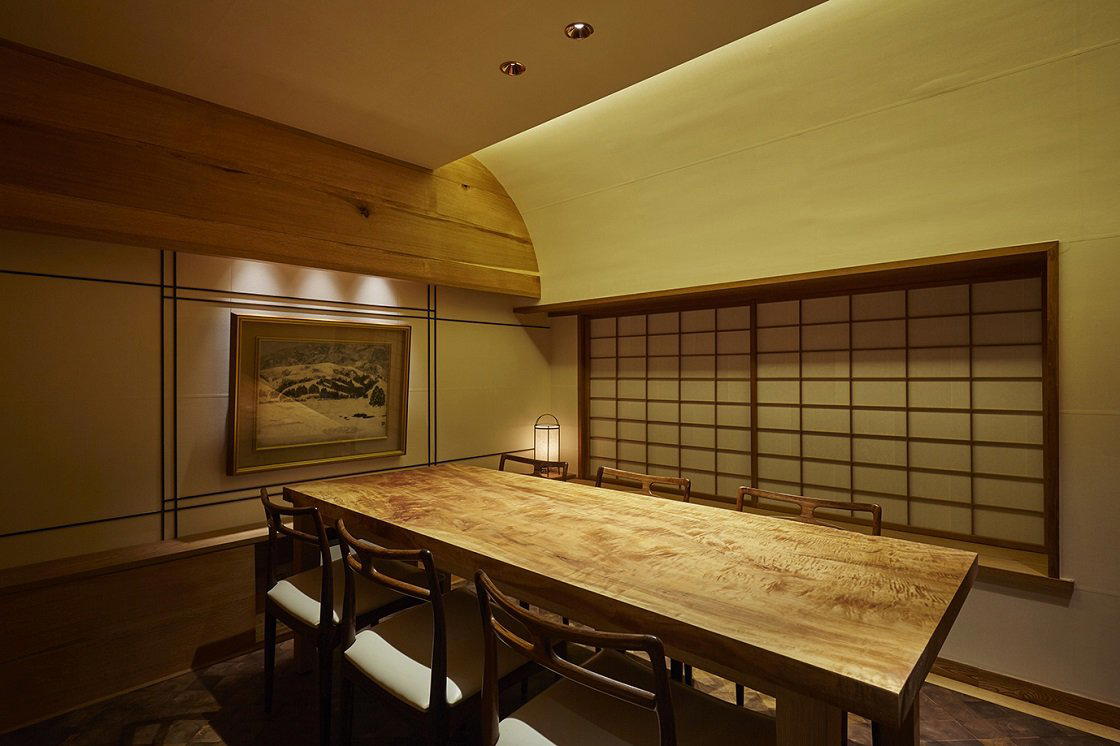
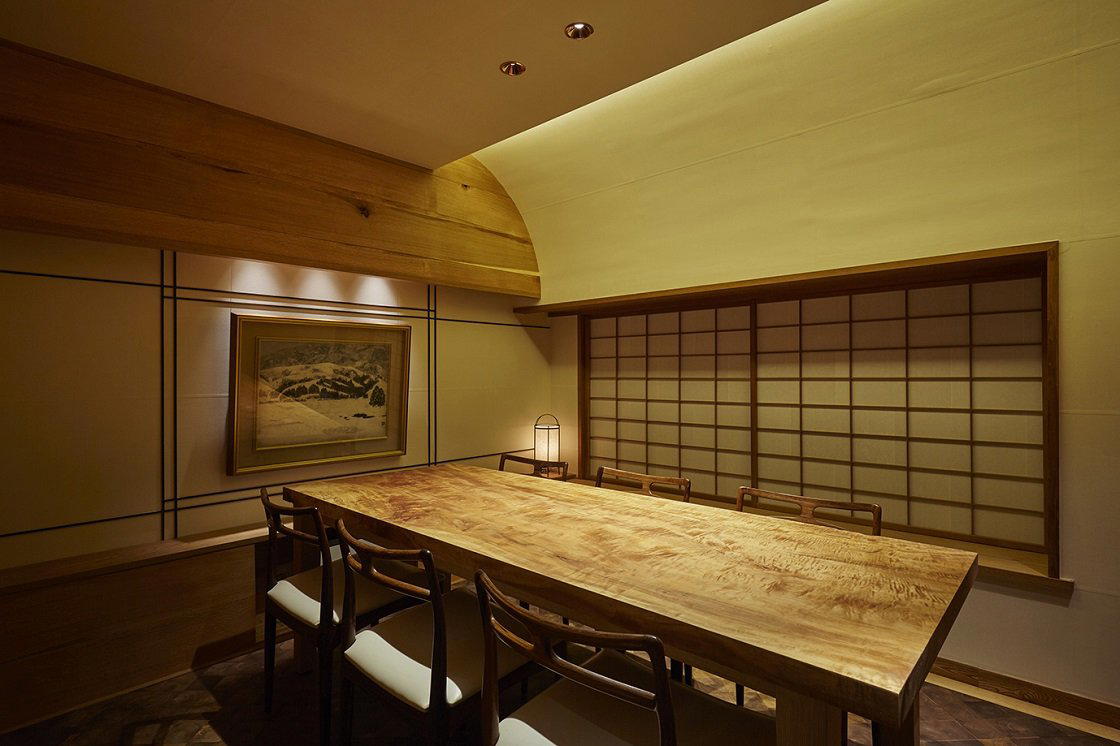
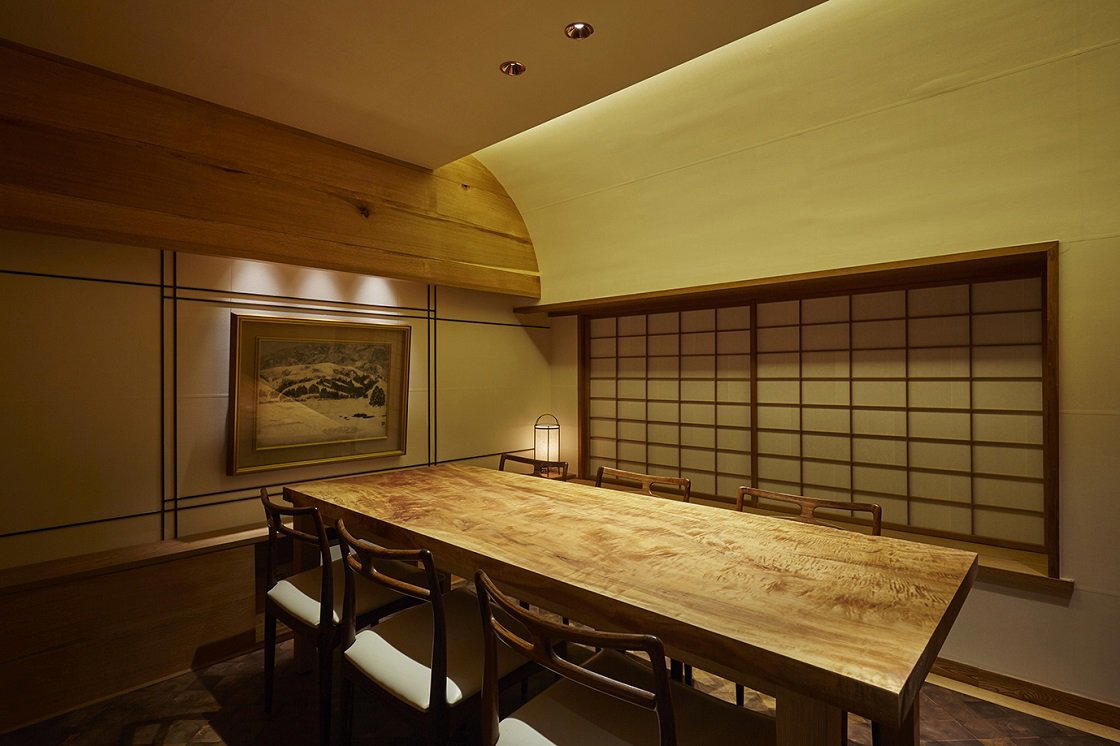
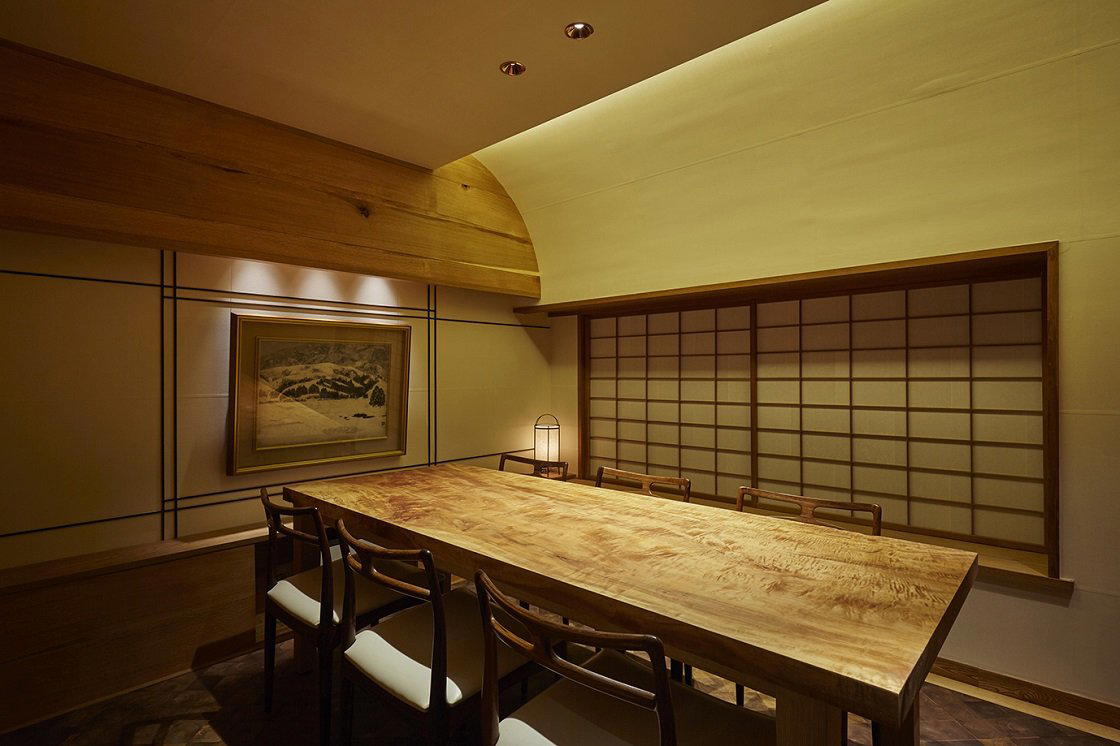
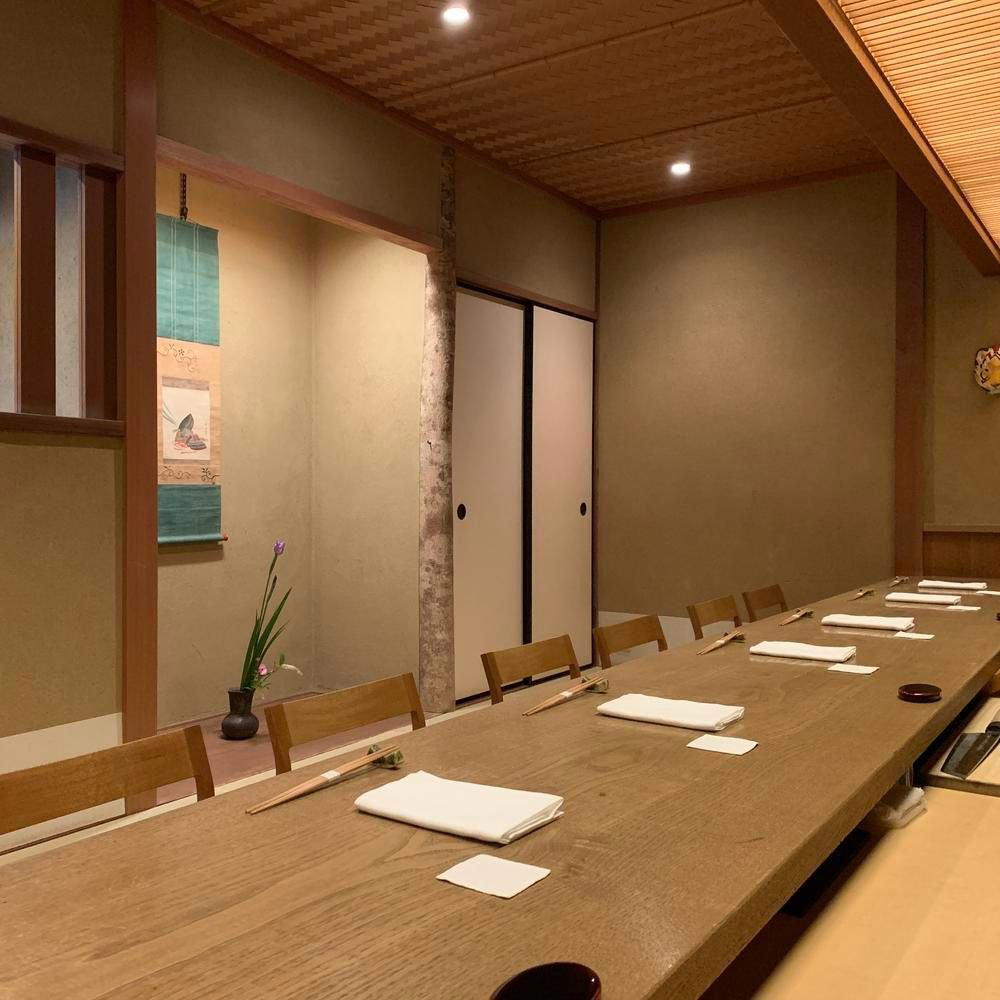
A Michelin Bib Gourmand izakaya in Tenjinbashi, Osaka, Sakeya Sakana Yoshimura seats at most three guests at a time, on some nights, just one. Owner Yoshimura Yasumasa runs a seafood-forward menu built to complement sake, with details like charcoal-toasted seaweed and bonito shaved to order signalling a kappo-level precision applied to pub-kitchen ingredients.

Pearl is the En Primeur Club membership app, where members save venues, book tables and use the concierge.
The menu
What to order
- Jellied conger eel broth
- Kombu-marinated shrimp
- Charcoal-grilled sardines
Three Seats, One Counter, No Shortcuts
Osaka's izakaya tradition has always operated at a different register from Tokyo's. Where the capital tends to favour vertical ambition, specialist wine bars, destination robatayaki, chef-table formats imported from Europe, Osaka's drinking-eating culture is more lateral, built on the principle that the leading food comes through the same door as the leading sake, without ceremony. Tenjinbashi, the long shotengai-anchored neighbourhood stretching north from Temma, sits at the core of that tradition. It is a district of working counters, neighbourhood loyalty, and almost no concessions to spectacle.
Sakeya Sakana Yoshimura operates inside that logic at an extreme end of the scale. The room holds three guests at maximum. On certain evenings it is reserved for a single diner. This is not an affectation borrowed from high-end omakase culture in Ginza or Shinjuku, where theatrically small counters have become a luxury signal in themselves. At this price tier, mid-range by Osaka standards, verified by consecutive Michelin Bib Gourmand recognition in 2024 and 2025, the constraint is structural: one owner, one kitchen, one programme of sake pairings, designed to work most precisely when the audience is smallest.
Osaka Informality, Kappo Discipline
The Bib Gourmand classification places Yoshimura in a specific position within Osaka's broader dining hierarchy. At the top of that hierarchy sit the kaiseki houses and the foreign-influenced tasting-menu rooms: venues like Taian and Kashiwaya in the ¥¥¥ tier, or the French-rooted progressive formats at Hajime and La Cime working at ¥¥¥¥. Yoshimura sits two full price tiers below those rooms, which in Osaka is less a statement about quality than about format. Bib Gourmand, by definition, rewards cooking that achieves a quality ceiling while holding to an accessible price, and in Osaka, that ceiling can be quite high.
The cooking here draws on kappo technique: the Japanese culinary tradition of preparing food in front of guests, adapting in real time to the sitting rather than running a fixed sequence. In a kappo izakaya, that discipline is applied to bar-snack formats rather than multi-course progression. The menu is seafood-dominated, structured to function as accompaniment to sake rather than as a meal with drinks appended. That distinction matters: in a sake-led programme, acid, fat, and umami are calibrated to the pour, not the other way around.
Degree of attention applied to individual components marks the gap between this type of operation and a standard neighbourhood izakaya. Seaweed is toasted over charcoal rather than served pre-packaged. Bonito is shaved to order, not from a container. Conger eel broth is set into jelly, a technique requiring time and stock quality that few one-person operations sustain. Deep-fried tofu arrives freshly made. None of this announces itself on arrival; it shows up in texture and temperature and the difference between a dish that was prepared with margin and one that was not.
Osaka vs. Kyoto: Two Models of Refinement
Editorial angle on a place like this is leading understood through the contrast with Kyoto's approach to the same basic format. Kyoto's drinking-eating culture, at every tier from machiya wine bars to sake-specialist izakaya like Berangkat, tends toward quiet presentation, seasonal restraint, and a certain formalism even in informal settings. Refinement in Kyoto is visible, in the tableware, the room temperature, the pace. It is a model shaped by proximity to kaiseki and by a tourism infrastructure that has trained visitors to look for it.
Osaka's refinement is often invisible in exactly the same way Yoshimura's is. The charcoal-toasted seaweed does not arrive with an explanation. The jellied broth is not plated for drama. The skill is in the doing, not the display. This is a meaningful difference in hospitality philosophy: Osaka's leading small operators tend to assume a guest who notices, rather than a guest who needs to be told. For a comparison across the Kansai region, Gion Sasaki in Kyoto represents the formal end of that spectrum, while akordu in Nara shows how a neighbouring city applies its own set of influences to the same seasonal ingredient base.
The Tokyo comparison is equally instructive. Counter-format restaurants in Tokyo, including Harutaka in the sushi category, operate with booking systems, waiting lists, and formalised guest management. A three-seat kappo izakaya in Tenjinbashi does not map to that infrastructure. It exists, and has earned back-to-back Michelin recognition, inside Osaka's parallel system of personal recommendation, neighbourhood knowledge, and return custom. Google's average across 29 reviews reflects a small, loyal audience rather than a mass-appeal tourist draw, a ratio that tells its own story about who the venue is actually serving.
Where It Sits Among Osaka's Izakaya Tier
Within the Osaka izakaya category, the comparison set for Yoshimura includes operations that apply similar care at similar price points. Benikurage, Jizakeya Iwatsuki, Izakaya Tokitame, Daidokoro Kamiya, and Kannomiho each represent distinct approaches to the izakaya format at the mid-range tier. What distinguishes Yoshimura within that set is the combination of maximum capacity, three seats, not twenty, and sustained Michelin recognition in two consecutive years. That combination is unusual: Bib Gourmand tends to reward accessible volume as much as quality. Achieving it at a format this small suggests a level of consistency that is difficult to maintain and easy to lose.
For wider regional context, Goh in Fukuoka and 6 in Okinawa illustrate how Japan's other major food cities have developed their own interpretations of the intimate counter format. The izakaya concept has also travelled internationally: Cube by Mika in Schwerin and venues like 1000 in Yokohama show the format adapting to different culinary environments with varying degrees of fidelity to the original proposition.
Planning a Visit
Sakeya Sakana Yoshimura is located at 1 Chome-13-21 Tenjinbashi, Kita Ward, Osaka. The address sits along the Tenjinbashisuji shopping arcade, one of the longest covered shotengai in Japan, well served by local transit. Given the three-seat maximum, and the possibility of single-guest reservations on some evenings, booking well in advance is strongly advised.
| Venue | Cuisine | Price | Capacity Signal | Michelin |
|---|---|---|---|---|
| Sakeya Sakana Yoshimura | Kappo Izakaya | ¥¥ | Max 3 guests | Bib Gourmand 2024, 2025 |
| Benikurage | Izakaya | ¥¥ | Not specified | |
| Jizakeya Iwatsuki | Izakaya | ¥¥ | Not specified | |
| Izakaya Tokitame | Izakaya | ¥¥ | Not specified |
For a broader picture of where Yoshimura sits inside Osaka's food scene, see our full Osaka restaurants guide. For planning the rest of your time in the city: hotels, bars, wineries, and experiences.
Frequently asked questions
What's Sakeya Sakana Yoshimura's location?
Sakeya Sakana Yoshimura is located at 1 Chome-13-21 Tenjinbashi, Kita Ward, Osaka, 530-0041, Japan, Osaka.
What cuisine category does Sakeya Sakana Yoshimura fall under?
What awards or recognition does Sakeya Sakana Yoshimura have?
Sakeya Sakana Yoshimura has received recognition including: This kappo izakaya is run by a sake-loving owner. The menu, crafted to double as bar snacks, is dominated by seafood. Jellied conger eel broth, vegetables seasoned with vinegar and miso and freshly deep-fried tofu are standard fare. Attenti….
What do regulars order at Sakeya Sakana Yoshimura?
The menu is built to accompany sake rather than follow a conventional course structure, so ordering tracks the drink. Jellied conger eel broth, vinegar-and-miso vegetables, and freshly deep-fried tofu are standard fare. Seaweed toasted over charcoal and bonito shaved to order at the moment of serving indicate where the kitchen focuses its precision. At the ¥¥ price point, these are the dishes that earned back-to-back Michelin Bib Gourmand recognition in 2024 and 2025.
How much does it cost to eat at Sakeya Sakana Yoshimura?
Pricing at Sakeya Sakana Yoshimura is listed as ¥¥.
Cuisine Context
| Venue | Cuisine | Price | Awards | Notes |
|---|---|---|---|---|
| Sakeya Sakana YoshimuraThis venue (the venue you are viewing) | Modern Japanese Kappo Izakaya | $50–100 | Michelin Bib Gourmand | Not listed |
| HAJIME | Avant-Garde Japanese Fine Dining | $300–500 | 3 Michelin Stars · World's 50 Best #83 | French, Innovative |
| La Cime | Modern French with Japanese Ingredients | $150–200 | 2 Michelin Stars · World's 50 Best #13 | French |
| Kashiwaya Osaka Senriyama | Seasonal Kaiseki Omakase | $200–300 | 3 Michelin Stars · La Liste Top Restaurants | Japanese |
| Taian | Traditional Japanese Kaiseki Omakase | $150–200 | 3 Michelin Stars · La Liste Top Restaurants | Kaiseki, Japanese |
| Fujiya 1935 | Modern Japanese with European influences | $100–150 | 2 Michelin Stars · La Liste Top Restaurants | Innovative |
Recognition history
Dated appearances from independent guides and award organizations, with the underlying list record or original source where available.
Michelin Bib Gourmand
Michelin
Full recognition history (3 entries)
Michelin Bib Gourmand
Michelin
Michelin Bib Gourmand
Michelin