Tabelog 100 #58
Our verdict
Sakanaya Hidezou Tachinomi ten belongs to Osaka’s standing-bar culture at its sharper, seafood-led end: counter seating, sake, shochu and wine, and a fish-first identity in Nanbasennichimae. Its selection for Tabelog 100 - Tachinomi - 2025 gives the room a useful signal in a category where the physical format matters as much as the cooking.

Pearl is the En Primeur Club membership app, where members save venues, book tables and use the concierge.
The menu
What to order
- Daily sashimi platter (market selection)
- Grilled or fried seasonal fish
- Seafood small plates to pair with sake
The first read here is spatial, not decorative. Osaka’s tachinomi culture is built around compression: a counter, a narrow standing position, short orders, quick pours, and the social permission to eat well without turning dinner into an event. In Osaka, that format has particular force. The city’s dining rhythm gives small rooms a natural audience of office workers, solo drinkers and groups moving between stops rather than settling into long tasting-menu rhythms.
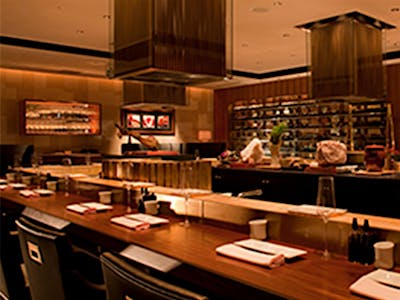
Within that context, Sakanaya Hidezou Tachinomi ten is better understood as a seafood standing bar than as a conventional restaurant. Its listed categories are stand-up bar, seafood and Japanese sake bar, which places it in a different lane from Osaka’s counter sushi, kushikatsu chains or late-night ramen rooms. The room’s standing-oriented setup turns the counter into the main architecture: it dictates pace, party size, ordering style and how long a meal feels socially natural.
A standing counter built for seafood, not ceremony
Osaka has always been good at formats that strip away ceremony while protecting appetite. Tachinomi is part of that grammar. The customer gives up the chair, the restaurant gives back speed, density and lower friction. That bargain works especially well when the cooking and drinking are kept direct, with seafood and sake doing most of the interpretive work.
The meaningful credential here is not a chef mythology, but the way the listing frames the place: stand-up bar, seafood and Japanese sake bar. That combination explains why seafood is the core argument of the room. In a standing-bar setting, that kind of focus matters because the format leaves little space for theatrical plating or long explanations. The product has to carry the evening in short, decisive orders.
The physical container also changes how to judge value. A seated seafood izakaya asks for comfort and duration; a tachinomi counter asks whether the room can deliver rhythm. Japanese sake is part of the listed identity, which makes the counter legible to two different kinds of diner: the local drinker treating seafood as accompaniment, and the visitor using the bar as a compact lesson in Osaka’s less formal dining intelligence.
Recognition from Tabelog Hyakumeiten 2025 puts the place inside a national conversation about stand-up bars rather than simply within Osaka’s tourist-heavy food map. Its Tabelog score is 3.56, a useful signal in Japan’s rating culture, where incremental differences can matter. The award context is also precise: tachinomi, not seafood in general. That distinction is the point. The achievement is tied to a format with its own standards, constraints and audience.
Why the room matters in Osaka
Osaka dining is often compact, direct and densely programmed. The city rewards places that can work in small footprints without feeling compromised. Standing counters fit that urban logic: they absorb turnover, encourage smaller groups and let a diner assemble an evening from several rooms rather than making one booking carry the night.
Sakanaya Hidezou Tachinomi ten belongs in the same Osaka conversation as casual specialists such as Chitose Honten, NEXT Shikaku, Oisi stand and THE BUTCHER, while still occupying its own seafood-and-sake lane. Its listed dinner budget of JPY 2,000 to JPY 2,999 is useful. It suggests a drink-and-seafood stop with enough seriousness to feel more than incidental, while staying far below the financial and time commitment usually associated with formal seafood dining.
The standing format also disciplines expectations. This is not the room for lingering over a multi-course sequence or asking the space to perform luxury. Its value lies in the Osaka habit of eating precisely in a narrow window: a few seafood-led plates, sake, and the possibility of moving on while the night is still open. That is why the counter is more than furniture. It is the operating system.
For a broader Osaka itinerary, this kind of room pairs better with contrast than repetition. A morning or daytime route might involve other Osaka dining rooms, while quick Osaka comfort food sits in a different register. For a seated counterpoint, other dining in the city shows how Osaka handles varied formats with the same appetite for specialization.
How to place it in an Osaka food day
The strongest use case is as a focused Osaka stop rather than a whole-evening anchor. The room’s standing-bar design makes it well suited to friends, solo diners and small groups that understand Osaka’s eat-and-move cadence. The appeal is functional and compact rather than lounge-like: a seafood-led standing bar that does not need a long meal structure to make sense.
Access details matter in this category because tachinomi often operates with tighter systems than hotel restaurants or international-facing bars. The published phone detail is listed as non-public, so diners should treat the visit as a practical, on-the-ground Osaka stop rather than a concierge-style booking exercise. Arrive prepared for a transit-based evening in Osaka, then let the format do what it is designed to do.
Readers building a fuller route can use Our full Osaka restaurants guide for dining context, Our full Osaka bars guide for after-dinner drinking, Our full Osaka hotels guide for where to stay, Our full Osaka experiences guide for cultural planning, and Our full Osaka wineries guide for wine-focused detours. For wider Japan and beyond, compare casual specialization across other unnamed dining rooms, bars and counters that share the same low-ceremony focus.
Frequently asked questions
What should I budget for a meal at Sakanaya Hidezou Tachinomi ten?
Pricing at Sakanaya Hidezou Tachinomi ten is listed as JPY 2,000 - JPY 2,999.
What's the address for Sakanaya Hidezou Tachinomi ten?
Osaka.
Should I book Sakanaya Hidezou Tachinomi ten in advance?
The provided listing does not give a specific reservation policy, so plan the visit with the flexibility typical of a standing-bar stop in Osaka.
What's the defining dish or idea at Sakanaya Hidezou Tachinomi ten?
The place is built around its listed categories: stand-up bar, seafood and Japanese sake bar. The hook is a seafood-led counter in Osaka, supported by Tabelog Hyakumeiten 2025 recognition and a 3.56 Tabelog score.
Is Sakanaya Hidezou Tachinomi ten allergy-friendly?
It is listed as a seafood standing bar in Osaka, so seafood allergies need caution from the outset. The provided venue information does not include a detailed allergen protocol.
A Quick Peer Check
Comparable venues at the same tier for side-by-side context.
| Venue | Cuisine | Price | Awards | Notes |
|---|---|---|---|---|
| Sakanaya Hidezou Tachinomi tenThis venue (the venue you are viewing) | Standing seafood & sake bar (tachinomi) | $20–30 | Tabelog 100 #58 | Not listed |
| Chiikawa Bakery | Chiikawa-themed Japanese bakery café | $10–20 | Not listed | Umeda |
| Chitose Udon | Osaka Nikusui Udon | $10–20 | Tabelog 100 #24 | Namba |
| Chitose Honten | Osaka Nikusui Udon | $10–20 | Tabelog 100 #24 | Chūō |
| Tachinomi Tekken | Japanese tachinomi (standing izakaya) | $20–30 | Tabelog 100 #69 | Naniwa |
| Tezukuri Udon Tenkomori | Japanese Udon Noodle Bar | $10–20 | Tabelog 100 #11 | Naniwa |
Recognition history
Dated appearances from independent guides and award organizations, with the underlying list record or original source where available.
Tabelog 100 #58 · No. 58
Tabelog · Tabelog 100 - Tachinomi - 2025