Tabelog 100 #35
Our verdict
Sakana Tetsu belongs to Osaka’s tighter izakaya tier, where the meal is built around pacing, drinking rhythm, and fish-led small plates rather than spectacle. Its Tabelog 100 Izakaya WEST selections in 2024 and 2025 place it among serious regional taverns, with oden and sake-friendly cooking shaping the draw.

Pearl is the En Primeur Club membership app — saves, bookings, and concierge access live there. Same editors, same standards.
The menu
What to order
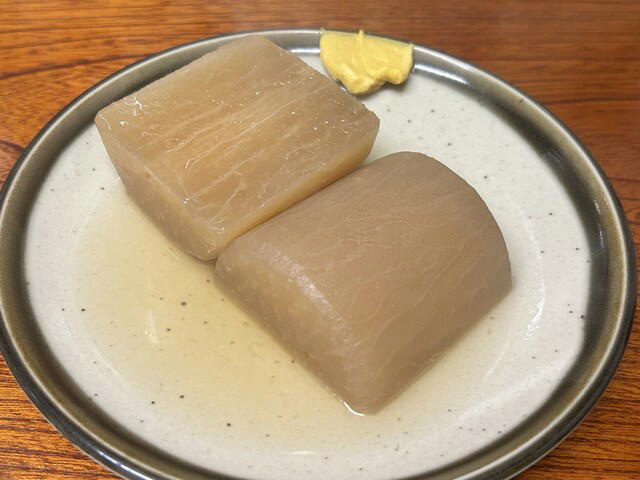
- Daikon oden
- Bacon with cream cheese
- Iwana fish balls
- Seasonal oden assortment
A serious Osaka izakaya rarely announces itself theatrically. The signal is scale and rhythm: a room built for drinking and eating together, with orders arriving in rounds rather than as a formal procession. In Osaka, where dinner runs from quick bowls to longer tavern sessions, Sakana Tetsu is the latter: categorized as izakaya and oden, and shaped by tavern custom rather than tasting-menu ceremony.
That distinction matters in Osaka. The city is often reduced to snack culture and market grazing, but its after-dark habit can be disciplined: order in rounds, reset the table, match sharper bites with drinks, and treat oden not as filler but as a grammar of broth, texture, and restraint. Sakana Tetsu’s 2025 Tabelog Hyakumeiten recognition places it in that regional conversation: not a grand dining room, but a tavern where format and repetition carry weight.
Izakaya pacing, with oden as the anchor
Osaka’s izakaya tradition rewards sequence. A meal may begin lightly, move through different styles of tavern cooking, and return to drinks as the metronome. Sakana Tetsu is categorized as an izakaya and oden restaurant, which suggests range and compatibility over a single headline dish.
Oden changes the temperature of an izakaya meal. It slows the table. In a city where casual meals can move quickly, broth-based cooking asks diners to settle into a softer rhythm, especially when the meal is built around repeated rounds rather than one quick order. The comparison is not only with faster local options such as Menya Joroku Nanba ten or Chitose Honten, but with the mid-evening tavern bracket where dinner becomes a sequence of decisions. Genbee Nanba ten belongs to Osaka’s broader casual dining map, while Sakana Tetsu’s 2025 recognition places it in a more selective izakaya lane.
The format reinforces the ritual. It favors small-party energy and progressive ordering rather than ceremony. Dishes can arrive in rounds, drinks adjust as the meal changes, and the table needs no kaiseki architecture to feel deliberate. The genre is social dining at close range, read through tempo rather than privacy.
Why the recognition matters in Osaka's casual dining hierarchy
Tabelog’s Hyakumeiten lists are useful because they recognize categories Michelin-style systems can underserve. Izakaya excellence is not always expressed through linen, chef biography, or fixed-course pricing. It depends on consistency, ingredient judgment, drink compatibility, and whether diners trust the kitchen for a full evening. Selection for Tabelog Hyakumeiten in 2025 gives Sakana Tetsu a credible marker in a category where local confidence matters more than international gloss.
The price tier separates it from quick casual Osaka eating without pushing it into fine-dining formality. Listed at JPY 6,000 - JPY 7,999 for dinner, it sits above everyday quick meals, bakery runs, and takeaway circuits, but below the choreographed counters of premium sushi or kappo. That middle zone is an Osaka strength: bills reflect a longer evening, while the atmosphere remains closer to a tavern than a destination dining room.
Osaka adds context. The city’s dining map shifts block by block, with some meals opportunistic: a bowl, snack, or queue. Others require a slower read, especially away from the heaviest tourist flow. Sakana Tetsu belongs to the second pattern. It is not defined by landmark visibility, but by whether a diner values an izakaya trusted enough to appear in a Tabelog Hyakumeiten selection with a listed score of 3.64.
How to read the evening: manners, drinks, and party size
The right expectation is not chef-driven performance. It is a structured tavern meal. Dining close to the rhythm of the room can make the experience feel immediate, but etiquette is simple: order progressively, leave room for simmered dishes, and treat drinks as part of the food. The restaurant’s izakaya-and-oden classification makes more sense when dinner is approached as a sequence rather than as a single plate.
For travelers building a broader Osaka itinerary, this address should sit between flashier meals, not after them. A night here pairs better with a day moving through Osaka than with a rushed multi-stop crawl. Readers mapping the city can cross-reference Our full Osaka restaurants guide, then place it against lighter or faster local options, including unnamed bakeries, casual counters, takeaway specialists, and other dining rooms. The contrast is useful: quick food shows Osaka’s range, while an izakaya-and-oden room explains how the city drinks dinner.
Planning the wider trip matters too. Osaka rewards proximity: dinner works better when hotels, bars, and late-night movement align, so broader hotel and bar planning can be practical companions to the restaurant map. The city is not a wine-region destination like Europe or California, but readers tracking drinks culture can also keep wider Osaka experiences in view.
Seen from outside Osaka, Sakana Tetsu clarifies a broader Japanese dining split. Some restaurants foreground one object or a single format, from noodles and set meals to counters built around a narrow specialty. Others follow a drinking grammar across several plates, where the meal is measured by pacing, broth, repetition, and compatibility. Sakana Tetsu belongs to the latter camp: not a spectacle, but a format that asks diners to read the evening gradually.
The editorial case for Sakana Tetsu is not that it performs luxury. It preserves a compact, adult rhythm of Osaka eating: oden, drinks, proximity, and enough regional recognition to matter beyond an ordinary listing. For travelers who understand izakaya dining as sequence rather than snack stop, that is the point.
Frequently asked questions
How much does it cost to eat at Sakana Tetsu?
Pricing at Sakana Tetsu is listed as JPY 6,000 - JPY 7,999.
What's Sakana Tetsu's location?
Osaka.
What's the best way to book Sakana Tetsu?
For direct inquiry, the listed number is +81-6-6633-3899. The restaurant is in Osaka.
What's the standout thing about Sakana Tetsu?
Its strongest credential is the Tabelog Hyakumeiten 2025 recognition. Sakana Tetsu is categorized as an izakaya and oden restaurant, with dinner pricing listed at JPY 6,000 - JPY 7,999.
The Quick Read
Comparable venues to place this listing in its category.
| Venue | Cuisine | Price | Awards | Notes |
|---|---|---|---|---|
| Sakana TetsuThis venue (the venue you are viewing) | Seasonal Oden & Sake Izakaya | $50–100 | Tabelog 100 #35 | Not listed |
| Menya Joroku Nanba ten | Takaida-style ramen counter | $10–20 | Tabelog 100 #58 | JPY 999 - JPY 999 |
| aglio olio | Seasonal Yakuzen Vegetable Curry | $10–20 | Tabelog 100 #19 | JPY 1,000 - JPY 1,999 JPY 1,000 - JPY 1,999 |
| き田たけ うどん | Traditional Udon | $10–20 | Tabelog 100 #100 | Not listed |
| Genbee Nanba ten | Japanese Steakhouse / Izakaya | Not listed | Tabelog 100 #26 | JPY 4,000 - JPY 4,999 JPY 1,000 - JPY 1,999 |
| Chitose Honten | Not listed | Not listed | Not listed | JPY 999 - JPY 999 |
Recognition history
Dated appearances from independent guides and award organizations, with the underlying list record or original source where available.
Tabelog 100 #35 · No. 35
Tabelog · Tabelog 100 - Izakaya - WEST - 2025