Tabelog 100 #26
Our verdict
Genbee Nanba ten sits in Osaka’s steak-and-izakaya overlap, where beef is treated less as formal luxury and more as a shared table proposition. Its 2025 Tabelog 100 selection for Steak / Teppanyaki in West Japan gives it a clear credential, while the drinks list points toward a broad, casual pairing culture rather than a rigid fine-dining cellar.

Pearl is the En Primeur Club membership app — saves, bookings, and concierge access live there. Same editors, same standards.
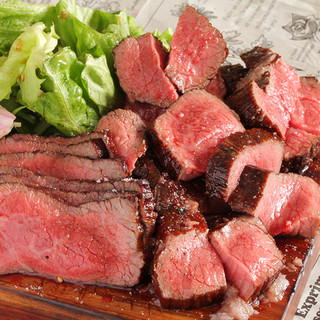
Osaka’s eating streets operate at street level: signs, staircases, compact dining rooms, and groups moving between transit, shopping, and late meals. Here, steak need not mean hushed counters or hotel rooms. It can sit near izakaya culture, with a social table built for sharing rather than ceremony.
Genbee Nanba ten fits that Osaka register. Its category, steak and izakaya, says more about the city’s practical appetite than any polished tasting-menu script. Osaka has long supported cross-format dining: quick noodles, standing bars, bakeries, department-store takeaways, and serious restaurants often sit within a few blocks. That density lets a visitor move between casual bites, drinks, and a steak-led room without treating the evening as a formal progression. For the broader map, Our full Osaka restaurants guide gives useful context.
Beef in an izakaya frame, not a steakhouse costume
Japan’s premium beef culture is often flattened abroad into wagyu clichés, but Osaka’s better casual rooms show another pattern: steak can be generous, sociable, and drinks-led. The recognition that matters here is not a luxury hotel award but 2025 Tabelog Hyakumeiten recognition, a signal that the restaurant is being noticed within a dining context relevant to its steak-and-izakaya listing.
The distinction helps. Around Osaka, lower-priced specialists such as Menya Joroku Nanba ten and Chitose Honten occupy the city’s quick-meal rhythm, while Sakanaya Hidezou Tachinomi ten speaks to standing-bar and seafood-drinking tradition. Genbee Nanba ten belongs to a heavier evening category: steak at the center, izakaya flexibility around it. It suits groups wanting substance more than diners seeking a tightly choreographed counter meal.
The category structure is the quiet tell. Steak and izakaya are both listed, placing the restaurant in a broad dining lane. This is not built around a declared sommelier program, chef narrative, or cellar story; it reads as Osaka-style optionality. The izakaya side keeps the meal close to shared-table habits, while the steak side gives the evening a clear center of gravity. In a city where dining decisions are often collective and late, that range matters more than a narrow trophy list.
That flexibility separates it from more format-specific Osaka rooms. Some addresses sharpen the city through a particular cuisine, counter style, or single-dish focus. Here, the point is breadth within a steak-led meal: a table can order around the category, then adjust the pace and mood without leaving the format.
The cellar signal is range, not ceremony
Osaka does not need every serious restaurant to perform seriousness. Its dining strength often lies in rooms that understand pace, group size, and appetite before announcing concept. A wine-led editorial lens can misread a steak address if it expects white-tablecloth rituals. The stronger read here is practical curation: the experience is best understood through steak, informality, and the izakaya frame rather than through ceremony.
That balance is culturally specific. In many Western steakhouse models, the wine list carries status: verticals, prestige labels, and a sommelier conversation that can dominate the table. In an Osaka izakaya-steak hybrid, drinks and ordering work more democratically. A table can begin lightly, move through shared plates, and let steak become the focus when appetite demands it. The format lets diners choose by rhythm rather than hierarchy.
The lack of a publicly foregrounded chef figure keeps emphasis on category and room behavior. This is not presented as an authorial counter with a single personality at the center, and that shapes expectations. It is better read as a practical Osaka steak-and-izakaya address: useful for visible appetite, shared ordering, and groups that want the meal to feel substantial without becoming stiff.
For travelers building an Osaka itinerary, the restaurant is a useful counterweight to narrower stops. A day might include bakeries, ramen, standing drinks, and destination dining; the city rewards that movement. Nearby and adjacent categories can be mapped through Our full Osaka bars guide, Our full Osaka hotels guide, Our full Osaka experiences guide, and even Our full Osaka wineries guide for readers tracking drinking culture beyond the restaurant table.
Where it fits in a Japan-wide beef-and-drinks itinerary
Genbee Nanba ten is clearest when Osaka is seen as part of a wider Japanese dining circuit rather than a single stop. Steak can mean formal traditions, counter-led grilling, casual drinking rooms, or regional specialists. Osaka’s version here is less solemnity than appetite meeting conviviality.
That comparison helps international diners calibrate expectations. Some restaurants make sake the organizing idea, while others foreground portability, comfort, or a single signature format. In Osaka, steak-and-izakaya dining can absorb both drinking and fullness in one sitting. Other Japanese regional dining scenes show how strongly format shapes a meal before any single dish is named.
The practical reading is simple: choose this for a steak-centered Osaka night where the room stays flexible and the meal can handle more than a narrow date-night script. The 2025 Tabelog Hyakumeiten recognition gives category credibility; the izakaya structure keeps the experience grounded. That combination is more valuable than another polished steakhouse imitation, especially in Osaka, where dinner is often part of a longer evening rather than its final punctuation.
Frequently asked questions
What does dinner at Genbee Nanba ten typically cost?
Pricing at Genbee Nanba ten is listed as Dinner: JPY 4,000 - JPY 4,999; Lunch: JPY 1,000 - JPY 1,999.
Is Genbee Nanba ten open every day?
Published award and listing details provided here do not confirm daily opening hours. Check the venue's official channels for the latest details.
Where is Genbee Nanba ten in Osaka?
Osaka.
What's the signature at Genbee Nanba ten?
Genbee Nanba ten is listed in the steak and izakaya categories, with 2025 Tabelog Hyakumeiten recognition. Expect a steak-led izakaya format in Osaka.
Can Genbee Nanba ten adjust for dietary needs?
Those details are not published. With steak and izakaya on the menu, guests with specific restrictions should confirm directly before booking. Check the venue's official channels for the latest details.
Is Genbee Nanba ten a family-friendly restaurant?
Guests planning a family meal should confirm suitability, seating, and timing directly with the venue before booking. Check the venue's official channels for the latest details.
The Quick Read
Comparable venues for cuisine and category context.
| Venue | Cuisine | Price | Awards | Notes |
|---|---|---|---|---|
| Genbee Nanba tenThis venue (the venue you are viewing) | Japanese Steakhouse / Izakaya | Not listed | Tabelog 100 #26 | Not listed |
| き田たけ うどん | Traditional Udon | $10–20 | Tabelog 100 #100 | Not listed |
| aglio olio | Seasonal Yakuzen Vegetable Curry | $10–20 | Tabelog 100 #19 | JPY 1,000 - JPY 1,999 JPY 1,000 - JPY 1,999 |
| Menya Joroku Nanba ten | Takaida-style ramen counter | $10–20 | Tabelog 100 #58 | JPY 999 - JPY 999 |
| Chitose Honten | Not listed | Not listed | Not listed | JPY 999 - JPY 999 |
| Sakanaya Hidezou Tachinomi ten | Standing seafood & sake bar (tachinomi) | $20–30 | Tabelog 100 #58 | JPY 2,000 - JPY 2,999 |
Recognition history
Dated appearances from independent guides and award organizations, with the underlying list record or original source where available.
Tabelog 100 #26 · No. 26
Tabelog · Tabelog 100 - Steak / Teppanyaki - WEST - 2025