Rituals Café
Rituals Café at Spui 10 pairs craft cocktails with farm-to-table, organic sourcing in a historic building and design destination setting.
Pearl is the En Primeur Club membership app — saves, bookings, and concierge access live there. Same editors, same standards.
- Address
- Spui 10, 1012 WZ Amsterdam, Netherlands
- Phone
- +31207055180
- Website
- ritualscafe.nl
- Directions
- Get directions
 Saves & bookings on Pearl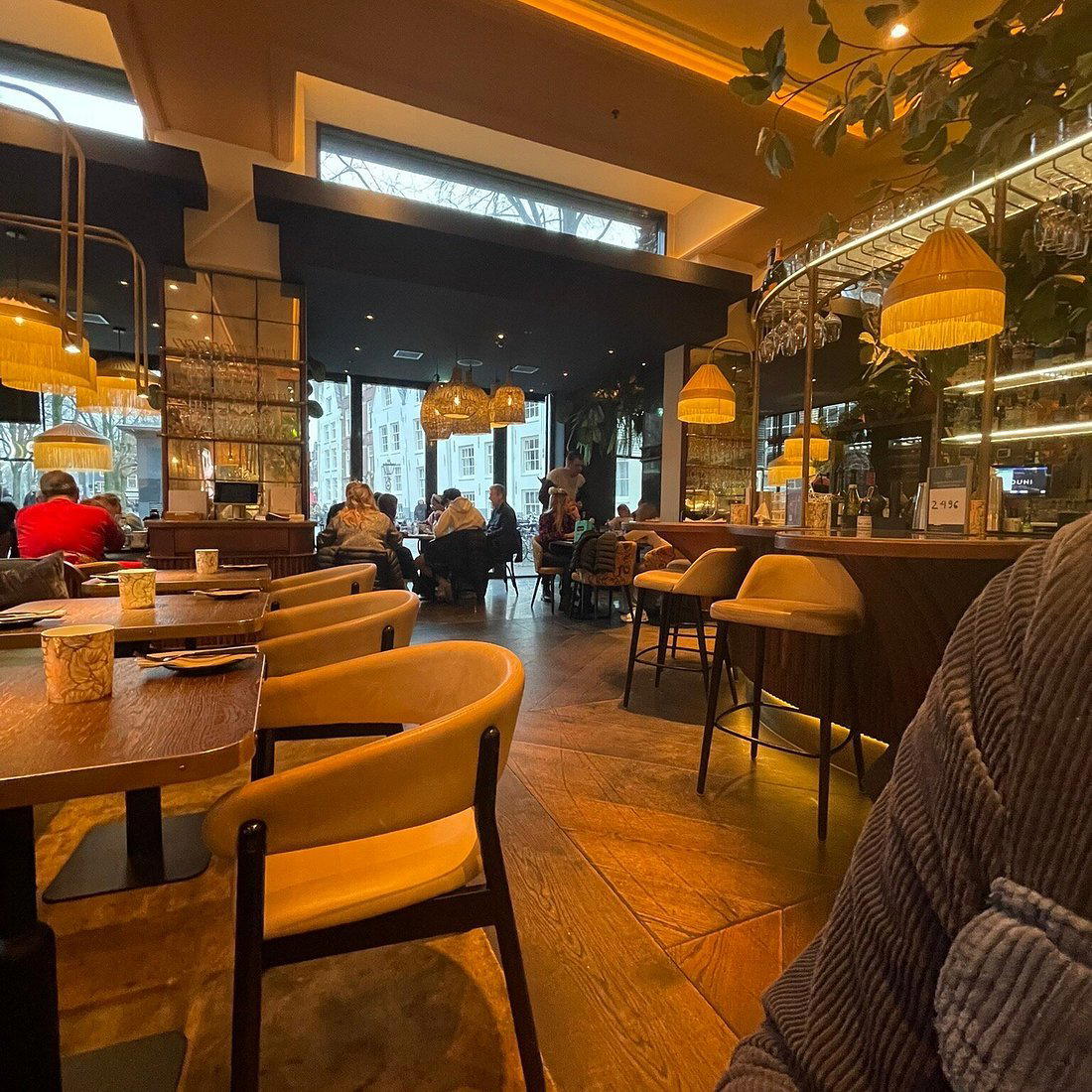
Spui and the Weight of a Square
Amsterdam's Spui has always carried a particular kind of cultural charge. The square sits at the junction of the old booksellers' quarter and the canal-ring grid, and it has hosted political demonstrations, open-air markets, and the kind of sustained foot traffic that comes from proximity to both the Amsterdams Historisch Museum and the Begijnhof courtyard. Restaurants on or immediately around Spui are not tucked away from scrutiny, they operate in full public view, and that visibility demands a degree of seriousness that more peripheral addresses do not. Rouhi is a restaurant at Spui 10, Amsterdam, in the upper dining tier, with a price point of about $45 per person.
A Cuisine with a Long Memory
Persian cooking is among the oldest continuous culinary traditions in the world, with documented records stretching back to pre-Islamic Iran and a flavour grammar, sweet-sour contrasts, herb volume, dried fruit in savoury contexts, rice techniques that treat each grain as a structural element, that has influenced everything from Mughal Indian cuisine to Ottoman palace cooking. In Amsterdam, that tradition has historically appeared in the city's Iranian diaspora restaurants, concentrated in areas like Amsterdam-West, where the cooking was kept close to domestic registers and rarely courted the kind of critical attention that French or Japanese formats command.
The more recent shift in European fine dining has been toward cuisines that carry this kind of deep cultural memory: Korean at Atomix in New York City, South American in various European capitals, and increasingly, Levantine and Persian formats in cities with the dining density to sustain them. Amsterdam, with a high concentration of internationally oriented diners and a Michelin Guide that has recognised restaurants across a wide range of traditions, is a plausible location for this shift to mature. Rouhi appears to be part of that maturation.
Where Rouhi Sits in Amsterdam's Fine Dining Structure
Amsterdam's upper dining tier is currently weighted toward creative and contemporary European formats. Ciel Bleu and Spectrum both operate at the €€€€ level with Michelin recognition, as does Vinkeles, which works from a historic canal-house space. Flore brings a contemporary sensibility to the same price tier. At the level below, restaurants like Bistro de la Mer anchor classic cuisine at €€€. What is notably absent from this picture is a non-European kitchen operating with the same level of formal ambition.
This is not unusual for European fine dining cities, but it is increasingly a gap that the market is beginning to address. Rouhi's position on Spui, in the city centre rather than in a neighbourhood traditionally associated with its cuisine, is a statement about intended audience and price positioning. It is reaching toward the same diner who might otherwise book a creative tasting menu, not the diner looking for a casual Iranian meal in a familiar setting.
For wider context on how the Netherlands handles this at the regional level, the Michelin roster outside Amsterdam includes addresses that have pressed different culinary traditions into fine-dining form: De Nieuwe Winkel in Nijmegen with its plant-forward approach, De Librije in Zwolle operating with a distinctly Dutch ingredient logic, and De Lindenhof in Giethoorn drawing from its lakeland setting. The Dutch Michelin ecosystem has demonstrated an appetite for format diversity, which creates the conditions for a kitchen rooted in Persian tradition to be taken seriously at a high level.
The Culinary Logic Behind Persian Fine Dining
What distinguishes Persian cooking as a candidate for fine-dining treatment is its structural sophistication. The cuisine is not reliant on technique opacity or rare ingredients to justify refined pricing, its complexity lies in balance and time. Khoresh preparations involve layered reductions where pomegranate molasses, saffron, and dried limes interact over hours. Rice in Persian cooking is a study in controlled heat and steam, producing the tahdig crust that is among the more technically demanding aspects of the cuisine to execute consistently. Herb volume in dishes like ghormeh sabzi or kuku is not decoration; it is architecture.
These are elements that translate well into a serious dining room context, where a kitchen can give them the time and sourcing attention they require. At comparable non-European fine-dining addresses internationally, Le Bernardin in New York City being the clearest example of a kitchen that built its reputation on making a single cuisine's logic as rigorous as possible, the argument is always the same: depth of tradition, executed with discipline, justifies the format.
Reading the Broader Dutch Pattern
The Netherlands has a distinctive relationship with non-European cuisines, shaped by its colonial history and a twentieth-century immigration pattern that brought Indonesian, Surinamese, and Moroccan cooking into the everyday food culture in ways that most Northern European countries cannot claim. Amsterdam in particular has a dining culture that is genuinely cosmopolitan rather than performatively so. Restaurants like Aan de Poel in Amstelveen and addresses further afield like Brut172 in Reijmerstok, De Bokkedoorns in Overveen, De Groene Lantaarn in Staphorst, De Lindehof in Nuenen, De Treeswijkhoeve in Waalre, and 't Nonnetje in Harderwijk each demonstrate that Dutch fine dining is geographically distributed and stylistically varied. That variety creates space for a Persian-rooted kitchen in the capital to find its footing without needing to justify its premise.
At a Glance
Comparable venues nearby, for context on price, style, and recognition.
| Venue | Cuisine | Price | Notes |
|---|---|---|---|
| RouhiThis venue — the venue you are viewing | Not listed | $$$ | Not listed |
| Bo Cinq | Spiegelbuurt, French-Arabic Fusion | $$$ | Not listed |
| KID | Not listed | $$$ | Frederik Hendrikbuurt Noord, Asian Fusion Comfort Food |
| Bottleshop Amsterdam | Not listed | $$ | Weesperzijde Midden/Zuid, Natural Wine Bar with Fusion Small Plates |
| George W.P.A. | Not listed | $$$ | Vondelpark Oost, French-New York Brasserie |
| Terpentijn | Not listed | $$ | Nes e.o., Frans-Aziatische Fusion |
Continue exploring
More in Amsterdam
Restaurants in Amsterdam
Browse all →
Bars in Amsterdam
Browse all →
Hotels in Amsterdam
Browse all →
Wineries in Amsterdam
Browse all →
At a Glance
- Quiet
- Cozy
- Modern
- Solo
- Casual Hangout
- Brunch
- After Work
- Standalone
- Craft Cocktails
- Farm To Table
- Organic
Current opening hours
- Monday
- 11 AM–6:30 PM
- Tuesday
- 10 AM–6:30 PM
- Wednesday
- 10 AM–6:30 PM
- Thursday
- 10 AM–8:30 PM
- Friday
- 10 AM–6:30 PM
- Saturday
- 10 AM–6:30 PM
- Sunday
- 11 AM–6:30 PM
Hours can change for holidays and private events. Last verified .
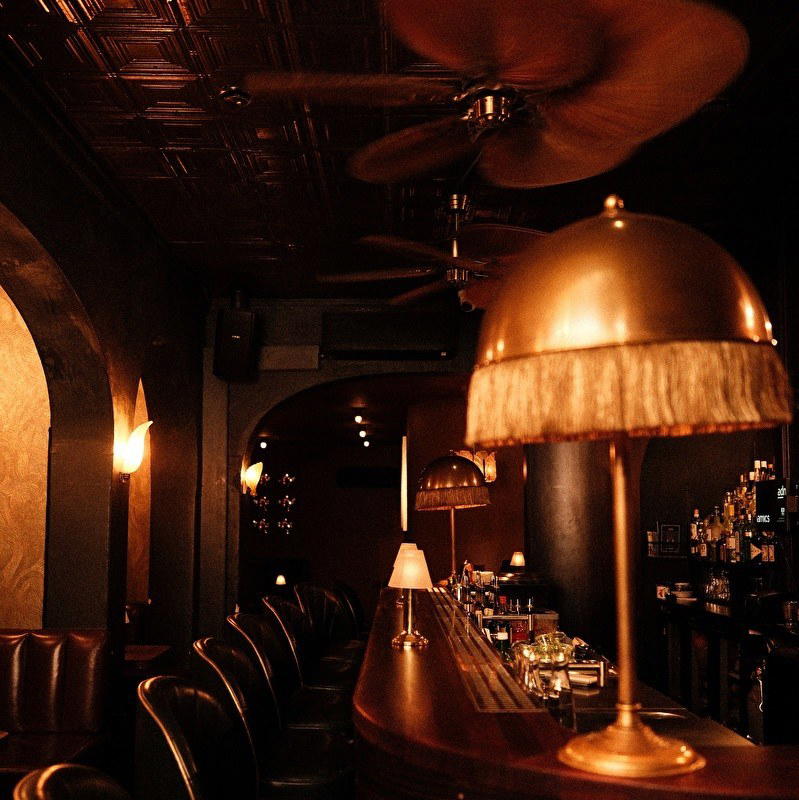
Warm, relaxed, and calm, described by the venue as a quiet corner in the heart of Amsterdam with comfortable seating and a slow-down atmosphere.