
Set within the Capella hotel on Dunhua North Road, Rong Ju brings a Hong Kong chef's three decades of Cantonese training to a dining room whose faux-brick atrium ceiling evokes the warmth of a traditional home. Classic set menus are sharpened with premium imported ingredients, from Japanese spiny sea cucumber to kuri pumpkin, and a well-considered tea selection completes the picture.
Pearl is the En Primeur Club membership app — saves, bookings, and concierge access live there. Same editors, same standards.
- Address
- Capella, 139 Dunhua North Road, Songshan District
- Phone
- +886 2 7709 6868
- Website
- capellahotels.com
- Directions
- Get directions
 Saves & bookings on Pearl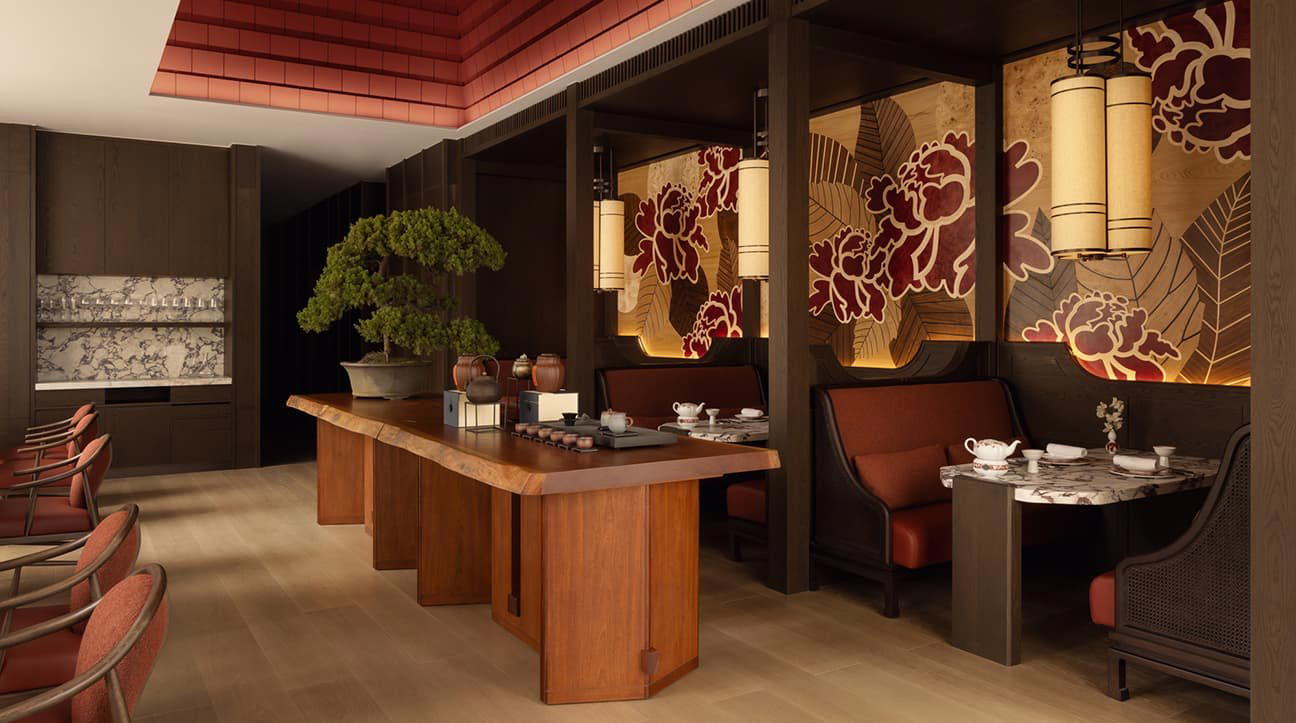
A Cantonese Room with Something to Prove
Taïrroir holds Michelin stars for its Taiwanese-French synthesis; Logy draws on European technique with a Japanese sensibility; L'Atelier de Joël Robuchon and Molino de Urdániz have planted European flags on the island. Into this competitive field, Rong Ju makes a different argument: that persuasive cooking on offer in a internationally prominent hotel might be deeply, uncompromisingly Cantonese.
The restaurant sits inside the Capella at 139 Dunhua North Road, Songshan District, a property that positions itself at the summit of Taipei's hotel tier. That address alone sets expectations. What Rong Ju does with those expectations is to resist the temptation to cross-pollinate, leaning instead on the rigour of a culinary tradition that rewards precision and restraint over novelty.
The Room Itself
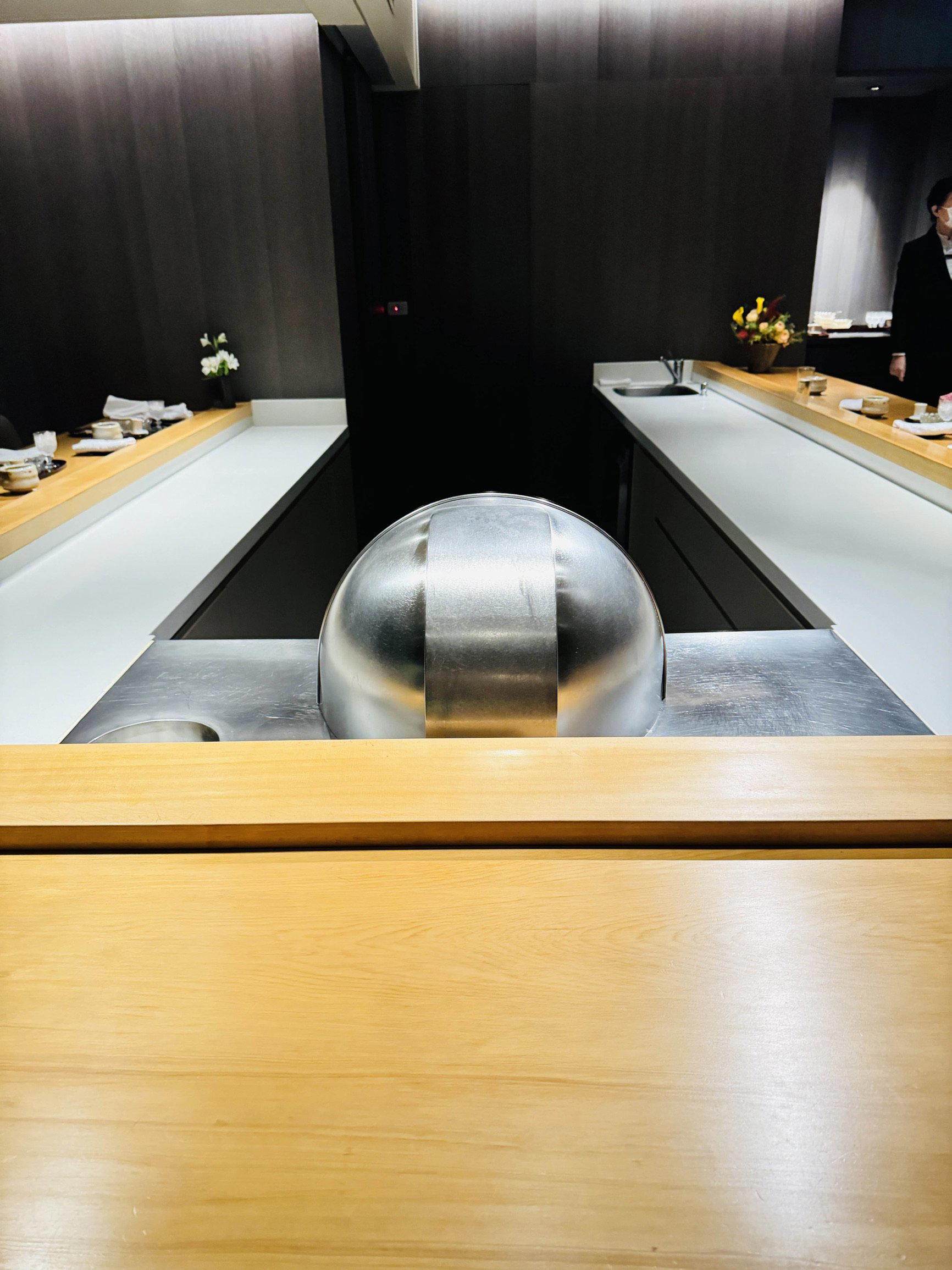
Before a dish arrives, the atrium at Rong Ju does considerable work. The tray ceiling covered in faux red brick references the domestic architecture of a traditional Chinese home, and the effect is notably warmer than the cool marble registers common in hotel dining across the region. This is a deliberate tonal choice. Cantonese dining culture has always placed weight on conviviality and the sense of gathering, and the room's design signals that priority clearly. The warmth of aged brick, even in reproduction, sets a different emotional register than the more austere modernism favoured by, say, Le Palais, which pursues grandeur through a different visual vocabulary.
The effect is one of contained ceremony. You are aware you are dining in a significant space, but the atmosphere does not make the room itself the performance. That function is reserved for what arrives at the table.
Classic Cantonese, Supplemented with Precision
Cantonese cuisine's reputation at the fine-dining level rests on its fidelity to product quality and its refusal to mask inferior ingredients with heavy saucing. In that context, the chef's decision to anchor the set menus in classics while supplementing them with imported premium ingredients is less a cosmetic upgrade than a structural one. Japanese spiny sea cucumber, kuri pumpkin, and lily bulb are not decorative flourishes; they are ingredients chosen to meet the standards that classical Cantonese technique demands. When the base cooking method exists to let an ingredient speak clearly, the quality of that ingredient determines everything.
The chef behind this program brings three decades of Cantonese cooking experience, a career long enough to have developed both technical command and the judgment to know when innovation serves the food and when it merely signals it. Set menus built on this foundation tend to move through a deliberate sequence: lighter preparations giving way to more substantial dishes, textures shifting from delicate to richly yielding, flavours building without ever accelerating into excess. That arc is a defining feature of serious Cantonese tasting menus, and it is the framework within which the restaurant operates.
Taipei has strong Cantonese representation at the leading end; the comparison with Le Palais, which holds Michelin recognition and operates from a similarly prestigious hotel base, is the natural one. Where Le Palais leans into formal grandeur, the restaurant's room makes a case for intimate warmth as an alternative register for the same tradition. They are not competing on the same terms, which makes the city's Cantonese offering richer for having both.
Tea as an Integral Element
A well-chosen tea pairing at a Cantonese table is not an afterthought; it is the oldest and most considered beverage program the cuisine possesses, predating wine pairings by centuries. The restaurant's tea menu is described as well-curated, and ordering a pot is the advised move, not as an optional supplement but as a structural element of the meal. The right tea service bridges courses, cleanses the palate between preparations that might otherwise blur into each other, and supplies a temperature and tannin dynamic that amplifies rather than competes with the food.
For guests who have spent their fine-dining attention on wine lists in European or fusion contexts, this represents a useful recalibration. The tea menu at a serious Cantonese restaurant is where equivalent sophistication lives.
Where Rong Ju Sits in the Wider Taiwan Scene
Taiwan's restaurant culture extends well beyond Taipei. JL Studio in Taichung has drawn international recognition for its Southeast Asian-inflected approach; GEN in Kaohsiung represents the island's southern dining ambitions; Akame in Wutai Township has brought indigenous Taiwanese ingredients into a fine-dining framework that attracted global attention. Zhu Xin Ju in Tainan anchors the old capital's reputation for ingredient-led, tradition-rooted cooking. Within this spread, the restaurant occupies a specific niche: classic Cantonese executed at hotel luxury level in Taipei's commercial and cultural centre.
That positioning is not incidental. Songshan District sits in a part of the city where the business and diplomatic visitor base sustains demand for precisely this kind of cooking: formal enough for significant occasions, rooted enough to communicate cultural seriousness, and technically accomplished enough to satisfy guests who arrive with comparable reference points from Hong Kong or Guangdong.
Planning Your Visit
The restaurant is housed within the Capella hotel. Reservations are recommended. The set menu format means the kitchen works to a defined pace, so arriving on time matters more here than at à la carte venues where the kitchen absorbs timing variation across the room.
Dress code expectations run toward smart casual. The tea pairing is worth factoring into your budget from the outset.
Nearby-ish Comparables
Comparable venues nearby, for context on price, style, and recognition.
| Venue | Cuisine | Price | Notes |
|---|---|---|---|
| Rong JuThis venue — the venue you are viewing | Modern Cantonese | $$$$ | Not listed |
| 85TD | Contemporary Cantonese | $$$$ | Jingxin |
| Cha Cha Thé Cuisine | Chinese Tea House with French Fusion Desserts | $$$ | Ren'ai |
| Celestial (天廚菜館) | Traditional Beijing Chinese | $$$$ | Min'an |
| Set. | Modern Western Fine Dining | $$$$ | Shuanglian |
| JUNTO | Modern Cantonese | $$$ | Guangfu |
Recognition history
Dated appearances from independent guides and award organizations, with the underlying list record or original source where available.
Michelin Plate
Michelin · 2026 Michelin Plate
Continue exploring
More in Taipei
Restaurants in Taipei
Browse all →
Bars in Taipei
Browse all →
Hotels in Taipei
Browse all →

Wineries in Taipei
Browse all →
At a Glance
- Elegant
- Cozy
- Sophisticated
- Special Occasion
- Business Dinner
- Hotel Restaurant
- Open Kitchen
Current opening hours
- Monday
- Closed
- Tuesday
- 12–2:30 PM, 5:30–9:30 PM
- Wednesday
- 12–2:30 PM, 5:30–9:30 PM
- Thursday
- 12–2:30 PM, 5:30–9:30 PM
- Friday
- 12–2:30 PM, 5:30–9:30 PM
- Saturday
- 12–2:30 PM, 5:30–9:30 PM
- Sunday
- Closed
Hours can change for holidays and private events. Last verified .
Stylish interior with atrium tray ceiling covered in faux red brick evoking traditional home cosiness; comfortable dining environment.