
Tabelog 100 #65
Our verdict
Rokkaku Do brings Kanazawa’s steak and teppanyaki ritual into a larger, celebration-friendly format rather than the hushed counter-only mold. Its 2025 Tabelog 100 selection for Steak / Teppanyaki WEST, English menu support, counter seating, private rooms, and family-friendly facilities make it a useful choice for travelers who want Japanese beef cookery with structure rather than ceremony alone.

Pearl is the En Primeur Club membership app — saves, bookings, and concierge access live there. Same editors, same standards.
The menu
What to order
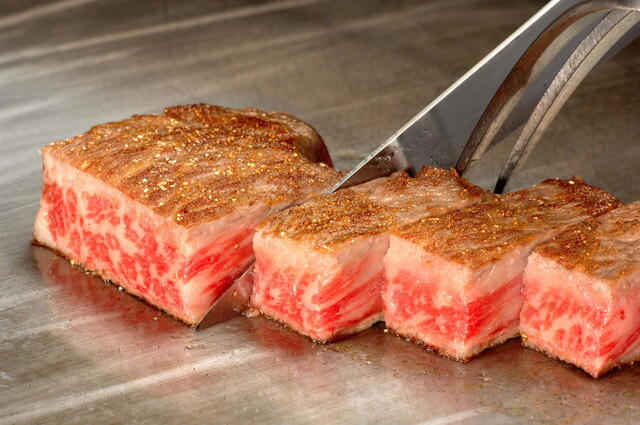
- Teppanyaki wagyu steak
- Rokkakudo steak course
- Teppan-grilled seafood
Approaching the meal here means entering a different Kanazawa rhythm from the city’s kaiseki rooms and seafood counters. A steakhouse has its own choreography: the grill is not background equipment but a central part of the experience, and the meal turns on pacing, heat control, and the social contract between guests who want a sense of occasion and guests who want dinner to move with discipline. Rokkaku Do belongs to that tradition, closer to a formal steakhouse than a small chef’s-counter hideaway, and that distinction matters in a city where premium dining often means silence, seasonality, and strict reservation etiquette.
Kanazawa’s high-end dining identity is usually framed through Kaga cuisine, winter crab, refined sweets, and market-driven Japanese cooking. Steak sits slightly outside that narrative, which is why a serious room in this category reads differently. The appeal is not necessarily a chef’s autobiographical menu or a hyper-seasonal tasting progression. It is the controlled ritual of steak cookery: timing, doneness, portioning, and the steady movement of service around a grill. In that sense, the format gives visitors an accessible way into Japanese dining manners without demanding fluency in kaiseki codes.
Kanazawa steakhouse formality with grill-focused pacing
Japan’s steakhouse tradition often gets flattened abroad into performance dining, but the domestic version can be more measured. The grill allows a meal to unfold in visible stages, and the room can make the experience feel personal without turning it into a private audience with a chef. Rokkaku Do’s 2025 Tabelog Hyakumeiten recognition in the Steak category places it within a field where consistency counts as much as flash. That selection is a useful trust signal because it compares the restaurant against steak specialists rather than sushi counters, kappo rooms, or French fine dining.
The format also changes the reading. This is a steakhouse that can work for mixed groups rather than only purists. That makes it a practical Kanazawa dinner choice when the table includes travelers with different comfort levels, older relatives, or guests who want a meal with Japanese structure but less formality than a high-wire kaiseki sitting. The steakhouse register pushes it toward celebration dining, while the grill-focused experience keeps the central ritual intact for guests who want the cooking itself to anchor the evening.
Compared with Kanazawa’s more rarefied Japanese dining tier, the positioning is clear. Kisanuki sits in a higher-spend Japanese cuisine bracket, while Kataori is part of the city’s kaiseki conversation. Cliente Kawabata occupies another premium lane with pricing that signals a different restaurant grammar. Rokkaku Do works in a more legible steak category: steak, grill, pacing, drinks, and group usability. That does not make it casual; it makes the value proposition easier to understand before committing an evening.
The meal is about control, not reinvention
Steakhouse cooking rewards restraint. The guest judges technique directly, which leaves less room for narrative camouflage. Heat, sequence, and service tempo are the point. A room like this asks to be judged less by novelty and more by whether the meal gives the table a clean arc: arrival, grill-focused progression, drinks matched to richness, and enough spacing for conversation. That is why the category tends to suit business dinners, family celebrations, and travelers who want a recognizably Japanese meal without the interpretive pressure of a long tasting menu.
The Tabelog score of 3.58 and the 2025 Hyakumeiten recognition in the Steak category suggest a restaurant operating with enough public confidence to matter in its category. The better way to read those signals is comparatively rather than emotionally. Kanazawa has restaurants built around seasonal Japanese cuisine, sweets shops tied to tea culture, and casual meat-focused addresses; this table sits in the steak-and-grill lane, where consistency, comfort, and service carry weight. For a different casual meat register in the city, compare the mood with other Kanazawa dining rooms. For a broader read on Kanazawa dining beyond steak, use unnamed local restaurants, cafes, and sweet shops as contrasting reference points.
The ritual also suits Kanazawa’s travel pattern. Many visitors build days around gardens, museums, preserved districts, and seafood lunches, then want dinner to feel settled rather than experimental. Steak answers that need neatly: enough theater to mark the evening, enough structure to avoid decision fatigue, and enough beverage flexibility for groups who split their preferences across different drinks. The group-friendly logic is not incidental; in Japan’s premium dining culture, the ability to choose a restaurant that feels comfortable for a varied table can be the difference between a realistic reservation and a beautiful idea that fails the evening.
Where it fits in a Kanazawa itinerary
Rokkaku Do is strongest as a planned dinner for travelers who want steak cookery, visible technique, and a room that can handle more than a narrow special-occasion script. It is less suited to diners chasing chef-driven experimentation or the seasonal codes of a small kappo counter. The distinction is useful: Kanazawa does not need every serious meal to be kaiseki. A well-run steakhouse adds another register to the city’s dining map, especially for visitors staying several nights and wanting one evening away from seafood and formal Japanese cuisine.
Readers mapping beef and Japanese comfort food across other cities can also compare the category generically against grilled-beef, sukiyaki, charcoal-grill, cafe, curry, sake-bar, and onigiri-focused dining elsewhere, while keeping Rokkaku Do’s specific role grounded in Kanazawa’s steak category.
Frequently asked questions
What should I budget for a meal at Rokkaku Do?
Pricing at Rokkaku Do is listed as Dinner: JPY 10,000 - JPY 14,999; Lunch: JPY 5,000 - JPY 5,999.
Where exactly is Rokkaku Do?
Kanazawa.
How far ahead should I plan for Rokkaku Do?
Plan ahead for dinner, especially on weekends, because Rokkaku Do carries 2025 Tabelog Hyakumeiten recognition in the Steak category. The Kanazawa setting and dinner service still make advance planning sensible.
What's Rokkaku Do best at?
Rokkaku Do is strongest for steak. The 2025 Tabelog Hyakumeiten recognition in the Steak category is the key signal here, and the listed budgets make it easier to plan from Kanazawa or beyond.
Cuisine and Credentials
Nearby venues at a similar price tier for orientation.
| Venue | Cuisine | Price | Awards | Notes |
|---|---|---|---|---|
| Rokkaku DoThis venue (the venue you are viewing) | Traditional Japanese Teppanyaki Steakhouse | $50–100 | Tabelog 100 #65 | Not listed |
| 乙女寿司 | Traditional Japanese Omakase | $150–200 | Tabelog Bronze #346 | Kanazawa |
| 東山 和今 | Michelin-Starred Omakase Sushi | $50–100 | Not listed | Kanazawa |
| Shusui Daigo | Japanese Izakaya | $30–50 | Tabelog 100 #94 | Kanazawa |
| Medicinal Food Café Cien Gallery | Medicinal Japanese Café | Not listed | Not listed | Not listed |
| Yakitori Manjiro | Yakitori counter in Kanazawa | $50–100 | Tabelog 100 #12 | Kanazawa |
Recognition history
Dated appearances from independent guides and award organizations, with the underlying list record or original source where available.
Tabelog 100 #65 · No. 65
Tabelog · Tabelog 100 - Steak / Teppanyaki - WEST - 2025
Continue exploring
More in Kanazawa
Restaurants in Kanazawa
All restaurants in Kanazawa →
Hotels in Kanazawa
All hotels in Kanazawa →
Wineries in Kanazawa
Browse all →
Details
- Classic
- Cozy
- Elegant
- Date Night
- Business Dinner
- Group Dining
- Family
- Special Occasion
- Chefs Counter
- Historic Building
- Standalone
- Sake Program
- Beer Program
- Local Sourcing
- A La Carte
- Set Menu
- Counter Dining
- Sake
- Beer
- Wine