Rogues


Michelin Plate · The Good Food Guide GFG Exceptional
Our verdict
A daily-changing seasonal menu served in a space of exposed concrete and mismatched wooden tables near Cambridge Heath station. Rogues trades in full-flavoured, category-resistant cooking that draws on East Asian technique, British produce, and French training without fully belonging to any of those traditions. Mondays bring an unconventional roast dinner; the rest of the week is guided by what arrives that morning.

Pearl is the En Primeur Club membership app, where members save venues, book tables and use the concierge.
The menu
What to order
- Sourdough with Bovril butter
- Katsu Cod Collar
- Hispi Cabbage
Concrete Walls, Bright Prints, and a Menu That Moves Daily
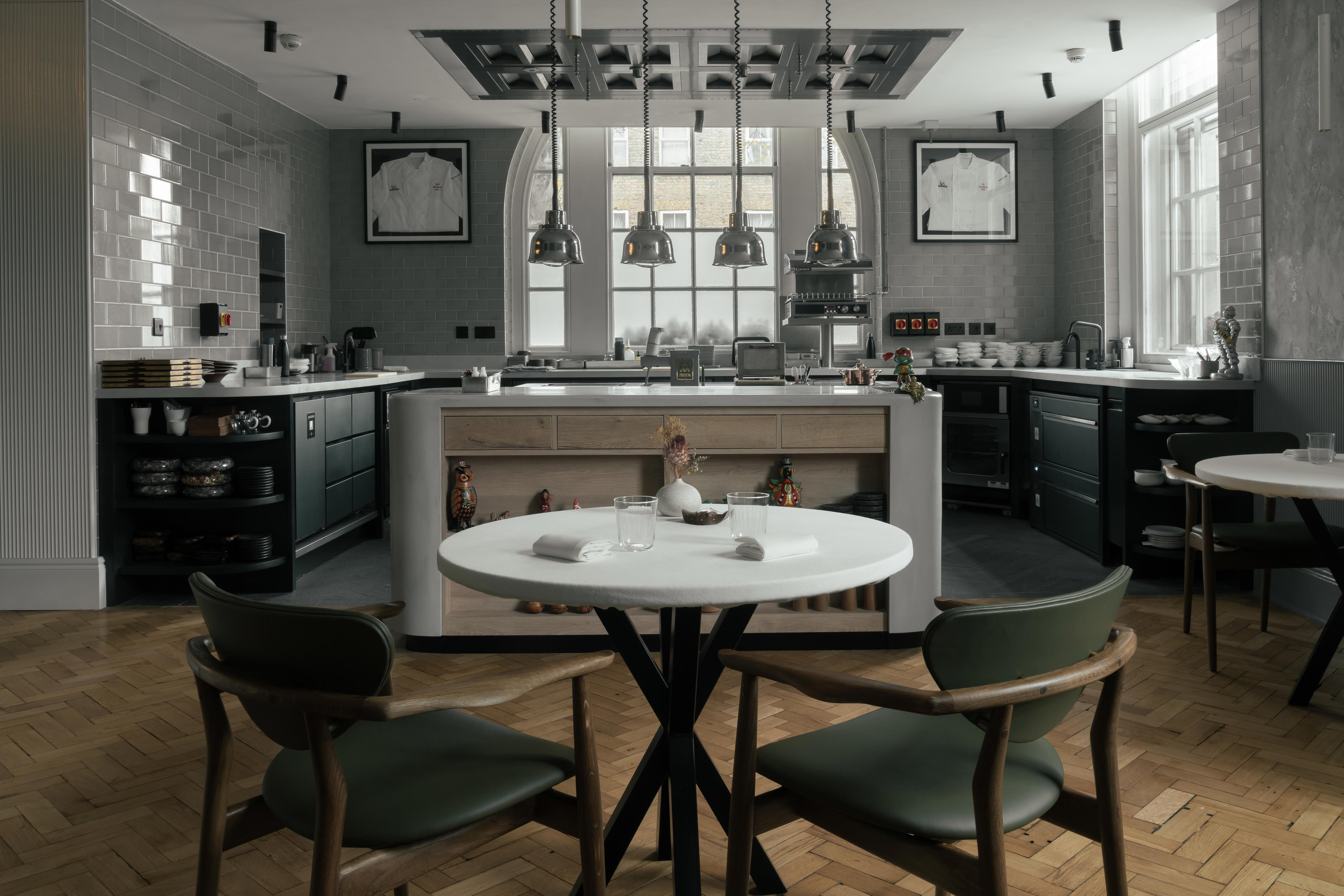
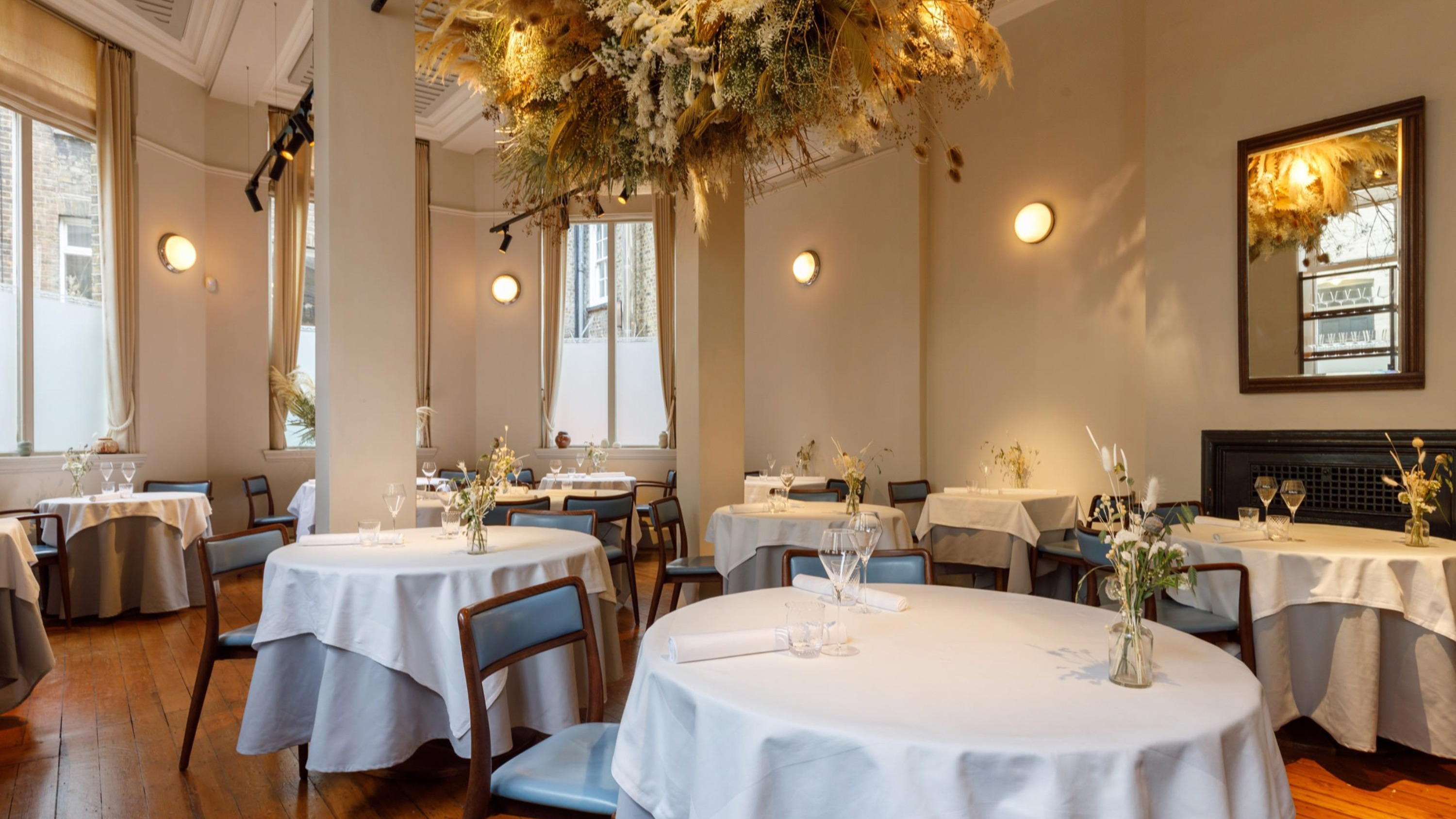
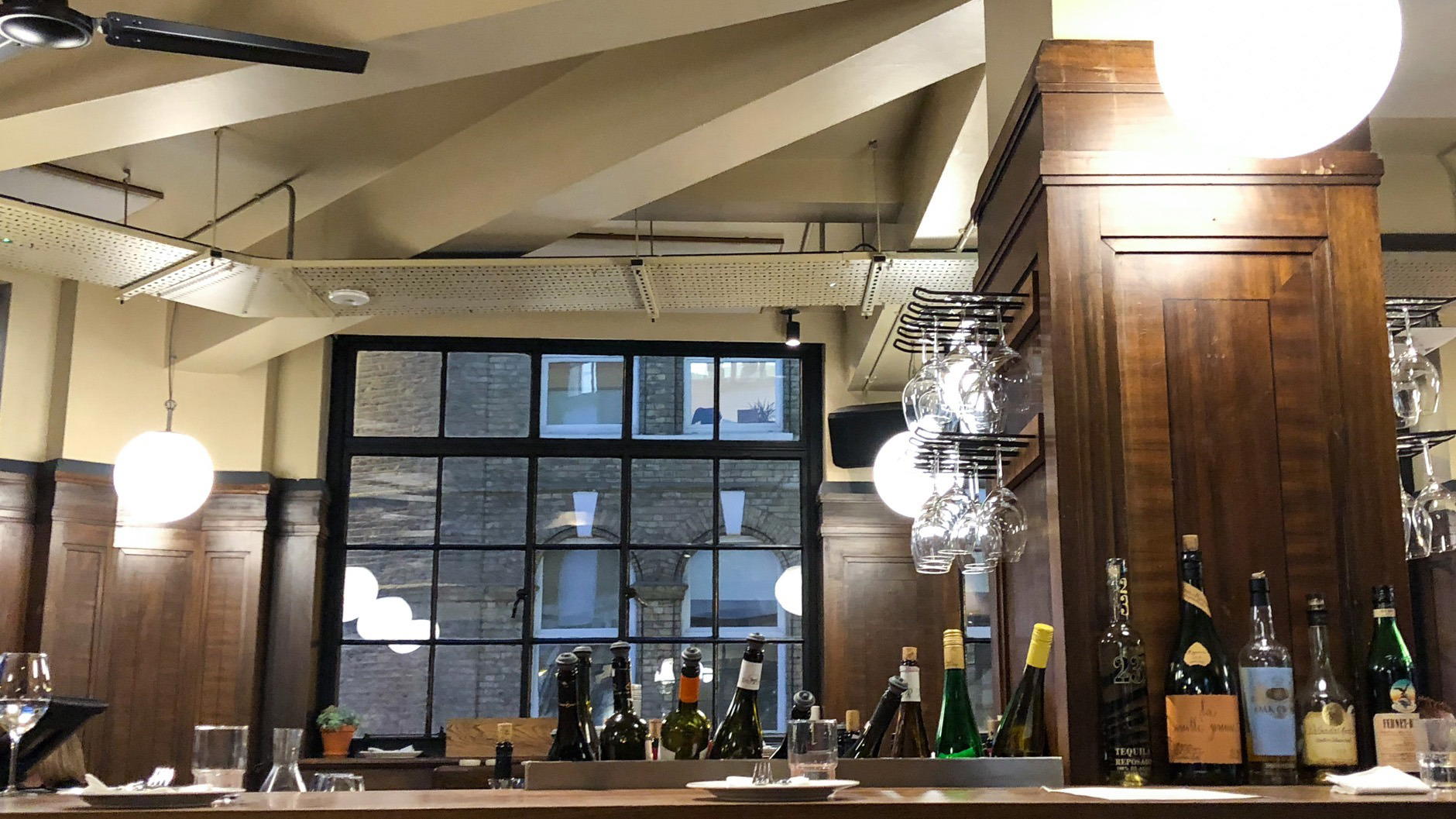
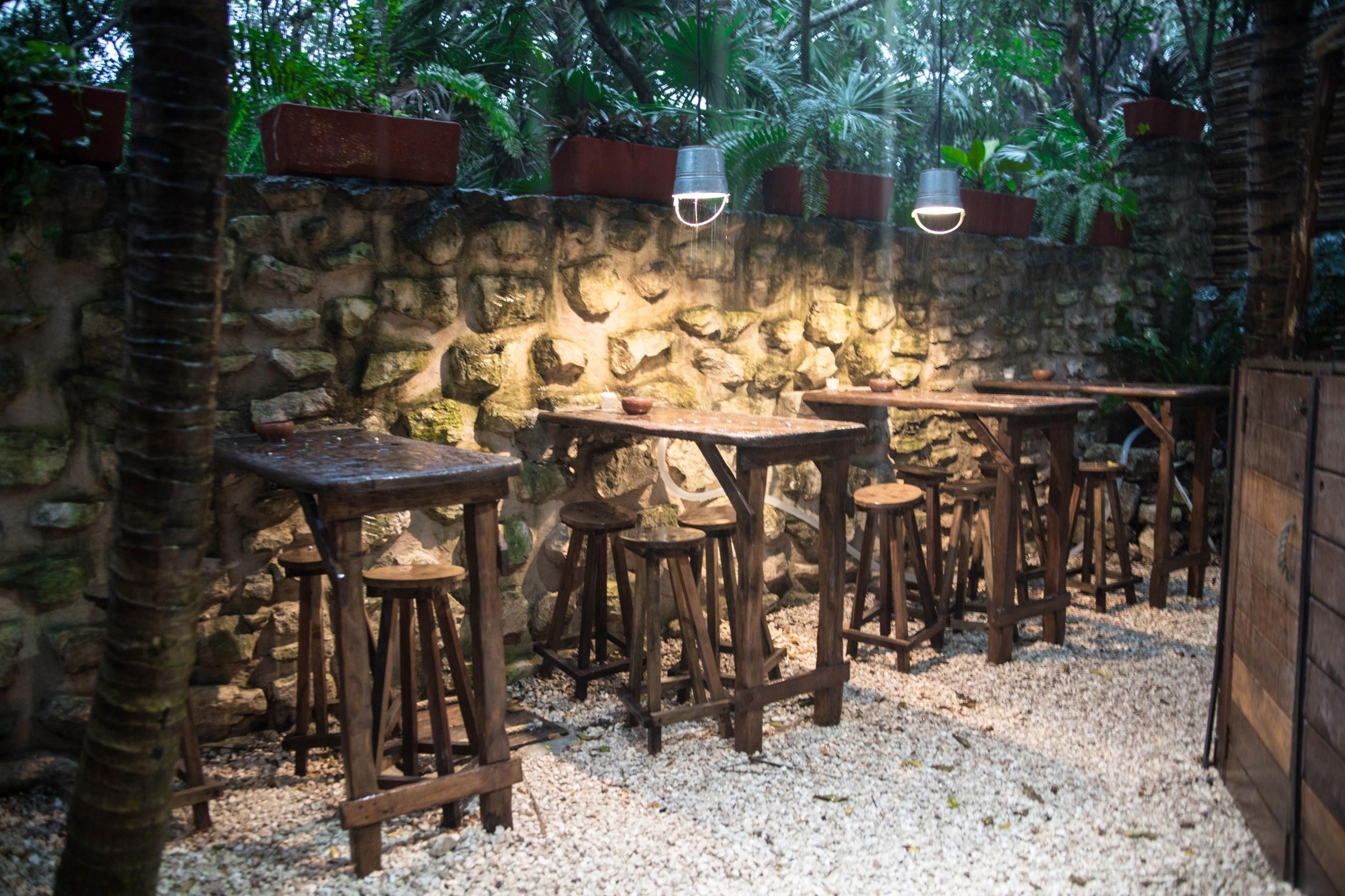
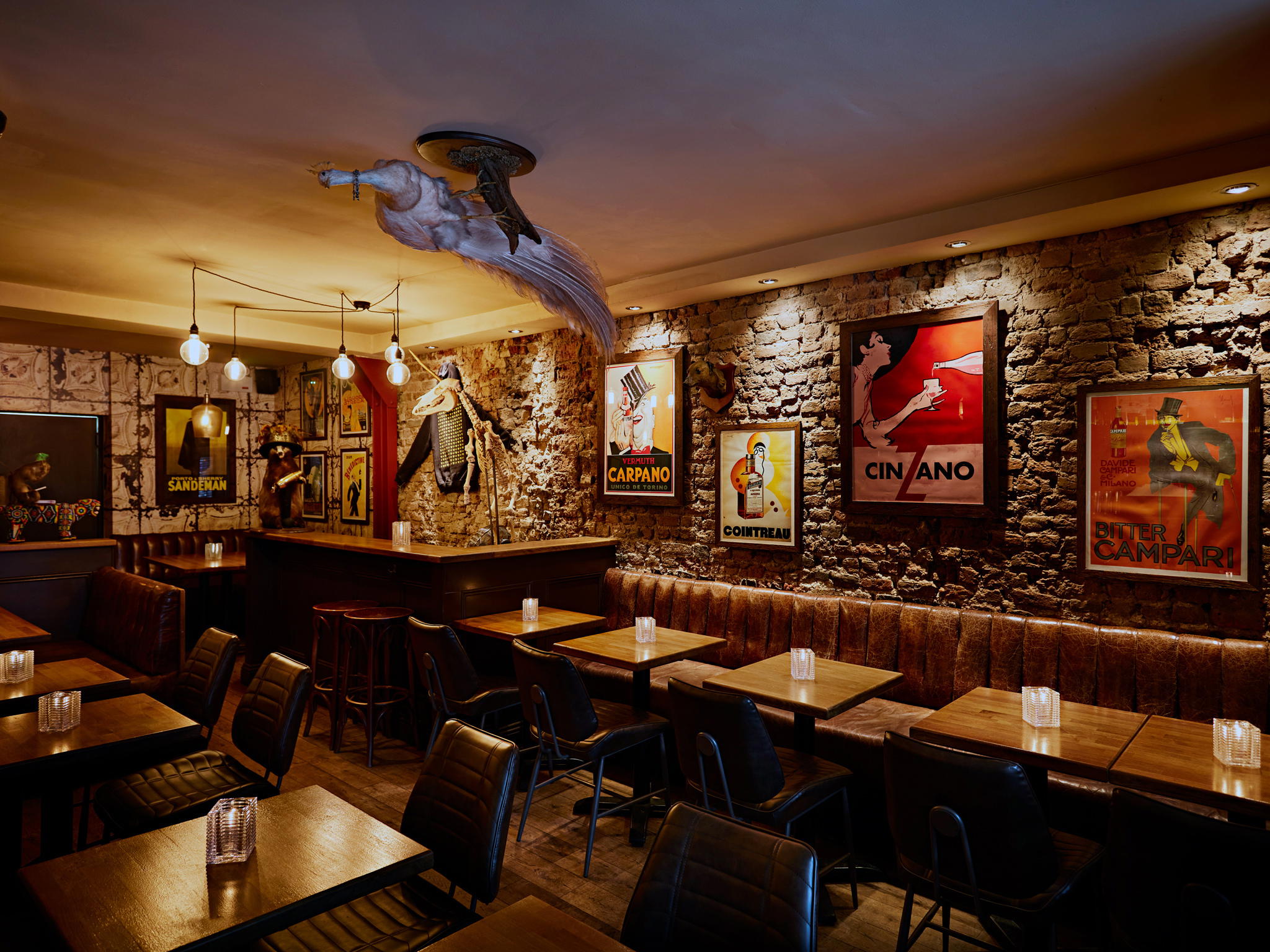
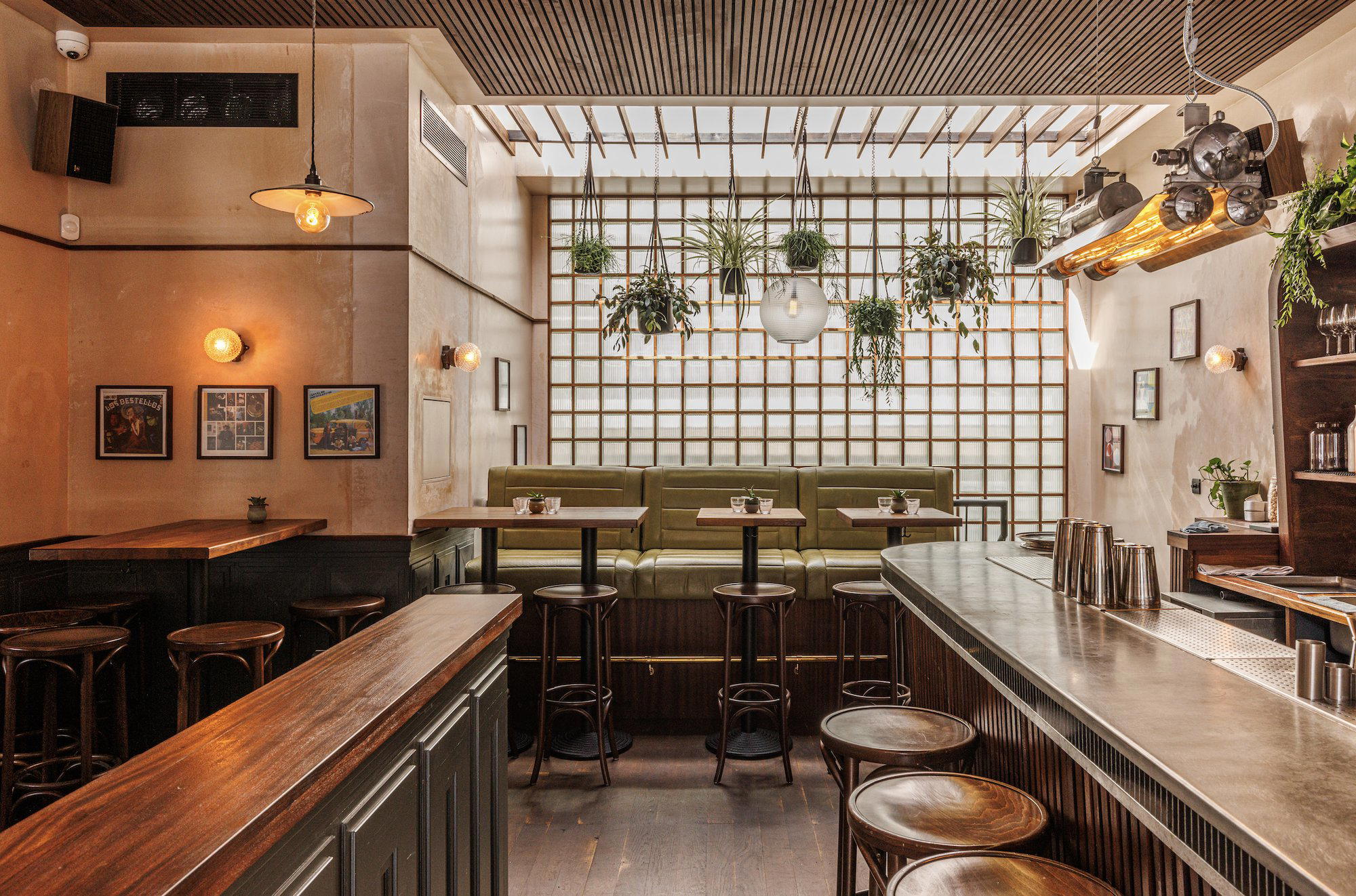
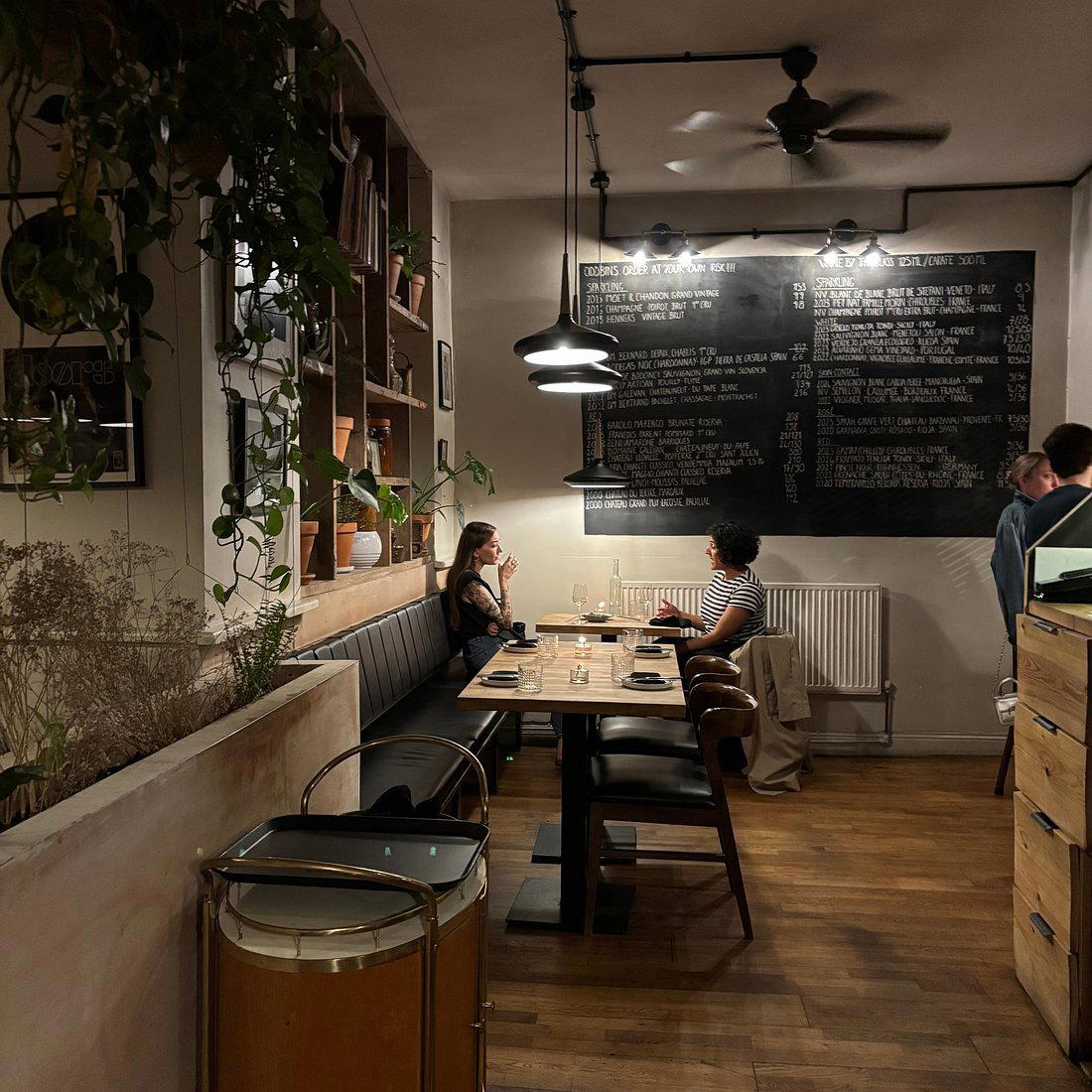
The physical container at Rogues does something deliberate: exposed concrete walls are offset by large-format printed artwork, and the mix-and-match wooden tables signal a room that is not trying to perform luxury. Near Cambridge Heath station on Hackney Road, the space sits inside a part of east London where the prevailing restaurant register runs from stripped-back natural wine bars to Bangladeshi canteens with decades of neighbourhood history. Rogues occupies its own lane within that range, informal without being casual, spare without being cold. The prints give the concrete warmth; the mismatched seating keeps the hierarchy flat.
That physical informality is not accidental. East London’s restaurant culture has long been resistant to the design codes of the West End, where a certain kind of calculated plushness signals price bracket. At Rogues, the room is the argument: this is a place where what arrives on the plate matters more than the chair you sit in. It belongs to a broader cohort of east London restaurants that have moved away from the reconstructed French bistro format that dominated the neighbourhood a decade ago, without landing in the conceptual-art dining territory that briefly filled the gap.
The Menu Format and What It Signals
The menu is structured into bites, plates, and finishers, with some dishes flagged for combination into an all-course tasting format. That architecture is now common across London’s mid-tier independent restaurants, offering flexibility without the rigidity of a fixed progression. What distinguishes the format here is the daily rotation: the kitchen operates on a genuinely seasonal, market-led basis, which means the menu changes each day rather than by season or month.
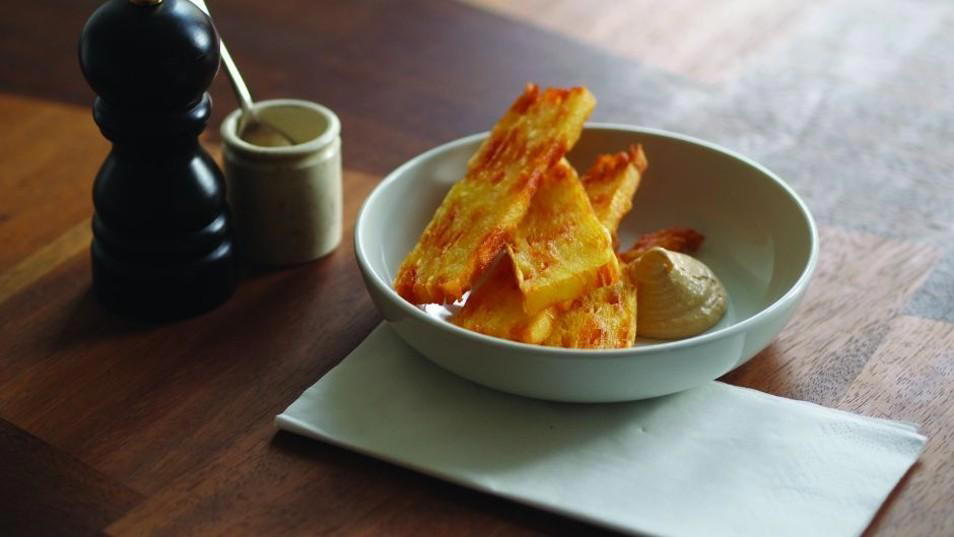
The category logic across the dishes is worth noting. A potato rösti topped with prawn, apple, and spring onion occupies a register that one critic described as “half prawn toast, half fish and chips”, which is an accurate description of how East Asian and British seaside traditions sit in the same bite without announcing themselves. A Maldon oyster dressed in sesame, soy, and kombu makes the East Asian influence explicit. Chalk stream trout arrives with blood orange, sour cream, dried sorrel, and pickled cucumber, a combination that reads Scandinavian in its acid structure but British in its sourcing. A Duroc pork chop in beer-butter sauce is paired with asparagus and sprouting broccoli in XO butter with preserved lemon, where the savoury-sour punch of the side explicitly offsets the richness of the meat. The cooking is not fusion in the old marketing sense; it is a kitchen applying whatever technique fits the ingredient without policing regional origin.
Monday roast is a deliberate twist on a tradition that is treated with genuine seriousness across London’s pub dining scene. Running it mid-week at a restaurant rather than a pub on a Sunday repositions the format without dismantling it, and it functions as a useful signal about how the kitchen approaches received ideas generally: with respect for what works, not deference to convention.
Where Rogues Sits in the East London Scene
East London’s restaurant scene has compressed into a narrower set of viable formats since the mid-2010s expansion. The neighbourhood pop-up that graduates to a permanent site is now a well-established trajectory, and Rogues followed it directly: originating as a Bethnal Green pop-up before taking the Hackney Road address. That progression matters because it means the cooking and the audience both arrived pre-formed rather than being built from scratch around a new room.
The reference point for the cooking is Galvin La Chapelle, where both chefs trained, which places the technical foundation firmly in the French fine-dining tradition. The gap between that training ground and what Rogues actually serves is where the editorial interest lies. Galvin La Chapelle operates at a price point and formality level well above what Hackney Road supports; the skill set has been redirected toward a different register. That gap between training and output is not a compromise, it is a positioning decision that a number of east London’s more serious kitchens have made in the same period.
For context on the broader London restaurant spectrum, the city’s formal end runs from CORE by Clare Smyth and Restaurant Gordon Ramsay to Sketch, The Lecture Room and Library and The Ledbury, all operating at the ££££ tier with corresponding expectations around room design, service formality, and tasting menu length. Dinner by Heston Blumenthal occupies a similar bracket with a British-historical framing. Rogues is not competing with any of those venues; it is operating in the independent neighbourhood register that those venues have no interest in, and where the daily-changing seasonal format is the point of difference rather than a concession. Our full London restaurants guide maps that full range across the city.
Elsewhere in Britain, the same seasonal-led independent format appears at different scales: L’Enclume in Cartmel and Moor Hall in Aughton pursue similar ingredient logic at significantly higher price points and formality levels, while Hand and Flowers in Marlow demonstrates how serious cooking can be delivered in a deliberately low-formality space. Gidleigh Park in Chagford, Le Manoir aux Quat’ Saisons in Great Milton, and The Fat Duck in Bray all sit at the formal-destination end of that spectrum. Internationally, Le Bernardin in New York City and Atomix in New York City illustrate how French-trained technique and East Asian influence can coexist at very different price registers, a dynamic that maps loosely onto what Rogues is doing at its own scale.
Drinks
The wine list organises bottles by weight, light through full-bodied, which is a reader-friendly structure that sidesteps the formality of classic regional classification. The list favours smaller growers. A cru Beaujolais from Eric and Pauline Morin, cited by critics who have eaten here, is indicative of the range: producers working at human scale, bottles that repay attention without requiring specialist knowledge to order. Craft beers and cocktails are also available.
Planning a Visit
Address: 460 Hackney Rd, London E2 9EG. Getting there: Cambridge Heath overground station is the closest rail point. Reservations: Recommended given the daily-changing format and neighbourhood following; booking ahead avoids the uncertainty of walk-in availability. Dress: No stated code; the informal room sets the register. Budget: Price range not published, but the neighbourhood positioning and independent format suggest a mid-tier spend relative to London’s restaurant spectrum. Note: The Monday roast dinner is a weekly fixture; the rest of the menu changes daily.
For broader London trip planning, see our guides to London hotels, London bars, London wineries, and London experiences.
Frequently asked questions
Is Rogues Michelin-listed?
Rogues has received recognition including: After a succession of pop-ups, friends Zac and Freddie found a permanent home at this rustic restaurant where bright prints enliven exposed concrete walls and the mix-and-match wooden tables fit the informal vibe. The overtly seasonal menu ….
What's the address for Rogues?
Rogues is located at 460 Hackney Rd, London E2 9EG, United Kingdom, London.
What's the signature dish at Rogues?
Rogues doesn't anchor itself to a single signature; the menu changes daily and dishes rotate with produce availability. Recurring reference points from documented visits include a prawn rösti framed as half prawn toast, half fish and chips, and a rhubarb trifle built from white-chocolate custard, magnolia flower, pistachios, and whipped cream with puffed rice. The format, bites, plates, finishers, means the kitchen's identity comes through the system, not a fixed centrepiece.
Do they take walk-ins at Rogues?
Rogues is a small, simply furnished room near Cambridge Heath overground station, and the daily-changing menu draws consistent demand from the neighbourhood. Reservations are recommended; the venue's size and format make drop-in availability unpredictable, particularly on Monday evenings when they run their roast dinner service.
Recognition, Side-by-Side
| Venue | Cuisine | Price | Awards | Notes |
|---|---|---|---|---|
| RoguesThis venue (the venue you are viewing) | Modern British Small Plates | $50–100 | Michelin Plate · The Good Food Guide GFG Exceptional | Not listed |
| The Ledbury | Modern British Fine Dining | $300–500 | 3 Michelin Stars · World's 50 Best #42 | Modern European, Modern Cuisine |
| Sketch, The Lecture Room and Library | Modern French Fine Dining | $200–300 | 3 Michelin Stars · World's 50 Best #18 | Modern French |
| CORE by Clare Smyth | Modern British Fine Dining | $150–200 | 3 Michelin Stars · World's 50 Best #97 | Modern British |
| Restaurant Gordon Ramsay | French Fine Dining | $200–300 | 3 Michelin Stars · World's 50 Best #13 | Contemporary European, French |
| Dinner by Heston Blumenthal | Historic British Fine Dining | $200–300 | 2 Michelin Stars · World's 50 Best #45 | Modern British, Traditional British |
Recognition history
Dated appearances from independent guides and award organizations, with the underlying list record or original source where available.
Michelin Plate
Michelin
The Good Food Guide GFG Exceptional
The Good Food Guide