Island

Michelin Plate
Our verdict
On the upper floor of King's Cross's Mare Street Market, Island revives surf 'n' turf as a serious culinary proposition rather than a dated steakhouse afterthought. Brad Carter and Tom Brown bring complementary expertise in meat and seafood, producing skewers and mixed grills that place the format in sharply contemporary territory. It's loud, friendly, and worth the detour north of the canal.

Pearl is the En Primeur Club membership app, where members save venues, book tables and use the concierge.
The menu
What to order
- Mixed grill
- Tamworth pork
- Quail stuffed with prawn paella
Where Surf 'n' Turf Stopped Being a Punchline
For the better part of two decades, surf 'n' turf existed in the British dining imagination as a cautionary tale: the overpriced plateau de fruits de mer wedged beside a forgettable steak, ordered by someone who couldn't decide. London's more serious restaurant culture, built around single-product focus and tasting-menu restraint, exemplified by the kind of Michelin-laden precision you find at CORE by Clare Smyth or The Ledbury, largely abandoned the combination format as too populist. Island, on the first floor of the King's Cross branch of Mare Street Market, makes the case that this was a mistake.
The revival here isn't nostalgic. It's structural. Two chefs with genuine domain expertise, Brad Carter in meat, Tom Brown in seafood, treat the combination not as a compromise but as a compositional principle. The logic is that land and sea, when handled by specialists rather than generalists, produce combinations that neither could achieve alone. That argument is made most clearly on skewers of duck and mussel or lamb belly and clam, where the fat of the meat and the brine of the shellfish perform the kind of counterpoint that a single-track menu rarely achieves.
King's Cross and the Market-Hall Format
Context matters here. King's Cross has undergone one of the more consequential urban transformations in recent London history, shifting from a transit interchange with little independent dining character to a neighbourhood that now draws food-focused operators specifically for its mix of office workers, residents, and the significant student population generated by Central Saint Martins and the Francis Crick Institute. Mare Street Market, a multi-vendor food hall with a design sensibility that pitches it above the average covered market, sits within that reconfigured zone, and Island occupies its upper floor rather than the ground level where foot-traffic logic would normally push a restaurant.
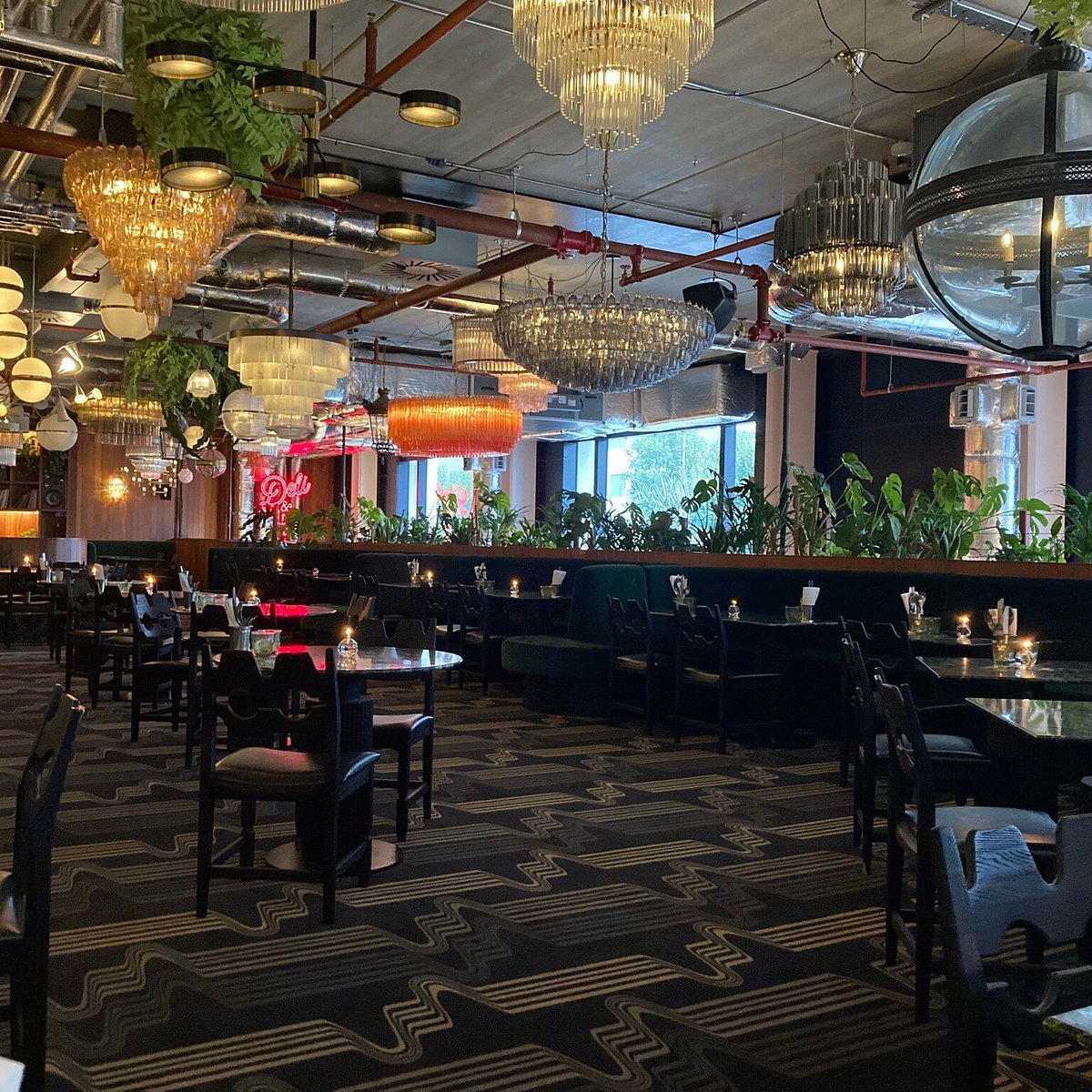
That positioning matters. The upper floor imposes a degree of intentionality on the visit. You have to choose to go there, rather than being drawn in by ground-level visibility, which gives Island a slightly more destination-oriented character than its market-hall surroundings might suggest. It also means the room operates as a distinct environment: loud, lively, and socially pitched toward groups rather than solo diners or quiet couples. The atmosphere is genuine rather than manufactured, the noise is a product of density and enthusiasm, and the service, described as friendly and engaged, amplifies rather than dampens that energy.
For a comparative frame on what premium British dining currently looks like at the opposite end of the formality scale, Dinner by Heston Blumenthal and Restaurant Gordon Ramsay represent the structured, high-ceremony end of the market. See our full London restaurants guide for the broader picture.
The Technique Behind the Format
The editorial angle on Island worth pressing is the intersection of imported professional technique and a format that has indigenous British roots. Surf 'n' turf is not a foreign import, the British coastline and its farming hinterland have long produced the raw materials for exactly this kind of combination. What changed was aspiration: as fine dining became more French in its reference points (see the influence visible at Sketch's Lecture Room and Library), the land-and-sea combination became associated with function-room catering rather than serious cooking.
What Carter and Brown bring is the technical grounding to treat the format differently. Carter's background in meat, his work at Carters of Moseley earned significant recognition before this collaboration, means the animal proteins here are handled with sourcing and cooking discipline that the original surf 'n' turf format never demanded. Brown's seafood credentials, developed at Outlaw's and then at Outlaws at The Capital and subsequently at his own Cornerstone in Hackney, bring a similar level of seriousness to shellfish and fish. The skewer format, which requires both components to be cooked to compatible doneness at the same time, is technically harder than it looks. Getting lamb belly and clam right simultaneously is a different calibre of challenge from plating each component separately.
For comparison, chefs working in the British regions who have pushed technique into traditional formats include those at L'Enclume in Cartmel, Moor Hall in Aughton, and Hand and Flowers in Marlow. The parallel isn't stylistic, Island is louder and less precious, but the underlying logic of applying serious professional training to approachable formats connects them. You can also find the land-sea combination handled at the opposite end of the structural spectrum at Le Bernardin in New York City, where the emphasis is exclusively seafood, or at Atomix, where Korean technique reframes protein combinations through a very different cultural lens.
Other British coastal and countryside restaurants worth cross-referencing for the surf-and-land tradition include Gidleigh Park in Chagford, hide and fox in Saltwood, and The Fat Duck in Bray, each of which demonstrates how British ingredients carry genuine international weight when handled with precision.
What to Order
The mixed grill is the format's fullest expression and the logical order for a first visit or a special occasion, when the range of what Carter and Brown can do together is more instructive than picking individual skewers. The skewer combinations, duck and mussel, lamb belly and clam, represent the core argument of the menu: that fat-forward meat and briny shellfish are natural partners rather than awkward bedfellows. Order these if you want to understand what the restaurant is actually trying to say. The atmosphere supports a longer, more social meal rather than a quick in-and-out, so the format rewards groups who are prepared to work through several rounds.
Planning Your Visit
| Factor | Island | Comparable London Casual Dining | Comparable London Fine Dining |
|---|---|---|---|
| Format | Surf 'n' turf, skewers, mixed grill | Single-focus menus (meat or fish) | Tasting menus, à la carte |
| Atmosphere | Loud, social, group-friendly | Varies; often more subdued | Formal, structured, quieter |
| Location | King's Cross, N1C (first floor, Mare Street Market) | City-wide spread | Mayfair, Chelsea, Notting Hill concentration |
| Chef credentials | Brad Carter (meat), Tom Brown (seafood) | Single-chef model typical | Michelin-starred lead chefs |
| Booking method | OpenTable / direct | Direct or dedicated reservation platforms |
For wider London planning, EP Club's guides cover hotels, bars, wineries, and experiences across the city.
Frequently asked questions
What do regulars order at Island?
What's the defining dish or idea at Island?
What's the ideal way to book Island?
What if I have allergies at Island?
Is Island suitable for a date or does it skew better for groups?
Side-by-Side Snapshot
Comparable venues nearby, for context on price, style, and recognition.
| Venue | Cuisine | Price | Awards | Notes |
|---|---|---|---|---|
| IslandThis venue (the venue you are viewing) | Modern British Surf & Turf | $50–100 | Michelin Plate | Not listed |
| Pippin's | Modern British Gastropub | $50–100 | Michelin Plate | Earl's Court |
| One Club Row | Modern British Bistro with New York & Parisian Influences | $50–100 | Michelin Plate · National Restaurant Awards Top 100 #41 | Bethnal Green |
| 74 Charlotte Street by Ben Murphy | Modern British | $50–100 | Michelin Plate · AA Rosettes 3 Rosettes | Fitzrovia |
| The Mayfair Chippy | Premium British Fish & Chips | $30–50 | Not listed | Mayfair |
| Clarke's | Seasonal Modern British | $100–150 | Michelin Plate · The Good Food Guide GFG Good | Kensington Palace Gardens |
Recognition history
Dated appearances from independent guides and award organizations, with the underlying list record or original source where available.
Michelin Plate
Michelin
Continue exploring
More in London
Restaurants in London
All restaurants in London →
Bars in London
All bars in London →
Hotels in London
All hotels in London →

Details
- Lively
- Modern
- Elegant
- Trendy
- Date Night
- Group Dining
- Special Occasion
- Open Kitchen
- Craft Cocktails
- Local Sourcing
- Small Plates
- Family Style
- Vegetarian Friendly
Current opening hours
- Monday
- Closed
- Tuesday
- Closed
- Wednesday
- 5:30–10 PM
- Thursday
- 12–2:30 PM, 5:30–10 PM
- Friday
- 12–2:30 PM, 5:30–10 PM
- Saturday
- 12–2:30 PM, 5:30–10 PM
- Sunday
- 12–7 PM
Hours can change for holidays and private events. Hours as of .
Relaxed yet refined atmosphere in a large chandelier-lit space with a buzzy, lively vibe.