Ristorante Saraceno
On Hanover Street in Boston's North End, Ristorante Saraceno sits inside one of the city's most concentrated Italian dining corridors, where the expectations around sourcing and tradition have sharpened considerably in recent years. The restaurant draws on the neighbourhood's long relationship with Italian-American cooking while operating against a backdrop of growing scrutiny on how ingredients are sourced and what sustainability means in a practical kitchen context.
Pearl is the En Primeur Club membership app — saves, bookings, and concierge access live there. Same editors, same standards.
- Address
- 286 Hanover St, Boston, MA 02113
- Phone
- +16172275353
- Website
- saracenonorthend.com
- Directions
- Get directions
 Saves & bookings on Pearl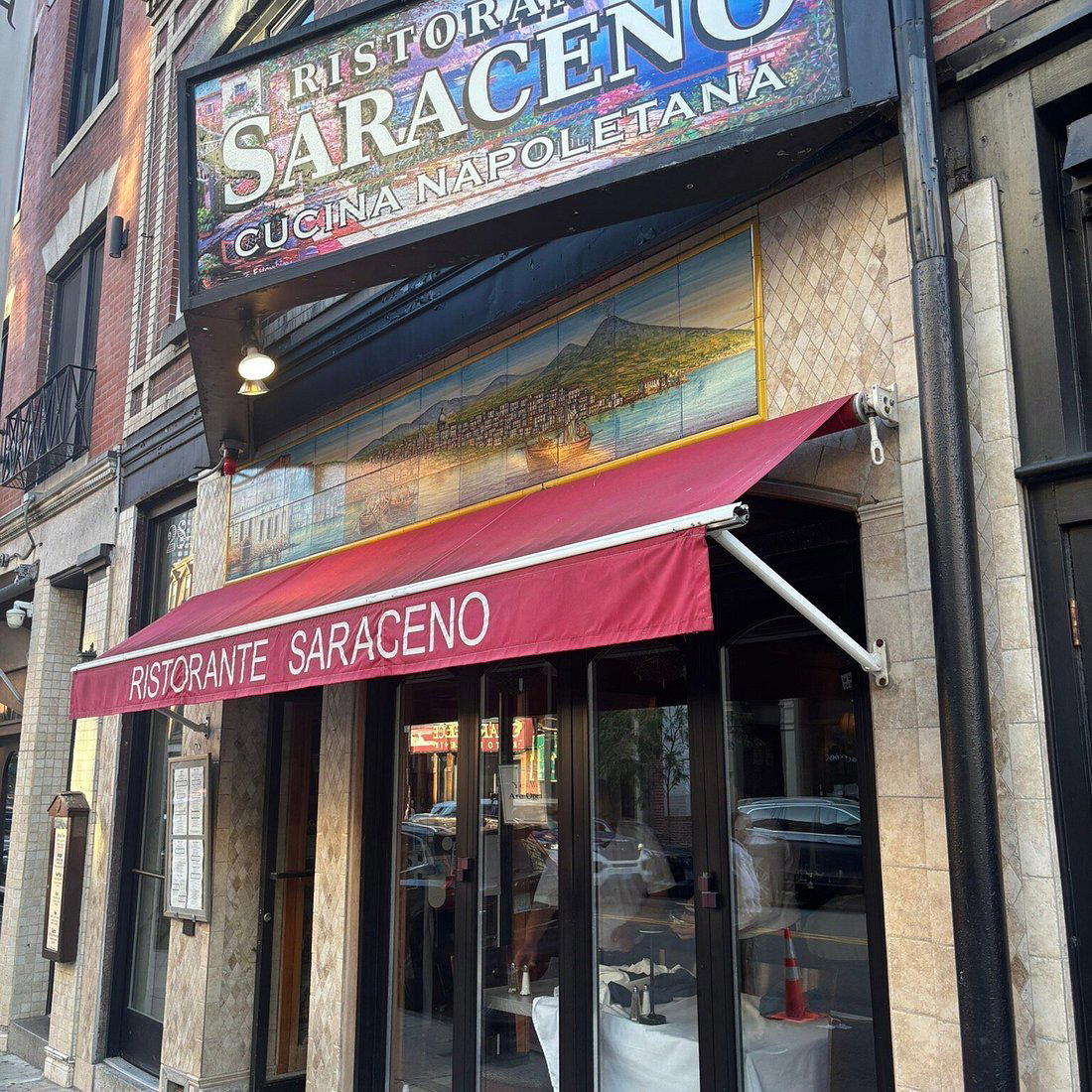
Hanover Street and the Weight of the North End
Few dining streets in American cities carry as much accumulated expectation as Hanover Street in Boston's North End. The neighbourhood has been synonymous with Italian-American cooking since the early twentieth century, and the density of restaurants along this stretch means every kitchen operates under comparison, whether its owners invite that reading or not. Ristorante Saraceno, at 286 Hanover St, sits inside this corridor and inherits both its advantages and its obligations. The physical approach tells you something: the street is narrow, the buildings close, and the smell of garlic and fresh bread arrives before you see the door. This is not ambient atmosphere engineered for effect. It is the accumulated output of dozens of working kitchens, and Saraceno is one node in that network.
That density matters for how the North End's restaurants are now being assessed. Increasingly, the question being asked of Italian restaurants in this neighbourhood is not simply whether the pasta is house-made or the sauce is correct, but where the ingredients originated and how the kitchen manages waste. These are not questions distinctive to Boston, but they arrive here with particular force because the North End's identity has always been built on authenticity claims. If you are going to argue that your cooking connects to Italian tradition, the sourcing logic has to follow.
Sourcing as a Structural Argument
The shift toward ethical sourcing and waste reduction in Italian-American restaurant kitchens has been gradual and uneven. At the higher end of the market, it has become a meaningful differentiator. Restaurants like Blue Hill at Stone Barns in Tarrytown have made the sourcing narrative central to their entire format, building menus around what the farm produces rather than the reverse. That model is not directly transferable to a neighbourhood Italian restaurant on a busy urban street, but the pressure it represents has filtered down through the American dining conversation. Diners who have engaged with the sourcing debate at places like Single Thread Farm in Healdsburg or Lazy Bear in San Francisco bring those questions with them when they sit down anywhere.
In the North End specifically, the seafood dimension of this conversation is unavoidable. Boston's proximity to the New England fishing grounds means that any Italian kitchen working with fish and shellfish is operating inside among the more scrutinised supply chains in American dining. The question of which boats, which fisheries, and which seasons governs a credible sourcing story here in ways that differ from, say, a landlocked Italian restaurant in the Midwest. Venues like Ostra and Neptune Oyster have built reputations in Boston's seafood-facing Italian and raw bar formats partly by demonstrating specificity about provenance. That specificity is now a baseline expectation rather than a point of distinction.
What Italian Tradition Actually Requires
Italian cooking, at its structural core, is a waste-reduction cuisine. The tradition of using every part of the animal, preserving summer vegetables through winter, and building flavour from scraps rather than premium cuts is not a modern sustainability intervention. It is how Italian regional cooking developed across centuries of scarcity. The cucina povera tradition, which informs everything from ribollita to pasta e fagioli, is built around the logic of using what you have and wasting nothing. A North End restaurant that takes this tradition seriously does not need to import sustainability as an external framework. It is already in the recipe.
That context matters when assessing how seriously any Italian restaurant is engaging with the sourcing conversation versus simply gesturing at it. The distinction between kitchens that have genuinely built procurement around seasonal availability and those that have added a line to their menu about local ingredients is visible in the cooking itself. Pasta made from locally milled flour behaves differently from commodity flour. Tomatoes sourced at the peak of New England's short summer season produce a different sauce structure than imported canned equivalents. These are not sentimental differences. They are technical ones.
Where Saraceno Sits in the North End comparable set
The North End is not a monolithic dining block. It contains everything from tourist-facing red-sauce restaurants to more considered kitchens that have earned sustained local loyalty. Saraceno's position at 286 Hanover puts it inside the street's most active stretch, alongside competitors that range across price points and ambitions. For comparison, Boston's broader Italian-influenced fine dining scene now includes formats as different as the Portuguese-inflected tasting counter at Agosto and the steakhouse confidence of Abe & Louie's, which signals how much the category has expanded beyond any single template.
Nationally, the Italian fine dining conversation has been reset by restaurants that have demonstrated what serious sourcing and technique look like at the highest level. Le Bernardin in New York City and Providence in Los Angeles have raised the bar for what a seafood-forward fine dining kitchen can deliver in terms of provenance rigour. Alinea in Chicago and The French Laundry in Napa operate in adjacent territory from a technique and sourcing discipline standpoint. These are reference points for the upper tier of American dining, and they shape what a well-travelled diner brings to any restaurant table, including one on Hanover Street.
Closer to home, the Boston dining scene has been adding depth. 311 Omakase and 1928 Rowes Wharf represent different points on the city's premium dining spectrum, and 75 on Liberty Wharf anchors the waterfront end of that conversation. The full picture of where Boston's restaurants are now is covered in our full Boston restaurants guide.
Know Before You Go
- Address: 286 Hanover St, Boston, MA 02113
- Neighbourhood: North End
- Cuisine: Italian-American, North End tradition
- Booking: Contact the restaurant directly; walk-ins possible on the street during off-peak hours, though weekend evenings on Hanover Street fill quickly across the block
- Timing: The North End is at its most animated from late spring through early autumn; winter weeknights offer a noticeably quieter experience
- Getting there: Haymarket station (Green and Orange lines) is the closest MBTA stop, a short walk from Hanover Street
City Peers
Comparable venues nearby, for context on price, style, and recognition.
| Venue | Cuisine | Price | Notes |
|---|---|---|---|
| Ristorante SaracenoThis venue — the venue you are viewing | Classic Italian/Napoletana | $$$ | Not listed |
| Standard Italian | Modern Italian Pasta | $$$ | Kenmore |
| casarecce | Rustic Italian Pasta | $$$ | North End |
| Arya Trattoria | Old World Italian Trattoria | $$$ | North End |
| Filippo Ristorante | Classic Abruzzese Italian | $$$ | North End |
| Sportello | Italian Counter Service | $$$ | Fort Point |
Continue exploring
More in Boston
Restaurants in Boston
Browse all →
Bars in Boston
Browse all →
Hotels in Boston
Browse all →
Wineries in Boston
Browse all →
At a Glance
- Classic
- Elegant
- Romantic
- Date Night
- Special Occasion
- Group Dining
- Rooftop
- Private Dining
- Extensive Wine List
Current opening hours
- Monday
- 11:30 AM–10 PM
- Tuesday
- 11:30 AM–10 PM
- Wednesday
- 11:30 AM–10 PM
- Thursday
- 11:30 AM–10 PM
- Friday
- 11:30 AM–10 PM
- Saturday
- 11:30 AM–10 PM
- Sunday
- 11:30 AM–10 PM
Hours can change for holidays and private events. Last verified .
Charming and authentic Italian atmosphere well-suited for romantic dinners or family gatherings.