Our verdict
Risala occupies a formal dining room within Umaid Bhawan Palace, the Art Deco royal residence that still functions as the seat of the Jodhpur royal family. The restaurant draws on Rajput culinary tradition, placing it in a small category of palace-hotel dining rooms where provenance and setting carry as much weight as the food. Advance booking through the hotel is advisable for non-resident guests.

Pearl is the En Primeur Club membership app — saves, bookings, and concierge access live there. Same editors, same standards.
- Address
- Umaid Bhawan Palace, Circuit House Rd, Cantt Area, Jodhpur, Rajasthan 342011, India
- Phone
- +91 291 251 0101
- Hours
- Daily 7:30 AM–11 PM
- Website
- tajhotels.com
- Directions
- Get directions
Dining Inside a Working Royal Palace
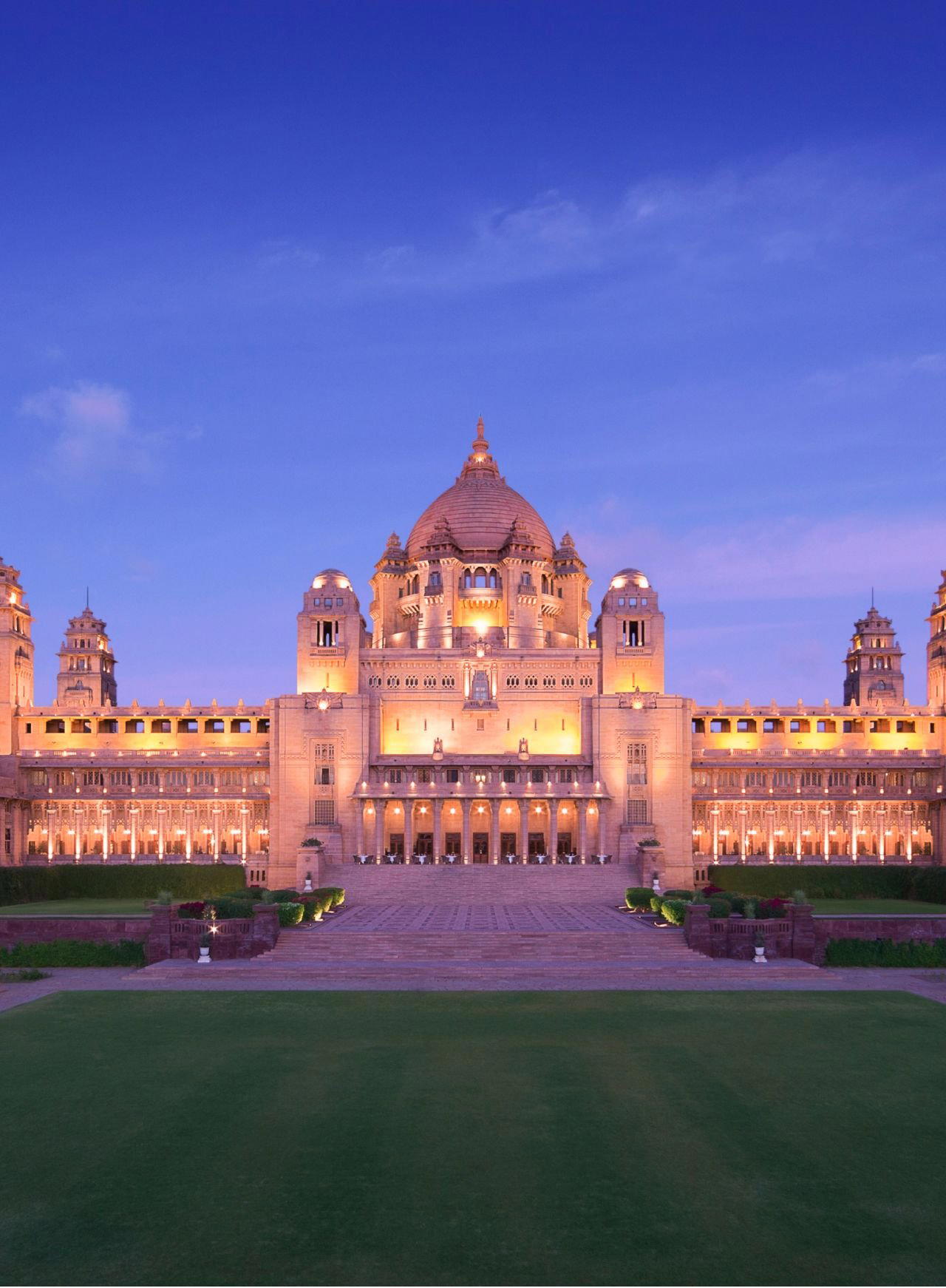
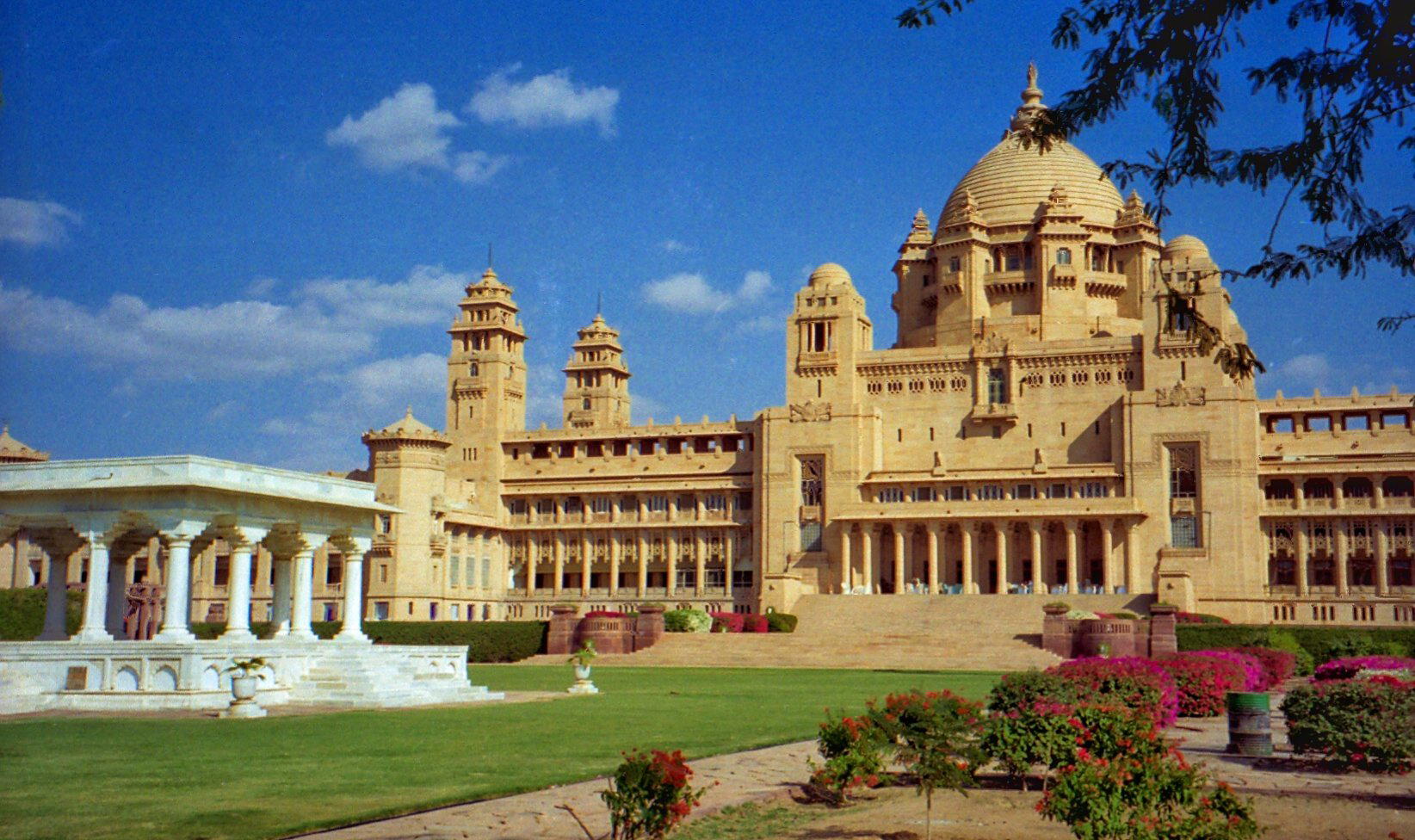
Umaid Bhawan Palace is not a heritage hotel in the loosest sense of that phrase. The building, completed in 1943 for Maharaja Umaid Singh, remains the private residence of the Jodhpur royal family, with one wing operating as a Taj hotel and another still occupied by the current maharaja. Risala sits within that hotel wing, which means the dining context here is categorically different from a converted haveli or a property that merely trades on Rajasthani aesthetics. The sandstone corridors, the scale of the interiors, and the deliberate formality of the space are architectural facts, not design conceits.
Approaching the palace from Circuit House Road, the building's sheer mass registers before any detail does. It is one of the largest private residences in the world by floor area, and the approach — a long drive through manicured grounds above the city — establishes a sense of remove from Jodhpur's more immediate street energy. That remove is part of the dining proposition at Risala: the restaurant functions inside a world that has been deliberately insulated from the city below it, and the experience reflects that separation in its pacing, service register, and physical environment.
What Rajput Cuisine Actually Means at This Level
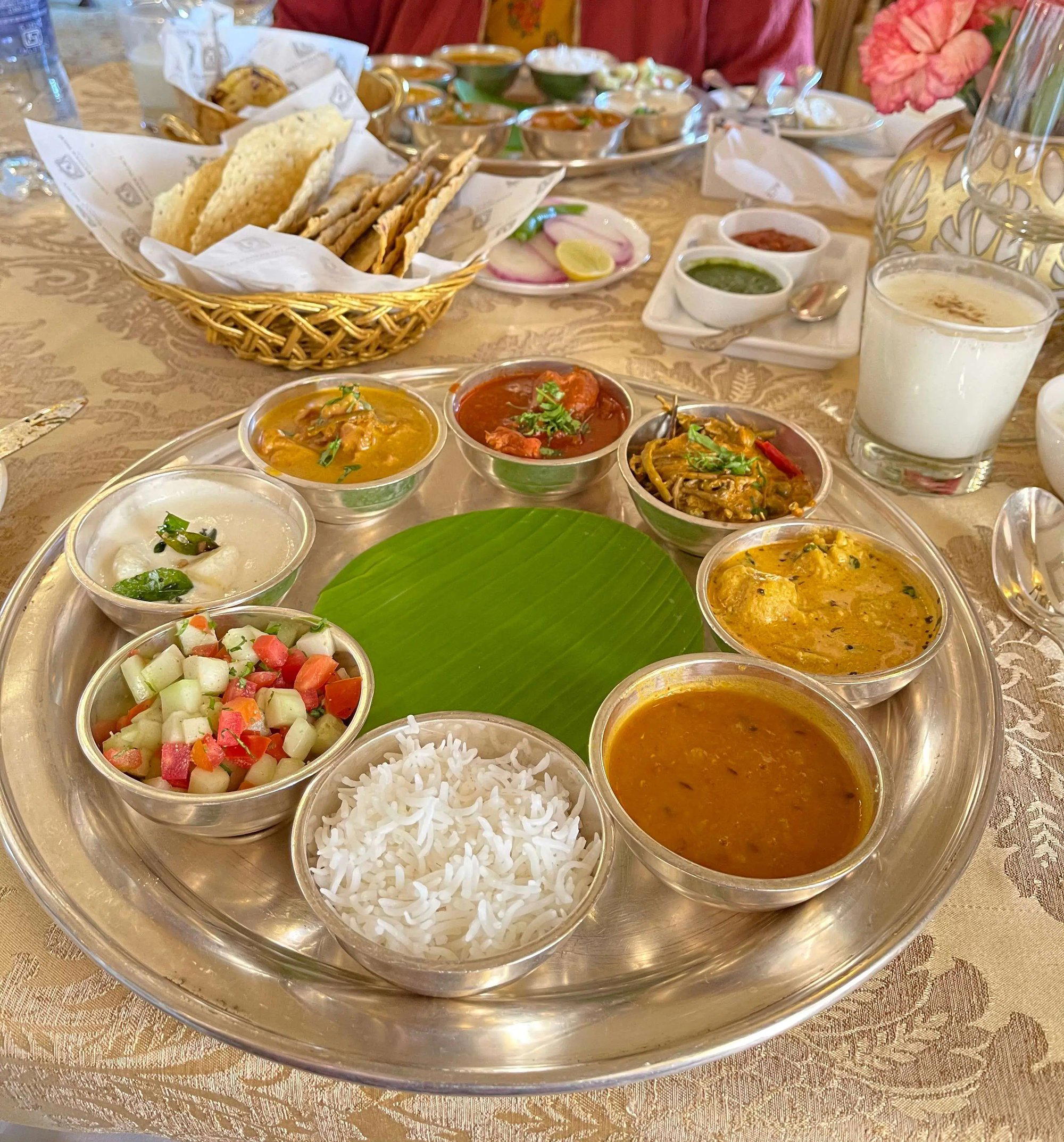
Rajput culinary tradition developed under specific constraints: a warrior aristocracy, arid terrain with limited water, reliance on game, preserved ingredients, and the logistical demands of long military campaigns. The result was a cuisine that learned to do more with less water, that favoured slow-cooked meats, dry spice blends, and preservation techniques that still define the flavour logic of Rajasthani cooking today. Laal maas, the slow-cooked mutton preparation built on mathania chilies, is perhaps the most cited regional dish, but the broader canon includes safed maas (a cream-based white mutton preparation), ker sangri (a wild berry and dried bean combination from the desert), and game preparations that remain difficult to find in restaurant settings outside the region.
Palace-hotel dining rooms occupy a specific position in that tradition. They carry access to archival recipes and family culinary lineage that no commercial kitchen in the city can claim with equivalent legitimacy. At the same time, they operate under luxury hotel constraints: consistency, allergen management, international guest expectations. The better palace dining rooms hold those two demands in tension productively; the weaker ones resolve the tension by defaulting to a safe, generalist Indian menu.
Jodhpur's Dining Scene and Where Risala Sits Within It
Jodhpur's restaurant offering divides roughly into three tiers. At the base, the old city's rooftop cafes and street-facing dhabas serve travellers moving through on a circuit; the food is serviceable and occasionally excellent, but the context is informal. In the middle, a cluster of heritage properties and boutique hotels operate dining rooms that market Rajasthani food to international guests with varying degrees of seriousness. At the leading, Risala and the other dining options within Umaid Bhawan Palace, including the palace's broader food and beverage programme, occupy a formal register that has no real equivalent elsewhere in the city.
Comparable mid-range options worth knowing about include Marudhar Restaurant and The Pillars, both of which offer Rajasthani food in less formal settings at considerably lower price points. For travellers who want to understand the regional cooking without committing to palace-hotel pricing, those options are useful counterpoints. But the case for Risala rests on something those restaurants cannot provide: physical access to a building that is, in itself, a primary document of Jodhpur's royal history.
Across India, the restaurants that hold the most interest editorially tend to be those anchored to a specific culinary geography rather than a generalist pan-Indian menu. Bukhara in New Delhi built its reputation on a narrow, disciplined focus on frontier-style cooking over three decades. Farmlore in Bangalore works from hyper-local sourcing and documented regional recipes. The question for any palace dining room is whether the regional identity on the menu reflects genuine culinary specificity or functions primarily as décor. See our full Jodhpur restaurants guide for the wider picture.
Planning Your Visit
Non-resident guests can dine at Risala, but booking in advance through the hotel is the appropriate route rather than arriving without a reservation. The palace operates at a price point consistent with Taj-managed luxury properties in India, which places a dinner here in a different bracket from Jodhpur's mid-market dining options. Dress code expectations align with formal palace-hotel norms: the building's architecture and service register make smart casual the minimum reasonable standard, and the experience reads better with more considered dress. The palace sits on the ridge above the city, roughly fifteen minutes by car from the clock tower area of the old city, and the drive at dusk, with the blue city spread below and the Mehrangarh Fort lit on its own escarpment, constitutes its own argument for timing dinner early enough to arrive while there is still light.
For travellers building a broader India itinerary around serious dining, Risala fits logically into a circuit that might also include Naar in Kasauli for mountain-region cooking and Americano in Mumbai for a different register entirely. Further afield, Leela Kerala Terrace in Trivandrum and WelcomCafe Oceanic Restaurant in Visakhapatnam represent the same category of heritage-adjacent hotel dining applied to their own regional cuisines. The pattern across those properties is consistent: the most compelling ones are those where the regional food identity is specific enough to justify the formal setting and the price. Additional reference points for regional Indian cooking in different formats include Beera Chicken House in Amritsar, 5868 Restaurant in Gandhinagar, Harvest Kitchen Somnath in Veraval, La Fountain Blu in Navsari, and Dadi Ki Rasoi in Budaun. For contrast at the international level, Le Bernardin in New York City and Atomix in New York City demonstrate what happens when regional culinary identity is applied with maximum formal discipline, which is ultimately the same question Risala is answering in a Rajasthani register.
Frequently asked questions
Is Risala suitable for children?
Umaid Bhawan Palace operates as a working royal residence and luxury hotel, which sets the tone for Risala's dining room. The setting demands a level of comportment that younger children may find difficult to sustain across a full dinner service. Families with older children who are comfortable in formal surroundings should call the hotel directly to confirm current arrangements before booking.
What should I expect atmosphere-wise at Risala?
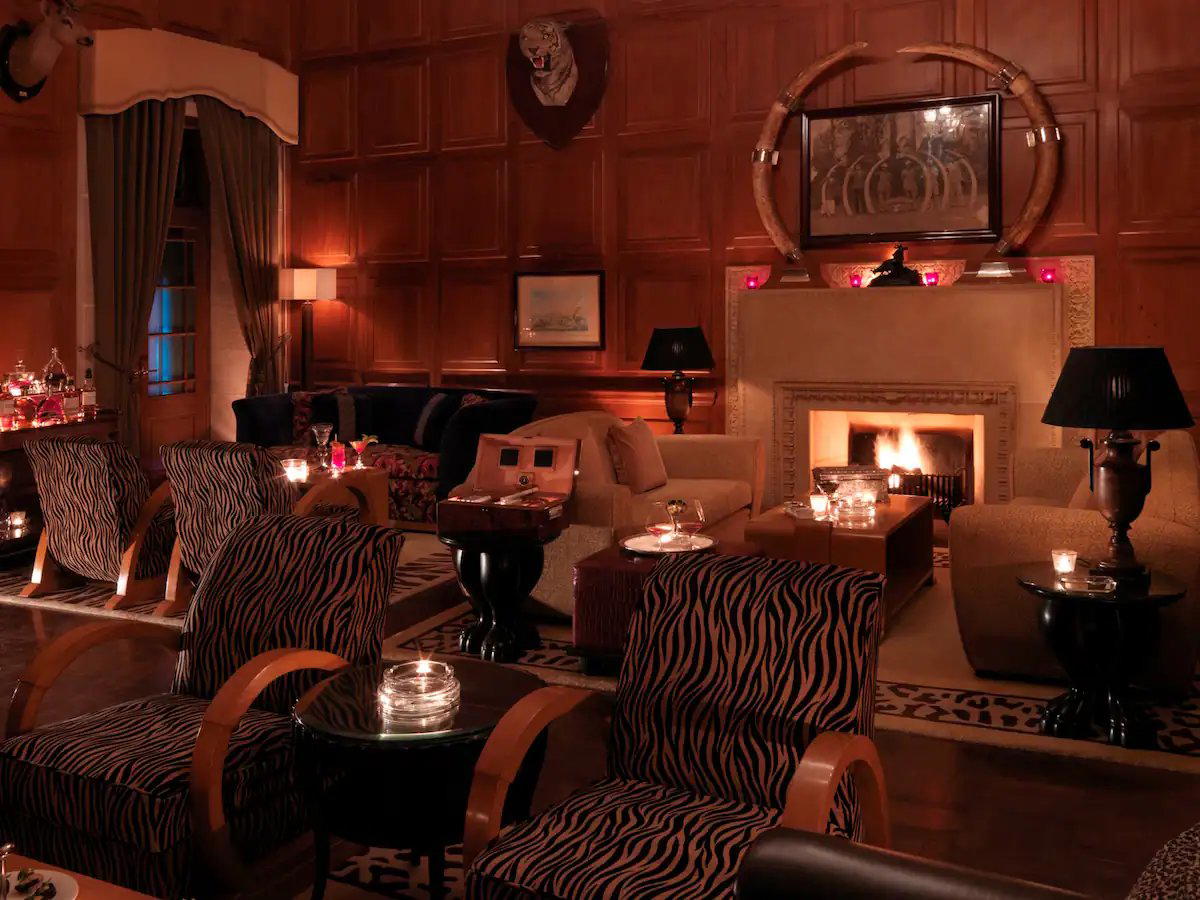
Risala sits inside Umaid Bhawan Palace, a 347-room Indo-Deco structure completed in 1943 that still houses the Jodhpur royal family in a private wing. The dining room carries the weight of that context: high ceilings, period architecture, and a formality that reflects the building's continued function as a royal seat rather than a repurposed heritage property. It reads closer to a European grand hotel than a tourist-facing heritage dining room.
Can non-residents of Umaid Bhawan Palace dine at Risala?
Non-resident guests are welcome at Risala, but advance booking through the hotel is the correct approach. Jodhpur has limited alternatives at this tier of Rajput cuisine within a palace setting, which makes securing a reservation before arrival the practical priority rather than attempting a walk-in.
What do regulars order at Risala?
Risala's menu is grounded in Rajput culinary tradition, a cuisine shaped by arid terrain, game cookery, and preservation techniques developed over centuries by a warrior aristocracy with limited access to water and fresh produce. Dishes rooted in that lineage, slow-cooked meats, lentil preparations, and game-influenced recipes, represent the strongest case for eating here rather than at Jodhpur's broader hotel dining options. Specific current menu items should be confirmed with the hotel at the time of booking.
Price Lens
Comparable venues nearby, for context on price, style, and recognition.
| Venue | Cuisine | Price | Awards | Notes |
|---|---|---|---|---|
| RisalaThis venue — the venue you are viewing | Modern Indian Fusion Fine Dining | $50–100 | Not listed | Not listed |
| Umaid Bhawan Palace | Royal Rajasthani & Continental Fine Dining | $50–100 | Not listed | Jodhpur, Royal Rajasthani & Continental Fine Dining |
| Marudhar Restaurant | Authentic Rajasthani Cuisine | $1–10 | Not listed | Aau, Authentic Rajasthani Cuisine |
| The Pillars | Not listed | Not listed | Not listed | Cantt Area, Contemporary European Fine Dining |
| Bukhara Restaurant | North West Frontier Tandoori | $30–50 | World's 50 Best #37 · La Liste Top Restaurants | Diplomatic Enclave, North West Frontier Indian |
| Avatara Mumbai | Not listed | Not listed | Not listed | Santacruz West, Modern Indian Vegetarian Fine Dining |
Details
- Elegant
- Ornate
- Sophisticated
- Special Occasion
- Date Night
- Celebration
- Hotel Restaurant
- Private Dining
- Terrace
- Historic Building
- Organic
- Garden
- Skyline
- Mountain
- Small Plates
- A La Carte
- Wine
- Cocktails
- Vegetarian Friendly
- Vegan Options
- Gluten Free Options
Current opening hours
- Monday
- 7:30 AM–11 PM
- Tuesday
- 7:30 AM–11 PM
- Wednesday
- 7:30 AM–11 PM
- Thursday
- 7:30 AM–11 PM
- Friday
- 7:30 AM–11 PM
- Saturday
- 7:30 AM–11 PM
- Sunday
- 7:30 AM–11 PM
Hours can change for holidays and private events. Last verified .
Quiet ambience with soothing lighting, opera-ish music, and sophisticated ornate surroundings.