Our verdict
A pure vegetarian kitchen on SH 43 in Budaun, Uttar Pradesh, Dadi Ki Rasoi draws on the region's deeply rooted tradition of plant-based home cooking. The name translates roughly as 'grandmother's kitchen,' signalling a domestic cooking register rather than a restaurant-format one. For travellers moving through western UP, it represents an honest point of contact with local vegetarian foodways.

Pearl is the En Primeur Club membership app — saves, bookings, and concierge access live there. Same editors, same standards.
- Address
- SH 43, Bhagautipur, Uttar Pradesh 243601, India
- Phone
- +919258014275
- Hours
- Daily 8 AM–11 PM
- Website
- business.site
- Directions
- Get directions
Budaun's Vegetarian Table: What the Region Puts on the Plate
Uttar Pradesh's western districts occupy a particular position in India's vegetarian cooking traditions. The Gangetic plains here produce wheat, mustard, lentils, and seasonal vegetables at scale, and the cuisine that developed around those ingredients is less ornamental than the restaurant-format vegetarian food found in Delhi or Lucknow. It is direct, repetitive in the leading sense, and calibrated to people who eat this way every day rather than occasionally. Budaun sits within that agricultural corridor, and the vegetarian kitchens that operate along its state highway routes reflect that agricultural reality more faithfully than anything on a urban tasting menu. For an editorial perspective on how ingredient provenance shapes vegetarian cooking across India, see how Farmlore in Bangalore approaches sourcing as a structural commitment rather than a marketing gesture.
The Kitchen the Name Describes
Dadi Ki Rasoi translates, without ceremony, as grandmother's kitchen. That framing is doing real work here. It signals a domestic cooking register rather than a restaurant-format one: the expectation is dal cooked down properly, roti made to order, sabzi that reflects what came in that day rather than what a printed menu requires year-round. On SH 43 in the Bhagautipur area of Budaun, the address places it along a state highway corridor where transit traffic mixes with local custom, which is typically the environment where this style of cooking survives most intact. Highway dhabas and roadside vegetarian kitchens along UP's state routes have historically operated as genuine repositories of regional home cooking, because their clientele demands familiarity and value over novelty.
The sourcing logic for a kitchen of this type is worth understanding on its own terms. Western UP's agricultural output means that seasonal vegetables, mustard oil, and whole grains move through local supply chains with relatively short distances from field to kitchen. That proximity is not a brand position in a place like Budaun; it is simply how the supply chain works. The result, in a kitchen that is paying attention, is produce at a stage of freshness that urban restaurant supply chains routinely cannot match. Kitchens operating this close to their ingredient sources often have a narrower menu than metropolitan vegetarian restaurants, but the depth within that narrower range tends to be more reliable. Compare this ground-level sourcing dynamic with the more formalised farm-to-table frameworks that urban Indian restaurants have constructed, as seen in the approach taken at Naar in Kasauli.
Pure Vegetarian as a Category, Not Just a Preference
India's pure vegetarian designation carries specific cultural weight that the phrase does not fully convey in a Western context. It signals the absence of eggs as well as meat, and in many cases indicates kitchens that observe additional restrictions around onion and garlic depending on community custom. In Uttar Pradesh, where a significant portion of the population follows Brahminical or Jain dietary frameworks, the pure vegetarian kitchen is not a niche offering; it is the mainstream for a large segment of the eating public. Understanding Dadi Ki Rasoi in that context means understanding it as a participant in a continuous culinary tradition rather than as a restaurant that has made a positioning choice.
That tradition connects to a broader arc of Indian vegetarian cooking that runs from the street-level to the formally celebrated. At the institutional end, restaurants like Royal Vega in Chennai have built refined dining formats entirely within vegetarian parameters, demonstrating the range the category contains. The regional kitchens of UP represent the other end of that arc: less formal, more ingredient-dependent, and accountable to a local audience that knows exactly what the cooking should taste like. Both ends of that spectrum deserve editorial attention.
Where It Sits in the Budaun Eating Picture
Budaun is not a city with a developed restaurant culture in the metropolitan sense. It functions primarily as a market and administrative town for the surrounding agricultural districts, and its eating establishments reflect that function. Roadside vegetarian kitchens, sweet shops, and tea stalls carry the bulk of daily food commerce. That context means the competition for a kitchen like Dadi Ki Rasoi is not other restaurants with comparable ambitions; it is other highway-side operations serving a transit and local population with specific, price-sensitive expectations.
For readers accustomed to India's more prominently featured dining destinations, the comparison set here is instructive rather than hierarchical. The cooking culture that produced the accessible vegetarian format at a place like Dadi Ki Rasoi is the same culture that, at greater investment and formality, generates celebrated regional vegetarian menus across the subcontinent. Adaa at Falaknuma Palace in Hyderabad and Kappa Chakka Kandhari in Chennai represent what happens when regional Indian vegetarian traditions are taken into a more structured format. The Budaun kitchen represents the same tradition at its point of origin. For readers building a broader picture of India's vegetarian dining spectrum, our full Budaun restaurants guide maps additional options in the area.
Planning a Stop
Dadi Ki Rasoi is located on SH 43 in the Bhagautipur area of Budaun, Uttar Pradesh 243601. The address places it along a state highway route, which makes it most practical as a stop for travellers moving through the region by road. Budaun is approximately 200 kilometres east of Delhi via NH 334 and NH 530, making it a plausible stop on a longer western UP road itinerary. Price, hours, and seat count are also unconfirmed in available data, so travellers should treat this as a flexible stop rather than a reservation-dependent destination. The pure vegetarian kitchen format means the menu will not vary by who is in the party, which makes it a direct choice for groups with mixed dietary requirements.
For readers planning a more extended Indian road itinerary that combines regional stops like Budaun with more structured dining destinations, the range of EP Club-covered venues across the subcontinent illustrates the full spectrum: from the highway-side vegetarian kitchens of UP to the considered sourcing at Palaash in Yavatmal, the palace dining format at Ran Baas The Palace in Qila Mubarak, and the Kerala-rooted cooking at The Malabar House in Fort Cochin. Each operates within its own regional logic, and Budaun's vegetarian kitchens are no less embedded in theirs.
Frequently asked questions
Can I bring kids to Dadi Ki Rasoi, Budaun, Pure Vegetarian restaurant?
The domestic cooking register that defines Dadi Ki Rasoi — grandmother's kitchen food from Uttar Pradesh's vegetarian tradition — translates naturally to family dining. Pure vegetarian kitchens of this type in western UP typically serve straightforward dal, roti, and sabzi formats that work across age groups.
What kind of setting is Dadi Ki Rasoi, Budaun, Pure Vegetarian restaurant?
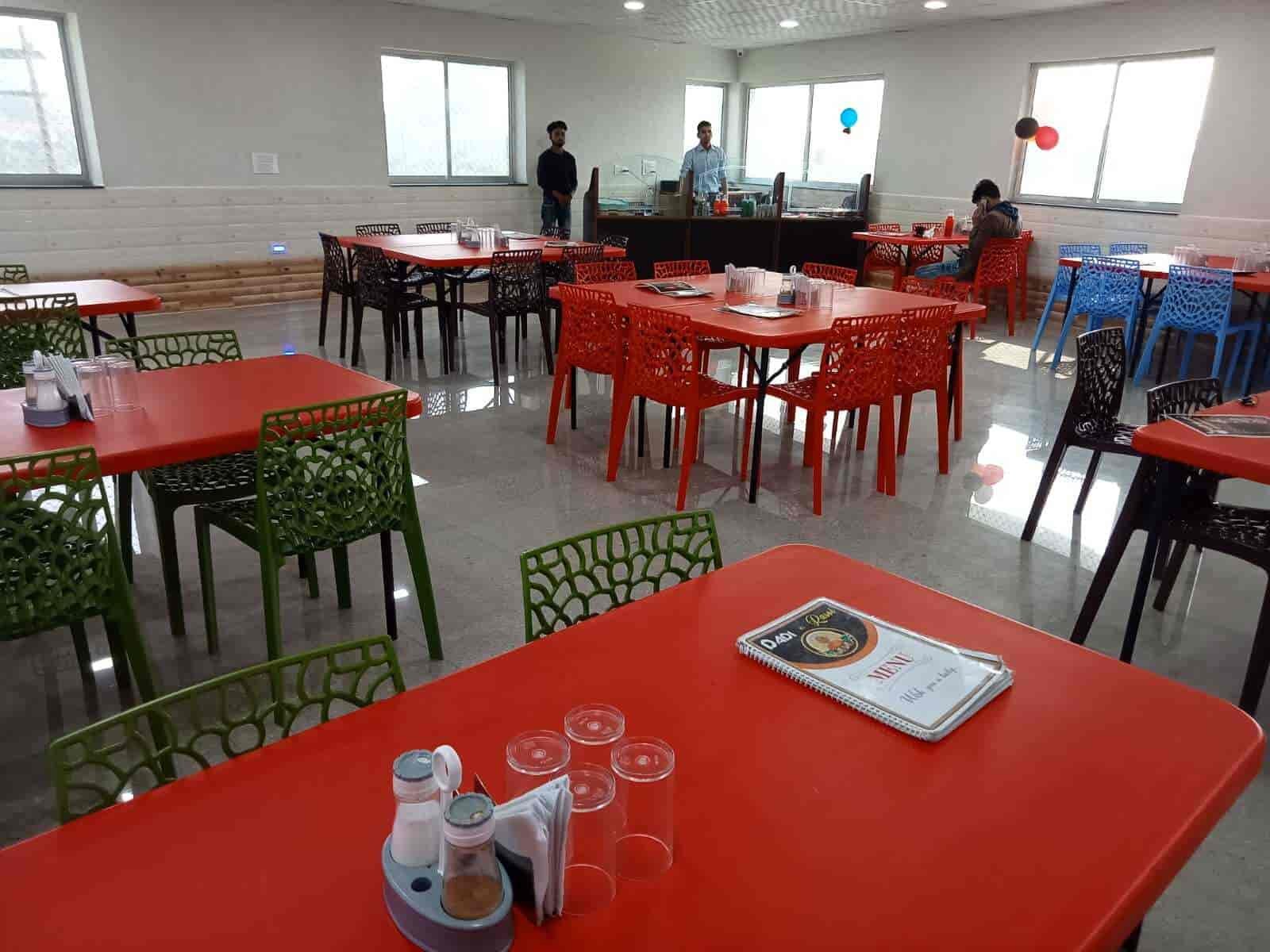
Dadi Ki Rasoi sits on SH 43 in the Bhagautipur area of Budaun, a market and administrative town rather than a metropolitan restaurant hub. The address on a state highway suggests a practical, roadside-adjacent format rather than a formal dining room. Expect a no-frills environment consistent with the domestic cooking register the name signals.
Is Dadi Ki Rasoi in Budaun suitable for travellers passing through on a highway route?
The restaurant's location on SH 43 in Bhagautipur, Budaun, places it directly along a state highway corridor, making it accessible for travellers moving through western Uttar Pradesh rather than those making a dedicated city-centre visit. Pure vegetarian establishments on highway routes in this part of UP are a distinct category, serving regional home-style cooking to both local and through traffic. No advance booking infrastructure is documented, which suggests walk-in access is the operating model.
What do people recommend at Dadi Ki Rasoi, Budaun, Pure Vegetarian restaurant?
Given the restaurant's pure vegetarian designation in western Uttar Pradesh, the kitchen likely draws on the wheat, mustard, and pulse-based cooking that characterises Gangetic plain cuisine in this region. Ordering within the seasonal dal and sabzi formats would align with what the name — grandmother's kitchen — implies.
Quick Comparison
| Venue | Cuisine | Price | Awards | Notes |
|---|---|---|---|---|
| Dadi Ki Rasoi, Budaun, Pure Vegetarian restaurantThis venue — the venue you are viewing | Pure North Indian Vegetarian | $1–10 | Not listed | Not listed |
| Bukhara | North West Frontier Tandoori | $30–50 | World's 50 Best #37 · La Liste Top Restaurants | Modern Indian |
| Indian Accent | Modern Indian Fine Dining | $50–100 | World's 50 Best #46 · La Liste Top Restaurants | Indian |
| Dum Pukht | Awadhi Dum Pukht Fine Dining | $50–100 | World's 50 Best #89 · La Liste Top Restaurants | Indian |
| Varq | Contemporary Indian Fine Dining with Molecular Fusion | $100–150 | Not listed | International |
| Karavalli | Coastal South Indian Seafood | $20–30 | La Liste Top Restaurants | Indian |
Details
- Cozy
- Quiet
- Trendy
- Romantic
- Family
- Casual Hangout
- A La Carte
- Buffet
- Vegetarian Friendly
Current opening hours
- Monday
- 8 AM–11 PM
- Tuesday
- 8 AM–11 PM
- Wednesday
- 8 AM–11 PM
- Thursday
- 8 AM–11 PM
- Friday
- 8 AM–11 PM
- Saturday
- 8 AM–11 PM
- Sunday
- 8 AM–11 PM
Hours can change for holidays and private events. Last verified .
Casual, cozy, quiet, romantic, and trendy atmosphere with warm and inviting setting.