


Michelin Selected · Virtuoso Luxury Hotel Partner · World Travel Awards
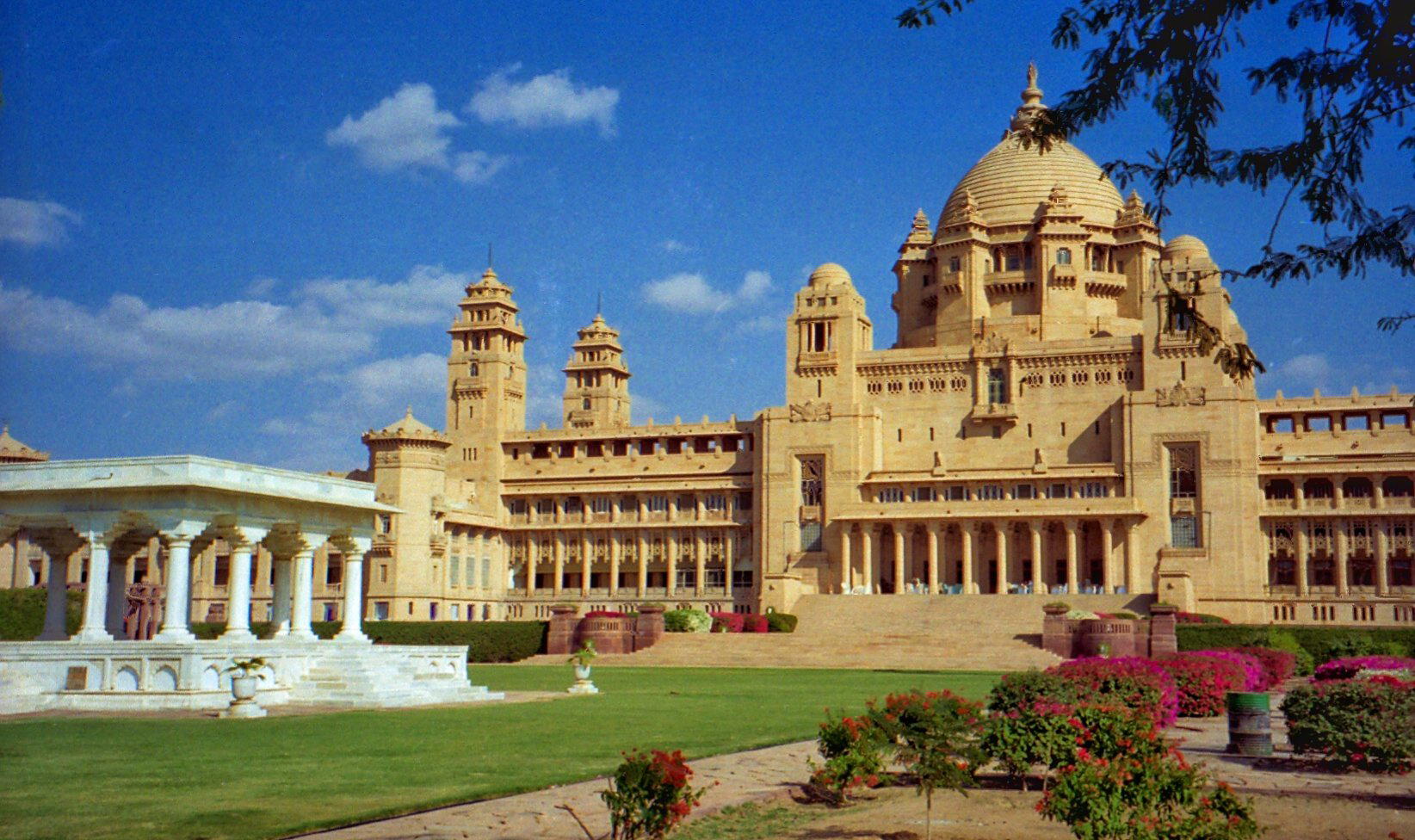
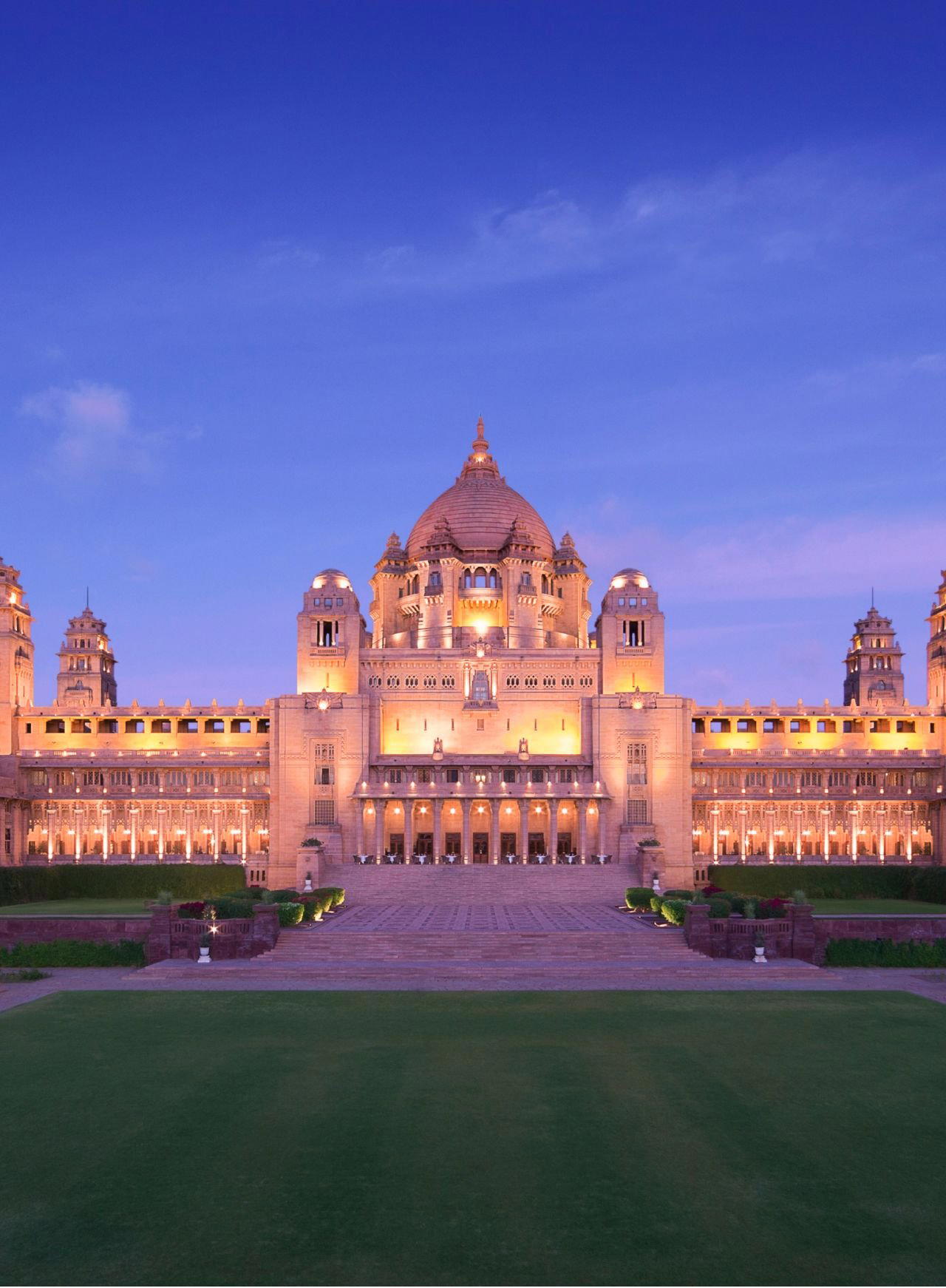
Completed in 1943 and among the largest private residences ever built, Umaid Bhawan Palace rises from Jodhpur's Chittar Hill in honey-gold Makrana sandstone. Seventy rooms and suites occupy one wing, while a branch of the Jodhpur royal family continues to occupy another. The 2025 World Travel Awards named it Rajasthan's Leading Palace Hotel.

Pearl is the En Primeur Club membership app, where members save venues, book tables and use the concierge.
Sandstone, Scale, and the Grammar of Art Deco in the Thar Desert
Rajasthan has converted many of its royal properties into hotels, but the category is not homogeneous. Some conversions are intimate havelis; others are fort-hotels where the architecture overwhelms the hospitality. Umaid Bhawan Palace belongs to a third, rarer tier: a purpose-designed palace, built at full ceremonial scale in the twentieth century, that has always occupied the overlap between inhabited royal residence and institutional grandeur. Near Circuit House in Jodhpur, the building crowns Chittar Hill and is visible from much of the old city below, its dome referencing classical Indian palace architecture while its detailing is unambiguously Art Deco. That tension between idiom and ornament is the defining characteristic of the building, and it shapes everything inside.
The palace was completed in 1943 and is frequently cited as one of the world's largest private residences. Seventy rooms and suites form the hotel wing; a separate portion of the structure remains the official residence of the Jodhpur royal family. The effect of that continued occupation is architectural seriousness. This is not a heritage building preserved behind velvet rope: it is a palace in active use, which means the corridors and reception rooms carry the weight of the function they were designed for. The 2025 World Travel Awards recognised the property as Rajasthan's Leading Palace Hotel, placing it at the front of a competitive tier that includes The Leela Palace Jaipur in Jaipur and properties like Amanbagh in Ajabgarh that operate at the opposite end of the scale register.
The Physical Argument: What the Building Actually Does
Art Deco arrived in Indian palace architecture through a specific historical window. The interwar period saw Maharajas commissioning buildings that could simultaneously read as modern and monumental, and Umaid Bhawan is the most complete surviving example of that ambition in Rajasthan. Where other palace-hotels in the region were adapted from Mughal or Rajput originals, Umaid Bhawan was conceived as a single unified statement. The sandstone is Chittar marble, the local honey-gold stone that gives Jodhpur its second nickname (the first being Blue City, for its indigo-painted old quarter). The stone's warmth shifts through the day: it reads pale gold at dawn, deep amber in late afternoon, and almost incandescent at sunset when the light hits the dome from the west.
Inside, the scale is maintained deliberately. The private museum preserves the ceremonial artefacts of the Jodhpur royal house. The billiards room is panelled wood in the English country-house mode, a reminder that Art Deco at this scale absorbed British institutional influence alongside Indian monumental tradition. The marbled squash courts belong to the same register. These are not period-room recreations but spaces that have been in continuous use. That distinction matters for guests who want to understand what they are entering.
Dining and Atmosphere Across the Compound
Palace dining in India tends toward theatrical re-enactment, with heritage themes deployed as costume. Umaid Bhawan's restaurants operate within their architectural context more directly than that. Risala, the flagship restaurant, takes its name and decorative programme from the Jodhpur Lancers, the maharaja's cavalry regiment and the force that fought at the Battle of Haifa in 1918. Artwork and objects in the room reference that military history specifically, which gives the space a frame of reference sharper than generic heritage décor.
Pillars, the all-day dining restaurant, is the room that earns its name most visibly: the space opens onto views of the Baradari lawns, where peacocks move across the grass, with Mehrangarh Fort occupying the skyline behind. Breakfast here is among the more photographically composed morning meals in Rajasthan, and the fort alignment at sunset rewards guests who time their evening drinks accordingly. The Trophy Bar anchors the building's colonial-era sporting culture through hunting memorabilia, single malts, wines, and Cuban cigars. Its regiment special cocktail is noted as a serious order rather than a novelty. For guests who want dining removed entirely from interior architecture, the palace offers a desert dinner format under the night sky, with a grilled menu and live musicians.
Among comparable Indian palace experiences, this variety of format within a single property is a structural advantage. The Oberoi Amarvilas in Agra and The Taj Mahal Palace, Mumbai in Mumbai each anchor their dining to a single primary register. Umaid Bhawan's compound is large enough to sustain distinct atmospheric modes across its multiple venues.
Wellness and the Jiva Spa Tradition
The Jiva Spa operates under a heritage structure within the palace and follows the Bihar School of Yoga framework, a holistic system that integrates physical and psychological practice rather than treating yoga as exercise programming alone. This positions the spa at a different point from luxury wellness centres that borrow yoga vocabulary for branding purposes. The Bihar School tradition has a documented lineage and a consistent methodology, which gives the wellness offer here a verifiable grounding. Among palace wellness programmes in north India, Ananda in the Himalayas in Narendra Nagar is the obvious comparator at the serious end of the discipline. Umaid Bhawan's offer sits within a broader luxury hotel context rather than a dedicated wellness resort, which suits guests for whom wellness is one component of a more varied stay.
How Umaid Bhawan Sits in the Jodhpur Context
Jodhpur is the second city of Rajasthan tourism after Jaipur and Udaipur, which means it has a well-developed infrastructure for heritage visitors but fewer international luxury hotels than either of those markets. Umaid Bhawan's position on Chittar Hill places it at a distance from the old city's lanes and bazaars, which is both a condition and an advantage: the palace compound functions as a self-contained destination with gardens, outdoor activities, and vintage car excursions into the city on offer. For guests who want to base themselves in Our full Jodhpur restaurants guide and explore the city at their own rhythm, the palace provides a complete enough domestic environment to make extended stays viable.
Rajasthan's palace hotel tier also includes more remote, smaller properties. Suján Jawai in Pali operates in a safari-camp register at the leopard conservation area north of Jodhpur, and Alila Fort Bishangarh in Manoharpur adapts a hilltop fort structure near Jaipur. Both are lower in key count and closer to landscape-immersion formats. Umaid Bhawan is the appropriate choice when the architecture itself is the destination rather than a frame for a wilderness or village experience. Guests for whom monument-scale and Art Deco craftsmanship are the point, rather than intimacy or seclusion, will find the correct register here.
Planning a Stay
Jodhpur's optimal visiting window runs from October through March, when temperatures across the Thar Desert drop to manageable levels and the light on the sandstone is at its most photogenic. The palace compound is large enough to absorb summer heat better than many fort-hotels in the region, but the cultural programming, outdoor dining, and city excursions that define the property's strongest offer function leading in the cooler months. Guests connecting to broader Rajasthan itineraries will find Jodhpur positioned between Udaipur (approximately six hours by road or a short domestic flight) and Jaisalmer to the west. The palace is close enough to Circuit House and the Jodhpur city centre that day trips to Mehrangarh Fort and the Sardar Market require no significant planning, though the vintage car excursion offered by the property is a more structured alternative for first visits to the city.
In Context: Similar Options
Comparable venues nearby, for context on price, style, and recognition.
| Venue | Cuisine | Price | Awards | Notes |
|---|---|---|---|---|
| Umaid Bhawan PalaceThis venue (the venue you are viewing) | Heritage Art Deco palace hotel | $500–750 | Michelin Selected · Virtuoso Luxury Hotel Partner | Not listed |
| RAAS Jodhpur | Heritage haveli restored with modern additions | Not listed | Michelin Selected · Mr & Mrs Smith Seal of Approval | Walled City |
| Mharo Khet | luxurious farmstay retreat with cottages inspired by Rajasthani raags | $500–750 | 1 Michelin Key · Travel + Leisure It List Hotels | Manai |
| The Leela Palace Bengaluru | Palatial luxury resort in urban setting | $200–300 | Michelin Selected | Old Airport Road |
| Taj Theog Resort & Spa, Shimla | Lodge-style luxury resort blending contemporary architecture with mountain tranquility. | Not listed | Michelin Selected | Theog |
| Taj Madikeri Resort and Spa, Coorg | Inspired by traditional Kodagu architecture with contemporary luxury cottages and villas set in rainforest. | $200–300 | Michelin Selected | Monnangeri |
Recognition history
Dated appearances from independent guides and award organizations, with the underlying list record or original source where available.
Michelin Selected
Michelin
Virtuoso Luxury Hotel Partner
Virtuoso
World Travel Awards
World Travel Awards
Continue exploring
More in Jodhpur
Hotels in Jodhpur
All hotels in Jodhpur →
Restaurants in Jodhpur
All restaurants in Jodhpur →
Details
- Ornate
- Elegant
- Well Known
- Sophisticated
- Honeymoon
- Romantic Getaway
- Anniversary
- Celebration
- Destination Wedding
- Historic Building
- Panoramic View
- Private Dining
- Terrace
- Butler Service
- Pool
- Spa
- Fitness Center
- Room Service
- Concierge
- Wi Fi
- Valet Parking
- Mountain
- Garden
- Wheelchair Accessible
- Elevator
- Step Free Entrance
- Accessible Parking
Ornate palace atmosphere with elegant lighting, lush gardens, and mesmerizing fort views creating a sophisticated and regal experience.