Our verdict
Umaid Bhawan Palace in Jodhpur occupies a category that few hotel dining experiences in Rajasthan can match: a palace-within-a-palace setting where the sourcing of ingredients traces back to regional Marwari traditions. Dining here positions you inside one of India's most architecturally significant royal residences, where the food program reflects the agrarian heritage of the Thar Desert rather than generic luxury hotel menus.

Pearl is the En Primeur Club membership app — saves, bookings, and concierge access live there. Same editors, same standards.
- Address
- Circuit House Rd, near Umaid Bhawan Museum, Cantt Area, Jodhpur, Rajasthan 342006, India
- Phone
- +912912510101
- Website
- tajhotels.com
- Directions
- Get directions
The menu
What to order
- Soola and Bootha
- Ker Sangri
- Chandalia
- Alba Truffle
- Muscovy Duck
- Maryland Crab Cake
- Canadian Scallops
The Weight of Stone and the Logic of the Desert
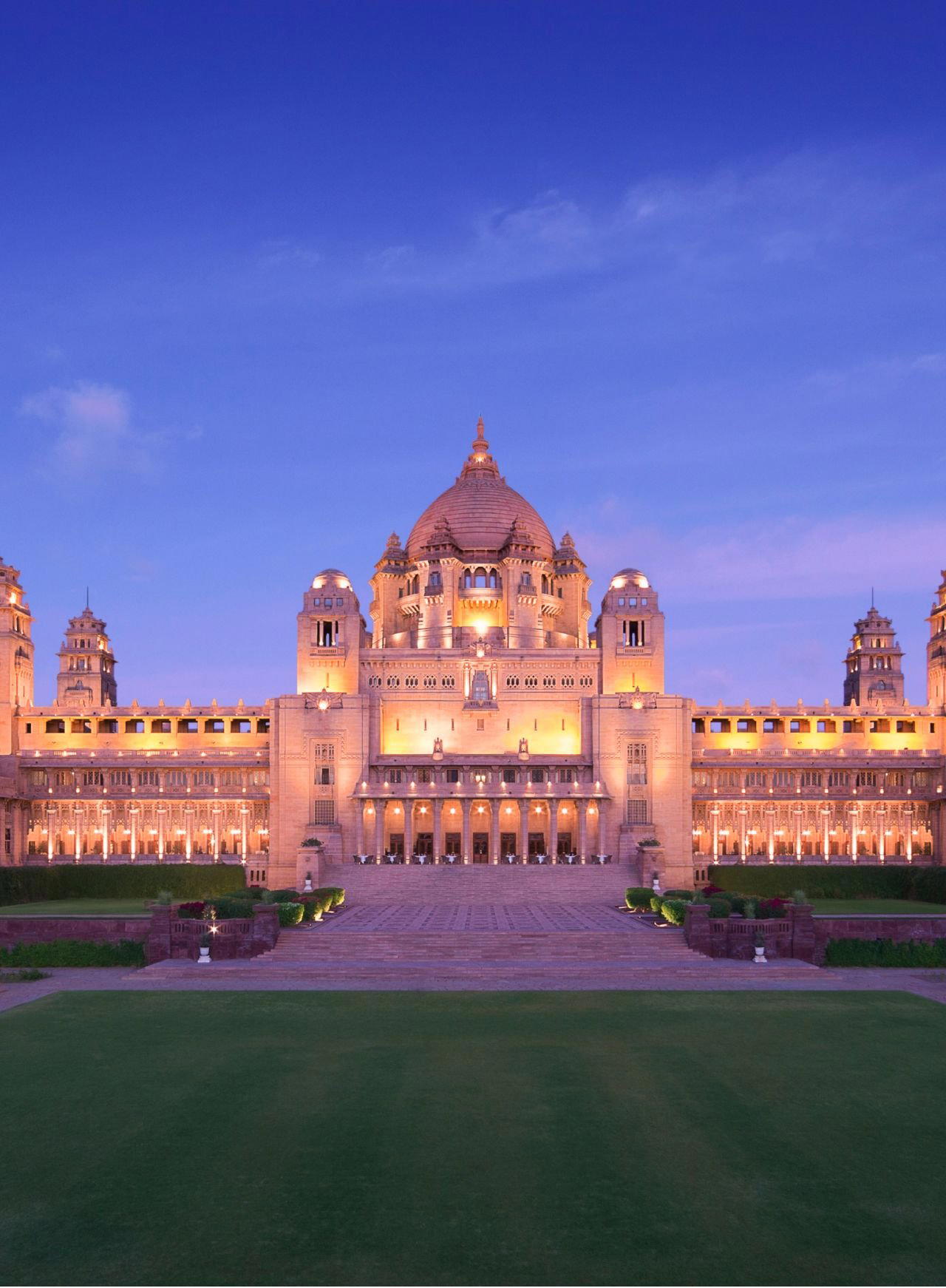
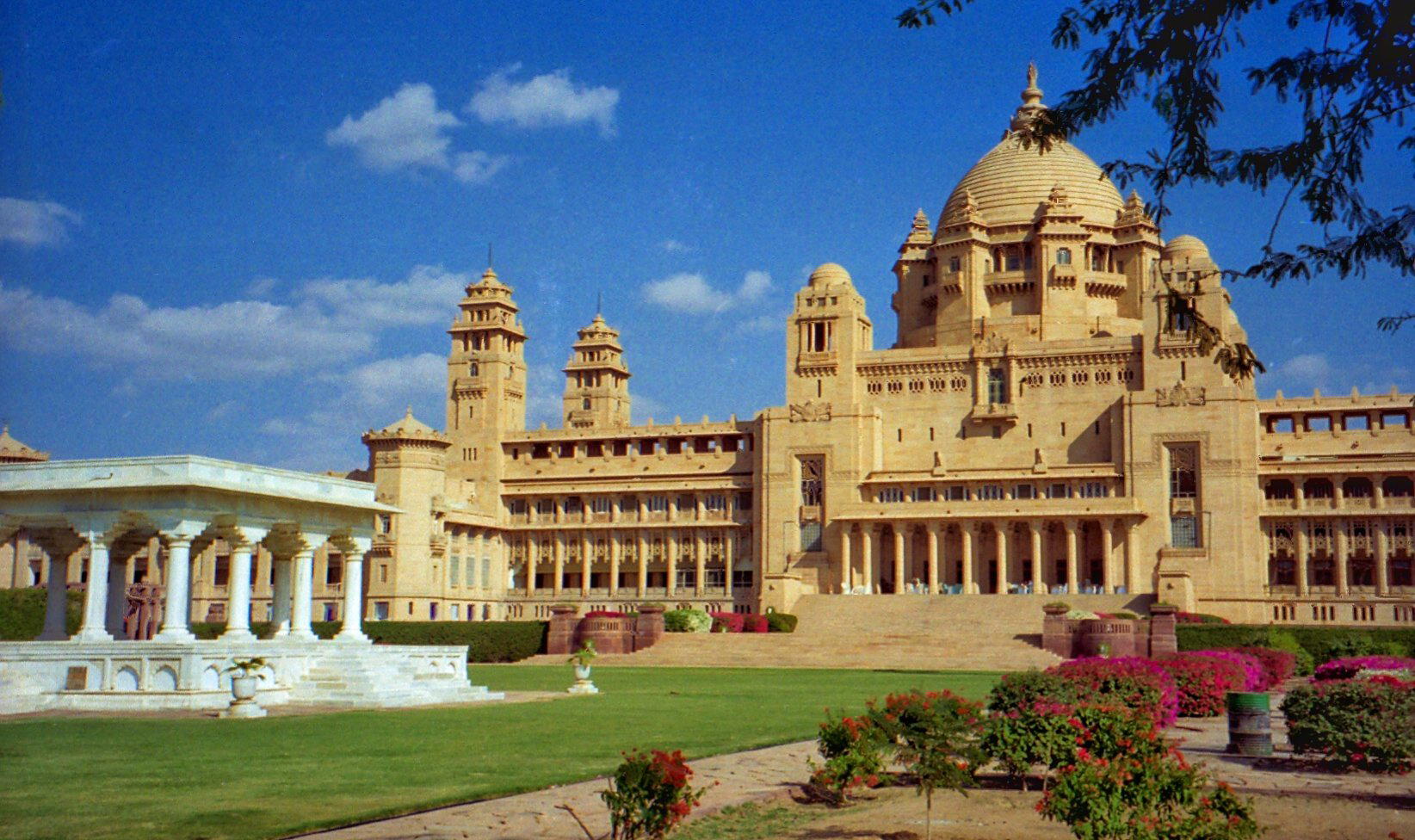
Approaching Umaid Bhawan Palace along Circuit House Road, the scale of the building does something that most luxury hotel architecture cannot: it makes the surrounding city feel like a natural extension rather than a nuisance to be screened out. The honey-gold sandstone rises in a dome that has defined the Jodhpur skyline since construction completed in 1943, and that material, quarried locally from the same Chittar Hill that surrounds the palace, sets the tone for how the property relates to its environment. This is not a building that imports its identity. The stone is local, the craft tradition is local, and the kitchen philosophy, at its most coherent, follows the same logic.
Rajasthan's culinary tradition developed in one of the subcontinent's most resource-constrained environments. The Thar Desert shaped a cuisine around scarcity and preservation: dried lentils, ker sangri (desert beans and berries foraged from arid scrubland), game, and dairy from livestock that could survive the heat. These were not ingredients chosen for elegance. They were chosen because they existed. Palace kitchens across the region historically amplified this larder with spice blending of considerable sophistication, transforming austere raw materials into dishes of genuine complexity. That heritage is the lens through which the dining at Umaid Bhawan Palace makes most sense.
Ingredient Provenance in the Marwari Tradition
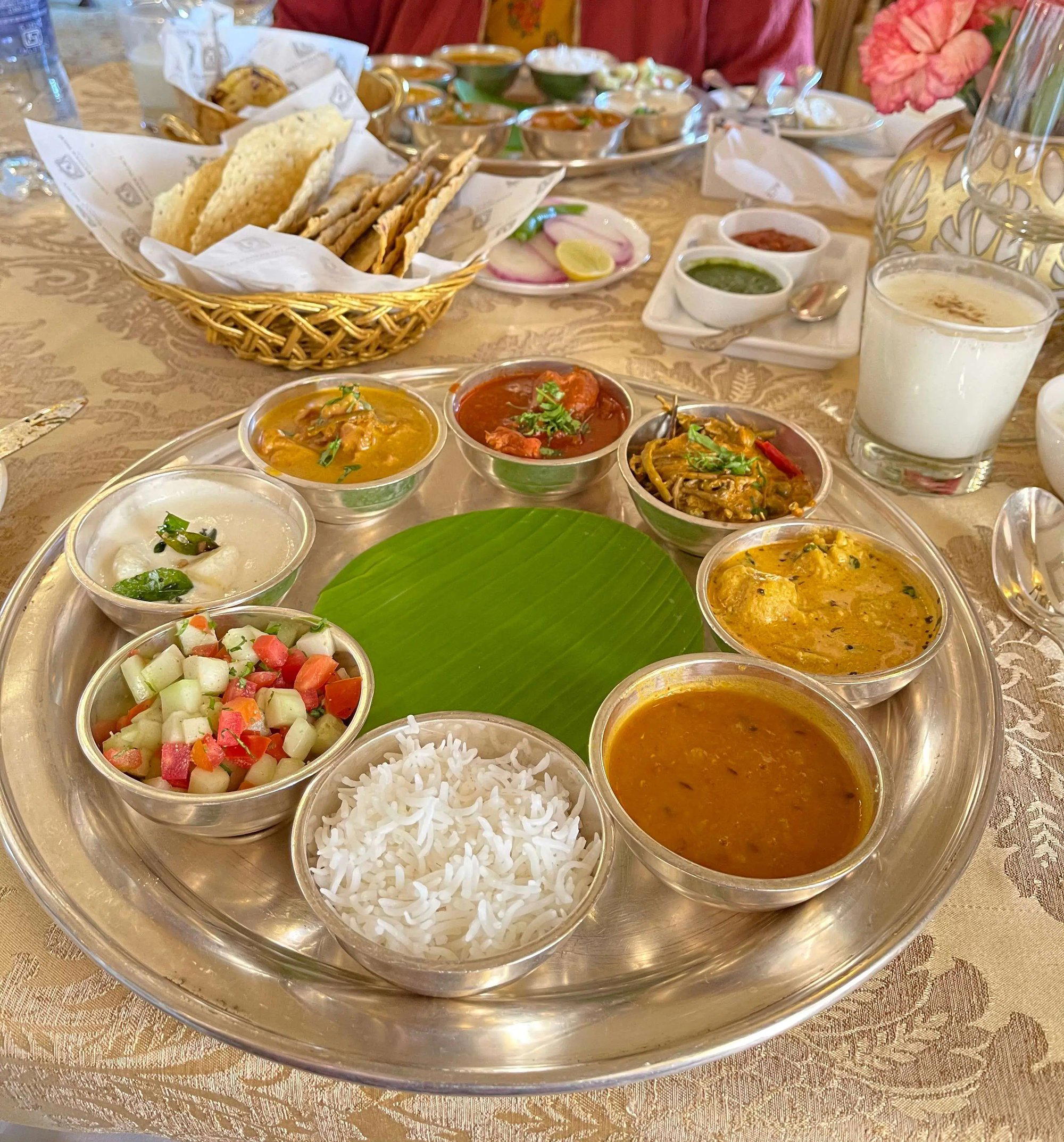
The Marwari kitchen is one of the more misunderstood regional cuisines in India. Outside Rajasthan, it often appears in diluted form, its vegetarian preparations stripped of context and served as generic North Indian. In its original setting, however, the cuisine is specific to the point of being hyperlocal, with certain preparations tied to particular communities, seasons, and sourcing windows. Ker sangri, for instance, is harvested during a narrow seasonal window in spring and preserved through sun-drying for use throughout the year. Bajra (pearl millet), grown across Rajasthan's drier districts, forms the base of breads that do not translate easily to other grain types. Hotels operating in Jodhpur that commit to sourcing these ingredients rather than substituting more convenient alternatives are making an active curatorial decision, not a passive one.
Farmlore in Bangalore has built its identity entirely around documented sourcing from identified farms. Esphahan in Agra, set inside the ITC Mughal, demonstrates how Mughal culinary heritage can be presented within a heritage hotel context with genuine research behind it. Umaid Bhawan's version of this conversation is rooted not in Mughal court cooking but in Rajput and Marwari traditions, which require different sourcing disciplines entirely.
The Dining Rooms and Their Contexts
Palace contains multiple dining venues, each calibrated to a different register of the overall experience. Marudhar Restaurant handles the primary all-day dining function, while Risala operates as a specialty dining venue with a more focused offering, and The Pillars functions as a setting for lighter meals and terrace dining. This internal segmentation is standard practice among palace hotels with significant food and beverage programs, and it allows a property to serve both resident guests seeking familiarity and visitors seeking a more deliberate culinary engagement. For our full context on dining across the city, see our full Jodhpur restaurants guide.
Architectural setting of each venue matters here in ways it does not at purpose-built hotels. The dining rooms at Umaid Bhawan exist within a building that was conceived as a residence, not as a hospitality facility, and that distinction shows in the proportions of the spaces, the ceiling heights, and the relationship between interior and exterior. Dining in these rooms places a guest inside the grammar of a Rajput palace rather than inside a hotel's interpretation of one.
How Umaid Bhawan Fits the Broader Palace Hotel Tier
India's palace hotel category is internally stratified in ways that outside visitors do not always register. At one end sit properties that have been converted to hospitality use while retaining the shell of their original architecture; at the other sit those where some portion of the original royal family continues to occupy the building. Umaid Bhawan falls into the latter category, with a section of the palace retained as a private residence, which affects both the guest experience and the institutional seriousness with which the property is maintained. This is not a hotel that has cut ties with its origin story.
That continuity of occupation has implications for the food program. Palace kitchens historically operated as institutions with their own hierarchies, recipe custodians, and sourcing relationships. Where that institutional memory survives, it tends to produce a different kind of menu from one assembled by an imported executive chef without local roots. The challenge for any property in this tier is that institutional memory alone does not guarantee quality; it requires active curation to remain relevant without becoming a museum exhibit.
For comparison, Bukhara in New Delhi demonstrates what happens when a hotel restaurant commits to a defined culinary tradition over decades and holds the line against menu drift. Naar in Kasauli shows how a smaller-format property can anchor its identity in regional ingredient sourcing at a fraction of the scale. Umaid Bhawan operates at the large end of this spectrum, where managing consistency across multiple venues and a large guest volume presents its own discipline.
Planning a Visit
Jodhpur sits in western Rajasthan, roughly five hours by road from Jaipur and accessible by direct rail from Delhi and Mumbai. The palace is located in the Cantt area of the city, on Circuit House Road, at a remove from the old city's markets and the Blue City's denser residential quarters. For guests not staying at the property, access to the dining venues requires advance inquiry, as palace hotels of this tier typically manage non-resident dining on a reservation basis rather than walk-in.
The cooler months between October and March represent the primary visiting window for Rajasthan, when temperatures allow outdoor dining and the landscape around Jodhpur is at its most photogenic. The summer months from April through June bring extreme heat that limits the utility of terrace settings and reduces the overall visitor volume significantly. Festival periods, particularly Diwali and the Rajasthan International Folk Festival in October, generate increased demand that affects availability across all of Jodhpur's upper-tier properties simultaneously.
For context on how palace hotel dining in this region compares to other premium formats across India, see Americano in Mumbai, Leela Kerala Terrace in Trivandrum, or 5868 Restaurant in Gandhinagar for a sense of how different regional traditions are being presented within hotel contexts across the country. Harvest Kitchen Somnath in Veraval offers an interesting counterpoint on how coastal Gujarat handles ingredient provenance in a hotel setting, and WelcomCafe Oceanic Restaurant in Visakhapatnam represents the ITC group's approach to regional sourcing on the eastern coast.
Frequently asked questions
Where exactly is Umaid Bhawan Palace?
Umaid Bhawan Palace is located at Circuit House Rd, near Umaid Bhawan Museum, Cantt Area, Jodhpur, Rajasthan 342006, India, Jodhpur.
Is Umaid Bhawan Palace in Jodhpur still a royal residence, or is it fully a hotel?
Umaid Bhawan Palace operates as a split-use property: a portion of the palace functions as a Taj-managed hotel open to guests, while another wing remains the private residence of the Jodhpur royal family. This arrangement, unusual even within India's palace hotel category, means guests are staying within an actively inhabited royal seat rather than a fully converted heritage property. The palace is located on Circuit House Road in the Cantt area of Jodhpur, Rajasthan.
What's the must-try dish at Umaid Bhawan Palace?
The Marwari kitchen at Umaid Bhawan is the most direct entry point into regional Rajasthani cooking — a vegetarian tradition that relies on dried legumes, preserved ingredients, and spice ratios developed for desert conditions. Marudhar Restaurant, the palace's primary dining venue, is the place to encounter this cuisine in its more considered form. Specific menu items rotate, so confirming current offerings directly with the property before arrival is advisable.
How far ahead should I plan for Umaid Bhawan Palace?
Umaid Bhawan Palace sits in Jodhpur, western Rajasthan, and draws both leisure travellers and destination wedding groups — the latter frequently occupying large portions of the property. The October-to-March peak season, when temperatures drop from summer extremes, sees the highest demand. Booking three to four months ahead for peak-season stays is a reasonable baseline; wedding-season dates may require earlier planning.
What has Umaid Bhawan Palace built its reputation on?
The palace's reputation rests on two things that are difficult to separate: the architecture and the continuity of occupation. Completed in 1943 for the Jodhpur royal family, the building is one of the last great palace construction projects of British-era India, and part of it remains the private residence of the Jodhpur royal household. That living connection to the original commission distinguishes it from properties that have been converted wholesale into hotels.
What if I have allergies at Umaid Bhawan Palace?
The Marwari culinary tradition at the palace is predominantly vegetarian and largely free of meat-based stocks, which reduces some common allergy complications, but guests with specific dietary requirements should communicate these directly with the property at the time of booking. Given the scale of the dining operation across multiple venues, advance notice allows the kitchen to plan accordingly. Confirming allergen protocols with the reservations team before arrival is the most reliable approach.
At-a-Glance Comparison
| Venue | Cuisine | Price |
|---|---|---|
| Umaid Bhawan PalaceThis venue — the venue you are viewing | Royal Rajasthani & Continental Fine Dining | $50–100 |
| Marudhar Restaurant | Authentic Rajasthani Cuisine | $1–10 |
| Risala | Modern Indian Fusion Fine Dining | $50–100 |
Details
- Elegant
- Ornate
- Romantic
- Scenic
- Well Known
- Date Night
- Special Occasion
- Celebration
- Group Dining
- Private Dining
- Terrace
- Garden
- Panoramic View
- Historic Building
- Hotel Restaurant
- Craft Cocktails
- Sommelier Led
- Local Sourcing
- Organic
- Garden
- Mountain
- A La Carte
- Family Style
- Buffet
- Cocktails
- Wine
- Mango Panha
- Vegetarian Friendly
- Vegan Options
- Gluten Free Options
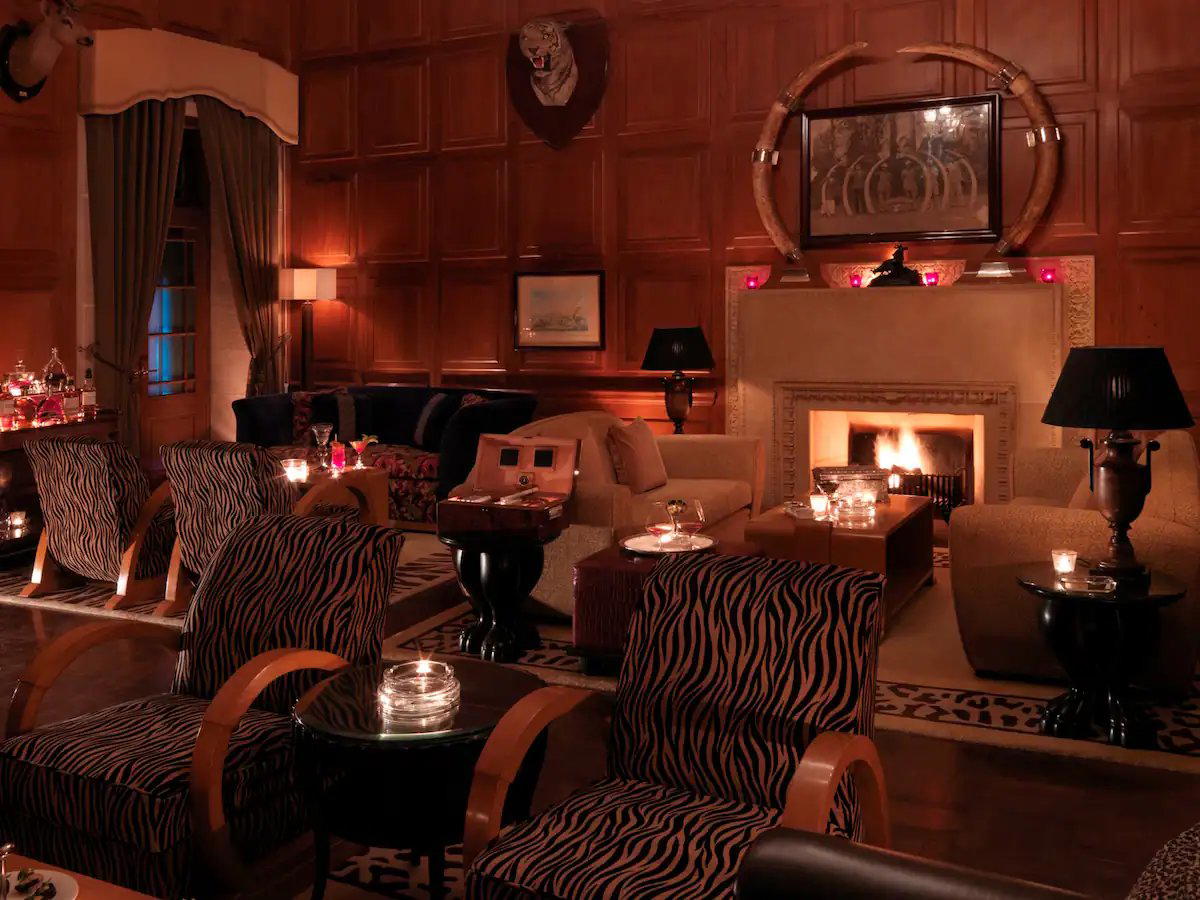
Sophisticated and elegant with high ceilings, glimmering chandeliers, lifelike ancestral paintings, and open-air colonnaded terraces overlooking gardens and city vistas.