Riding House Bloomsbury
Riding House Bloomsbury occupies the ground floor of the Brunswick Centre on Bernard Street, WC1N, sitting at the casual-dining end of London's all-day brasserie format. The Bloomsbury outpost follows the Riding House model of relaxed European cooking in a neighbourhood setting, drawing academics, locals, and visitors in roughly equal measure. Booking ahead is advisable, though walk-ins are accommodated when space allows.
Pearl is the En Primeur Club membership app — saves, bookings, and concierge access live there. Same editors, same standards.
- Address
- 1, Brunswick Centre, Bernard St, London WC1N 1AF, United Kingdom
- Phone
- +442038298333
- Website
- riding.house
- Directions
- Get directions
 Saves & bookings on Pearl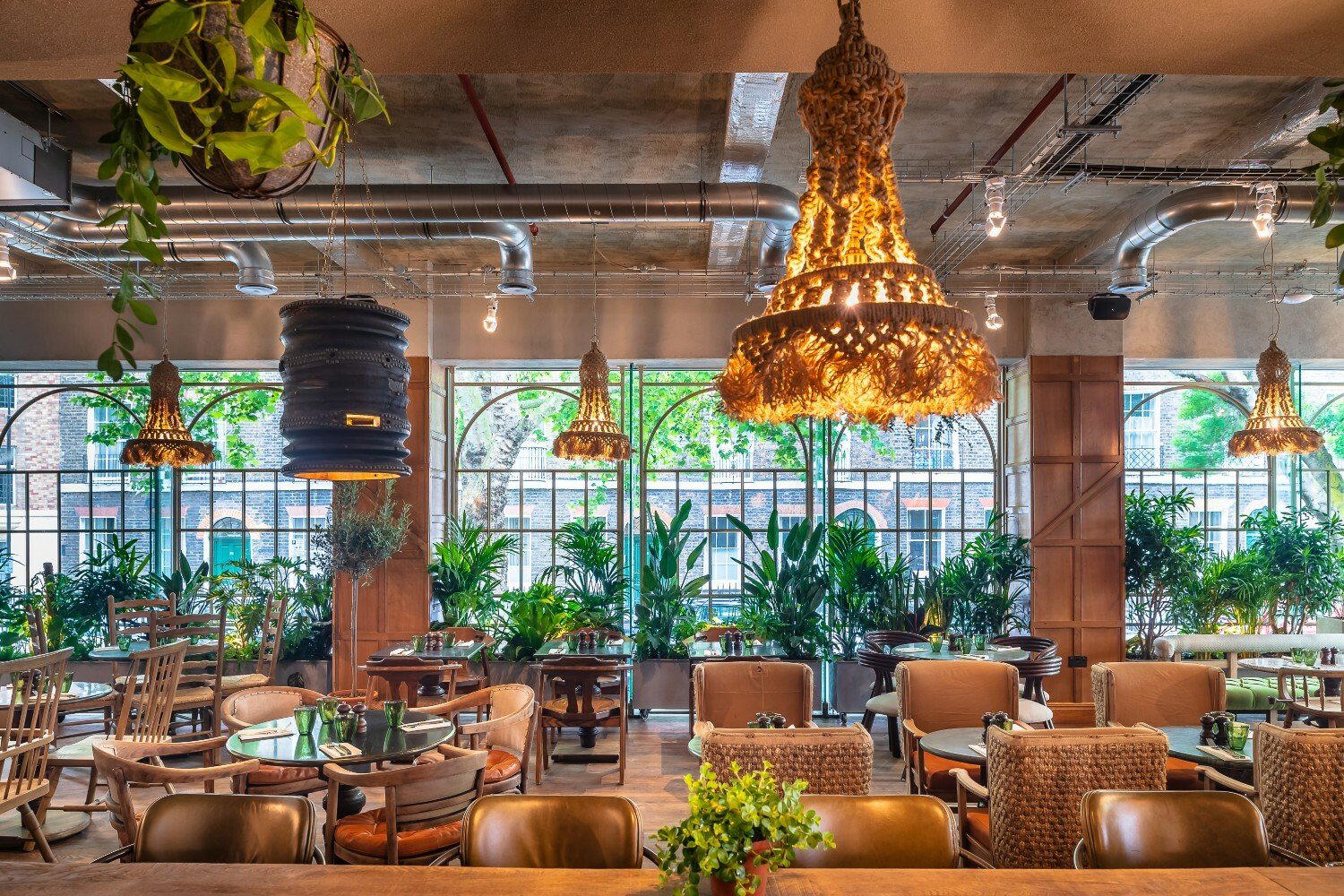
All-Day Brasseries and the Brunswick Centre's Unlikely Position in London Dining
The Brunswick Centre on Bernard Street is a piece of 1970s Brutalist architecture that took decades to shed its reputation as a failed utopia. Designed by Patrick Hodgkinson and opened in 1972, the complex sat in various states of underfunded neglect before a 2006 renovation by Levitt Bernstein brought it closer to its original ambition: a covered urban street lined with retail and restaurants at ground level, apartments rising above. That renovation repositioned the Brunswick as a genuine neighbourhood amenity rather than a planning experiment, and the dining addresses inside shifted accordingly. Riding House Bloomsbury arrived into that revised context, where the ground-floor units now attract operators who want a Central London address without the cost structure of Mayfair or the competitive density of Soho.
Bloomsbury itself occupies an unusual position in London's dining geography. The area is defined by the British Museum, University College London, and a cluster of publishing houses and legal chambers that generate a lunchtime-heavy, Monday-to-Friday trade. It is not a destination dining neighbourhood in the way that, say, Notting Hill or Marylebone have become, which means the restaurants that succeed there tend to do so through consistency and neighbourhood loyalty rather than through press-driven surges of interest. The all-day brasserie format, which Riding House has pursued across its London sites, fits that demand profile.
The Riding House Format and How Bloomsbury Fits the Wider Pattern
The original Riding House Café opened on Great Titchfield Street in Fitzrovia, establishing a model built around a large, loft-style room, an open kitchen, and a menu that moved from breakfast through dinner without hard pivots in style or register. That Fitzrovia format drew on the neighbourhood's proximity to the media and creative industries clustered around Mortimer Street and Portland Place, and the original site developed a following among a specific professional demographic.
The Bloomsbury outpost represents a different phase in the brand's development. Opening a second site under a slightly revised name signals an intention to extend the format beyond its original postcode while adjusting to a different neighbourhood character. The Brunswick setting is more residential and more transit-connected than Fitzrovia, with Russell Square tube station within easy walking distance. That logistical difference shapes who uses the space: fewer drop-in media lunches, more sustained neighbourhood regulars and museum visitors looking for a reliable mid-range option in an area where such options are thinner than the foot traffic would suggest.
London's all-day brasserie category has shifted considerably over the past fifteen years. The format that once meant stripped-back interiors and a chalkboard of daily specials has been pushed upward in price and ambition by operators benchmarking against European café culture, and pulled in different directions by the rise of brunch as a commercial category and the contraction of the traditional three-course lunch. The venues that have sustained themselves in this format tend to be those that found a consistent identity rather than those that chased trend cycles. In that context, the Brunswick location gives Riding House Bloomsbury a degree of structural stability: a fixed residential catchment, an institutional lunchtime market from UCL and the nearby Great Ormond Street Hospital, and a tourism flow from the British Museum that provides weekend volume.
Where Riding House Bloomsbury Sits in the Broader London Scene
It is worth mapping this clearly against the wider range of London restaurant options, because the positioning is genuinely distinct. The Michelin-starred tier in London, which includes addresses like CORE by Clare Smyth, Restaurant Gordon Ramsay, Sketch, The Lecture Room and Library, The Ledbury, and Dinner by Heston Blumenthal, operates in a different commercial register entirely, with tasting menus, advance booking requirements, and price points that assume a special-occasion or expense-account visit. The restaurant is not competing in that bracket. Its competitive set is the reliable mid-market neighbourhood restaurant, and the question for that category is consistency and value within a specific postcode, not prestige or critical recognition.
Properties like Waterside Inn in Bray, Le Manoir aux Quat'Saisons in Oxford, L'Enclume in Cartmel, Moor Hall in Aughton, Gidleigh Park in Chagford, and Hand and Flowers in Marlow draw visitors who plan a meal as the primary reason for travel. The restaurant is the kind of place you choose because you are already in WC1N, not a reason to travel there from elsewhere. Understanding that distinction matters when setting expectations.
For readers building a broader picture of British dining outside London, addresses worth tracking include hide and fox in Saltwood, Midsummer House in Cambridge, Opheem in Birmingham, and Restaurant Andrew Fairlie in Auchterarder, all of which operate at the more ambitious end of the regional UK scene. The international frame of reference, if you want one, might run to Le Bernardin in New York City or Atomix in New York City, though those comparisons illuminate the category gap rather than the competitive overlap.
Planning a Visit: What to Know Before You Go
The Brunswick Centre address places the restaurant a short walk from Russell Square tube station on the Piccadilly line, and within comfortable walking distance of the British Museum and UCL's main campus on Gower Street. The surrounding streets are direct to reach from King's Cross St. Pancras by tube or on foot, which makes it a functional stop before or after rail travel. Parking in the area follows the standard Central London pattern: difficult and expensive enough that public transport is the practical default for most visitors.
The all-day brasserie format means the kitchen typically operates across a longer service window than a traditional restaurant. Lunch periods in Bloomsbury tend to be busy on weekdays given the volume of office and institutional workers in the area; weekend traffic shifts toward the museum-going crowd. Booking ahead is recommended.
Awards and Standing
Comparable venues nearby, for context on price, style, and recognition.
| Venue | Cuisine | Price | Notes |
|---|---|---|---|
| Riding House BloomsburyThis venue — the venue you are viewing | Modern European Brasserie | $$$ | Not listed |
| St John. Marylebone | Modern British Nose-to-Tail | $$$ | Marylebone |
| Blue Boar | British Gastropub | $$$ | Westminster |
| Olympic Studios | British Brasserie | $$$ | Barnes |
| Smith’s of Smithfield | British Steakhouse | $$$ | Farringdon |
| Claridge's Bakery | Modern British bakery & café | $$$ | Mayfair |
Continue exploring
More in London
Restaurants in London
Browse all →
Bars in London
Browse all →
Hotels in London
Browse all →


At a Glance
- Modern
- Elegant
- Lively
- Brunch
- Date Night
- Casual Hangout
- Business Dinner
- Group Dining
- Terrace
- Design Destination
- Standalone
- Extensive Wine List
- Craft Cocktails
- Beer Program
Current opening hours
- Monday
- 9 AM–11 PM
- Tuesday
- 9 AM–11 PM
- Wednesday
- 9 AM–11 PM
- Thursday
- 9 AM–11 PM
- Friday
- 9 AM–11 PM
- Saturday
- 9 AM–11 PM
- Sunday
- 9 AM–5 PM
Hours can change for holidays and private events. Last verified .
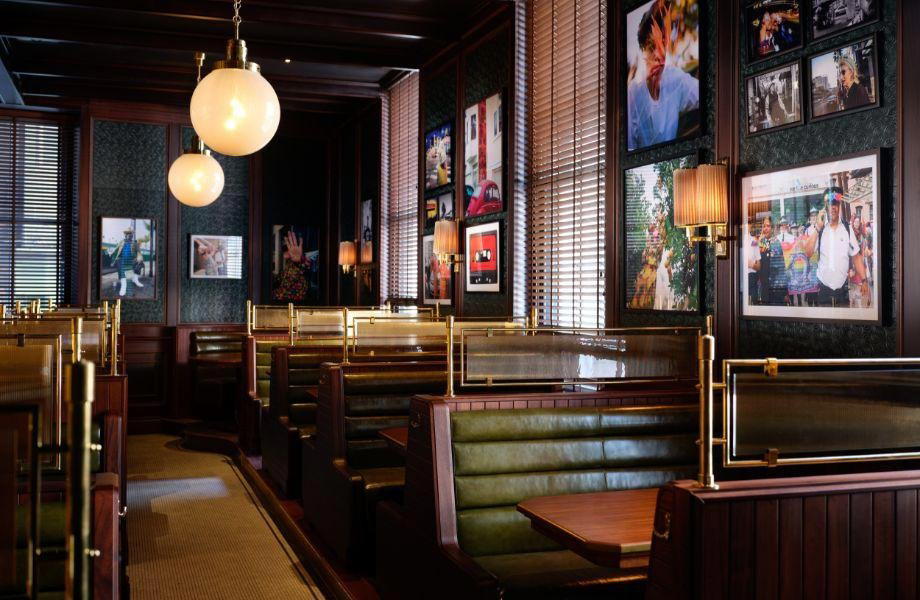
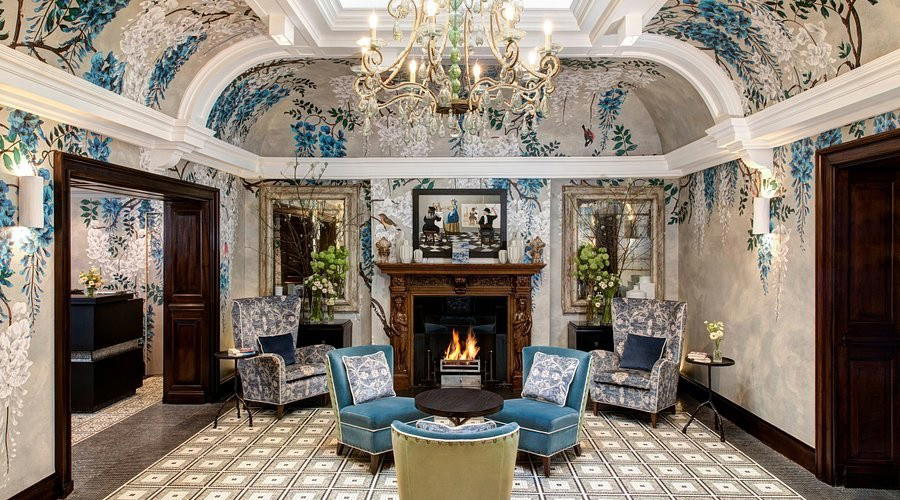
Bright, welcoming space with thoughtful design combining manor-house-style wood panelling and comfy leather-padded chairs beneath exposed metal pipes, creating an unexpectedly warm atmosphere within brutalist surroundings.