On a colonial backstreet in Trinidad, Restaurante San José operates within Cuba's paladares tradition, privately run tables where sourcing is shaped by what's available locally rather than what's listed on a menu. For travellers used to fixed formats, it offers something more contingent and, in that contingency, more honest about how food actually moves through a Cuban town.
Pearl is the En Primeur Club membership app — saves, bookings, and concierge access live there. Same editors, same standards.
- Address
- 382 Calle Gutiérrez, Trinidad, Sancti Spíritus
- Directions
- Get directions
 Saves & bookings on Pearl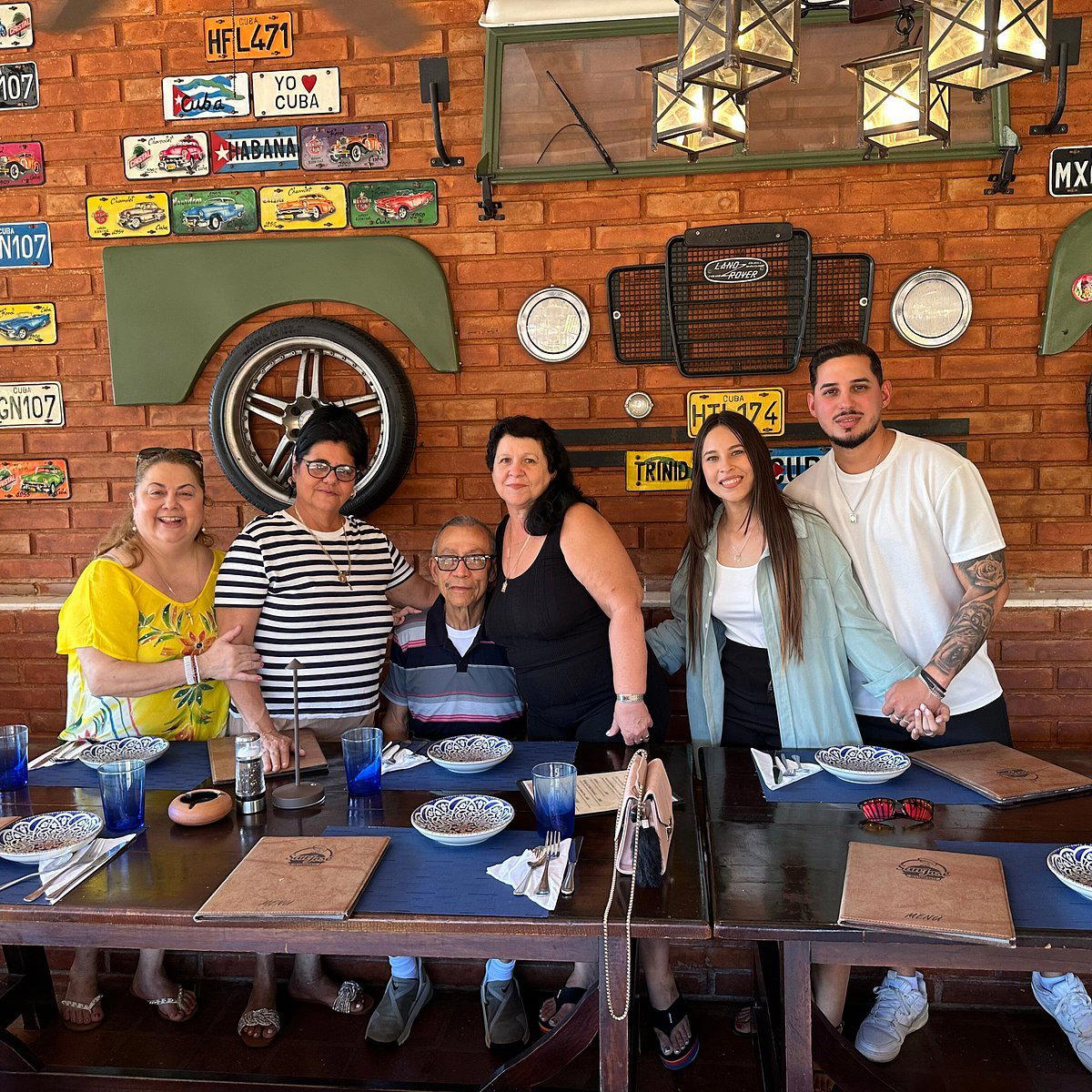
A Colonial Street, a Private Table, and What the Market Had That Morning
Calle Gutiérrez runs through among the more intact colonial grids in the Caribbean. The cobblestones, the terracotta rooflines, the pastel facades, Trinidad's UNESCO-protected centre has been absorbing visitors for decades without becoming a stage set, partly because the town's food infrastructure remains domestic in scale. Restaurante San José, at number 382, fits that pattern. The address alone signals what to expect: not a commercial strip, not a hotel dining room, but a house with tables, operating inside Cuba's paladares framework, the privately run restaurant system that has been the more interesting half of Cuban dining since it was legalised and expanded in the 1990s.
Arriving at a Trinidad paladar in the early evening, when the heat has dropped a fraction and the street noise is somewhere between the afternoon's quiet and the night's activity, is one of the more specific experiences Caribbean travel offers. There is no lobby sequence, no maître d' with a reservation tablet. The transition from street to dining room is immediate, and in Trinidad's leading private tables, the room itself tends to be part of a family home still in use, with the sourcing logic of a family kitchen: you cook what arrived, you cook what grows nearby, you cook what the season permits.
The Sourcing Logic Behind Cuban Private Dining
To understand what Restaurante San José is serving, it helps to understand how ingredients actually circulate in provincial Cuba. Trinidad sits in Sancti Spíritus province, a region where smallholder agriculture, freshwater fishing in the nearby Escambray foothills, and coastal access along the southern coast all feed into what arrives at a kitchen door. The supply chain for a Trinidad paladar is not a distribution system, it is a series of personal relationships: a farmer who passes on the street, a fisherman who parks a cooler out front, a neighbour with a productive mango tree.
This is not romanticisation. It is the structural reality of how paladares operate, and it produces cooking that functions on entirely different logic from tasting-menu restaurants like Arpège in Paris or Aponiente in El Puerto de Santa María, where sourcing is a deliberate curatorial statement. In Trinidad, sourcing is contingent and practical, and that contingency is precisely what makes the food feel grounded in its place in a way that few highly designed restaurant experiences can replicate. The menu at any given evening is, in effect, a record of what was available in Trinidad that day.
Across Cuba's more established private dining circuit, including operations like La Cocina de Esteban in Havana and La Esperanza in Playa, both of which have developed more polished formats over time, the trajectory tends toward tighter menus and more controlled presentation as a paladar matures. Smaller-town operations like San José occupy an earlier, less formalised point on that arc. For travellers who have spent time at either end of the Cuban dining spectrum, from state-run hotel restaurants to Havana's more ambitious private tables, a Trinidad paladar in this register sits at the genuinely local end of the range.
What Cuban Cooking Actually Does With Its Ingredients
Cuban provincial cooking is not a cuisine of complexity in the technical sense that occupies critics at places like Alinea in Chicago or Atomix in New York City. It is a cuisine of accumulation: slow-cooked proteins, sofrito bases built on onion, garlic, and tomato, black beans that have been going since morning, rice cooked dry, root vegetables treated with the patience that comes from having few shortcuts available. What changes across the island is the protein, in coastal Trinidad, fresh fish and lobster appear more reliably than in inland towns, and the seasoning confidence of individual cooks.
The result, at a well-run Trinidad table, is food that asks for calibration from the diner rather than performance from the kitchen. This is not the food of Le Bernardin in New York City or Alain Ducasse at Louis XV in Monte Carlo. It is food that rewards attention to its own terms: the freshness of the fish, the balance of the rice, whether the plantains have been given time to caramelise properly. Those are the signals worth reading.
Planning a Meal Here
Trinidad functions as an overnight or multi-night stop rather than a day trip from nearby Santa Clara or Cienfuegos. The town's colonial centre is walkable, and Calle Gutiérrez is within the core grid, reachable on foot from any guesthouse in the historic zone. Paladares in Trinidad tend to operate on a dinner-forward schedule, and in a town this size, turning up without contact is the normal approach; walk-in culture is the default. Cuba's intermittent connectivity means advance booking by phone or message is not always reliable, and the informal model means tables are added when demand warrants. Arriving before peak hour, early- to mid-evening, gives a stronger chance of a smooth seating.
Pricing at Trinidad's private restaurants runs well below Havana's more developed paladar circuit. For travellers who have been budgeting around Havana's dining scene, a provincial table like San José represents a pronounced shift downward in price per head, with the menu shaped by what is available locally. Payment in cash, in Cuban currency, remains the practical norm at this level of operation.
For a broader orientation to the town's private dining options, the full Trinidad restaurants guide maps the range from open-air paladares to more established houses. Those planning a wider Cuban itinerary can cross-reference with Havana's more ambitious private dining at La Cocina de Esteban, which occupies a meaningfully different tier in terms of format and ambition, or with the entertainment-forward format of Cabaret Tropicana for a sense of how varied the Cuban dining and entertainment spectrum actually runs.
Comparable Spots, Quickly
Comparable venues nearby, for context on price, style, and recognition.
| Venue | Cuisine | Price | Notes |
|---|---|---|---|
| Restaurante San JoséThis venue — the venue you are viewing | Cuban-Italian Paladar | $$ | Not listed |
| O'Reilly 304 | Creative Latin Fusion Tapas | $$ | Old Havana |
| La Bodeguita Del Medio | Traditional Cuban Creole | $$ | Old Havana |
| Union Francesa | Cuban and International in Historic Vedado Building | $$ | Vedado |
| Beirut | Lebanese Fusion Rooftop | $$ | La Habana Vieja |
| La Paila Fonda | Authentic Cuban BBQ & Paladar | $ | Vedado |
At a Glance
- Rustic
- Cozy
- Elegant
- Date Night
- Group Dining
- Celebration
- Family
- Live Music
- Terrace
- Historic Building
- Craft Cocktails
Warm, welcoming atmosphere with period decor, air-conditioning, spacious lounges, and terrace seating.