Restaurant Six occupies a Georgian address on Cavendish Row, steps from O'Connell Street in Dublin 1. The restaurant sits within Dublin's growing northside dining scene, where a younger generation of kitchens is reframing Irish produce through contemporary technique.
Pearl is the En Primeur Club membership app — saves, bookings, and concierge access live there. Same editors, same standards.
- Address
- 6 Cavendish Row, O'Connell Street Upper, Upper, Dublin 1, D01 V3P6, Ireland
- Phone
- +35318871366
- Website
- restaurantsixdublin.com
- Directions
- Get directions
 Saves & bookings on Pearl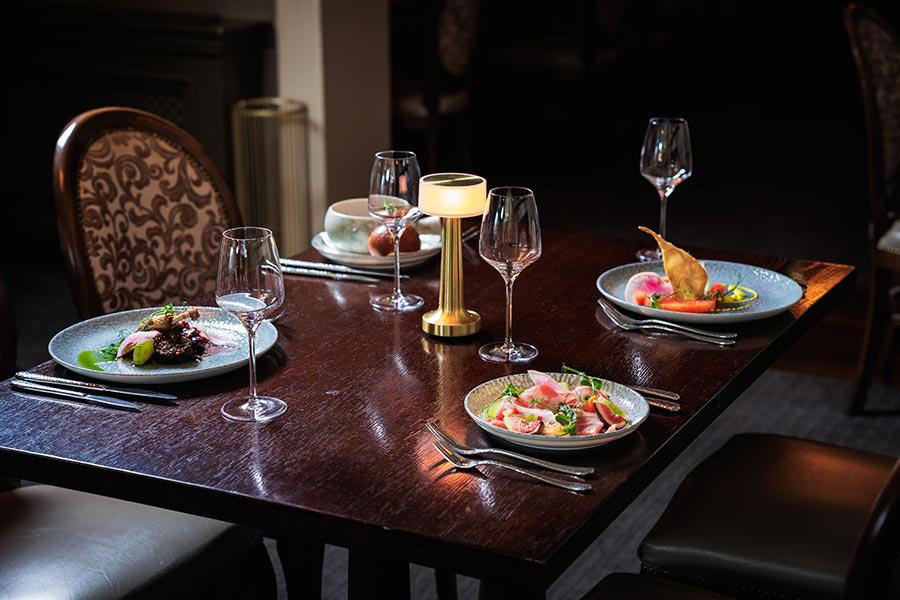
Cavendish Row and the Northside Shift
Dublin's dining weight has historically sat south of the Liffey, concentrated around St. Stephen's Green, Merrion Square, and the Grand Canal. That geometry has been shifting. The northside, long associated with Georgian decay and budget hospitality, has seen a measurable uptick in serious restaurant openings over the past several years. Cavendish Row, the short Georgian terrace running along the northern edge of Parnell Square, sits at the edge of that shift. Restaurant Six takes its name from its address at number six, placing it squarely in a neighbourhood that is still defining its dining identity rather than resting on one.
The location matters editorially. A restaurant opening on the southside near Glovers Alley or Patrick Guilbaud inherits a context of established fine dining. A restaurant on Cavendish Row inherits something different: proximity to the Gate Theatre, the Garden of Remembrance, and a pedestrian catchment that mixes tourists moving up from O'Connell Street with a local professional crowd. That mix shapes expectations in both directions.
Irish Ingredient Culture and What It Demands of a Kitchen
The strongest thread running through contemporary Irish restaurant cooking is not technique but sourcing. The conversation that began at places like Aniar in Galway, which built its identity explicitly around wild and foraged West of Ireland ingredients, has spread into the broader national scene. Kitchens from Chestnut in Ballydehob to Liath in Blackrock have made traceable provenance a structural part of how they communicate with diners, not a footnote on a menu. Ireland's relatively small scale as a food-producing nation works in kitchens' favour here: the distance between a Kerry sheep farm and a Dublin plate is short enough that the chain of custody is legible.
What that sourcing culture demands is discipline. A kitchen that commits to Irish produce is committing to seasonality in the strict sense, not the performative kind. Spring menus must actually reflect what Irish soil and coastline yield in spring. That constraint, when followed seriously, produces cooking that reads as coherent rather than assembled. Dublin kitchens operating at the upper end of the market, from Chapter One by Mickael Viljanen to Bastible, have made this commitment central to their identities. The question for any newer entry into this space is whether it joins that conversation with the same rigour or treats provenance as aesthetic rather than operational principle.
For restaurants further afield making the same arguments, the comparison points are instructive. dede in Baltimore, Bastion in Kinsale, and Homestead Cottage in Doolin all demonstrate that serious sourcing-led cooking is not confined to the capital. That context is useful when assessing any Dublin restaurant's claims about local supply: the bar has been set in places with even more direct access to primary producers.
The D1 Postcode in Context
Dublin 1 is not a restaurant destination in the way that certain London or Paris postcodes function as reliable coordinates for serious eating. The area around O'Connell Street has long served primarily as a transit zone, with hospitality geared toward volume and speed. Cavendish Row sits at the quieter, more residential northern end of that zone, closer to Parnell Square's cultural institutions than to the commercial density of the main street. That positioning gives a restaurant like this a different kind of customer: one who has made a deliberate choice to be here rather than arrived by default.
The contrast with D'Olier Street, which operates in a more established southside corridor, or with the Georgian set pieces of Merrion that frame Patrick Guilbaud, illustrates how much a postcode shapes the dining social contract. In D1, a kitchen earns its reputation without the inherited gravity of a prestigious address. That can be an advantage, producing a less ceremonial atmosphere, or a challenge, requiring more consistent work to draw a destination-seeking clientele.
Where Restaurant Six Sits in the comparable set
Positioning Restaurant Six against its Dublin peers requires reading the signals available. Its address and format place it in the mid-to-upper segment of the Dublin market, above the casual end but below the tasting-menu-only tier occupied by fine dining rooms. That middle ground in Dublin is genuinely competitive. Diners in that bracket have access to strong options across the city, and the standard set by kitchens operating with full creative ambition at similar price points is high.
Internationally, the sourcing-led approach that characterises the better end of Irish contemporary cooking has a clear peer conversation. Le Bernardin in New York City demonstrates what singular ingredient focus looks like at the highest technical level, and Atomix in New York City shows how tasting formats built around cultural and agricultural specificity can carry serious critical weight. The ambition in both cases is to make the ingredient the argument. Irish kitchens making the same argument operate with a different set of raw materials but the same underlying logic.
Other Irish restaurants in the wider national picture, including Campagne in Kilkenny, Terre in Castlemartyr, House in Ardmore, and Lady Helen in Thomastown, collectively establish what serious regional Irish cooking looks like outside the capital. Any Dublin restaurant making claims about sourcing and quality is implicitly measured against this national comparable set, not only against its immediate city neighbours.
Know Before You Go
- Address: 6 Cavendish Row, O'Connell Street Upper, Dublin 1, D01 V3P6, Ireland
- Neighbourhood: Parnell Square / Cavendish Row, Dublin 1
- Booking: recommended
- Price tier: €60 per person
- Hours: Tue to Sat, 4:30 to 9:30 PM; Mon and Sun closed
- Getting there: Walking distance from O'Connell Street Luas stop and multiple Dublin Bus routes on O'Connell Street
Cost Snapshot
Comparable venues nearby, for context on price, style, and recognition.
| Venue | Cuisine | Price |
|---|---|---|
| Restaurant SixThis venue — the venue you are viewing | Rotunda A, Modern Irish Fine Dining | $$$ |
| Roe & Co Distillery | Ushers B, Modern Irish Whiskey Bar | $$$ |
| The Woollen Mills | North City, Modern Irish Gastropub | $$ |
| Cinnamon Ranelagh | Rathmines East A, Irish Café Brunch | $$ |
| Craft | Kimmage C, Modern Irish Bistro | $$$ |
| The Green | Royal Exchange B, Modern Irish Bistro | $$ |
Continue exploring
More in Dublin
Restaurants in Dublin
Browse all →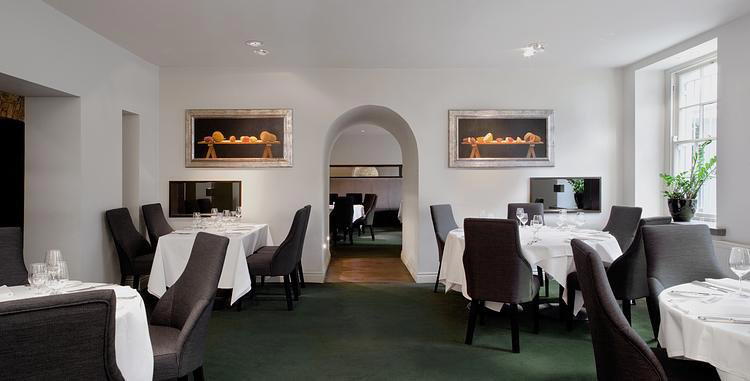
Bars in Dublin
Browse all →
Hotels in Dublin
Browse all →
Wineries in Dublin
Browse all →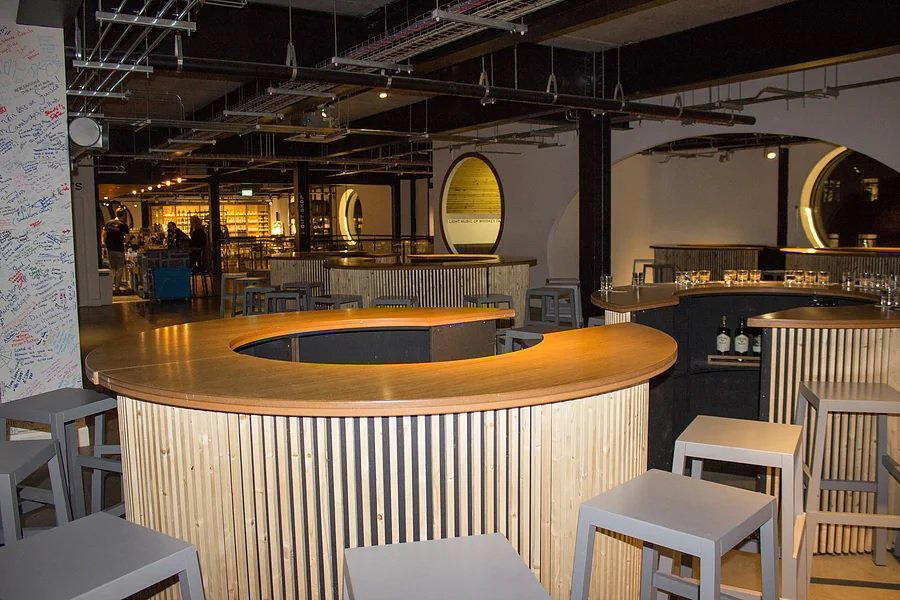
At a Glance
- Elegant
- Intimate
- Sophisticated
- Date Night
- Special Occasion
- Pre Theater
- Historic Building
- Hotel Restaurant
- Local Sourcing
- Street Scene
Current opening hours
- Monday
- Closed
- Tuesday
- 4:30–9:30 PM
- Wednesday
- 4:30–9:30 PM
- Thursday
- 4:30–9:30 PM
- Friday
- 4:30–9:30 PM
- Saturday
- 4:30–9:30 PM
- Sunday
- Closed
Hours can change for holidays and private events. Last verified .
Warm, elegant and intimate with stylish décor and a relaxed yet refined old-world Georgian atmosphere.