
1 Michelin Star
Our verdict
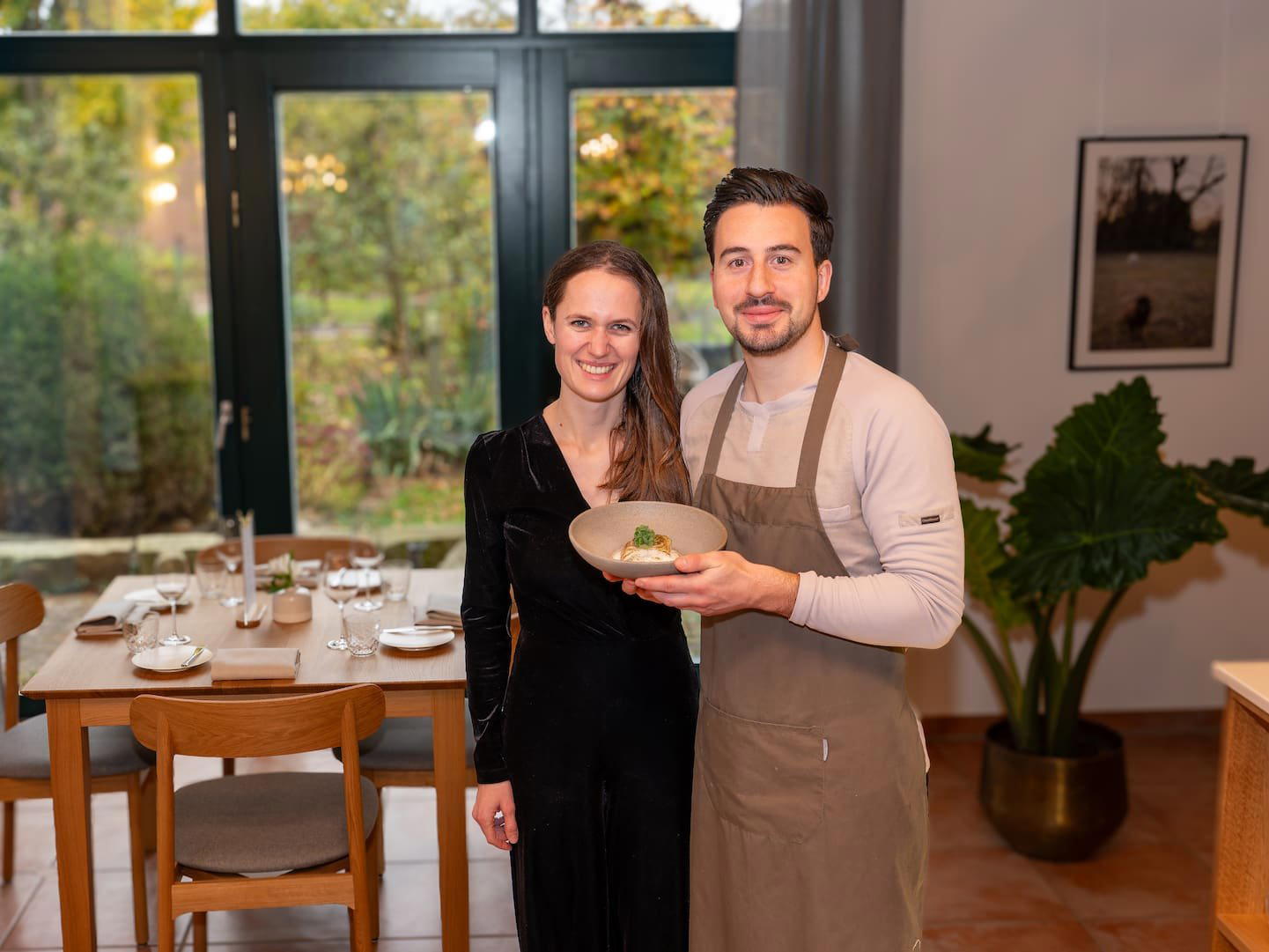
Restaurant Mohn sits at Hauptstraße 25 in Hohnhorst, a small Lower Saxony town that positions it firmly outside Germany's urban fine dining circuit. The address alone signals something about the dining tradition it draws from: a regional kitchen operating at a remove from metropolitan trend cycles, where the sourcing logic and the surrounding landscape are inseparable parts of what ends up on the plate.

Pearl is the En Primeur Club membership app, where members save venues, book tables and use the concierge.
Dining at a Distance from the Circuit
Germany's serious restaurant culture is not confined to Berlin, Munich, or Hamburg. A quieter parallel exists in smaller towns and rural addresses where the kitchen's relationship to its immediate region shapes the menu more directly than any metropolitan influence could. Hohnhorst, a small community in Lower Saxony between Hanover and the Weser Uplands, sits in that category. Restaurant Mohn at Hauptstraße 25 occupies this kind of position: a dining address that operates outside the usual peer-set conversations happening in larger cities, where ingredient sourcing and regional character tend to carry more weight than format experimentation. For a broader map of what's available in the area, see our full Hohnhorst restaurants guide.
The name itself, Mohn, German for poppy, signals an orientation toward the specific rather than the generic. Named plants, flowers, or local botanical references in a restaurant's identity often indicate a kitchen that thinks about its raw materials in the same terms: not as undifferentiated product categories but as things with particular seasons, particular sources, and particular contexts of use. What the address alone does establish is that this is a restaurant operating in a landscape where the sourcing radius is naturally compact.
What the Region Supplies
Lower Saxony is among Germany's most productive agricultural regions. The Hanover hinterland and the areas north toward Bremen supply grain, root vegetables, dairy, and pork in quantities that make proximity sourcing a practical reality rather than a marketing posture. For kitchens in this part of the country, the argument for local sourcing is logistical before it is philosophical: the producers are nearby, the supply chains are short, and seasonal alignment is the default rather than an aspiration. Lamb from the Lüneburg Heath, freshwater fish from the Weser system, and orchard fruit from the lower Elbe corridor are all within the sourcing orbit of a kitchen in this district.
That regional abundance distinguishes this tier of German dining from the kind of high-concept operations found at addresses like Aqua in Wolfsburg or JAN in Munich, where international product sourcing and technical ambition sit at the center of the proposition. The Lower Saxon kitchen tradition tends toward something more grounded: preparations that make sense of the season and the surrounding countryside rather than demonstrating mastery over imported luxury ingredients. That is not a hierarchy but a distinction of purpose, and it serves a different reader.
Where Mohn Fits in Germany's Wider Dining Picture
Germany's decorated restaurant tier has accumulated significant depth over the past two decades. Operations like Schwarzwaldstube in Baiersbronn, Vendôme in Bergisch Gladbach, and Waldhotel Sonnora in Dreis represent the classic fine dining pole: long-established, Michelin-recognised, and often attached to hotel properties in semi-rural or small-town settings. A separate, more experimental cohort, CODA Dessert Dining in Berlin and ES:SENZ in Grassau among them, has pushed format and concept further. Restaurant Mohn does not fit cleanly into either bracket based on available information, which places it in the broader category of serious regional addresses that operate below the awards radar but above the level of undifferentiated local gastronomy.
That middle territory is where much of Germany's most interesting eating happens. Addresses like Schanz in Piesport, Bagatelle in Trier, and ammolite in Rust each sit in smaller communities and have carved distinct identities from their regional contexts rather than despite them. The same structural logic applies in Hohnhorst: distance from a metropolitan centre is not a limitation but a definition of what the kitchen must do to earn its audience. For contrast, Restaurant Haerlin in Hamburg and Victor's Fine Dining by Christian Bau in Perl represent how the hotel fine dining format lands at different ends of Germany's geographic and stylistic range.
The Sourcing Argument at This Kind of Address
When a restaurant operates in a small town with a name drawn from the botanical world, the implied contract with the diner is about specificity: specific producers, specific seasons, specific preparations that could not be replicated in the same way elsewhere. That contract is most legible at the plate level. Kitchens in this mode tend to rotate menus with seasonal discipline, treat preservation and fermentation as extensions of their sourcing logic rather than as technique for its own sake, and build dishes around what the immediate region does well rather than around what a globally sourced larder makes possible.
Internationally, the clearest expressions of this discipline appear at addresses like Le Bernardin in New York City, where sourcing specificity is the foundation of the whole enterprise, or at the other extreme of format innovation, Atomix in New York City, where ingredient provenance is narrated directly to the diner as part of the experience structure. German regional kitchens rarely narrate sourcing in that explicit way, but the underlying logic, that where food comes from determines what you can honestly cook, runs through the better addresses in every tier. ATAMA by Martin Stopp in Sankt Ingbert and AUGUST in Augsburg each demonstrate how that sourcing-led approach can anchor a serious kitchen in a smaller German city.
Planning a Visit
Restaurant Mohn is located at Hauptstraße 25, 31559 Hohnhorst, in Lower Saxony. The town sits roughly thirty kilometres west of Hanover, making it accessible by car from the A2 motorway corridor. Visitors travelling from Hamburg or from the Ruhr region will find Hanover the natural transit point. Given the small-town setting, walk-in availability is plausible on quieter evenings, but addresses in this category in Germany often build a regular local following that can fill a modest dining room without much advance notice. AURA by Alexander Herrmann and Tobias Bätz in Wirsberg is one example of how a regional German address in a similarly small community can sustain serious reservation demand well beyond its immediate locality.
Frequently asked questions
Is Restaurant Mohn child-friendly?
No formal children's policy is documented for Restaurant Mohn at Hauptstraße 25, Hohnhorst. Restaurants operating at this level in small Lower Saxony towns tend toward an adult dinner-out format rather than a family-dining setup, though calling ahead to confirm is the practical move before arriving with young children.
How would you describe the vibe at Restaurant Mohn?
The address, a main street location in a town of under 5,000 people roughly thirty kilometres west of Hanover, points toward something quieter and more focused than a city dining room. Restaurants at this kind of remove from major urban centres typically cultivate a regulars-led atmosphere where the cooking does the talking rather than the room. Expect calm over spectacle.
Is Restaurant Mohn worth the drive from Hanover for a special occasion?
At approximately thirty kilometres from central Hanover, the trip is around a thirty-minute drive, a reasonable detour if the occasion calls for somewhere away from the city's busier restaurant corridor. Hohnhorst and the surrounding Lower Saxony hinterland support a tradition of serious, produce-anchored cooking that operates outside the attention given to Germany's larger urban food scenes. Confirming current opening hours and reservation availability directly with the restaurant before making the journey is advisable, as details are not currently published online.
What do regulars order at Restaurant Mohn?
The safer assumption is a short, seasonal menu that shifts with supply rather than a stable à la carte.
Where do I go for Restaurant Mohn?
Restaurant Mohn is located at Hauptstraße 25, 31559 Hohnhorst, Germany, Hohnhorst.
Side-by-Side Snapshot
Comparable venues nearby, for context on price, style, and recognition.
| Venue | Cuisine | Price | Awards | Notes |
|---|---|---|---|---|
| Restaurant MohnThis venue (the venue you are viewing) | Modern Regional German Fine Dining | $50–100 | 1 Michelin Star | Not listed |
| Küchenfreunde | Modern German Bistro | $30–50 | Not listed | Anscharhoehe |
| Wildfrisch Gutsküche | Modern German Contemporary | $50–100 | Not listed | Rittergut Nordsteimke |
| Zum Alten Lotsenhaus | Regional German | $50–100 | Not listed | Neumuehlen |
| Hotel-Restaurant Bachmühle | Traditional German Grill & European Cuisine | $50–100 | Not listed | Künzeller Str. |
| Jörg's Bulettenschmiede | Traditional German Imbiss | Not listed | Not listed | Empelde |
Recognition history
Dated appearances from independent guides and award organizations, with the underlying list record or original source where available.
Michelin 1 Star
Michelin
Continue exploring
More in Hohnhorst
Restaurants in Hohnhorst
All restaurants in Hohnhorst →
Hotels in Hohnhorst
Browse all →
Wineries in Hohnhorst
Browse all →
Details
- Cozy
- Elegant
- Date Night
- Special Occasion
- Historic Building
- Local Sourcing
- A La Carte
- Set Menu
Current opening hours
- Monday
- Closed
- Tuesday
- Closed
- Wednesday
- 6–11 PM
- Thursday
- 6–11 PM
- Friday
- 6–11 PM
- Saturday
- 6–11 PM
- Sunday
- Closed
Hours can change for holidays and private events. Hours as of .
Nettes Ambiente with idyllische Lage, cozy half-timbered setting.