Our verdict
Restaurant Dalmacija on Gartenstraße 37 in Brühl brings Dalmatian coastal cooking to a small German city between Cologne and Bonn. The address places it within reach of the Rhine corridor's growing interest in regional European cuisines that travel beyond their home coastlines. For those tracing the influence of Adriatic ingredients in Germany's mid-tier dining circuit, it is a reference point worth knowing.

Pearl is the En Primeur Club membership app — saves, bookings, and concierge access live there. Same editors, same standards.
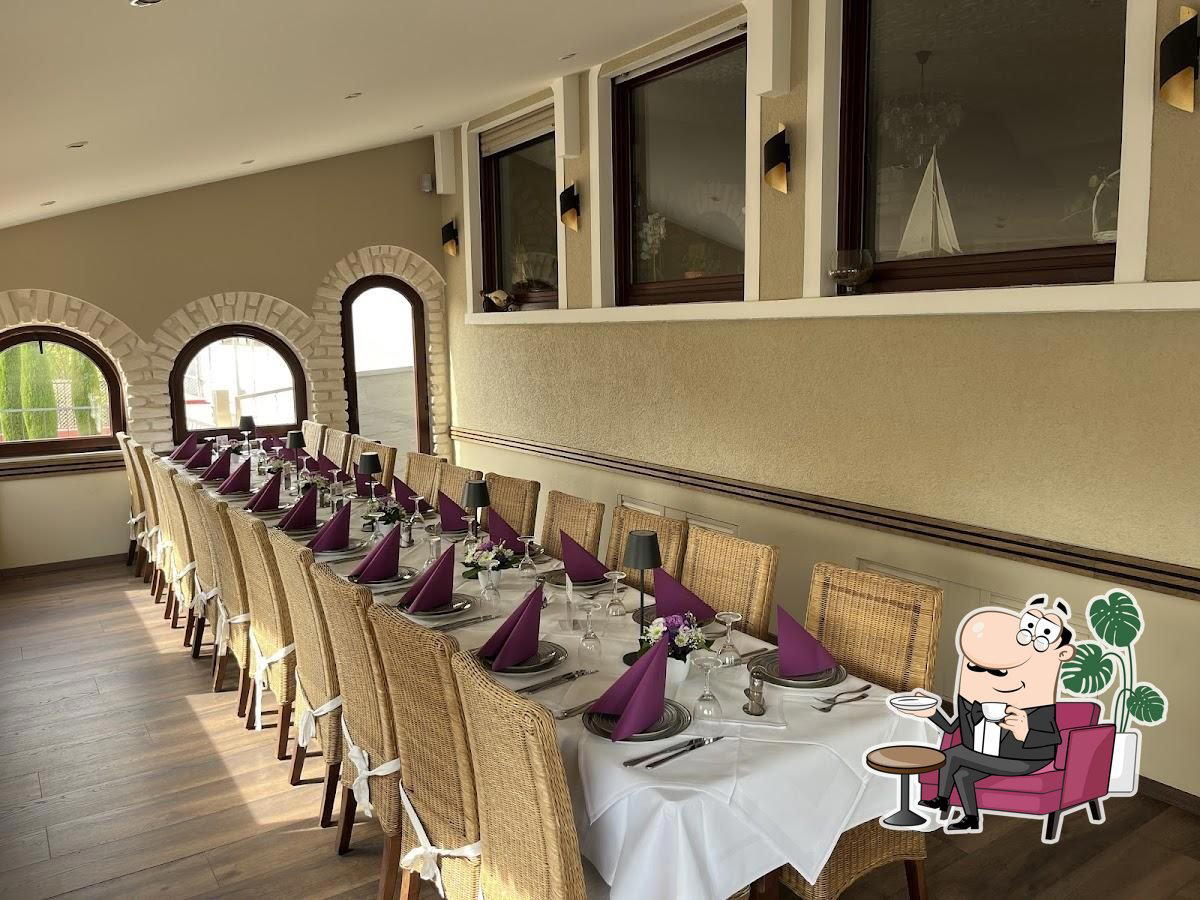
Adriatic Cooking in the Rhine Corridor
Brühl sits roughly 15 kilometres south of Cologne, a compact city leading known internationally for Phantasialand and the Baroque Augustusburg Palace. Its restaurant scene follows a pattern common to mid-sized German cities within commuting distance of a major urban centre: a core of neighbourhood regulars, a handful of international kitchens that serve the local diaspora, and occasional surprises that draw from further afield. Restaurant Dalmacija, on Gartenstraße 37, represents the last of those categories, bringing the ingredient logic of the Dalmatian coast to a setting far from the Adriatic.
Dalmatian cooking is, in structural terms, one of the more ingredient-dependent cuisines in the broader Mediterranean tradition. Unlike the sauce-centred French classical canon or the fat-and-cured-meat architecture of central European cooking, the Adriatic coastal tradition rests almost entirely on what arrives that morning: fish pulled from cold, clean water; olive oil pressed from centuries-old groves on the Croatian islands; vegetables grown in the thin, stony soil behind the coastline; and lamb raised on the scrubby herbs of the Dalmatian hinterland. When that tradition travels, the sourcing question becomes the central editorial question. Does the kitchen reconstruct the ingredient logic from German-available produce, or does it import? Either answer is defensible; they simply produce different results.
For our full overview of where Brühl fits in Germany's wider dining map, see our full Brühl restaurants guide. The city does not have the Michelin concentration of Bergisch Gladbach, home to the three-star Vendôme, or the profile of Baiersbronn, where Schwarzwaldstube has long anchored the Black Forest's fine-dining identity.
The Sourcing Logic Behind Dalmatian Kitchens in Central Europe
The spread of Croatian and Dalmatian restaurants across German cities over the past two decades follows a demographic logic: a substantial Croatian-origin population settled across the Rhine-Ruhr corridor from the 1960s onward, and with it came a cooking culture that resisted assimilation more stubbornly than many of its Central European counterparts. The reason is partly ingredient pride. Dalmatian cooking does not translate easily into locally sourced substitution. Peka, the slow-roasting technique using a bell-shaped lid buried in embers, requires not just the method but the right cut of lamb or veal and the patience of a wood-fire tradition. Adriatic fish dishes built around sea bass, bream, or the small, oily fish of the Dalmatian catch carry a flavour profile that North Sea or Baltic alternatives do not replicate.
This is the tension that defines the better Dalmatian kitchens operating in Germany today. The restaurants that hold their ground over years tend to be those that invest in sourcing: importing olive oil, wine, and specific proteins from Croatian suppliers rather than substituting German-market equivalents. The tradeoff is cost and logistical complexity. The reward is a plate that retains the mineral, clean-water character that makes Adriatic fish cooking distinct from any landlocked approximation. Germany's higher-end Mediterranean restaurants often make a version of this argument explicitly. Aqua in Wolfsburg, operating at the €€€€ tier with a creative mandate that draws from Italian and Japanese traditions alongside German produce, demonstrates how rigorous sourcing can define a kitchen's competitive position even when the base cuisine is not local. The same principle, applied to a Dalmatian framework at a neighbourhood scale, is what separates a credible regional kitchen from a generic approximation.
What the Address Tells You
Gartenstraße 37 is a residential-commercial street in central Brühl. The address carries no particular dining cachet, which is consistent with how most Dalmatian and Croatian restaurants position themselves across German cities: in neighbourhood locations, without the frontage or square-footage of hotel dining rooms or destination addresses. That positioning is not a limitation. Some of the more serious regional kitchens in Germany operate from exactly this kind of address, where rent economics allow the kitchen budget to go toward produce rather than décor.
The comparison is instructive when set against the trajectory of similarly positioned kitchens in smaller German cities. Bagatelle in Trier and Schanz in Piesport both operate in cities that carry less dining weight than Cologne or Munich, yet have established reputations by working with precision within a specific culinary frame. The geography of German fine and near-fine dining has increasingly validated the argument that sourcing discipline and kitchen focus matter more than address prestige.
Brühl in the Broader German Dining Circuit
Germany's dining circuit in 2024 is more geographically distributed than it was a decade ago. The concentration of Michelin attention in major cities has softened as kitchens in smaller cities have accumulated recognition. JAN in Munich, ES:SENZ in Grassau, AUGUST in Augsburg, and AURA in Wirsberg all demonstrate that serious cooking is no longer confined to the largest urban centres. ATAMA by Martin Stopp in Sankt Ingbert extends that argument to a city even smaller than Brühl. For a restaurant like Dalmacija, this broader pattern matters: the Rhine corridor between Cologne and Bonn is not a culinary backwater, and a kitchen with genuine sourcing rigour can find an audience here.
For comparison at the higher end of the German regional spectrum, Waldhotel Sonnora in Dreis and Victor's Fine Dining by Christian Bau in Perl represent what the country's countryside fine-dining tier looks like at its most established. Restaurant Haerlin in Hamburg and ammolite in Rust map the range further. Dalmacija operates at a different altitude, but within a country where that full spectrum now exists and is legible to a travelling audience.
For international reference on what ingredient-led coastal cooking looks like at its most disciplined, Le Bernardin in New York City remains the clearest benchmark for fish-first kitchen logic, while Atomix demonstrates how a tight, specific culinary identity can translate across geographic distance without losing its reference point. CODA Dessert Dining in Berlin is a useful domestic reminder that format discipline and a coherent culinary argument matter more than cuisine category.
Planning a Visit
Restaurant Dalmacija is at Gartenstraße 37, 68782 Brühl, Germany. Brühl is served by S-Bahn connections from Cologne Hauptbahnhof on the S12 and S13 lines, making it accessible as a day or evening trip from the city without requiring a car. Given the neighbourhood positioning and the cuisine type, pricing is likely to sit below the €€€€ tier that characterises Germany's Michelin-awarded kitchens, though this should be confirmed directly.
Frequently asked questions
Is Restaurant Dalmacija suitable for children?
Dalmatian cooking traditions lean heavily on grilled fish, lamb, and shared plates, formats that tend to work well for families. The Gartenstraße 37 address is a residential-commercial street in central Brühl, which typically signals a neighbourhood setting rather than a formal dining room. check the venue's official channels to confirm seating arrangements for groups with children.
Is Restaurant Dalmacija formal or casual?
Croatian and Dalmatian restaurants in German cities generally run as relaxed, mid-register dining rooms rather than formal establishments. Nothing in the venue's profile at Gartenstraße 37 in Brühl suggests a dress code or ceremony-driven format. Treat it as you would a neighbourhood restaurant rather than a special-occasion destination requiring advance wardrobe planning.
Does Restaurant Dalmacija in Brühl serve traditional Croatian food or a German-adapted version?
The spread of Croatian restaurants across German cities over the past two decades has been largely driven by diaspora communities, which tends to keep menus closer to Adriatic originals than tourist-market adaptations. Restaurant Dalmacija's name references the Dalmatia region specifically, which historically signals coastal Croatian cooking: fish, lamb, and olive oil-based preparations rather than inland meat-heavy dishes. For precise menu details, contact the restaurant at Gartenstraße 37, 68782 Brühl.
What dish is Restaurant Dalmacija famous for?
No specific signature dishes are documented for Restaurant Dalmacija.
Where exactly is Restaurant Dalmacija?
Restaurant Dalmacija is located at Gartenstraße 37, 68782 Brühl, Germany, Bruhl.
How hard is it to get a table at Restaurant Dalmacija?
No booking data or reservation lead times are documented for Restaurant Dalmacija at Gartenstraße 37 in Brühl. Smaller Croatian restaurants in mid-sized German cities can fill quickly on weekends, particularly those serving a local diaspora community alongside general diners. Calling ahead is advisable, especially for Friday or Saturday evenings.
What makes Restaurant Dalmacija worth seeking out?
Brühl sits 15 kilometres south of Cologne on the S12 and S13 S-Bahn lines, making it an accessible side trip from the city. Croatian and Dalmatian restaurants are relatively sparse outside of Germany's largest urban centres, so a dedicated Dalmatian kitchen in a smaller Rhine corridor city like Brühl fills a genuine gap in the local dining circuit. The Gartenstraße 37 address suggests a community-rooted operation rather than a tourist-facing venue.
How It Stacks Up
Comparable venues nearby, for context on price, style, and recognition.
| Venue | Cuisine | Price | Notes |
|---|---|---|---|
| Restaurant DalmacijaThis venue — the venue you are viewing | Croatian Mediterranean | Not listed | Not listed |
| Mauritius | Mediterranean Beach Food with Caribbean Influences | $20–30 | Gablenberg |
| Dubrovnik Restaurant | Croatian Grill & Mediterranean | $20–30 | Friedrichsplatz |
| Cava | Modern Mediterranean & Greek | $20–30 | Old Town Kaarst |
| coa | Modern Pan-Asian | $10–20 | City Center |
| Anh-Thu Restaurant | Authentic Vietnamese | $20–30 | Schwabing |
Continue exploring
More in Bruhl
Restaurants in Bruhl
All restaurants in Bruhl →
Bars in Bruhl
Browse all →
Hotels in Bruhl
Browse all →

Details
- Cozy
- Family
- Casual Hangout
- Live Music
- A La Carte
- Vegetarian Friendly
Current opening hours
- Monday
- 11:30 AM–2 PM, 5–9 PM
- Tuesday
- Closed
- Wednesday
- 11:30 AM–2 PM, 5–9 PM
- Thursday
- 11:30 AM–2 PM, 5–9 PM
- Friday
- 11:30 AM–2 PM, 5–9 PM
- Saturday
- 11:30 AM–2 PM, 5–9 PM
- Sunday
- 11:30 AM–2 PM, 5–9 PM
Hours can change for holidays and private events. Last verified .
Cozy atmosphere with lively ambiance.