Restaurant Café Timothé
Our verdict
A café-restaurant on a narrow lane in Saint-Paul-de-Vence's medieval centre, Restaurant Café Timothé sits within one of the Côte d'Azur's most visited walled villages. The address — 4 Rue du Bresc — places it inside a concentrated dining scene where Provençal tradition and the demands of an international visitor crowd pull menus in competing directions.

Pearl is the En Primeur Club membership app — saves, bookings, and concierge access live there. Same editors, same standards.
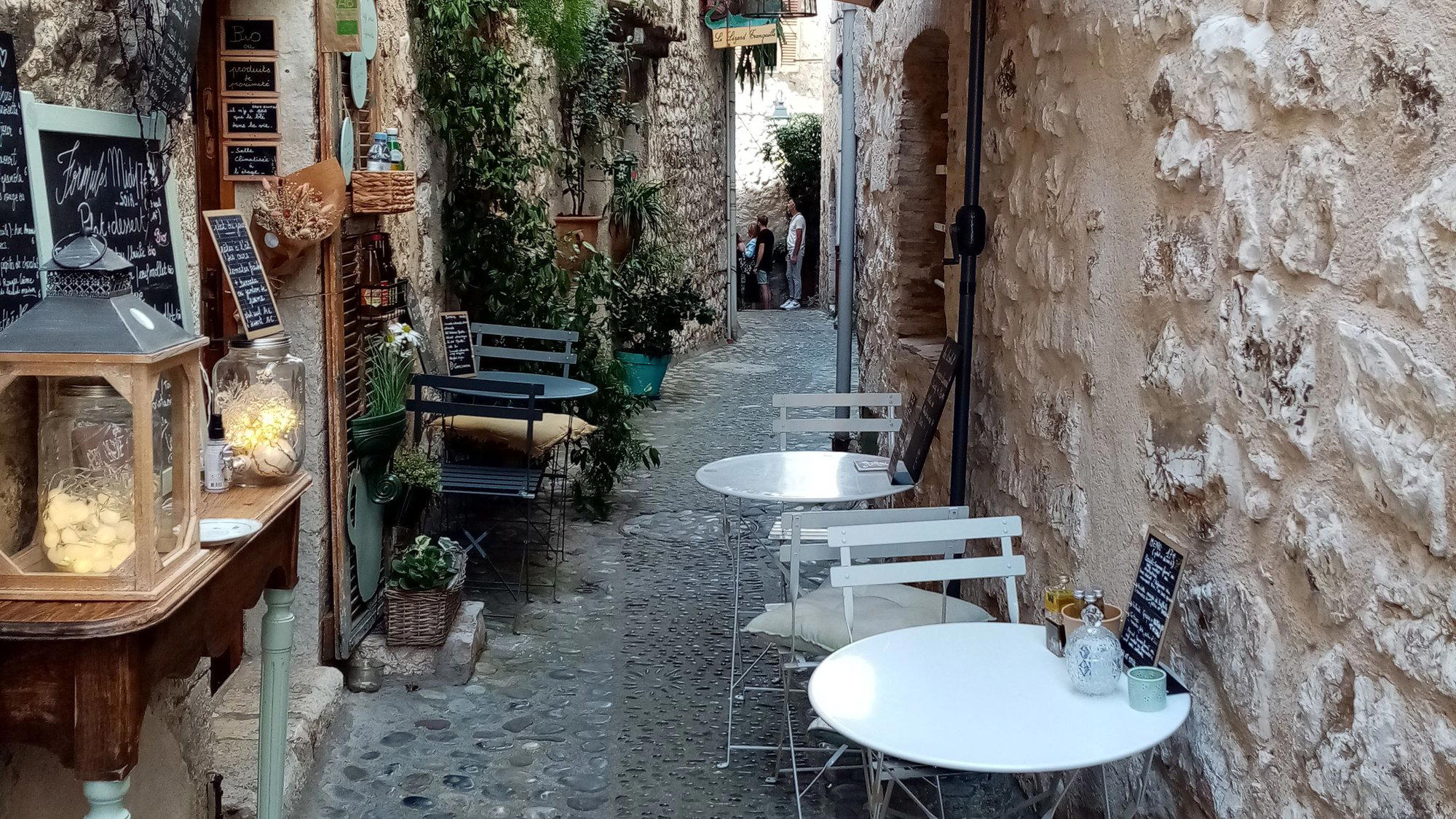
Dining Inside the Walls: Saint-Paul-de-Vence's Concentrated Restaurant Scene
Saint-Paul-de-Vence occupies a narrow ridge above the valleys between Nice and Antibes, its medieval ramparts enclosing a village so compact that the entire restaurant scene operates within a few hundred metres of cobblestone. That compression creates a particular dining dynamic: venues here compete not on neighbourhood differentiation but on what they offer the same captive audience — mostly art-trail visitors, second-home owners from the surrounding hills, and travellers staying along the Côte d'Azur who make the short drive inland. The result is a dining culture that layers Provençal roots over persistent tourist demand, and the better addresses hold that tension more gracefully than others.
Restaurant Café Timothé occupies a position on Rue du Bresc — one of the village's interior lanes, that places it within easy reach of the main gallery circuit but slightly removed from the most trafficked stretch near the main gate. In a village this size, that distinction matters. The streets of Saint-Paul-de-Vence have been a cultural crossroads since the 1920s, when artists including Chagall, Matisse, and Picasso made the surrounding area a base. That legacy feeds the contemporary visitor economy and sets a particular expectation: people arrive culturally primed, attentive to craft, and willing to pay for it if the experience justifies the price.
The Provençal Table: What the Regional Tradition Means Here
Provençal cuisine is built on restraint in seasoning and generosity in produce, olive oil over butter, herbs gathered from dry hillsides, tomatoes with genuine sun acidity, fish from the Mediterranean drawn into dishes with minimal intervention. It is a tradition that predates the formalism of French haute cuisine by centuries and has survived successive waves of culinary fashion largely because it is rooted in specific geography. The olive groves, lavender fields, and market gardens of the Alpes-Maritimes and Var departments produce ingredients that carry their own argument.
In practice, that tradition faces pressure in heavily touristed villages. The path of least resistance, simplified menus, extended service hours, volume pricing, often wins out over the slower, market-dependent rhythms that genuine Provençal cooking requires. The addresses that resist that pressure tend to signal it through specific choices: shorter menus, seasonal variation, and a willingness to serve dishes that require actual preparation time. For travellers comparing options in Saint-Paul-de-Vence, those signals are more useful indicators of kitchen seriousness than any single dish claim. Our full Saint Paul De Vence restaurants guide maps the local field in more detail.
Nearby La Brouette represents another reference point within the village's dining options, offering a useful comparison for visitors assessing the range available inside the walls.
The Côte d'Azur's Broader Fine Dining Axis
Saint-Paul-de-Vence sits within reach of some of the most formally recognised tables in the south of France. Mirazur in Menton, ranked among the world's most decorated restaurants, with three Michelin stars and a former No.1 position on the World's 50 Best list, operates roughly an hour's drive east along the coast and represents the ceiling of what the Riviera's culinary geography can produce. Further afield, L'Oustau de Baumanière in Les Baux and AM par Alexandre Mazzia in Marseille extend the southern French dining map in different stylistic directions, one rooted in classical Provençal prestige, the other in a more experimental idiom.
That broader context is worth holding when considering what a café-restaurant in a medieval village can and should do. The ambition at the Michelin-starred level, extended tasting menus, wine programmes with regional depth, front-of-house orchestration, belongs to a different category of experience. Addresses like Café Timothé operate in the space where regional cooking tradition, an accessible price register, and the particular pleasure of eating inside an ancient walled village intersect. Those are real pleasures, and the comparison set that matters is other village restaurants, not the formal tables down on the coast.
For those planning a wider journey through French restaurant culture, the country's range extends from the three-starred formalism of Alléno Paris au Pavillon Ledoyen and Paul Bocuse - L'Auberge du Pont de Collonges to the mountain-rooted precision of Flocons de Sel in Megève, the generational legacy of Troisgros in Ouches, and the terroir intensity of Bras in Laguiole. The Alsatian tradition runs through Auberge de l'Ill and Au Crocodile in Strasbourg, while Auberge du Vieux Puits in Fontjoncouse, Christopher Coutanceau in La Rochelle, Assiette Champenoise in Reims, and Georges Blanc in Vonnas represent the depth of France's regional fine dining tradition. Cross-Atlantic comparisons can be drawn with Le Bernardin and Atomix in New York City, both of which demonstrate how European culinary traditions translate, and transform, at distance.
Planning Your Visit
Saint-Paul-de-Vence is accessible by road from Nice (approximately 25 kilometres) and from Antibes to the south. The village is pedestrianised within the walls, so visitors arriving by car park outside the gates and walk in. Rue du Bresc, where Restaurant Café Timothé is addressed at number 4, sits within the interior of the village. Peak visiting months, July and August, bring significant foot traffic to the area, and restaurants operating during this period typically run at capacity. Visiting outside summer, particularly in May, June, September, or October, tends to mean shorter waits and a more measured pace through the village itself.
Frequently asked questions
Is Restaurant Café Timothé a family-friendly restaurant?
Its address at 4 Rue du Bresc places it within the pedestrianised medieval core of Saint-Paul-de-Vence, a village that draws a broad mix of visitors including families touring the ramparts and the Fondation Maeght. A café-restaurant format in this setting typically accommodates all ages without formality. Confirming specific children's menu provisions directly with the venue is advisable before visiting.
What kind of setting is Restaurant Café Timothé?
The restaurant occupies a position inside the walled village of Saint-Paul-de-Vence, one of the most intact medieval hilltop settlements on the French Riviera. The address on Rue du Bresc sits within a compact pedestrian zone where stone lanes connect the ramparts to the village centre. The café format suggests an informal, street-level presence rather than a formal dining room.
Is Restaurant Café Timothé a good option for lunch after visiting the Fondation Maeght in Saint-Paul-de-Vence?
The restaurant's address at 4 Rue du Bresc places it within the walled village, a short walk from the Fondation Maeght, which sits just outside the northern ramparts. Saint-Paul-de-Vence has relatively few full-service dining rooms inside the walls, making café-restaurants on the interior lanes a practical post-visit option. The café format suits a midday stop without requiring the time commitment of a formal multi-course lunch.
What's the signature dish at Restaurant Café Timothé?
Given its location in Saint-Paul-de-Vence, the regional Provençal tradition — centred on olive oil, seasonal vegetables, and herbs from the surrounding hillsides — provides the most likely culinary frame.
Where do I go for Restaurant Café Timothé?
Restaurant Café Timothé is located at 4 Rue du Bresc, 06570 Saint-Paul-de-Vence, France, Saint Paul De Vence.
How hard is it to get a table at Restaurant Café Timothé?
Saint-Paul-de-Vence draws significant visitor numbers relative to its size, and the village's dining options within the walls are limited by the compact geography of the ramparts. Demand at any restaurant on Rue du Bresc tends to concentrate during summer months and weekend afternoons. Reserving ahead during peak season is the practical approach, particularly for lunch when foot traffic through the village is at its highest.
What's the defining dish or idea at Restaurant Café Timothé?
Without documented menu specifics, the defining idea is best understood through place rather than plate: a café-restaurant operating inside a medieval Provençal village carries a certain logic of locality, where the surrounding region — the olive groves, the dry-herb hillsides between Nice and Antibes — informs the table. The café format at 4 Rue du Bresc points toward an accessible, produce-anchored approach rather than a tasting-menu register.
Budget and Context
Comparable venues nearby, for context on price, style, and recognition.
| Venue | Cuisine | Price | Awards | Notes |
|---|---|---|---|---|
| Restaurant Café TimothéThis venue — the venue you are viewing | Organic French Bistro | $20–30 | Not listed | Not listed |
| La Brouette | Scandinavian Northern European | $20–30 | Not listed | Saint-Paul de Vence, Scandinavian Northern European |
| Dolce Provenza | Provençal & Italian Mediterranean Bistro | $50–100 | Relais Chateaux Award | Domaine du Mas de Pierre, Provençal & Italian Mediterranean Bistro |
| Le Signal 2108 | Bistronomic French with Regional Alpine Specialties | $30–50 | Not listed | Signal Mountain, Bistronomic French with Regional Specialties |
| Bistrot de la Marine | French Seafood Bistro | $20–30 | Not listed | Cros-de-Cagnes, French Seafood Bistro |
| Café Llorca | Provençal-Catalan Bistro | Not listed | Not listed | Vallauris, Provençal-Catalan Bistro |
Continue exploring
More in Saint-Paul-de-Vence
Restaurants in Saint-Paul-de-Vence
All restaurants in Saint-Paul-de-Vence →
Bars in Saint-Paul-de-Vence
Browse all →
Hotels in Saint-Paul-de-Vence
All hotels in Saint-Paul-de-Vence →
Wineries in Saint-Paul-de-Vence
Browse all →

Details
- Cozy
- Rustic
- Romantic
- Brunch
- Casual Hangout
- Family
- Terrace
- Organic
- Local Sourcing
- Street Scene
- A La Carte
- Vegetarian Friendly
- Gluten Free Options
Current opening hours
- Monday
- 10 AM–5 PM
- Tuesday
- 10:30 AM–5 PM
- Wednesday
- 10:30 AM–5 PM
- Thursday
- 10:30 AM–5 PM
- Friday
- 10:30 AM–5 PM
- Saturday
- Closed
- Sunday
- Closed
Hours can change for holidays and private events. Last verified .
Cozy Provence-style with rustic homely atmosphere, natural decoration, and terrace seating in a charming village alley.