A compact wine bar on a quiet covered passage in the 11th arrondissement, Restaurant Au Passage operates at the informal end of Paris's natural wine circuit, where small plates arrive in whatever order the kitchen decides and the bottle list reads like a who's who of low-intervention producers. The format rewards curiosity and a willingness to relinquish control of the menu.
Pearl is the En Primeur Club membership app — saves, bookings, and concierge access live there. Same editors, same standards.
- Address
- 1 bis Pass. Saint-Sébastien, 75011 Paris, France
- Phone
- +33 1 43 55 07 52
- Website
- restaurant-aupassage.fr
- Directions
- Get directions
 Saves & bookings on Pearl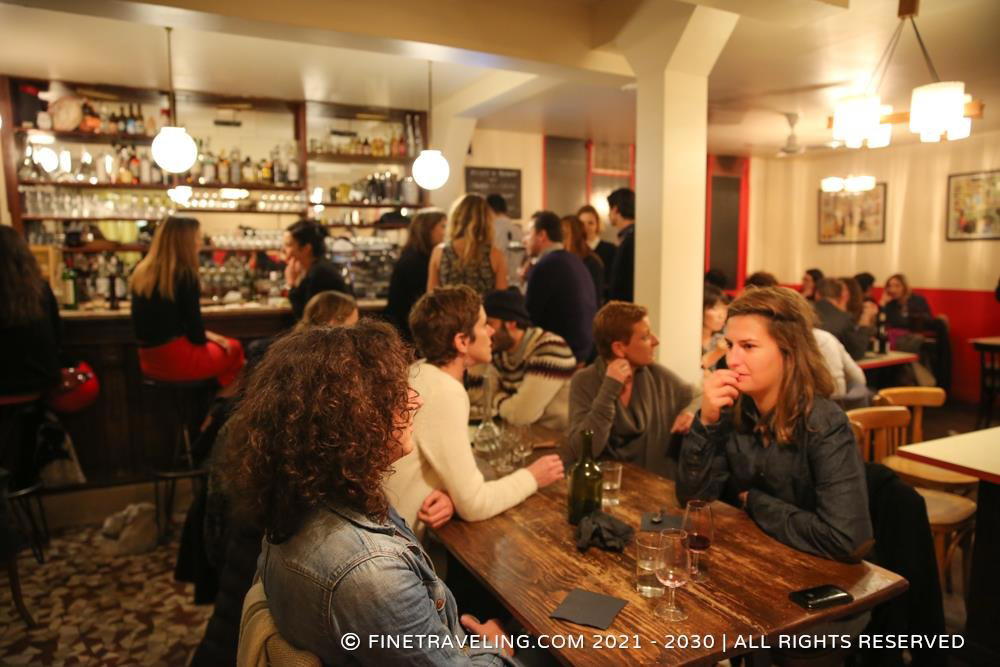
A Passage, a Counter, and the Rhythm of the 11th
Passage Saint-Sébastien is the kind of narrow, glass-roofed corridor that Paris built in the 19th century and largely forgot about in the 20th. Arriving at Restaurant Au Passage means walking under that iron-and-glass canopy with the ambient noise of the 11th arrondissement dropping away behind you. What you find at the end is not a dining room in any formal sense: a counter, a chalkboard, low light, and bottles lined up with the casual authority of a place that has decided wine is the main event and food is the essential companion. The physical environment sets the terms of engagement before anyone has taken your order.
Paris's wine bar scene has split into recognizable tiers over the past decade. At one end, the grand-format restaurants of the 8th and 16th — Alléno Paris au Pavillon Ledoyen, Le Cinq at the Four Seasons George V, or the austere classicism of L'Ambroisie — operate with full brigade kitchens, carefully orchestrated service, and price points that announce their institutional seriousness. At the other end, the 11th and surrounding Right Bank neighborhoods have produced a different kind of address: smaller rooms, shorter menus, natural and low-intervention wine lists, and a format that blurs the line between bar and restaurant. Au Passage sits in this second category with some conviction, and has been doing so long enough to have influenced the template that younger openings in Oberkampf and Ménilmontant now follow.
The Ritual at the Table: How a Meal Works Here
The dining ritual at Au Passage is worth understanding before you arrive, because it does not conform to the sequencing that French gastronomy classically prescribes. This is not a room where you select a starter, a main, and a dessert in that order, pausing between courses while the room operates at a stately pace. The format is closer to a Spanish bodega than a French bistro: small plates, designed to share, arriving with a logic that the kitchen controls. You order several things at once, more arrive as the kitchen sees fit, and the wine glass is refilled on a timeline loosely related to how quickly you are drinking rather than which course you are on.
For diners accustomed to the structured progression of a meal at Arpège or the precise coursework of Kei, this can initially feel like a loss of control. It is more accurate to read it as a different kind of ceremony: one in which attentiveness shifts from the choreography of service to the conversation across the table and the glass in your hand. The format rewards diners who are willing to order widely, share freely, and treat the meal as a series of arrivals rather than a linear progression toward a single main event.
This approach has parallels elsewhere. In San Francisco, Lazy Bear operates a communal, ticket-based format that similarly asks diners to surrender the conventional menu structure. In New York, Le Bernardin takes the opposite position, maintaining strict tasting architecture. Au Passage sits between those poles: informal in structure, but serious in its sourcing convictions.
The Wine Argument
The bottle list at Au Passage is the editorial spine of the room. The selection concentrates on natural, biodynamic, and low-intervention producers, with a bias toward the Loire, Jura, and Beaujolais, regions that have provided the intellectual foundation for Paris's cave à manger culture since at least the early 2000s. The wines are chosen to be drunk with food rather than discussed in isolation, which means the list skews toward lighter-bodied reds, high-acid whites, and producers who prioritize freshness over concentration.
Comparing this approach to the cellar philosophy at France's larger destination restaurants is instructive. At Mirazur in Menton or Troisgros in Ouches, the wine program is built to match a cuisine of considerable technical ambition, with lists that extend across decades and regions in service of a tasting menu designed to last several hours. At Au Passage, the wine program is the cuisine, in the sense that the food exists primarily to give the wine a better argument for being opened. That is not a criticism; it is a description of a different set of priorities, one that has produced a specific kind of regulars, sommeliers eating on their nights off, wine importers entertaining clients informally, and travelers who have read enough about the Paris natural wine scene to seek out its longer-running addresses.
Where It Sits in Paris's Broader Dining Picture
The 11th arrondissement has been the engine room of Paris's informal dining movement for the better part of fifteen years. The restaurants that opened here in the early 2010s, frequently small, frequently wine-forward, frequently run by chefs who had trained in formal kitchens and then opted out of the white-tablecloth format, established a grammar that is now readable across the city. Au Passage was among the earlier addresses in this cohort, which gives it a reference-point status that newer equivalents in the same neighborhood do not yet have.
Against the more institutional end of French restaurant culture, the multi-generational houses like Auberge de l'Ill, Paul Bocuse, Georges Blanc, or the destination addresses of Provence like La Table du Castellet and Auberge du Vieux Puits, Au Passage represents an entirely different theory of what a French restaurant is for. Those addresses are arguments for the formal meal as a high-ceremony event. Au Passage is an argument for the meal as a social occasion in which wine, company, and duration matter more than hierarchy of ingredients or precision of technique. Both arguments are legitimate. Knowing which one you want on a given evening is most of the decision.
For travelers building a Paris itinerary that spans both ends of this spectrum, our full Paris restaurants guide maps the city's dining options across price tiers, arrondissements, and formats. For those curious about the regional French cooking traditions that inform the broader context, including mountain cooking at Flocons de Sel in Megève or the nature-driven philosophy at Bras in Laguiole, those links offer useful comparison points. And for the Paris counterpart to Michel Guérard's southern destination, Les Prés d'Eugénie remains the clearest expression of grand French spa-restaurant tradition.
Know Before You Go
- Address: 1 bis Passage Saint-Sébastien, 75011 Paris, France
- Neighbourhood: 11th arrondissement, a short walk from Saint-Sébastien–Froissart metro station (line 8)
- Format: Informal wine bar with shared small plates; not a fixed tasting menu
- Dress code: No formal dress requirement; the room is casual by design
- Leading approach: Order broadly, share across the table, and treat the wine list as the primary menu
How RESTAURANT AU PASSAGE Paris compares with similar nearby venues.
| Venue | Cuisine |
|---|---|
| Repaire de Cartouche | Bistro |
| Le Saint Sébastien | Neo-bistro |
Continue exploring
More in Paris
Restaurants in Paris
Browse all →
Bars in Paris
Browse all →
Hotels in Paris
Browse all →



At a Glance
- Cozy
- Lively
- Trendy
- Intimate
- Date Night
- Casual Hangout
- After Work
- Open Kitchen
- Wine Cellar
- Natural Wine
- Local Sourcing
Current opening hours
- Monday
- Closed
- Tuesday
- 7 PM–1 AM
- Wednesday
- 7 PM–1 AM
- Thursday
- 7 PM–1 AM
- Friday
- 7 PM–1 AM
- Saturday
- 7 PM–1 AM
- Sunday
- Closed
Hours can change for holidays and private events. Last verified .