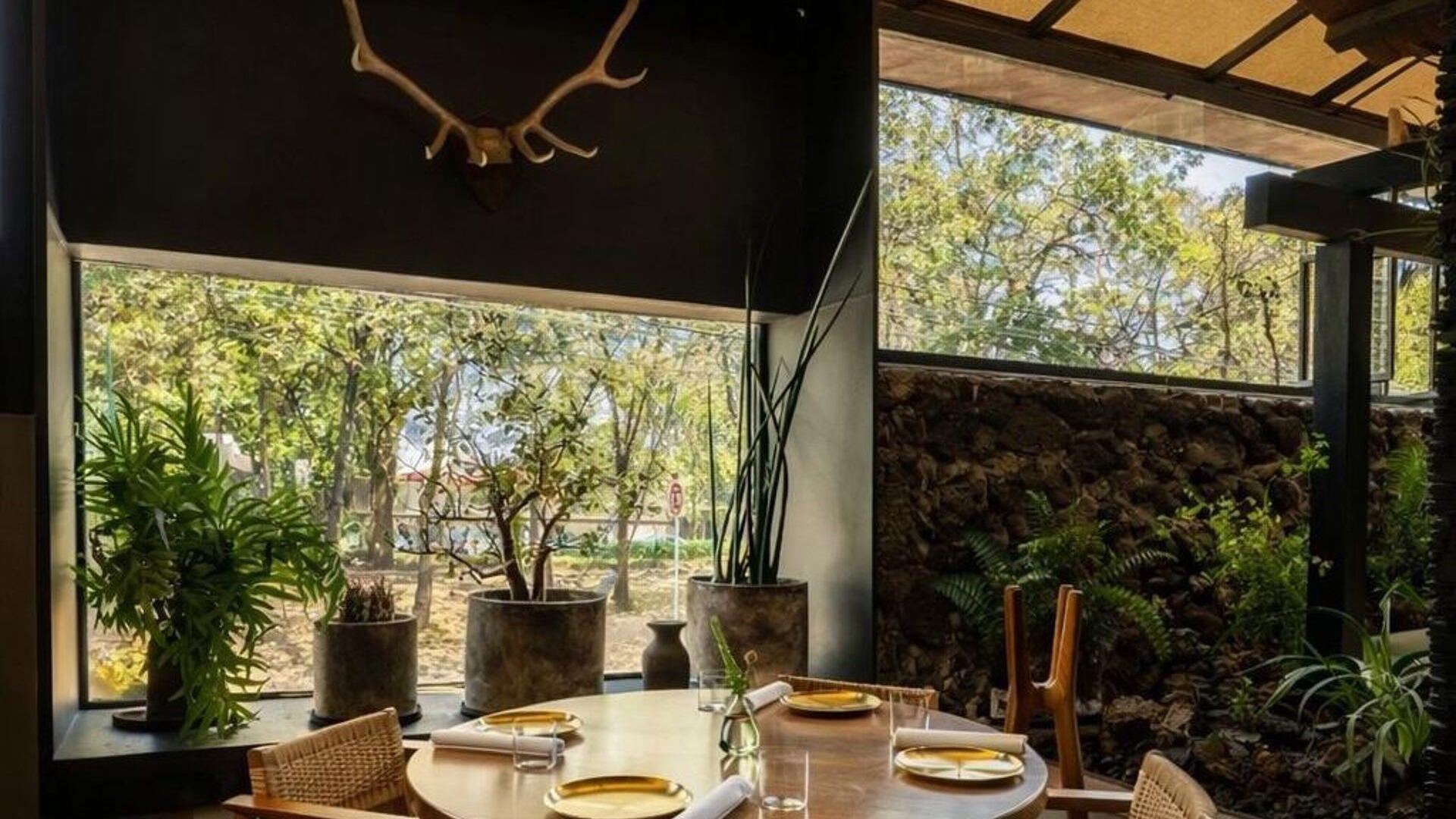
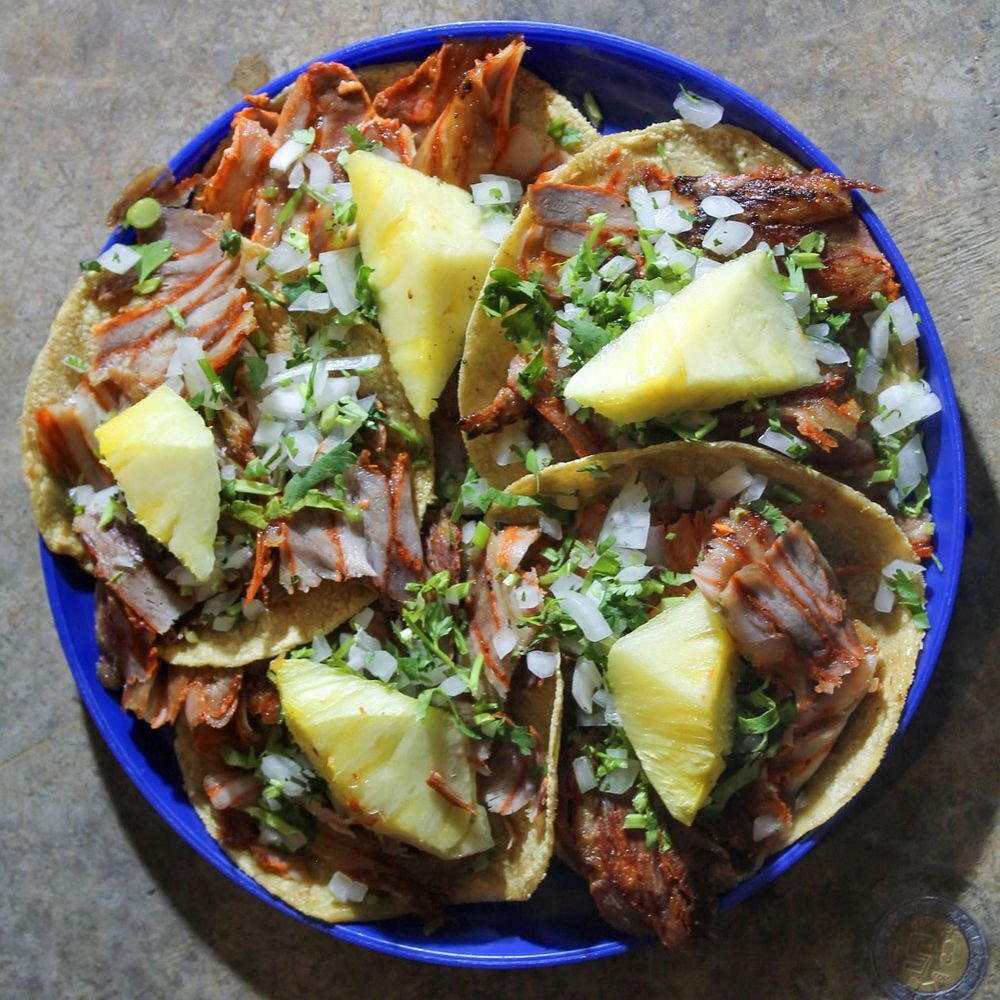
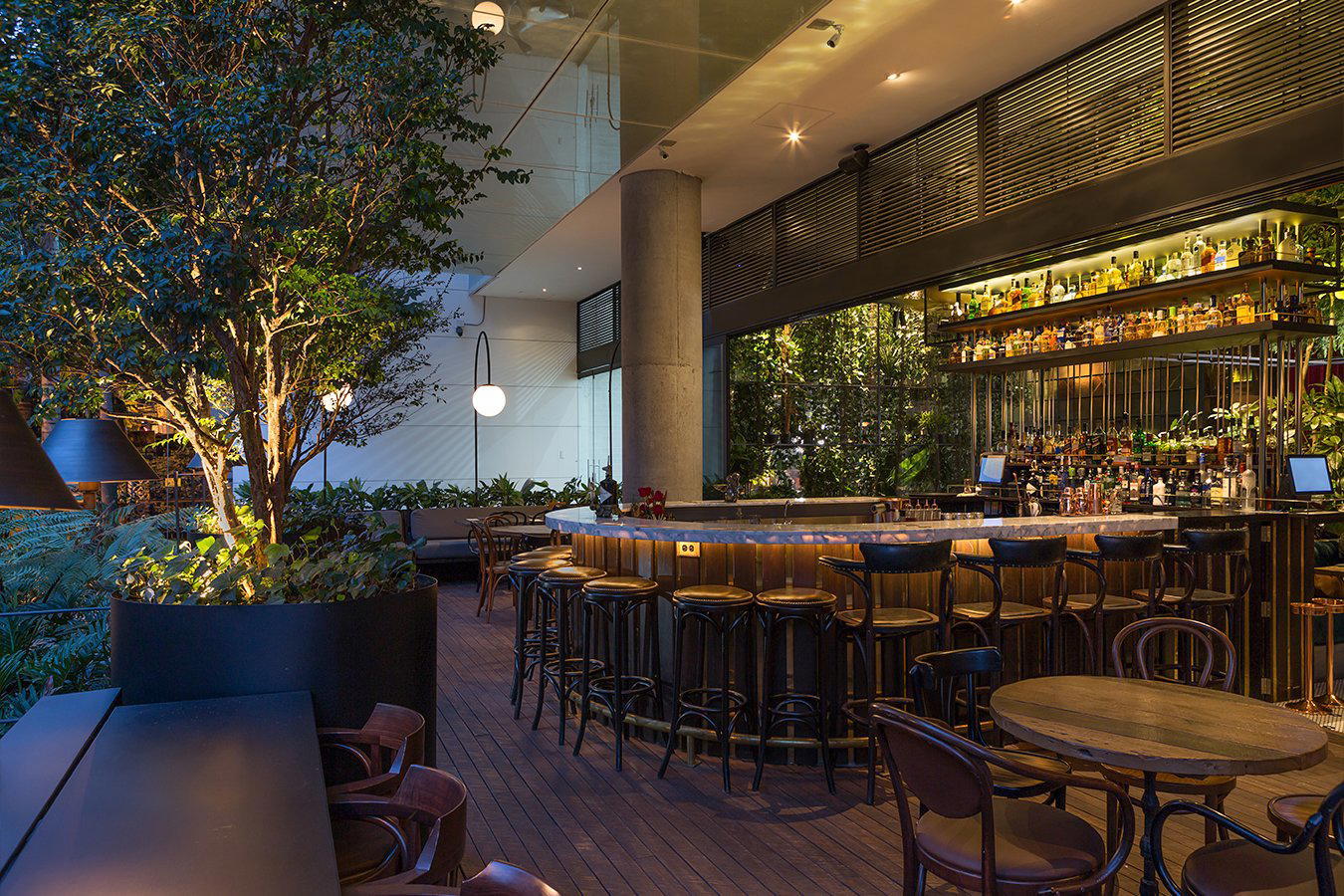
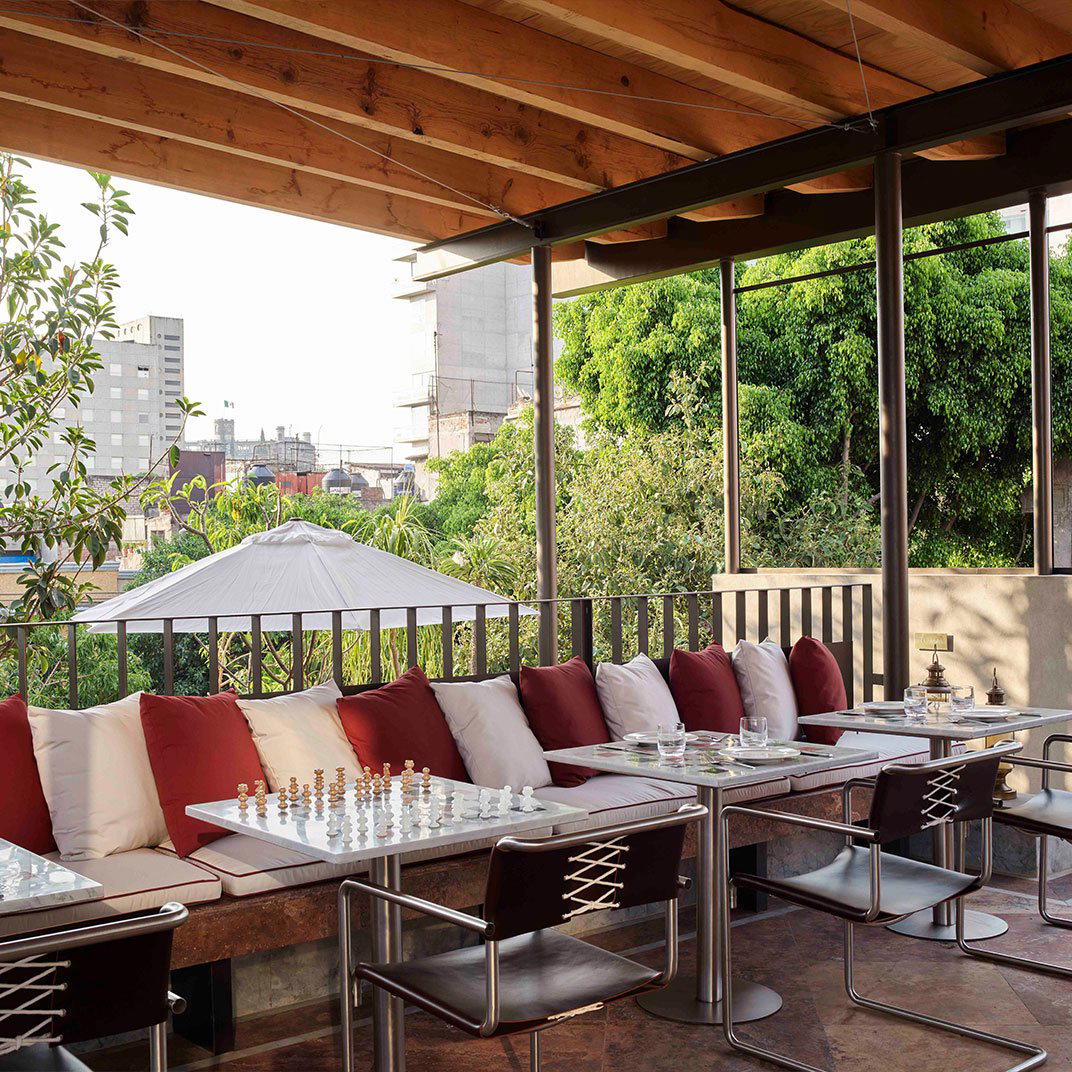
Ramma
Our verdict
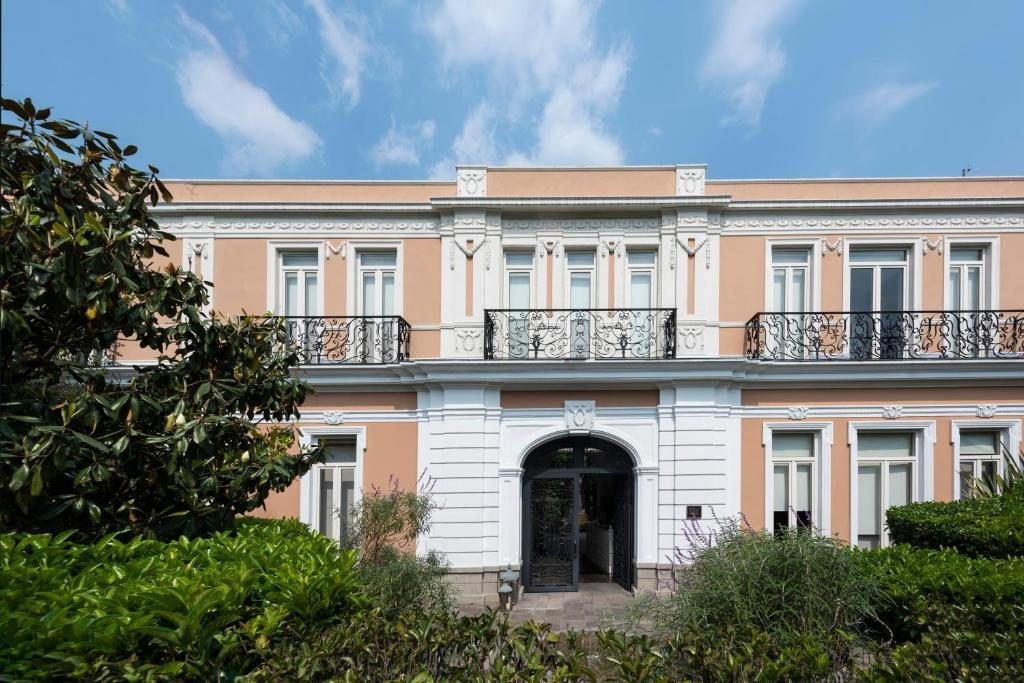
Located in the leafy San Ángel corridor of Álvaro Obregón, Ramma occupies a stretch of Mexico City where neighbourhood character and culinary ambition converge. The restaurant sits within a wider movement of Mexico City dining that foregrounds ethical sourcing and environmental accountability alongside the plate. For travellers tracing the city's serious restaurant circuit, it belongs on the itinerary alongside the capital's better-documented names.

Pearl is the En Primeur Club membership app — saves, bookings, and concierge access live there. Same editors, same standards.
- Address
- Av. San Jerónimo 393, Tizapán San Ángel, Loreto y Campamento, Álvaro Obregón, 01090 Ciudad de México, CDMX, Mexico
- Phone
- +525641336462
- Hours
- Mon 1–11 PMTue 1 PM–12 AMWed 1 PM–1 AMThu 1 PM–2 AMFri–Sat 7 AM–2 AMSun 7 AM–10 PM
- Website
- rammaterraza.com
- Directions
- Get directions
- Booking
- Book on the venue's website
San Ángel's Quieter Register
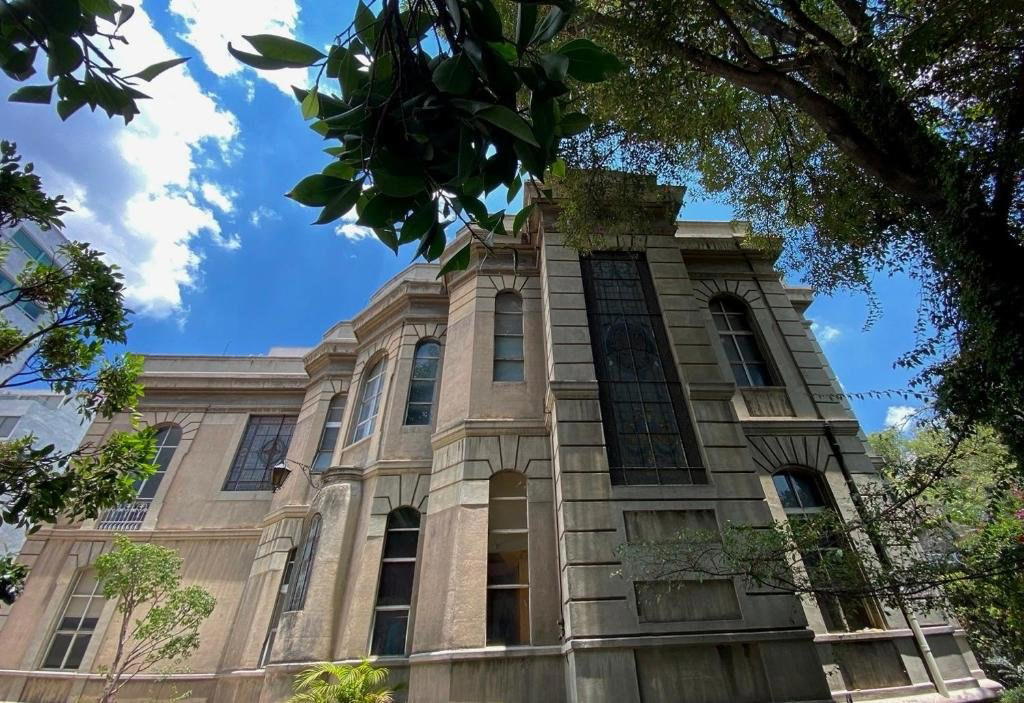
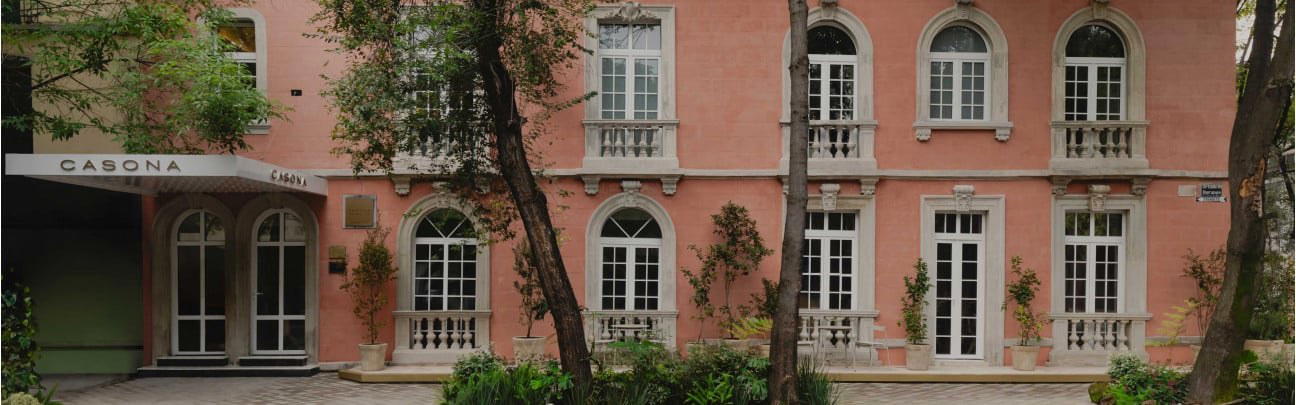
Mexico City's dining conversation tends to anchor itself in Polanco and Roma Norte, but the southern borough of Álvaro Obregón has been accumulating serious restaurants at its own pace. San Ángel, the colonial-era neighbourhood where Ramma sits on Avenida San Jerónimo, operates at a lower frequency than the capital's more photographed districts: cobblestone lanes, weekend tianguis markets, and the kind of residential density that keeps a restaurant's clientele local and repeat rather than tourist-heavy. That context matters when reading what a restaurant like Ramma is doing and for whom.
Across Mexico, a generation of kitchens has shifted its sourcing logic from supplier convenience toward supply-chain transparency. The movement is visible from Animalón in Valle de Guadalupe, where the vineyard setting enforces an almost literal farm-to-plate relationship, to Olivea Farm to Table in Ensenada, which treats proximity to Baja's agricultural producers as a design principle rather than a marketing footnote. Ramma operates within the same current, placing it inside a national conversation rather than a local curiosity.
The Ethical Sourcing Turn in Mexico City Dining
Mexico City's upper-tier restaurant circuit has, over the past decade, moved environmental accountability from the periphery of menu design to something closer to its centre. Pujol and Quintonil both built reputations that entangle technique with sourcing ethics: the former through its long-running corn research program, the latter through direct producer relationships in Oaxacan and Poblano communities. Sustainability in that context is not a certification or a sidebar paragraph on the menu; it is the structural logic of how ingredients are chosen and what the kitchen does when supply is interrupted.
That shift has filtered into mid-tier and neighbourhood restaurants across the city. Sud 777 in Pedregal built an on-site garden that supplies a measurable proportion of its kitchen's herbs and produce — a physical demonstration of sourcing intent, not just a stated value. Em has worked with small-scale producers whose output is too variable or too small-volume for larger restaurant groups. These are structural commitments that carry operational costs and limit menu flexibility, which is precisely what distinguishes them from restaurants that use the language of sustainability without absorbing the trade-offs.
Ramma, in the San Ángel zone, belongs to a chapter of this movement that operates without the spotlight of the Polanco dining circuit. Restaurants south of the city centre have historically attracted less international press than their northern counterparts, which means sourcing practices here tend to be visible first to regular neighbourhood diners rather than critics on assignment. That dynamic can actually produce more consistent practice: the pressure to perform sustainability for an external audience is lower, and the incentive to make it structurally embedded is higher.
Mexico's Broader Sustainable Kitchen Movement
The conversation around ethical sourcing in Mexican fine dining has a geographic reach that extends well beyond the capital. Levadura de Olla in Oaxaca centres traditional Zapotec ingredients and techniques in a way that frames preservation as both cultural and environmental act. KOLI Cocina de Origen in Monterrey applies a northern Mexico terroir logic, sourcing from the arid ecosystems of Nuevo León rather than defaulting to produce networks built around the Bajío agricultural belt. Huniik in Merida draws on Yucatecan ingredients that rarely surface in Mexico City menus, maintaining a sourcing geography that is place-specific by design.
In coastal settings, the sourcing question becomes one of marine stewardship as much as agricultural relationship. HA' in Playa del Carmen and Le Chique in Puerto Morelos both operate in the Riviera Maya, where Caribbean seafood sourcing intersects with conservation concerns around reef ecosystems. Lunario in El Porvenir situates itself inside Baja's wine and olive-growing country, where the farm-restaurant relationship is structured by the landscape's own agricultural logic.
Internationally, the reference points for this kind of structural sustainability are well-established. Le Bernardin in New York City has maintained a public sustainability framework around seafood sourcing for years, and Atomix, also in New York, has built a tasting counter around hyper-specific Korean producer relationships. The comparison is instructive: what those restaurants do with documented rigor and international scrutiny, Mexico's serious neighbourhood kitchens often do with less documentation but equivalent structural commitment. Alcalde in Guadalajara and Pangea in San Pedro Garza García represent the northern Mexican cities' equivalents: chefs working producer networks that are regional-first rather than nationally aggregated.
Where Ramma Sits in This Context
San Ángel's restaurant scene attracts a clientele that overlaps with the academic and creative communities around UNAM and the southern art museum belt. That audience tends to arrive with more patience for local sourcing and less appetite for spectacle than the Polanco crowd. A restaurant positioned at Av. San Jerónimo 393 is making a neighbourhood argument as much as a culinary one: that serious food and ethical sourcing do not require the infrastructure of a luxury dining district to function with integrity.
Within Mexico City specifically, the comparison set for Ramma is less Pujol and more Rosetta in terms of register: kitchens that have built real credibility without operating in the uppermost price bracket or requiring international award validation to maintain their position. Rosetta, which operates at the $$ tier, demonstrates that sourcing-led cooking and creative ambition can coexist with accessibility; Ramma's San Ángel address suggests a similar orientation. See our full Mexico City restaurants guide for a broader map of where different kitchens sit in this ecosystem.
Planning Your Visit
| Venue | Neighbourhood | Price Range | Format |
|---|---|---|---|
| Ramma | San Ángel, Álvaro Obregón | Not published | Not confirmed |
| Pujol | Polanco | $$$$ | Tasting menu / à la carte bar |
| Quintonil | Polanco | $$$$ | Tasting menu |
| Rosetta | Roma Norte | $$ | À la carte |
| Em | Roma Norte | $$$ | Tasting menu |
San Ángel is accessible from central Mexico City via Insurgentes Sur or by metro to Miguel Ángel de Quevedo station on Line 3, from which the neighbourhood's main commercial strip is a short walk. The area's Saturday Bazar del Sábado, a long-running artisan market in Plaza San Jacinto, makes weekend visits particularly dense with activity; arrivals timed before or after the market peak will find quieter street access. San Jerónimo 393 or an on-site visit to confirm current operations is the recommended approach.
Frequently asked questions
What's Ramma's location?
Ramma is located at Av. San Jerónimo 393, Tizapán San Ángel, Loreto y Campamento, Álvaro Obregón, 01090 Ciudad de México, CDMX, Mexico, Mexico City.
How does Ramma fit into Mexico City's ethical sourcing restaurant movement?
Ramma sits in San Ángel, a southern Mexico City borough that has been developing a distinct restaurant identity separate from the better-publicised Polanco and Roma Norte circuits. The venue's positioning on Av. San Jerónimo 393 places it within a neighbourhood whose dining clientele overlaps with the academic and creative communities around UNAM. Mexico City's upper-tier restaurants have spent the past decade moving environmental accountability from a marketing footnote to a structural part of kitchen practice, and Ramma operates within that broader shift.
What's the must-try dish at Ramma?
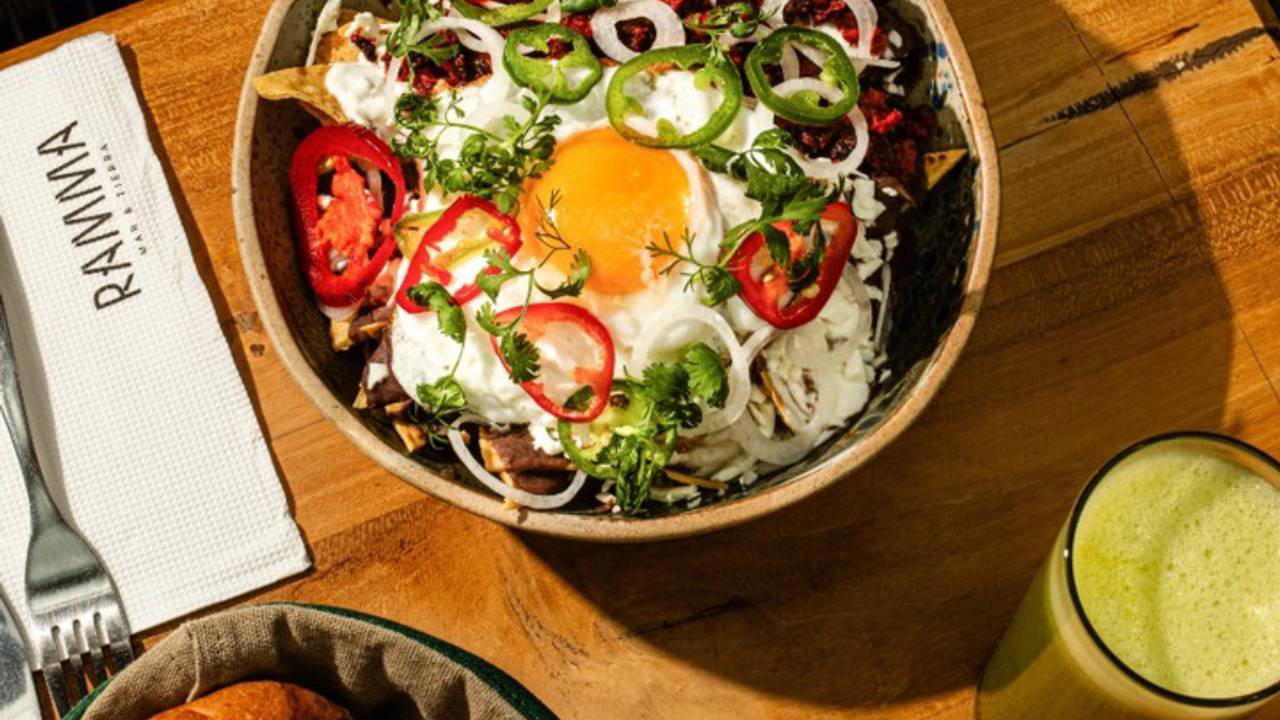
The restaurant operates within San Ángel's emerging dining corridor on Av. San Jerónimo 393, in a neighbourhood that draws a culinary clientele aligned with Mexico City's ethical sourcing movement. Visiting without a fixed agenda is reasonable here — the kitchen's orientation toward environmental accountability tends to drive the menu rather than individual headline dishes.
What's the best way to book Ramma?
A published phone number and website for Ramma are not currently on record. The most reliable approach is to check the venue's official channels at Av. San Jerónimo 393, Tizapán San Ángel, Álvaro Obregón, Mexico City, or to check current reservation platforms that cover the southern Mexico City dining scene for live availability.
Cuisine Lens
Comparable venues nearby, for context on price, style, and recognition.
| Venue | Cuisine | Price | Notes |
|---|---|---|---|
| RammaThis venue — the venue you are viewing | Seafood and Grill | Not listed | Not listed |
| EL CORAZÓN DEL MAR Manacar | Mexican Seafood | $20–30 | Actipan |
| Treze | Seafood with Raw Bar and Grilled Meats | Not listed | Del Bosque |
| Agua & Sal | Latin American Cevicheria | $20–30 | Polanco Chapultepec |
| Fisher's | Mexican Avant-Garde Seafood | $30–50 | Ampl Napoles |
| 7 osteria | Italian Osteria with Pizza and Pasta | $30–50 | San Ángel Inn |