
Ramen Jiro Keisei ookubo ten puts Funabashi’s Keisei Okubo area into the serious ramen conversation: an 11-seat counter with Tabelog Ramen EAST 100 selections in 2024 and 2025. The appeal is not polish or ceremony, but a compact, cash-only Jiro-style format where scale, pace, and local routine define the meal.
Pearl is the En Primeur Club membership app — saves, bookings, and concierge access live there. Same editors, same standards.
- Address
- 千葉県船橋市三山2-1-11
- Website
- tabelog.com
 Saves & bookings on Pearl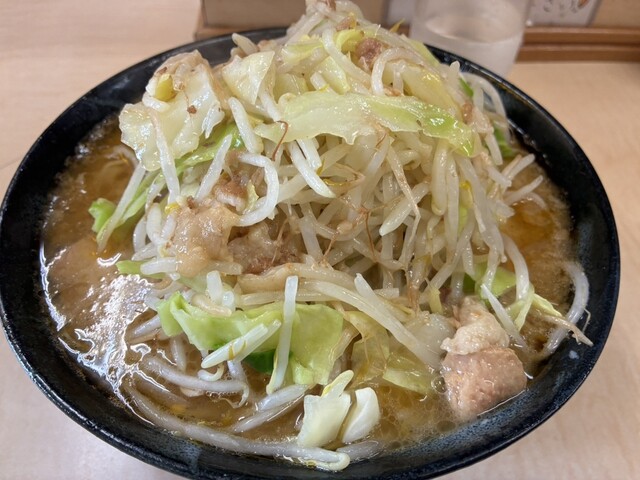
Approaching a Jiro-style ramen counter in a university-adjacent Chiba neighbourhood is not like entering a polished Tokyo dining room. The cues are functional: tight frontage, short menu logic, counter seats rather than tables, and a rhythm for people who know what they came for. In Keisei Okubo, that rhythm matters. Funabashi sits outside the capital’s central ramen theatre, yet its rail-linked neighbourhoods sustain specialist shops that regulars treat less as destination dining than as weekly life.
Ramen Jiro Keisei ookubo ten belongs to the strain of Japanese ramen culture where appetite, procedure, and local loyalty outweigh décor. Its recognition on the Tabelog Ramen EAST 100 list in both 2024 and 2025 places it in a selective regional conversation, but the experience remains narrow by design: ramen and tsukemen, counter seating, no private-room comfort, and a format suited to solo diners as much as small groups of friends. The point is concentration, not range.
Keisei Okubo gives Jiro-style ramen a neighbourhood frame
Jiro-style ramen has never been about quiet restraint. The tradition is defined by volume, directness, and shop-specific ordering grammar that rewards preparation. In central Tokyo, the genre can feel like a pilgrimage circuit; in Funabashi, the same logic lands differently. Keisei Okubo’s value is its everyday setting: a residential-commercial pocket where lunch traffic, rail access, and local repetition shape the room more than guidebook tourism.
That neighbourhood frame changes the editorial reading. This is not a broad Funabashi survey restaurant like Akasaka Ajiichi, Ayutthaya, BHOYE CHHEN, Boulangerie Queue, or Funakko, each pointing to a different slice of the city’s eating habits. It is a specialist counter, a useful distinction for travelers: Funabashi food culture is not only izakaya, bakeries, and suburban family tables. It also includes high-commitment ramen shops whose reputations travel well beyond the station area.
The Tabelog score of 3.73 adds another signal in Japan’s conservative review culture, where category lists often matter more than star language. The Ramen EAST 100 selection shows the shop has moved from local fixture to regional recognition, but the format keeps the meal grounded. Eleven counter seats are built for throughput and attention, not lingering. That intimacy compresses the social contract: arrive prepared, read the room, and do not treat the counter like a long-form tasting menu.
A compact counter, a narrow category, and a clear appetite test
The menu category is ramen and tsukemen, setting expectations before any bowl arrives. Tsukemen, with noodles served separately for dipping, is a major ramen subgenre, especially for diners who want more control over noodle texture and broth intensity. Jiro-style ramen is usually discussed through heft and customization culture. The Funabashi address brings those expectations into a small counter environment rather than a sprawling casual dining room.
One practical note belongs to the food conversation rather than logistics: large-format ordering is restricted. Large Buta and Double Large Buta tickets are not offered; diners wanting a large portion are directed to order a pork ticket, and large miso ramen is not part of the setup. That matters because Jiro-style shops attract diners who think in portion strategy. Here, house rules narrow that strategy, part of the experience rather than an inconvenience.
Compared with nearby out-of-metro references, the positioning is clear. Mandolin Hamburger Kitchen occupies a casual burger price band, Le Pâtissier Yokoyama Keisei ookubo ten sits in the low-priced pastry bracket, while Cinq au Pied and Hanamigawa Ootomi belong to a far higher spend category. Ramen Jiro Keisei ookubo ten operates at the opposite end: inexpensive, compact, and award-recognised within a single category. That combination is rare in premium travel planning because the price is modest while the specificity is high.
The absence of a chef-led public narrative is not a weakness. Ramen culture often turns on branch identity, queue discipline, and category fidelity rather than named-chef biography. For a traveler, that clarifies the reason to come: not a personality story, but to read how a Chiba neighbourhood absorbs a famous ramen grammar and makes it routine. That is stronger than chasing novelty.
How to place it inside a Funabashi itinerary
Funabashi is often treated as a transit city between Tokyo and Chiba’s coastal or suburban nodes, but its dining value sits in rail-linked pockets. Keisei Okubo is not trying to mimic Ginza, Ebisu, or Shinjuku. Its appeal is density at human scale: counters, bakeries, local restaurants, and everyday specialists near station life. For broader mapping, Our full Funabashi restaurants guide is the natural companion, with Our full Funabashi hotels guide, Our full Funabashi bars guide, Our full Funabashi wineries guide, and Our full Funabashi experiences guide completing the trip architecture.
For comparison beyond Funabashi, Japan’s regional dining map rewards tightly defined specialists as much as formal restaurants. A sukiyaki-focused address such as -Grilled beef Sukiyaki- KAMAKURA TANUKIAN 鎌倉 たぬき庵 in Kamakura, a seafood-and-grill format like. 鮪と炭火焼き うお炭 秋葉原店 in Tokyo, or compact casual addresses including.cafe in Osaka.know in Kumamoto, (Shoku) Vietnam in Kawasaki, and [Curry Senmon Ten] Maruyama Kyoju. in Sapporo show how category focus can carry a meal without luxury signals. Abroad, the same lesson applies at focused Japanese-leaning counters such as Jōdo Saké Bar in Los Angeles and Onigiri Time in Pasadena: a narrow format can be the point, if execution and local audience support it.
The critical read is simple. Ramen Jiro Keisei ookubo ten is for diners who want Funabashi with edges intact: compact seating, a low spend threshold, a recognised ramen-category reputation, and a neighbourhood that does not soften the genre for visitors. It is less useful for groups seeking comfort, menu breadth, or a long meal. As a ramen stop, however, it gives Keisei Okubo a strong claim in the city’s food map.
At a Glance
Comparable venues by cuisine and price in the same metro.
| Venue | Cuisine | Price | Notes |
|---|---|---|---|
| Ramen Jiro Keisei ookubo tenThis venue — the venue you are viewing | Funabashi, Jiro-style ramen and tsukemen | $ | Not listed |
| Sakuma Ice Cream Kobo | Takifudo, Ice Cream & Gelato | $ | Not listed |
| BHOYE CHHEN | Not listed | $ | Funabashi, Nepalese & Indian Restaurant-Bar |
| Akasaka Ajiichi | Not listed | $ | / Funabashi, Classic niboshi ramen shop |
| Shogetsu En | Not listed | $$ | Keisei Nishifuna, Traditional Yakiniku (Japanese BBQ) |
| Thai Restaurant Kinmedai | Not listed | $$ | Nishi-Funabashi, Authentic Thai Street‑Food & Curry |
Recognition history
Dated appearances from independent guides and award organizations, with the underlying list record or original source where available.
Tabelog 100 #10 · No. 10
Tabelog · Tabelog 100 - Ramen - EAST - 2025
Continue exploring
More in Funabashi
Restaurants in Funabashi
Browse all →

Bars in Funabashi
Browse all →



At a Glance
- Lively
- Solo
- Casual Hangout
- After Work
- Group Dining
- Standalone
A small, non-smoking Jiro-style ramen shop with just 11 counter seats, focused on quick solo or friend dining in a simple, functional setting rather than decor.