
Ramen Jinsei JET 600 belongs to Osaka’s serious everyday-noodle tier: low-cost, compact, and validated by repeated Tabelog 100 Ramen selections. Near Tamatsukuri, it reads as a lunch-and-dinner counter for ramen, tsukemen, abura-soba, and maze-soba rather than a ceremony-driven destination, with value and consistency doing the heavy lifting.
Pearl is the En Primeur Club membership app — saves, bookings, and concierge access live there. Same editors, same standards.
- Address
- 1 Chome-3-2 Higashiobase, Higashinari Ward, Osaka, 537-0024, Japan
- Phone
- +81 6-6977-0550
- Website
- twitter.com
 Saves & bookings on Pearl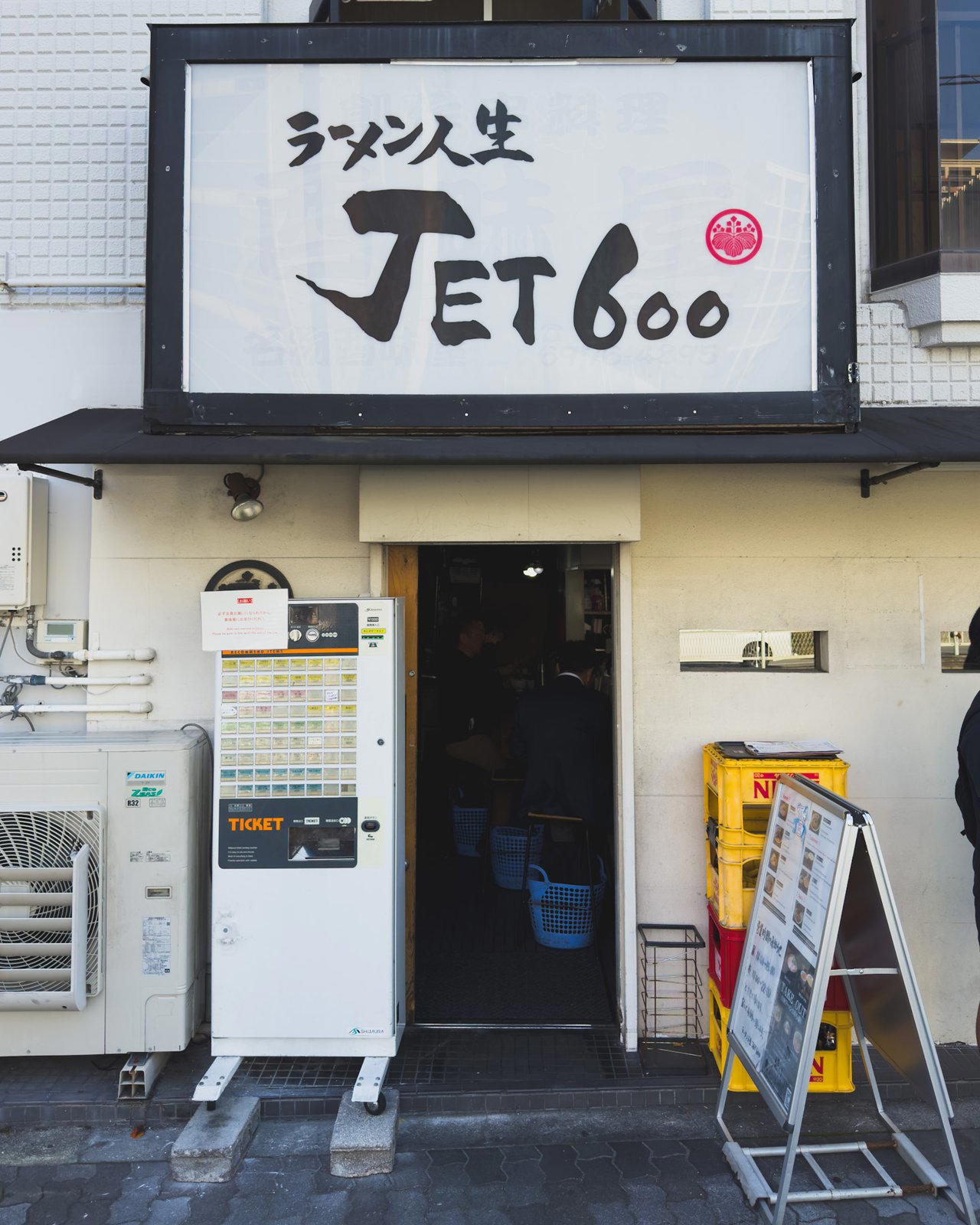
Tamatsukuri ramen is station-side rhythm rather than grand arrival: commuters, neighborhood regulars, small groups, and solo diners moving through compact rooms where the counter matters more than the view. In that setting, Ramen Jinsei JET 600 fits a category Osaka knows well: the serious everyday shop where the meal is affordable, turnover adds energy, and reputation is earned bowl by bowl, not through ceremony.
Osaka’s noodle culture is often framed through udon, takoyaki, and late-night drinking food, but ramen has its own competitive grammar. The city rewards shops that work at lunch without feeling anonymous and at dinner without becoming occasion restaurants. The useful comparison is not formal Japanese dining such as Terada, but the broader low-cost specialist circuit: Gokuraku Udon TKU for udon, Sobakiri Imose for soba, and Matsushita kitchen for casual everyday value. Ramen Jinsei JET 600 belongs to that practical Osaka register, with a narrower ramen brief.
Lunch has the sharper edge; dinner gives the room more breathing space
The lunch-versus-dinner divide matters because the same bowl reads differently with the room’s tempo. Daytime service is built for decisiveness: choose quickly, eat while the noodles hold texture, and free the seat. Evening softens the pace, especially for groups using ramen as a casual finish rather than a workday reset. The 17-seat configuration, with counter seating and two four-person tables, supports both modes without pretending to be a tasting-menu room.
That split gives this kind of shop more traveler relevance than its price tier suggests. Lunch in Osaka can become a choice between convenience and character; a recognized ramen counter near a useful rail node solves that without consuming the day. Dinner suits nights when heavier restaurant options feel too structured, or when a second stop is likely. Udon Izakaya Mugiwara, with its evening izakaya framing, shows the other side of Osaka noodle dining: longer, looser, more drink-adjacent. Here, the appeal is tighter and bowl-focused.
The trust signal is not cosmetic. Selection for Tabelog 100 Ramen Osaka 2025 places the shop within a heavily scrutinized local field, and its listed score of 3.71 is meaningful in a market where Tabelog ratings tend to be conservative. Repeated Tabelog 100 ramen selections across recent years show durability, not one attention spike. For travelers sorting dozens of casual noodle options, that matters more than a chef biography.
Ramen, tsukemen, abura-soba, and maze-soba map the modern Osaka counter
The listed categories tell a useful story about contemporary ramen culture. A shop covering ramen, tsukemen, abura-soba, and maze-soba is not just serving one soup format; it is part of the wider Japanese counter tradition where noodles can be broth-led, dipping-based, oil-dressed, or mixed. That range is useful in Osaka, where meals often need to fit the day rather than define it. Soup ramen suits the classic quick stop. Tsukemen offers a more deliberate rhythm. Abura-soba and maze-soba shift from broth toward texture, seasoning, and mixing.
Travelers should not treat the category as interchangeable with instant comfort food. Serious ramen shops in Japan operate with specialist-kitchen discipline: limited seats, fast decisions, and an expectation that diners understand the pace. The absence of private rooms is part of the point. Counter culture compresses the distance between kitchen and diner, and the small room makes service timing visible. A ramen meal can feel more instructive than a longer dinner because the format exposes priorities quickly.
Within Osaka’s wider eating map, this is the casual counterpoint to polished Italian rooms such as a canto (Italian), quick bakery stops like 52CHO-ME BAKERY, and snack-driven institutions such as 551 Horai (551蓬莱). It also sits apart from pizza-focused casual dining at 99 Pizza Napoletana Gourmet or cafe-led pacing at .cafe. The useful itinerary is not to rank them, but to know what each does for an Osaka day: bread in the morning, ramen at lunch, a more expansive dinner after dark.
How to place it in an Osaka eating day
Ramen Jinsei JET 600 works because it respects Osaka’s appetite for value without becoming generic. The average spend sits in the low ramen bracket, and the small room keeps the experience close to the kitchen rather than stretched across a dining room. Children are welcome, making it more flexible than many counter-first restaurants, though the format still rewards compact parties and quick decisions. Payment is cash-oriented, a reminder that acclaimed casual dining in Japan often remains operationally old-school.
The Tamatsukuri position changes the calculus. This is not the neon shorthand of Dotonbori or the hotel-dense convenience of Umeda; it is an Osaka neighborhood stop for travelers moving beyond the obvious core. Nearest-station access makes it easy to fold into a day without turning the meal into a detour.
For readers comparing Japanese casual dining beyond Osaka, the same logic applies: know the format before judging the room. A grilled-beef specialist such as -Grilled beef Sukiyaki- KAMAKURA TANUKIAN 鎌倉 たぬき庵 in Kamakura asks for a different tempo than. 鮪と炭火焼き うお炭 秋葉原店 in Tokyo, while.know in Kumamoto, (Shoku) Vietnam in Kawasaki, [Curry Senmon Ten] Maruyama Kyoju. in Sapporo, and [ki:] in Kyoto each sit in their own local dining grammar. Even outside Japan, Jōdo Saké Bar in Los Angeles and Onigiri Time in Pasadena show how Japanese formats travel, adapt, and lose or gain structure by context.
The editorial verdict is simple: choose this for a focused Osaka ramen stop, not a drawn-out restaurant evening. Lunch gives the format its cleanest expression; dinner works when the night calls for precision, speed, and a bowl-led reset. In a city where casual food can carry as much identity as formal dining, that is a serious advantage.
Peers Worth Knowing
Comparable venues at a similar level for quick context.
| Venue | Cuisine | Price | Notes |
|---|---|---|---|
| Ramen Jinsei JET 600This venue — the venue you are viewing | Ramen & Tsukemen Shop | $ | Not listed |
| Menya Hanabusa | Nagoya Cochin chicken ramen & chuka soba | $ | Chūō |
| Spice Curry Te | Japanese Curry | $ | Chūō |
| Menya Saisai Shouwa chou honten | Ramen shop specializing in chicken-based broth | $ | Abeno |
| Udon Biyori | Udon and Tempura | $ | Higashi-Osaka |
| Teishokudo Kongoseki | Japanese Curry & Teishoku | $ | Chūō |
Recognition history
Dated appearances from independent guides and award organizations, with the underlying list record or original source where available.
Tabelog 100 #37 · No. 37
Tabelog · Tabelog 100 - Ramen - OSAKA - 2025
Continue exploring
More in Osaka
Restaurants in Osaka
Browse all →




Bars in Osaka
Browse all →

Hotels in Osaka
Browse all →



Wineries in Osaka
Browse all →
At a Glance
- Lively
- Cozy
- Solo
- Casual Hangout
- After Work
- Family
- Standalone
Current opening hours
- Monday
- 11 AM–3 PM, 6–10 PM
- Tuesday
- 11 AM–3 PM, 6–10 PM
- Wednesday
- 11 AM–3 PM, 6–10 PM
- Thursday
- 11 AM–3 PM, 6–10 PM
- Friday
- 11 AM–3 PM, 6–10 PM
- Saturday
- 11 AM–3 PM, 6–10 PM
- Sunday
- 11 AM–3 PM, 6–10 PM
Hours can change for holidays and private events. Last verified .
A small, house-style neighborhood ramen shop with counter-focused seating, no-frills decor, and a bustling, lively atmosphere typical of popular local noodle bars.