
1 Michelin Key
A 77-room Coal Harbour property with a Michelin Key, a mid-century-inflected design approach, and an in-house French restaurant that holds its own as a destination in its own right. Rates from $386 place it in Vancouver's premium-independent tier, where smaller scale and neighbourhood specificity do the work that brand recognition handles elsewhere. The surrounding waterfront and Stanley Park proximity make location part of the offer.

Pearl is the En Primeur Club membership app — saves, bookings, and concierge access live there. Same editors, same standards.
- Address
- 1177 Melville St, Vancouver, BC V6E 4C4
- Phone
- (604) 669-5060
- Website
- theloden.com
- Directions
- Get directions
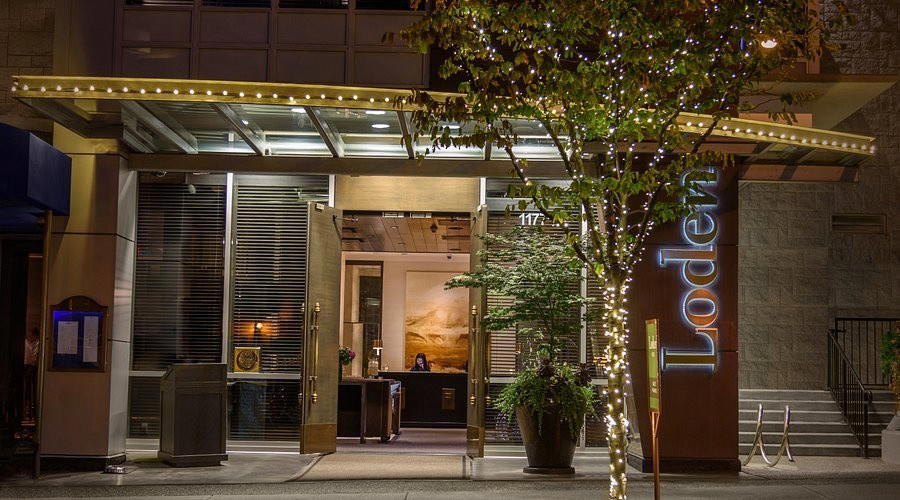
Coal Harbour's Case for Boutique Over Brand
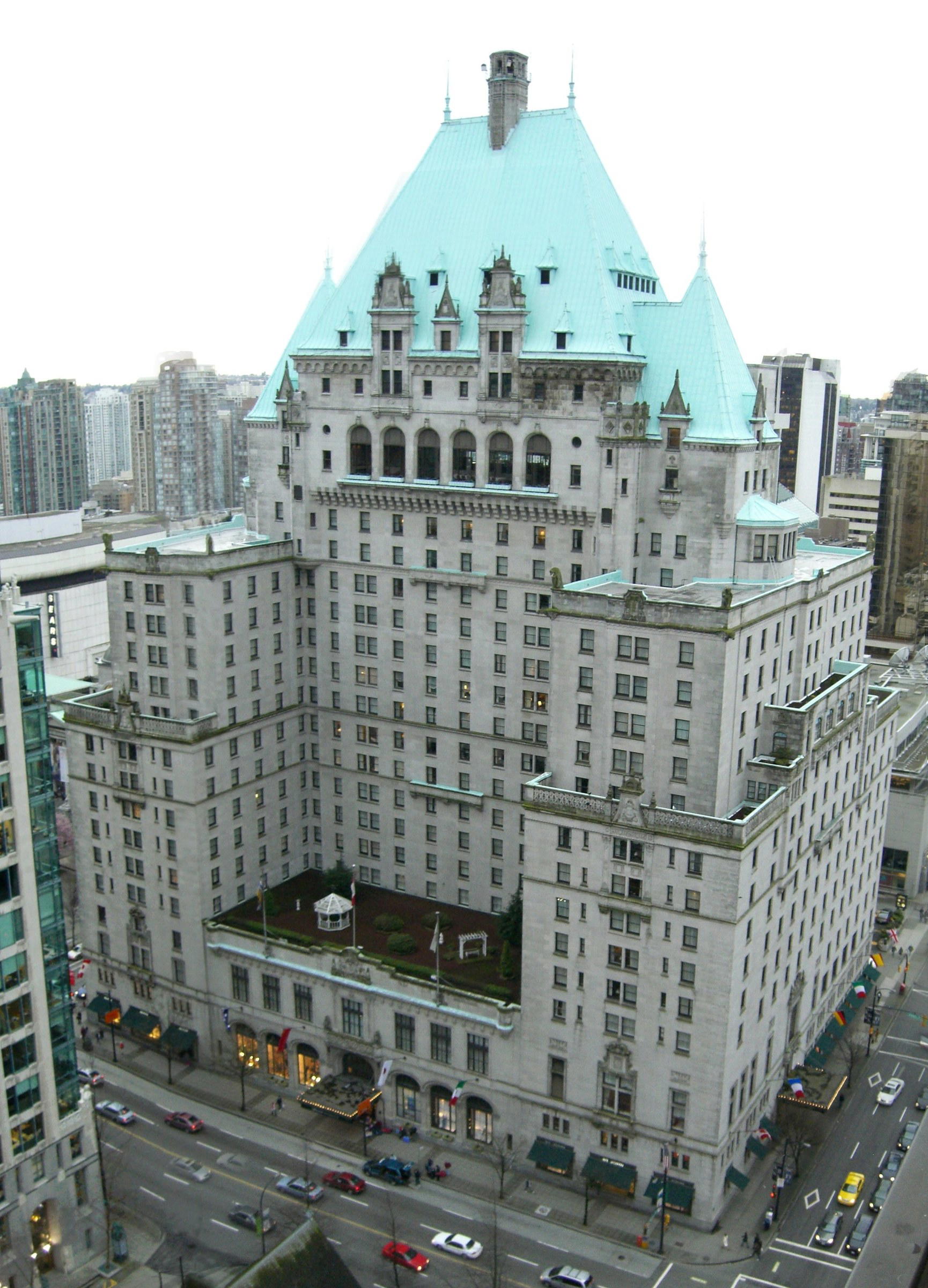
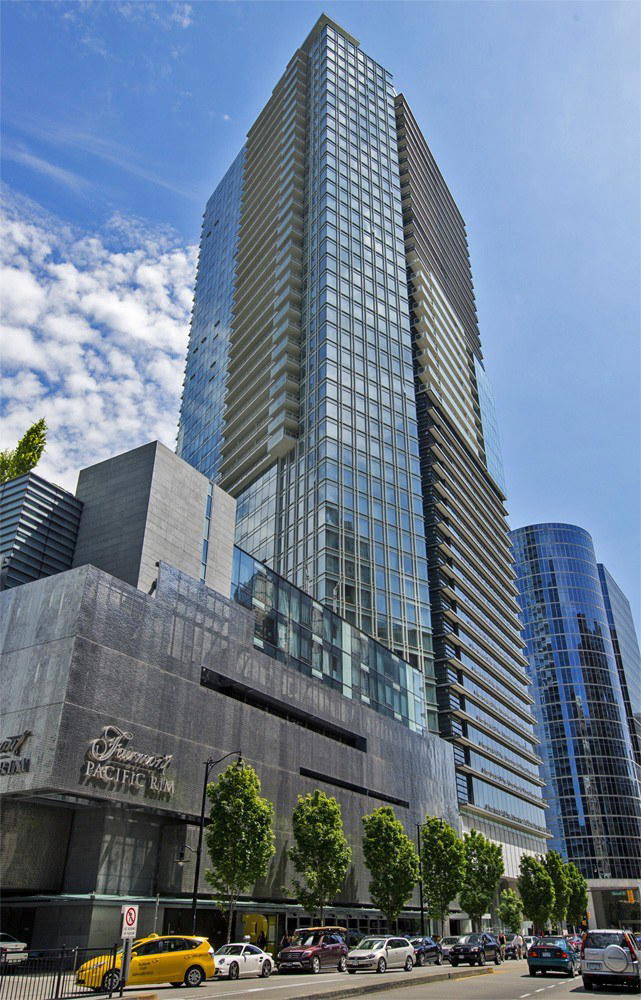
Vancouver's downtown hotel market divides along a familiar axis. On one side sit the large-footprint flagships: properties like the Fairmont Pacific Rim, the Rosewood Hotel Georgia, and the Fairmont Hotel Vancouver, which trade on heritage, scale, and international brand assurance. On the other sit a smaller cohort of design-led independents, where the argument is made through neighbourhood placement, interior restraint, and culinary credibility rather than lobbies built for arrival photography. The Loden Hotel, 77 rooms at the northern edge of downtown in Coal Harbour, belongs firmly to the second category, and it makes that case more coherently than most properties at its price point.
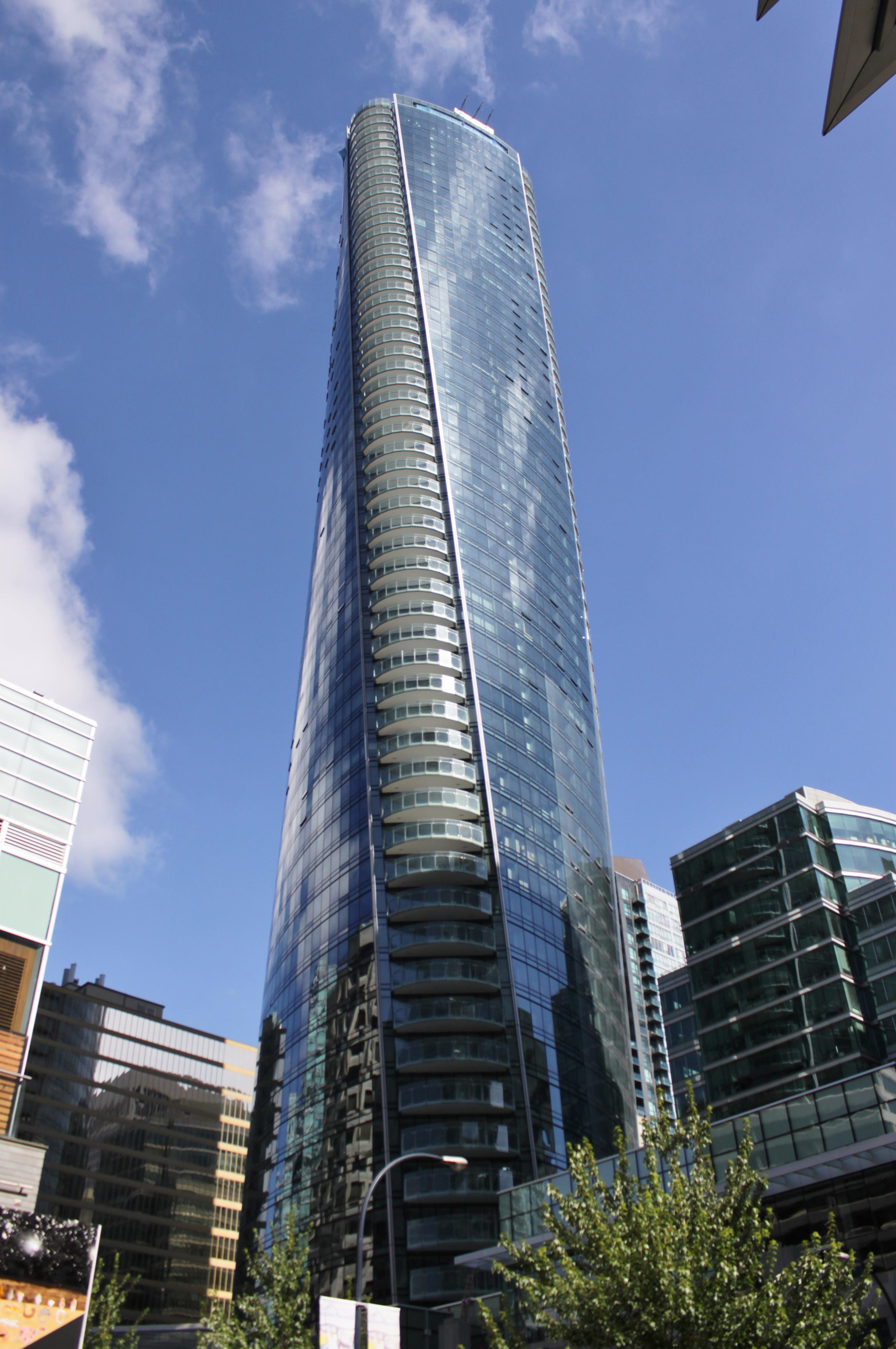
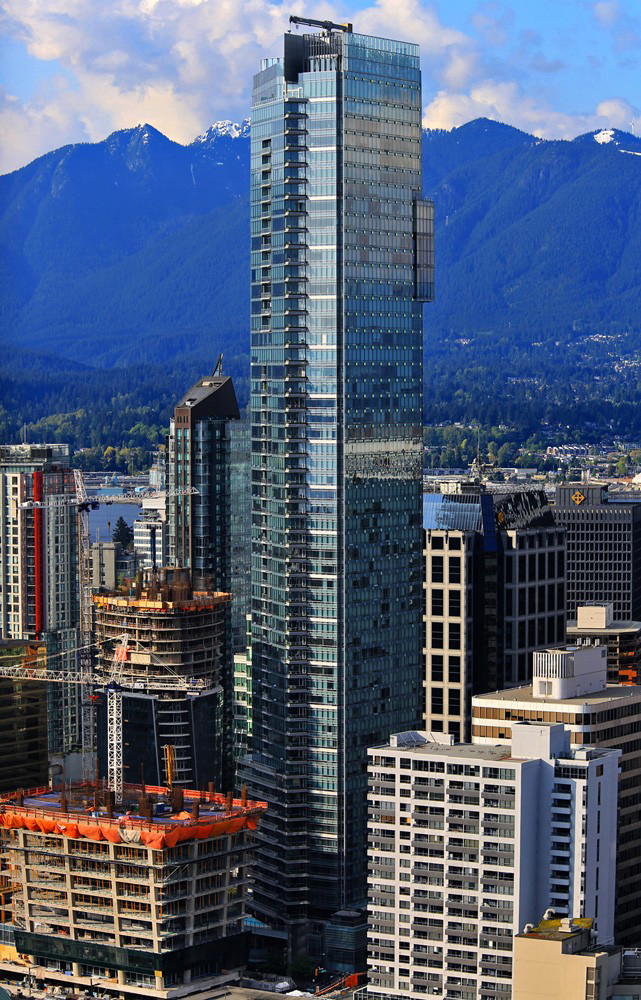
Coal Harbour is not simply an address. The district, redeveloped over the past two decades into a sequence of parks, a working marina, and a concentration of glass residential towers with a design seriousness unusual for North American cities, functions as something close to stadium seating for the Burrard Inlet panorama. Mountains to the north, float planes banking over the water, Stanley Park's forest edge visible from the seawall: it is a neighbourhood that genuinely earns its premium rents, and the Loden sits within that geography rather than despite it. Guests who walk the Coal Harbour seawall at dusk are doing something the neighbourhood was built to accommodate, not improvising around a hotel's geographic shortcomings.
Design That Works Through Restraint
Mid-century modern as a hotel design language has become something of a cliché in North American boutique hospitality, applied generically to properties that share little beyond an Eames chair and some walnut veneer. What differentiates it in practice is whether the references feel inhabited or decorative. At the Loden, the mid-century touches are grounded by a regional colour palette drawn from the Pacific Northwest, muted tones that read as considered rather than corporate, and that avoid the obvious green-and-cedar shorthand that characterises less confident Vancouver properties. The effect is a coherent interior identity that does not demand the guest notice it, which is usually the mark of design executed with conviction.
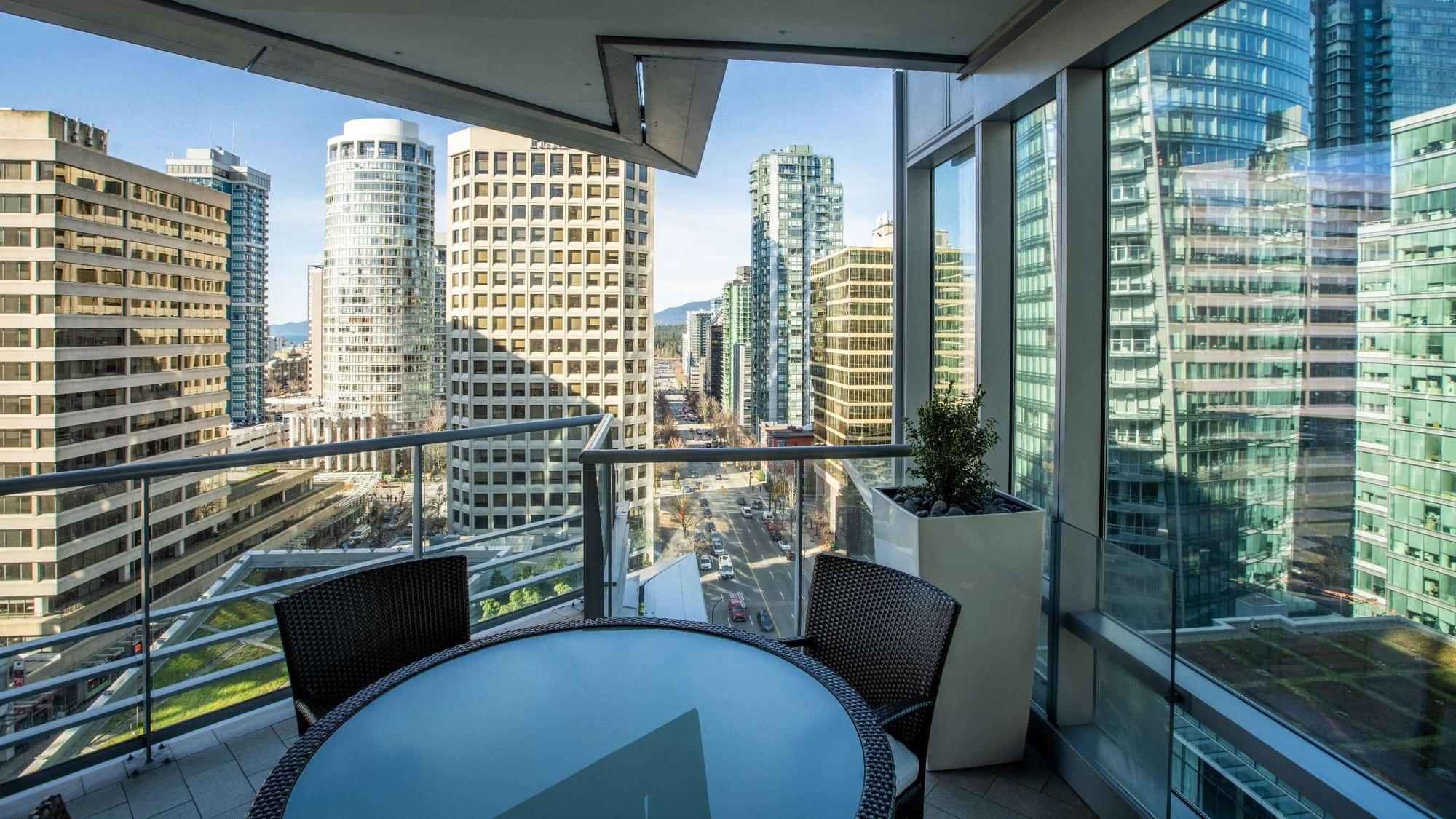
The 77 rooms are arranged across five tiers, with the Halo Suite occupying the apex: a wrap-around terrace that frames the mountain panorama in a way that turns the view into architecture. For guests arriving in January or February, the low-light quality over the Inlet and the snow line on the North Shore peaks constitute a genuinely different visual proposition than the high-summer version. The deep soaking tubs, a recurring feature across categories, make particular sense in the context of Vancouver's winter: the city's rain-softened evenings and single-digit temperatures create conditions where a long bath after a Coal Harbour walk is a practical pleasure, not just an amenity checkbox.
Tableau and the In-House Restaurant Question
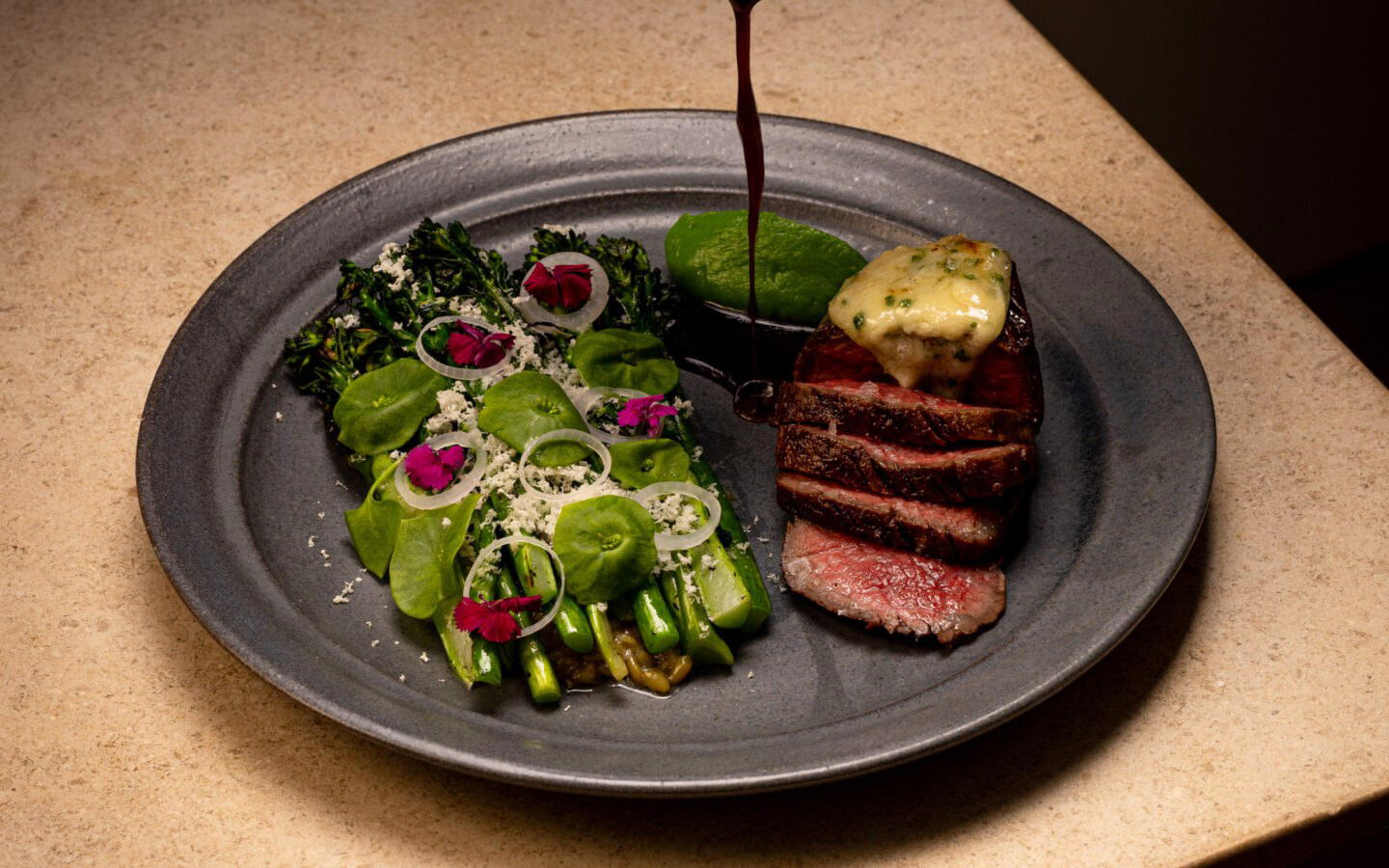
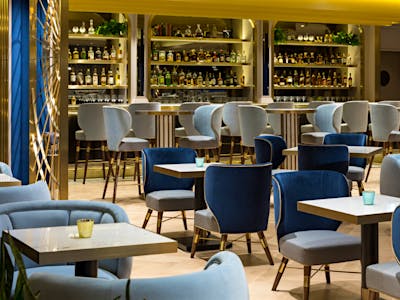
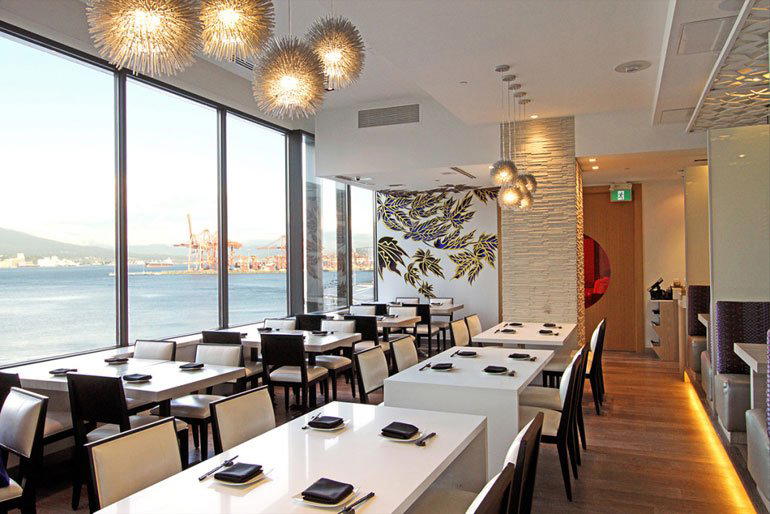
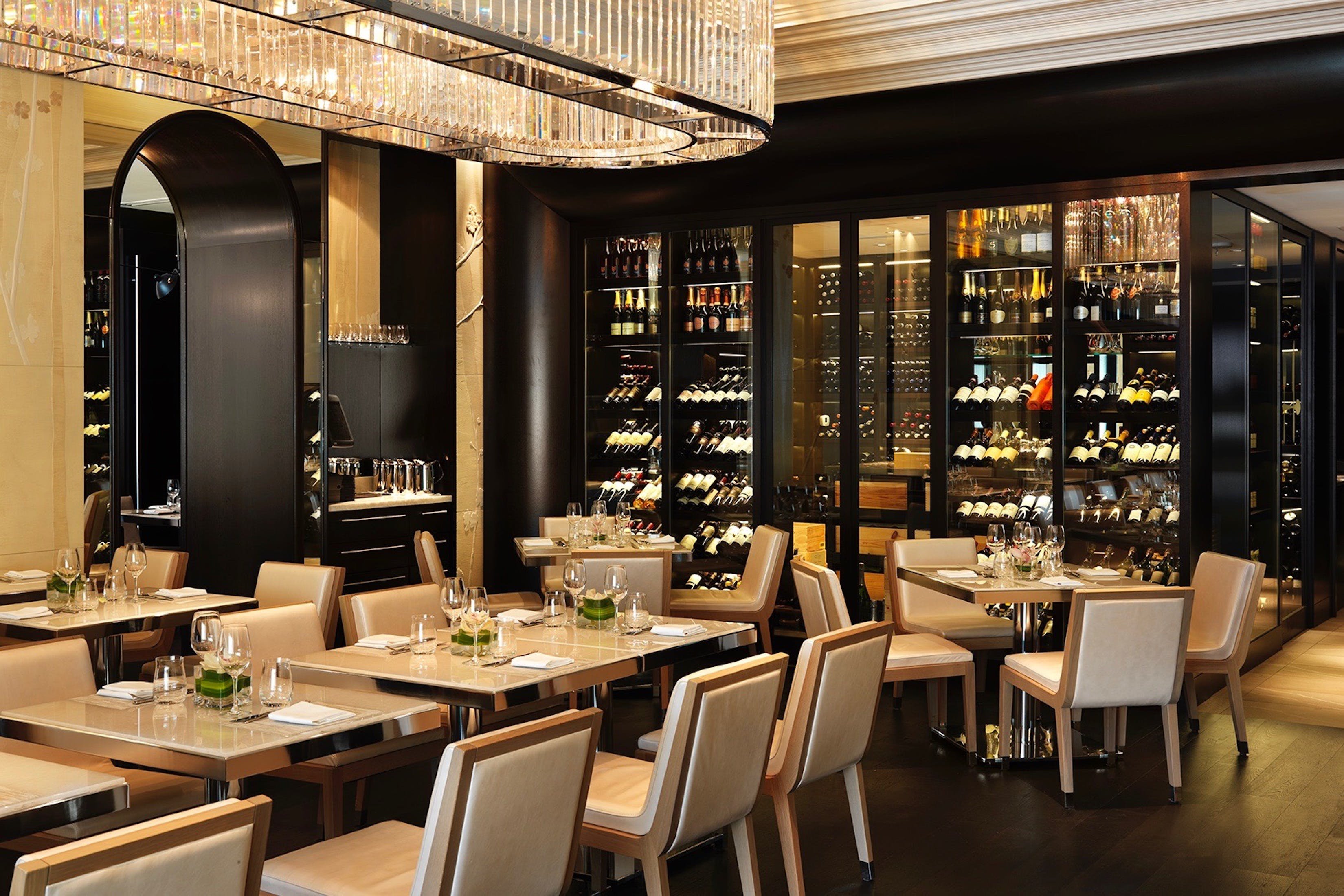
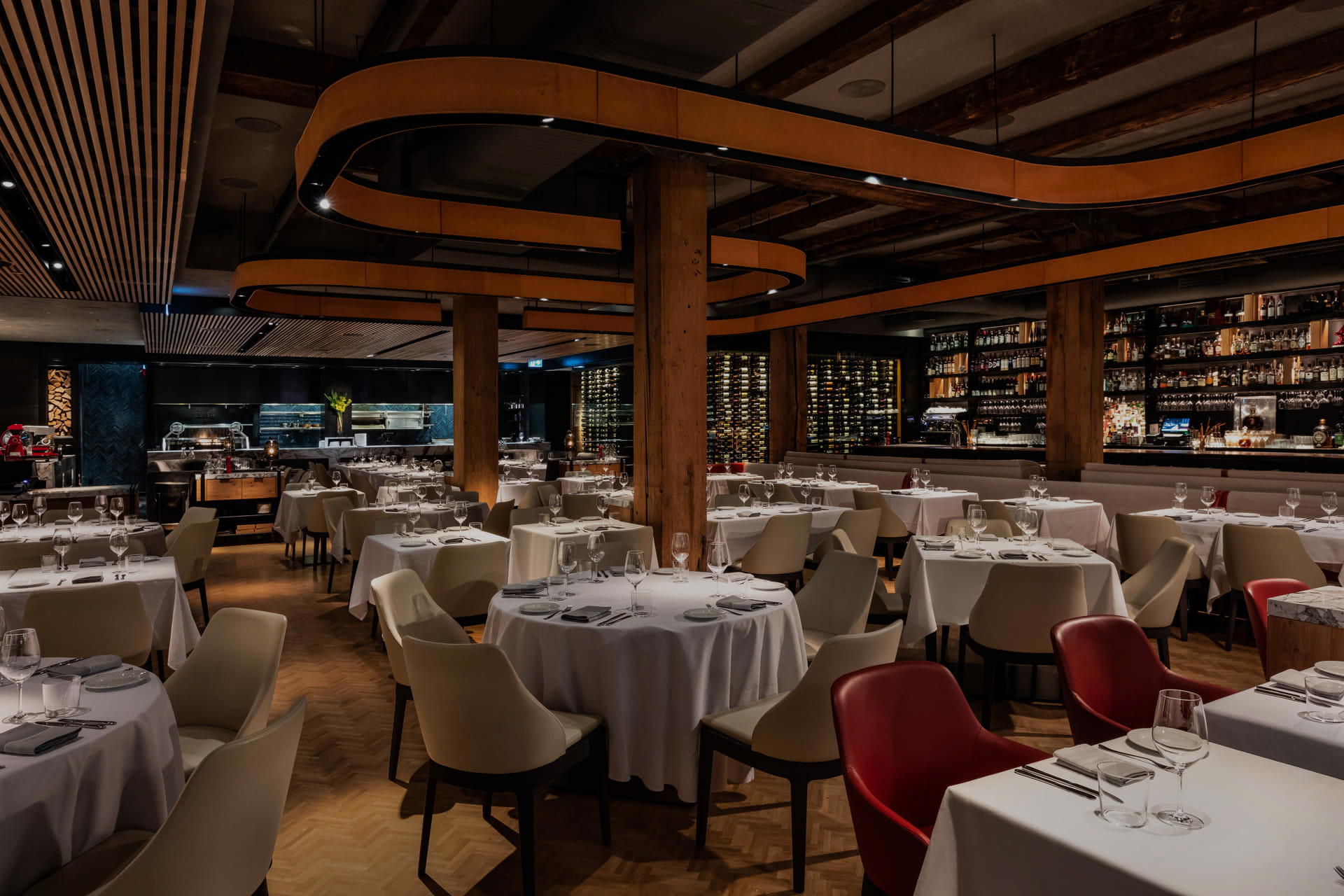
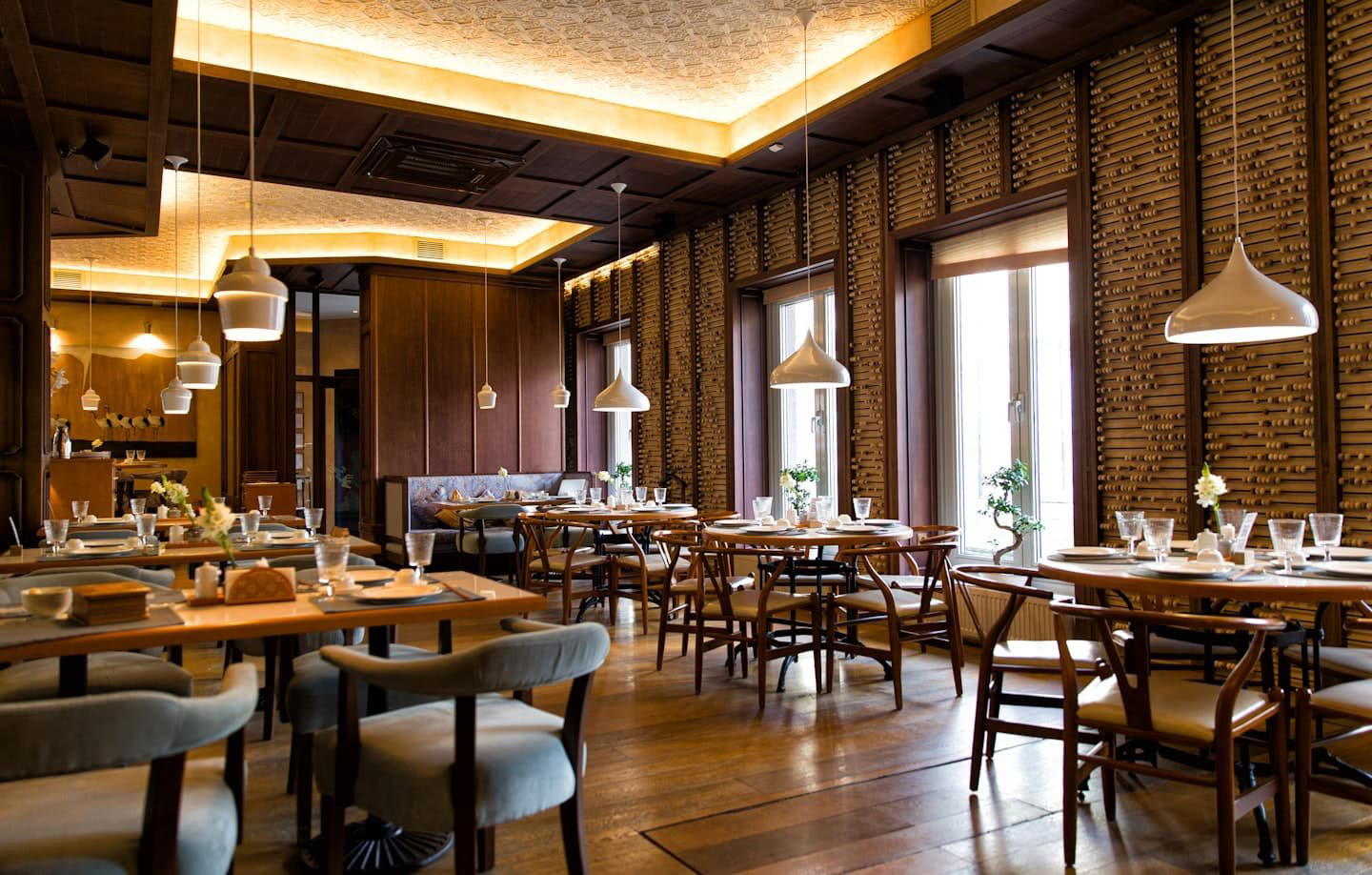
Few decisions matter more in boutique hotel design than how seriously a property treats its restaurant. The corridor between a hotel dining room that exists to capture breakfast revenue and one that operates as a genuine neighbourhood destination is wider than it appears, and most properties fall into the former category regardless of how their marketing frames it. Tableau, the Loden's French restaurant, sits in the latter. The room carries a late-1940s lounge sensibility, a particular register of French-inflected atmosphere that lands differently than the contemporary bistro format that has become the default for hotel restaurants trying to signal seriousness. It is the kind of room that works as well for a long dinner as for a nightcap, which is not a common thing to be able to say.
The Loden received a Michelin Key in 2024, placing it within a small peer group of Vancouver properties recognised under that framework. The Key designation, distinct from the star system applied to restaurants, functions as a signal about overall hospitality quality rather than culinary achievement alone, and its presence here tracks with what the property's design and service approach suggest: that the experience is being taken seriously at a structural level, not just at the amenity level. For travellers comparing properties in Vancouver's premium-independent tier against options like the Wedgewood Hotel or the AZUR Legacy Collection Hotel, the Key provides an independent data point rather than a house claim.
Where the Loden Sits in Vancouver's Premium Tier
At rates from $386, the Loden prices at the entry point of Vancouver's serious independent tier, below the Hotel, Vancouver and the larger Fairmont properties, but above the mid-market category. That positioning is meaningful because it sets the competitive reference group correctly. The Loden is not trying to out-amenity properties twice its size; it is making an argument about scale, neighbourhood, and design coherence as the correct trade-off for a certain kind of traveller.
For context within Canada's broader premium hotel market, the Loden's combination of boutique scale, urban specificity, and culinary credibility places it in a conversation with properties like Hotel Le Germain Montreal, which operates in a similar register of design-led independence in its own city. For travellers whose Canadian itinerary extends beyond Vancouver, the country's most geographically ambitious properties, from Fogo Island Inn in Joe Batt's Arm to Clayoquot Wilderness Lodge in Tofino, occupy a different category entirely, trading on wilderness access rather than urban design. The Loden's frame of reference is city-specific, and it competes on that terrain rather than pretending otherwise.
Planning Around Vancouver's Winter Peak
January and February represent a particular kind of Vancouver visit. The city's rain and low light, conditions that deter the summer hiking crowd, create a different and arguably more atmospheric version of the Coal Harbour waterfront. The seawall walk to Stanley Park, approximately a kilometre from the Loden's address at 1177 Melville Street, is navigable year-round and takes on a specific quality in winter: fewer visitors, cedar scent sharpened by rain, the Inlet under grey skies. For guests whose schedule extends to the arts, the city's gallery and performance calendar runs heavily through winter months, and Coal Harbour's central position makes the main cultural venues accessible on foot or by short transit.
April brings a shift: cherry blossoms in the West End and along the seawall edge, longer evenings, and the first viable outdoor terrace conditions. The Halo Suite's wrap-around terrace makes most sense in this window, before summer pricing and summer crowds compress the experience. Guests planning around Tableau would do well to factor in that the restaurant's atmosphere, built around warmth and intimacy rather than outdoor dining energy, plays to winter and early spring rather than peak summer.
For anyone building a broader Vancouver dining picture alongside a Loden stay, our full Vancouver restaurants guide maps the city's major dining categories and neighbourhoods. The The Magnolia Hotel & Spa and EXchange Hotel Vancouver serve different parts of the downtown core and represent alternative framings of the boutique-independent tier for travellers weighing options across the city. Those planning extended Canada itineraries might also consider the mountain properties: Fairmont Chateau Whistler in Whistler, Fairmont Banff Springs in Banff, and Fairmont Chateau Lake Louise in Lake Louise each offer a different geographic logic, while Fairmont Empress Hotel in Victoria provides an island alternative a short ferry ride from Coal Harbour's seaplane terminal.
Peers You’d Cross-Shop
A quick snapshot of similar venues for side-by-side context.
| Venue | Price | Awards |
|---|---|---|
| Loden HotelThis venue — the venue you are viewing | Not listed | 1 Michelin Key |
| Rosewood Hotel Georgia | Not listed | 2 Michelin Keys · La Liste Top Hotels |
| Fairmont Hotel Vancouver | $300–500 | Michelin Selected · Forbes 4-Star |
| Fairmont Pacific Rim | $300–500 | Michelin Selected · La Liste Top Hotels |
| JW Marriott Parq Vancouver | Not listed | Forbes Recommended |
| The St. Regis Hotel | $200–300 | Forbes Recommended |
Recognition history
Dated appearances from independent guides and award organizations, with the underlying list record or original source where available.
Michelin 1 Key
Michelin
Full recognition history (3 entries)
Michelin 1 Key
Michelin
Michelin 1 Key
Michelin
Details
- Elegant
- Sophisticated
- Modern
- Cozy
- Romantic Getaway
- Business Trip
- Weekend Escape
- Wi Fi
- Spa
- Fitness Center
- Room Service
- Concierge
- Restaurant
- Valet Parking
- EV Charging
- Bicycle Rental
- Skyline
- Waterfront
- Wheelchair Accessible
- Elevator
- Accessible Parking
Welcoming and serene atmosphere with soundproofed rooms, premium bedding, attentive staff, and a cozy lobby fireplace.