Rajaji
On Connecticut Avenue NW in Washington's Woodley Park, Rajaji occupies a stretch of the city where neighborhood restaurants carry more weight than downtown flagships. With sparse public data and a low-profile booking presence, it sits in the category of places that build reputation through repeat local custom rather than press cycles — worth tracking for anyone mapping D.C.'s quieter dining tier.
Pearl is the En Primeur Club membership app — saves, bookings, and concierge access live there. Same editors, same standards.
- Address
- 2603 Connecticut Ave NW, Washington, DC 20008
- Phone
- +12022657344
- Website
- rajajicurryhouse.com
- Directions
- Get directions
 Saves & bookings on Pearl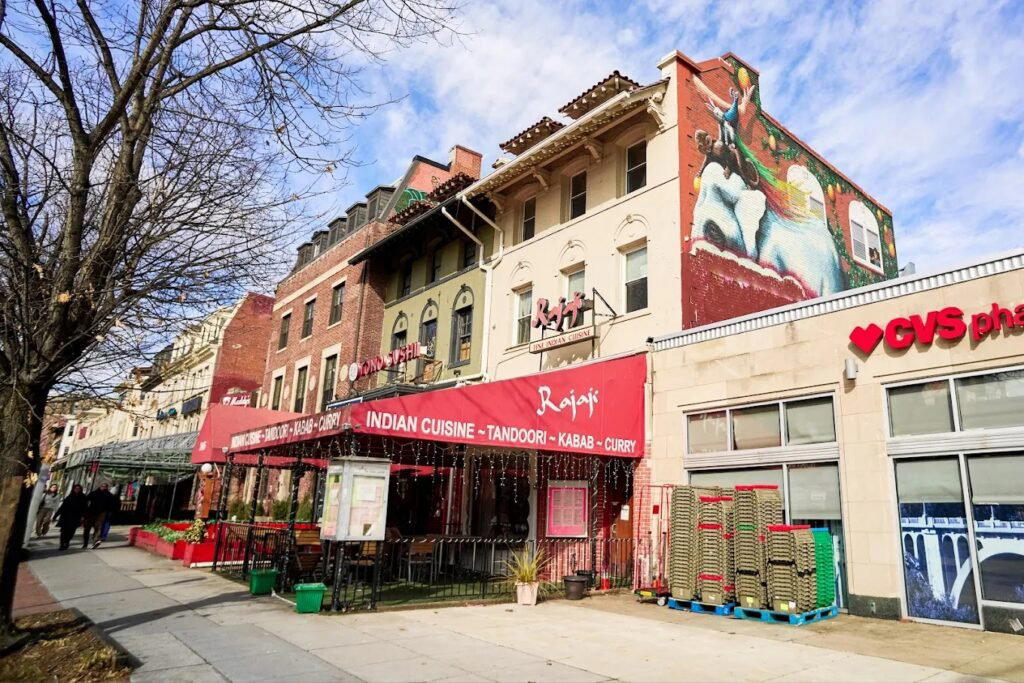
Connecticut Avenue's Quieter Register
Washington's dining conversation tends to concentrate downtown and in Shaw, with the occasional nod to Georgetown. Woodley Park, by contrast, operates at a different frequency. The stretch of Connecticut Avenue NW around the 2600 block has long housed the kind of neighborhood restaurants that don't chase awards cycles or court food media — they build through regulars, word of mouth, and the simple logic of being good enough that people come back. Rajaji, at 2603 Connecticut Ave NW, sits inside that pattern. Its public footprint is deliberately minimal: no awards listing in the major guides, no high-profile chef name circulating in press coverage, no price tier published on aggregator platforms. For a city where venues like Jônt and minibar compete loudly for national attention, that restraint is itself a positioning choice.
The Scene on Connecticut Avenue
Woodley Park is a residential neighborhood anchored by the National Zoo to its south and the broader upper Connecticut Avenue corridor running north toward Chevy Chase. It attracts a mix of diplomatic community members, long-term residents, and university-adjacent professionals who want proximity to the city center without the density of Dupont Circle or Adams Morgan. Restaurants here tend to service that community first and destination diners second. The competitive context, then, is less about peer pressure from Michelin-tracked tasting menu counters and more about what makes a place the weekly choice for people who live within walking distance. That is a different kind of excellence — one that doesn't always surface in the metrics that drive most dining coverage.
For broader Washington D.C. context and a fuller map of where Rajaji sits relative to the city's wider restaurant tier, see our full Washington, D.C. restaurants guide.
Team Dynamics in a Low-Profile Format
In rooms where the front-of-house operates with limited media reinforcement, the collaboration between kitchen and floor becomes the primary signal of quality. Without a celebrity chef name to do the marketing work, the floor team carries more interpretive weight: they must communicate what the kitchen is doing, pace the room without a tasting menu structure to lean on, and build the kind of familiarity that turns a first visit into a habit. This dynamic is common in neighborhood restaurants that outlast their more decorated contemporaries, places where the sommelier or floor lead becomes the face the regulars recognize, and where the kitchen's consistency is the floor team's primary selling point.
That model of quiet collaboration produces a different kind of dining room than the chef-forward counter format that dominates D.C.'s high-end tier. At venues like Albi or Causa, the kitchen's identity is the draw and the floor team amplifies that identity. At lower-profile neighborhood operators, the relationship inverts: the floor creates continuity and the kitchen sustains it. Which model produces better hospitality depends entirely on what the diner is looking for, spectacle and credential, or reliability and recognition.
Where Rajaji Fits in D.C.'s Dining Tiers
Washington's restaurant market has stratified sharply over the past decade. At the leading end, multi-course tasting menus with $200-plus price points compete for Michelin stars and 50 Best adjacency. In the middle, a wave of ingredient-driven casual-fine operators, including Oyster Oyster at the $$$ tier, have built critical reputations on focused, often produce-led formats. Below that, neighborhood restaurants operate on volume, regularity, and proximity logic. Rajaji's sparse public data makes precise tier placement difficult, but the Connecticut Avenue address and its absence from major awards databases place it in the neighborhood-restaurant category rather than the destination-dining tier.
That is not a diminishment. Some of the most durable restaurants in any city occupy exactly this position: known to locals, invisible to tourists, and entirely indifferent to the press machinery that cycles through the same downtown addresses. Nationally, the pattern holds at places like Lazy Bear in San Francisco or Blue Hill at Stone Barns in Tarrytown, where identity is built over years rather than seasons, though those examples sit at the opposite end of the visibility spectrum. The underlying logic is the same: longevity in a neighborhood requires something that awards can't manufacture.
For reference points at D.C.'s more credentialed end, The Inn at Little Washington remains the region's anchor of formal fine dining, while Jônt represents the tasting-menu counter format at its most technically ambitious. Rajaji operates in a separate register from both.
What the Address Signals
2603 Connecticut Ave NW is in a block that benefits from the foot traffic generated by Woodley Park's concentration of apartment buildings and the subway access from the Woodley Park-Zoo/Adams Morgan Metro station on the Red Line. For visitors staying in upper Northwest or around Dupont Circle, the location is reachable without a car, which matters in a city where parking remains a persistent friction point. The neighborhood's relative calm compared to busier dining corridors like 14th Street NW makes it a logical choice for an unhurried weeknight meal.
Readers tracking D.C.'s broader dining geography might also note how Connecticut Avenue's upper stretch differs from the denser restaurant clusters in Shaw or Penn Quarter, where proximity to venues like minibar creates a different ambient energy. Woodley Park is quieter by design, and restaurants that succeed there tend to reflect that preference.
Know Before You Go
- Address: 2603 Connecticut Ave NW, Washington, DC 20008
- Neighborhood: Woodley Park, upper Northwest D.C.
- Metro Access: Woodley Park-Zoo/Adams Morgan station (Red Line), walking distance
- Booking: Contact details not publicly listed, check current platforms for availability
- Awards: No major guide listings confirmed at time of publication
How Rajaji Washington, D.C. compares with similar nearby venues.
| Venue | Cuisine | Price |
|---|---|---|
| New Heights | American | $$$ |
| Open City | Coffee Shop | Not listed |
Continue exploring
More in Washington DC
Restaurants in Washington DC
Browse all →
Bars in Washington DC
Browse all →
Hotels in Washington DC
Browse all →

At a Glance
- Classic
- Elegant
- Intimate
- Casual Hangout
- Family
- Group Dining
- Date Night
- Standalone
Current opening hours
- Monday
- 11 AM–10 PM
- Tuesday
- 11 AM–10 PM
- Wednesday
- 11 AM–10 PM
- Thursday
- 11 AM–10 PM
- Friday
- 11 AM–10 PM
- Saturday
- 11 AM–10 PM
- Sunday
- 11 AM–10 PM
Hours can change for holidays and private events. Last verified .
Warm and welcoming with elegant decor reflecting authentic Indian fine dining traditions.
Know Before You Go
- Getting there
- 2603 Connecticut Ave NW, Washington, DC 20008