


Rafael occupies an art-deco mansion on Calle San Martín in Miraflores, where chef Rafael Osterling has spent decades threading Peruvian ingredients through Italian and Japanese technique. Ranked on Opinionated About Dining's South America list consistently since 2023 and awarded 90 points by La Liste in 2025, it holds a steady position in Lima's upper tier of cosmopolitan modern Peruvian dining.
Pearl is the En Primeur Club membership app — saves, bookings, and concierge access live there. Same editors, same standards.
- Address
- Ca. San Martín 300, Miraflores 15074, Peru
- Phone
- +51 966 409 797
- Website
- rafaelosterling.pe
- Directions
- Get directions
 Saves & bookings on Pearl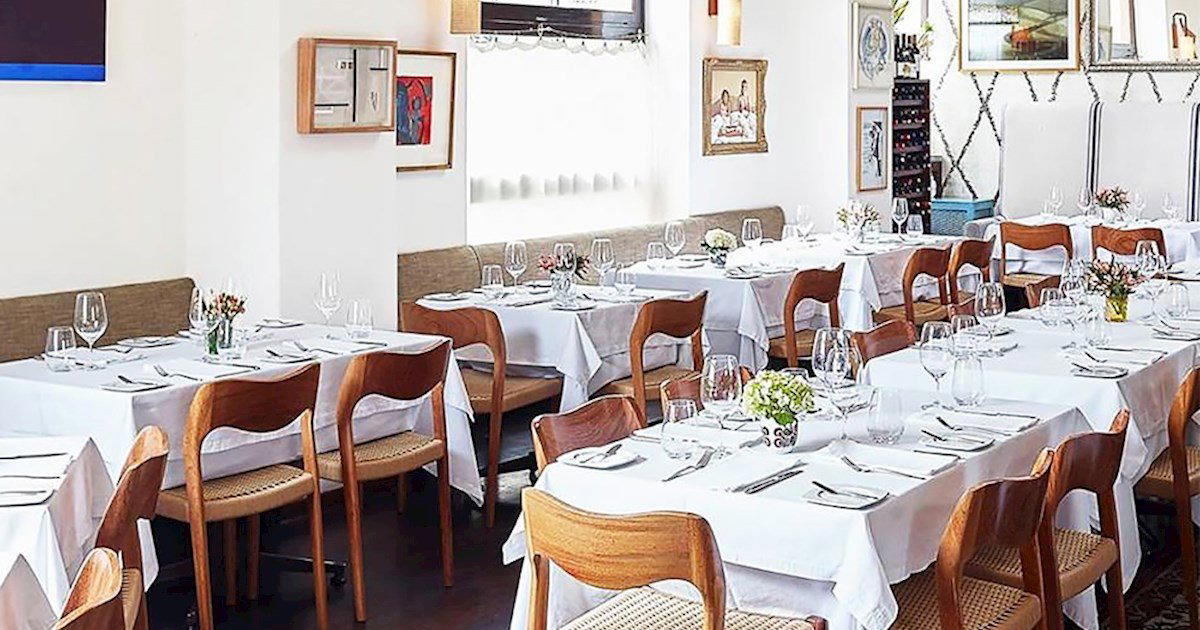
Rafael Restaurant Lima, Peru
Where Miraflores Places This Restaurant in Lima's Dining Order
Lima's modern Peruvian scene has fractured into distinct camps over the past decade. One current runs through hyperlocal sourcing and altitude-driven tasting menus, the direction associated with Central (Progressive Peruvian) and Kjolle. Another, older current is cosmopolitan: it draws on Lima's layered immigrant history, reads Peruvian ingredients through European and Asian technique, and prizes a certain dining-room ease that the more laboratory-style addresses deliberately avoid. Rafael sits firmly in this second current, and has for long enough that it now reads as a reference point for it rather than a follower of it.
The address, Ca. San Martín 300 in Miraflores, signals the positioning immediately. Miraflores is Lima's most polished residential and commercial district, where the dining infrastructure skews toward sustained quality rather than experimental risk. Costanera 700 operates in the same neighbourhood, and the concentration of internationally oriented restaurants here is not accidental: the area's clientele includes returning Peruvians, business travellers, and residents with exposure to global dining standards who expect a room to match the plate. Rafael's home, an art-deco mansion, gives the cooking a physical frame that most of Lima's newer addresses cannot replicate.
The Kitchen's Culinary Coordinates
Modern Peruvian cuisine, as a category, covers an enormous range. At one end, it means tightly controlled tasting menus built around endemic biodiversity. At the other, it means the looser, more pleasure-oriented style that traces Lima's port-city cosmopolitanism: the Nikkei tradition of Japanese-Peruvian fusion, the Italian influence that arrived in waves through the twentieth century, and the underlying Andean and coastal larder that gives it all grounding. Rafael Osterling's kitchen operates in this second register. The cuisine is described across multiple sources as a sophisticated, cosmopolitan take on Peruvian cooking, with Peruvian, Italian, and Japanese flavours and ingredients working in combination.
That triangulation has its own internal logic. Japanese technique, particularly in the handling of raw fish and the precision applied to seafood, connects naturally to Peru's ceviche and tiradito traditions. Italian influence shows up in pasta discipline and in an approach to richness that differs from both Andean and Japanese reference points. The result is a kitchen that can move across registers within a single meal without the transitions feeling arbitrary, because all three traditions have legitimate historical roots in Lima's culinary identity. Compare this with Maido (Nikkei), which pursues a single fusion axis with greater intensity, or Astrid & Gastón, which anchors itself more explicitly in Peruvian culinary heritage research. Rafael's kitchen reads as deliberately pluralist, which is a different editorial choice and one that suits a certain kind of diner.
Team Architecture and the Dining Room Dynamic
The editorial angle assigned to this restaurant by its sustained rankings is partly about kitchen output and partly about what kind of experience the full team delivers. Front-of-house at addresses like this one carries significant interpretive responsibility: the menu's cultural triangulation requires staff who can explain the logic of a dish that pulls from three distinct culinary traditions without the explanation becoming a lecture. That skill is rarer than it sounds, and in Lima's upper tier it separates the rooms that feel genuinely cosmopolitan from those that merely cook cosmopolitan food.
Rafael Osterling's presence as the chef whose name the restaurant carries creates a specific dynamic. At addresses where the chef's name is above the door, guests arrive with expectations shaped by that name, which means the front-of-house team must function as interpreters of a culinary personality as much as servers of dishes. The service standard implied by the restaurant's consistent ranking on Opinionated About Dining's South America list since 2023 suggests this interpretive function is being performed at a high level. La Liste scores compound kitchen quality and service experience, making the 90-point score meaningful beyond cooking alone.
The wine and drinks program at addresses working this kind of cosmopolitan modern Peruvian register tends to reflect the same pluralism as the kitchen. Peru's own wine production, centred in the Ica and Tacama regions, has limited relevance at this price point, but the sommelier function here would typically involve matching Italian, Japanese, and Peruvian flavour profiles to a cellar that skews European. The dining room's art-deco architecture creates a specific atmosphere for that conversation: it is a room with weight and history, which changes how guests receive service and how front-of-house reads the table.
Rankings, Recognition, and Where Rafael Sits in 2025
On Opinionated About Dining's South America ranking, Rafael is listed at 33 in 2025. That oscillation within the 29 to 40 band over three years is less a story of instability than of consistent upper-tier presence in a region whose ranking dynamics have become more contested as more South American cities develop serious fine-dining infrastructure.
Relevant peer context for these rankings includes the full spread of Lima's leading tables: Maras and Cosme in San Isidro occupy adjacent competitive space, while the Peruvian addresses that regularly appear at the summit of global rankings, Central among them, operate in a different competitive tier defined by different ambitions. Rafael's consistent presence in the Opinionated About Dining South America top 40 over multiple years, combined with the La Liste 90-point score, positions it as one of the more durable addresses in Lima's upper middle tier: not chasing the experimental vanguard, but not yielding ground to it either.
For broader context across Peruvian fine dining, Mil in Cusco, Cirqa in Arequipa, and Mauka in Cusco represent different regional expressions of modern Peruvian cooking. Internationally, the kind of cosmopolitan technical precision Rafael applies to seafood finds a rough analogue in addresses like Le Bernardin in New York City, though the culinary frameworks are distinct. The comparison is useful for calibrating the seriousness of the operation rather than equating the cuisines.
Planning a Visit: Hours, Location, and Practical Notes
Rafael operates Tuesday through Saturday for both lunch (1:00 to 3:30 pm) and dinner (7:00 to 11:00 pm), and on Monday for dinner service only. The restaurant is closed on Sundays. These hours follow a pattern common among Lima's upper-tier restaurants: a genuine lunch service reflects the city's tradition of afternoon dining as the main meal, and the dinner window closing at 11:00 pm aligns with Miraflores's slightly earlier rhythm compared to the late-night culture of Barranco or central Lima.
The address, Ca. San Martín 300, Miraflores 15074, is in Lima's Miraflores district. Miraflores is walkable from several of Lima's better hotel concentrations, and the neighbourhood itself offers enough adjacent dining and bar options to structure a full evening. For Amazon dining experiences further afield in Peru, Delfin Amazon Cruises and the Delfin I dining room in Nauta represent a different register of Peruvian hospitality.
6 across 1,973 ratings, a figure that suggests consistency across a high volume of covers. For an art-deco room in Miraflores with consistent South American ranking credentials, that breadth of positive reception across a large review sample is a meaningful data point about the experience at different price points and table types within the restaurant.
Pricing, Compared
Comparable venues nearby, for context on price, style, and recognition.
| Venue | Cuisine | Price | Awards | Notes |
|---|---|---|---|---|
| RafaelThis venue — the venue you are viewing | Miraflores, Modern Peruvian Fine Dining | $$$ | World's 50 Best #33 | Not listed |
| La Mar Cebicheria | Miraflores, Peruvian Cevicheria | $$$ | World's 50 Best #26 | Not listed |
| Kjolle | Barranco, Modern Peruvian Fine Dining | $$$$ | World's 50 Best #2 | Not listed |
| Maido | Not listed | $$$$ | World's 50 Best #1 | Miraflores, Nikkei (Japanese-Peruvian Fusion) |
| Mérito | Not listed | $$$ | World's 50 Best #4 | Barranco, Modern Venezuelan-Peruvian Fusion |
| Mayta | Miraflores, Modern Peruvian Fine Dining | $$$$ | World's 50 Best #11 | Not listed |
Recognition history
Dated appearances from independent guides and award organizations, with the underlying list record or original source where available.
Opinionated About Dining Top Restaurants in South America Ranked #34
Opinionated About Dining
La Liste Top Restaurants
La Liste
Opinionated About Dining Top Restaurants in South America Ranked #29
Opinionated About Dining
Opinionated About Dining Top Restaurants in South America Ranked #36
Opinionated About Dining
The Best Chef One Knife
The Best Chef
World's 50 Best Latin America's Best Restaurants #33
World's 50 Best
Opinionated About Dining Top Restaurants in South America Ranked #36
Opinionated About Dining
Opinionated About Dining Top Restaurants in South America Ranked #40
Opinionated About Dining
Opinionated About Dining Top Restaurants in South America Ranked #30
Opinionated About Dining
Opinionated About Dining Top Restaurants in South America Ranked #40
Opinionated About Dining
Continue exploring
More in Lima
Restaurants in Lima
Browse all →
Hotels in Lima
Browse all →
Wineries in Lima
Browse all →
At a Glance
- Cozy
- Elegant
- Sophisticated
- Date Night
- Business Dinner
- Celebration
- Open Kitchen
- Craft Cocktails
Current opening hours
- Monday
- 1:30–3:30 PM, 7–11 PM
- Tuesday
- 1–3:30 PM, 7–11 PM
- Wednesday
- 1–3:30 PM, 7–11 PM
- Thursday
- 1–3:30 PM, 7–11 PM
- Friday
- 1–3:30 PM, 7–11 PM
- Saturday
- 1–3:30 PM, 7–11 PM
- Sunday
- Closed
Hours can change for holidays and private events. Last verified .
Cozy with natural light during lunch, elegant atmosphere, views of bar action, can be crowded and noisy at peak times.