




Named The World's Best Restaurant 2025 by the 50 Best organisation, Maido occupies a specific position in Lima's dining scene: the city's clearest expression of Nikkei cuisine, where Japanese technique meets Peruvian ingredient with precision and seasonal intent. Chef Mitsuharu Tsumura has built a decade-and-a-half of credential around this intersection, earning consecutive top-ten rankings and a loyal international following from a Miraflores address on Calle San Martín.
Pearl is the En Primeur Club membership app — saves, bookings, and concierge access live there. Same editors, same standards.
- Address
- Ca. San Martín No. 399, Miraflores 15074, Peru
- Phone
- +51 1 3135100
- Website
- maido.pe
- Directions
- Get directions
 Saves & bookings on Pearl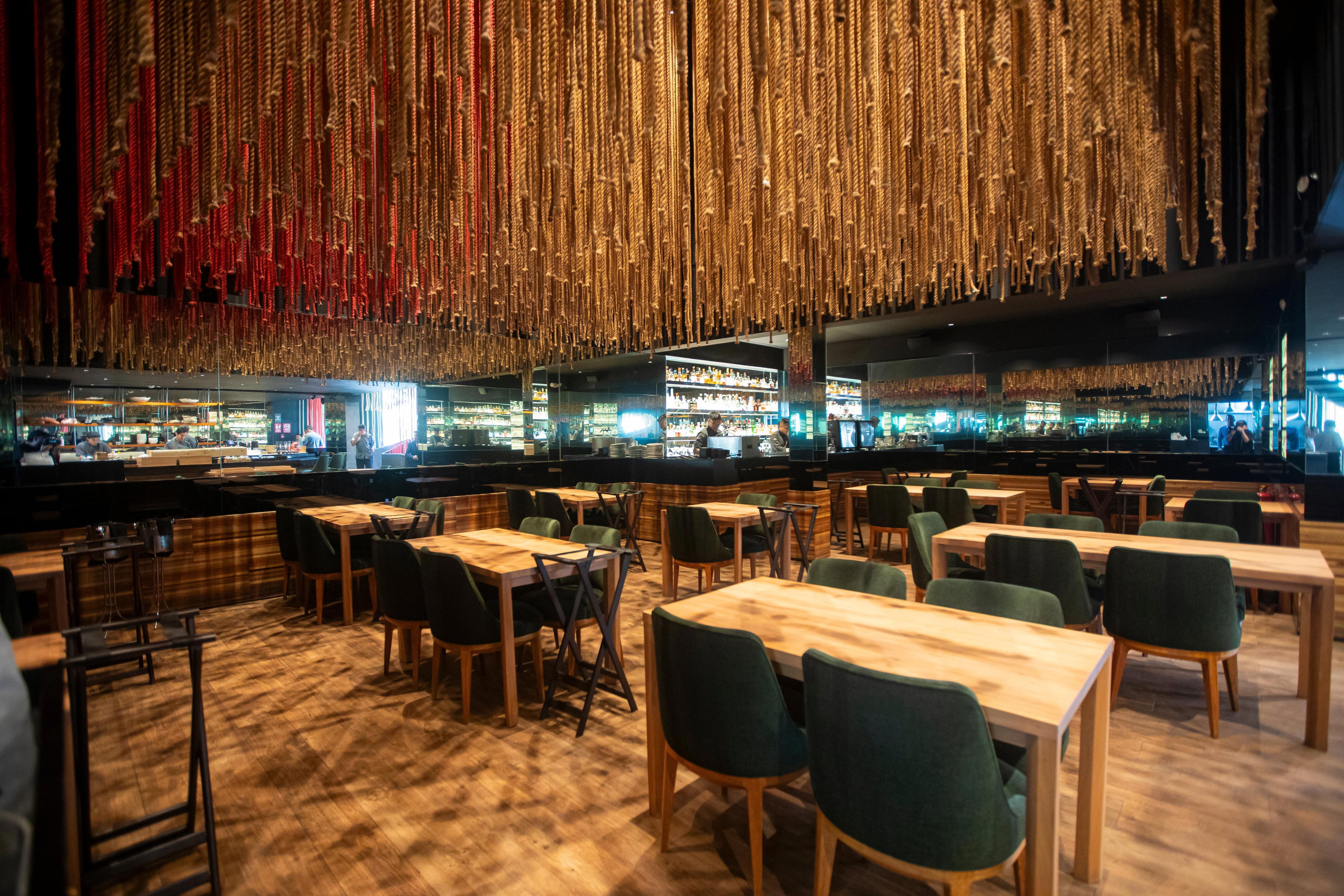
Where Two Culinary Traditions Converge
Miraflores, Lima's most polished residential and dining district, has long been the address where Peru's international restaurant ambitions concentrate. The neighbourhood's grid of low-rise streets and ocean-adjacent parks houses a cluster of globally ranked tables, and Calle San Martín 399 sits within that cluster. Maido is a Nikkei restaurant in Lima, led by Mitsuharu “Micha” Tsumura, and it is ranked No. 1 on the World's 50 Best Restaurants list in 2025. Walking toward Maido, the exterior reads quietly: no theatre, no queues managed by a clipboard, no exterior signage designed for Instagram. What happens inside, however, places it firmly at the centre of a conversation that extends well beyond Lima's borders. In 2025, the World's 50 Best Restaurants named it the single leading restaurant on the planet, capping a trajectory that began with a #44 ranking in 2015 and moved upward almost without interruption through #13 (2016), #8 (2017), #7 (2018), #10 (2019), #11 (2022), #7 (2023), and #5 (2024).
That kind of sustained forward movement in a ranking with 50 positions is statistically unusual. It signals not a single standout vintage but a kitchen operating at consistent high pressure over multiple assessment cycles. The La Liste platform, which aggregates critic and guide scores across national boundaries, placed Maido at 94 points in its 2026 edition. The Opinionated About Dining survey of South America, which draws on a different evaluator base than 50 Best, ranked it #15 on the continent in 2025, having placed it at #21 in 2024 and #17 in 2023. These are three separate methodologies converging on the same address.
Nikkei as a Culinary System, Not a Style
The cuisine category here is Nikkei, and it rewards a moment of explanation. Japanese immigration to Peru began in significant numbers in 1890, and the subsequent generations of Japanese-Peruvian families developed a cooking tradition that was neither fusion in the modern marketing sense nor preservation of either parent cuisine. It was functional hybridisation: Japanese discipline applied to what was available, which meant Andean chilies, Pacific seafood caught off a different coast, indigenous tubers, and citrus profiles foreign to any Japanese culinary canon. The result over more than a century became its own system, with its own logic, its own classic preparations, and its own restaurants across Lima's Miraflores and San Isidro districts.
Maido operates within that system but pushes its technical ceiling. The kitchen applies Japanese preparation methods, fermentation approaches, and temperature control to ingredients sourced from multiple Peruvian ecosystems: Pacific coast, Andean highlands, and the Amazon basin. The tasting menu, which runs to more than ten courses and changes with seasonal availability, has included preparations like sea snails with yellow chilli foam and Nikkei sauce, squid ramen with Amazonian chorizo, duck dumplings, and nigiri made from Peruvian catch. The Amazon thread has grown more prominent in recent years, with courses referencing ingredients like paiche, a large freshwater fish from the rainforest basin, and palm heart in miniature parcels alongside pork jowl. For context on how Amazon ingredients are appearing across Lima's dining scene, see also Delfin Amazon Cruises in Iquitos and Delfin I dining room in Nauta.
The restaurant also offers an à la carte format, anchored in the same seasonal sourcing logic. Neither format treats technique as decoration. The Japanese methods present in the kitchen, knife work, temperature management, fermentation, broth construction, exist to do specific things to specific Peruvian ingredients, not to signal cosmopolitan ambition.
Lima's Broader Table: How Maido Sits in Its comparable set
Understanding Maido's position requires understanding what it is not. Central, Lima's other globally recognised table, operates through a framework of altitude and ecosystem: courses mapped to elevations across Peru's vertical geography. Kjolle, which shares a building with Central, focuses on ingredient-forward modern Peruvian with a different tonal register. Astrid & Gastón in San Isidro carries the historical weight of being the restaurant that first placed Lima in international conversation in the 1990s, though its contemporary identity has evolved. Mayta and Mérito represent newer registers of the city's cooking ambitions.
Maido's specific niche within this field is the Nikkei category at its most technically exacting. There is no other table in Lima with equivalent awards density operating from this culinary tradition. Costanera 700, also in Miraflores, works the Nikkei and Peruvian-Japanese register at a different price and format point. The comparison illuminates how wide the category is: from casual cevicherías incorporating Japanese technique through to the multi-course precision of Maido's service. For those curious how Nikkei translates beyond Peru, TokyoLima in Hong Kong offers a useful reference point for how the tradition travels. And for a French technical parallel, the way Le Bernardin in New York City applies classical French discipline to seafood offers a structural comparison to how Maido applies Japanese precision to Peruvian catch.
Within Peru more broadly, the concentration of globally ranked cooking in Lima is notable. Mil in Cusco and Cirqa in Arequipa show that serious cooking has spread beyond the capital, but Lima remains the primary address for international visitors building a Peru itinerary around food.
The Anniversary Dimension and What It Signals
In 2024, Maido marked fifteen years of operation with a dedicated menu called the Maido Experience, which the restaurant described as a reflection on past, present, and future. In the same year, Chef Tsumura received the Estrella Damm Chefs' Choice Award, voted by his peers in the global 50 Best community. These two events in proximity are not coincidental. A kitchen that can mount a retrospective menu at fifteen years and command peer recognition simultaneously is one operating with institutional confidence, not simply technical execution.
The 2025 World's 50 Best Restaurants ranking capped this period. It also placed Maido in a short list of South American restaurants to have reached that position, and the first from Peru. For those building a Lima itinerary, the rest of our full Lima restaurants guide maps the broader scene, including the neighbourhoods and formats that sit outside the tasting-menu tier.
Planning a Visit
Maido is located at Calle San Martín 399, Miraflores, Lima 15074. The neighbourhood is walkable from most Miraflores hotels and accessible by taxi from San Isidro and Barranco within fifteen to twenty minutes depending on traffic. Advance booking is essential. The format divides between a multi-course tasting menu and an a la carte option, making the table accessible to different table configurations without requiring full tasting-menu commitment from every diner. The restaurant has confirmed it will accommodate vegetarian preferences at the full tasting level, with Chef Tsumura personally overseeing those menus.
For the complete picture of what Miraflores and Lima offer beyond Maido, our Lima hotels guide, bars guide, wineries guide, and experiences guide cover the adjacent infrastructure for building a longer stay. Cosme in San Isidro is worth noting as part of the same wider neighbourhood dining circuit for those spending multiple evenings in Lima.
Cost and Credentials
Comparable venues nearby, for context on price, style, and recognition.
| Venue | Cuisine | Price | Awards |
|---|---|---|---|
| MaidoThis venue — the venue you are viewing | Nikkei | $$$$ | World's 50 Best #1 |
| Kjolle | Barranco, Modern Peruvian Fine Dining | $$$$ | World's 50 Best #9 |
| Astrid & Gastón | San Isidro, Modern Peruvian Fine Dining | $$$$ | Latin America's 50 Best founding No.1 (2013) |
| Mayta | Miraflores, Modern Peruvian Fine Dining | $$$$ | World's 50 Best #39 |
| La Mar Cebicheria | Miraflores, Peruvian Cevicheria | $$$ | Latin America's 50 Best #26 (2025) |
| Central | Barranco, Modern Peruvian Tasting Menu | $$$$ | World's 50 Best #1 (2023; Best of the) |
Recognition history
Dated appearances from independent guides and award organizations, with the underlying list record or original source where available.
Food & Wine Global Tastemakers Top Restaurants #2
Food & Wine
La Liste Top Restaurants
La Liste
Opinionated About Dining Top Restaurants in South America Ranked #18
Opinionated About Dining
Star Wine List
Star Wine List
Opinionated About Dining Top Restaurants in South America Ranked #15
Opinionated About Dining
The Best Chef Three Knives
The Best Chef
We're Smart World 3 Radishes
We're Smart World
World's 50 Best Best Restaurants #1
World's 50 Best
Opinionated About Dining Top Restaurants in South America Ranked #21
Opinionated About Dining
World's 50 Best Best Restaurants #5
World's 50 Best
Opinionated About Dining Top Restaurants in South America Ranked #17
Opinionated About Dining
World's 50 Best Best Restaurants #6
World's 50 Best
World's 50 Best Best Restaurants #11
World's 50 Best
World's 50 Best Best Restaurants #7
World's 50 Best
World's 50 Best Best Restaurants #10
World's 50 Best
World's 50 Best Best Restaurants #7
World's 50 Best
World's 50 Best Best Restaurants #8
World's 50 Best
World's 50 Best Best Restaurants #13
World's 50 Best
World's 50 Best Best Restaurants #44
World's 50 Best
Continue exploring
More in Lima
Restaurants in Lima
Browse all →
Hotels in Lima
Browse all →
Wineries in Lima
Browse all →
At a Glance
- Sophisticated
- Elegant
- Modern
- Special Occasion
- Date Night
- Celebration
- Open Kitchen
- Extensive Wine List
- Sake Program
Current opening hours
- Monday
- 1–10 PM
- Tuesday
- 1–10 PM
- Wednesday
- 1–10 PM
- Thursday
- 1–10 PM
- Friday
- 1–10 PM
- Saturday
- 1–10 PM
- Sunday
- Closed
Hours can change for holidays and private events. Last verified .
Sophisticated yet comfortable and relaxed atmosphere with professional service.