Our verdict
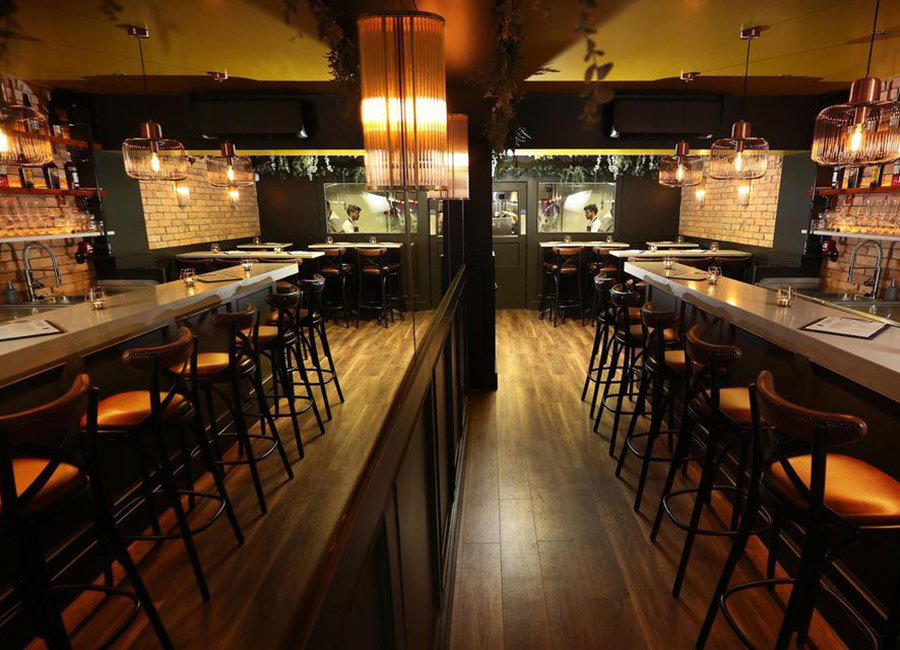
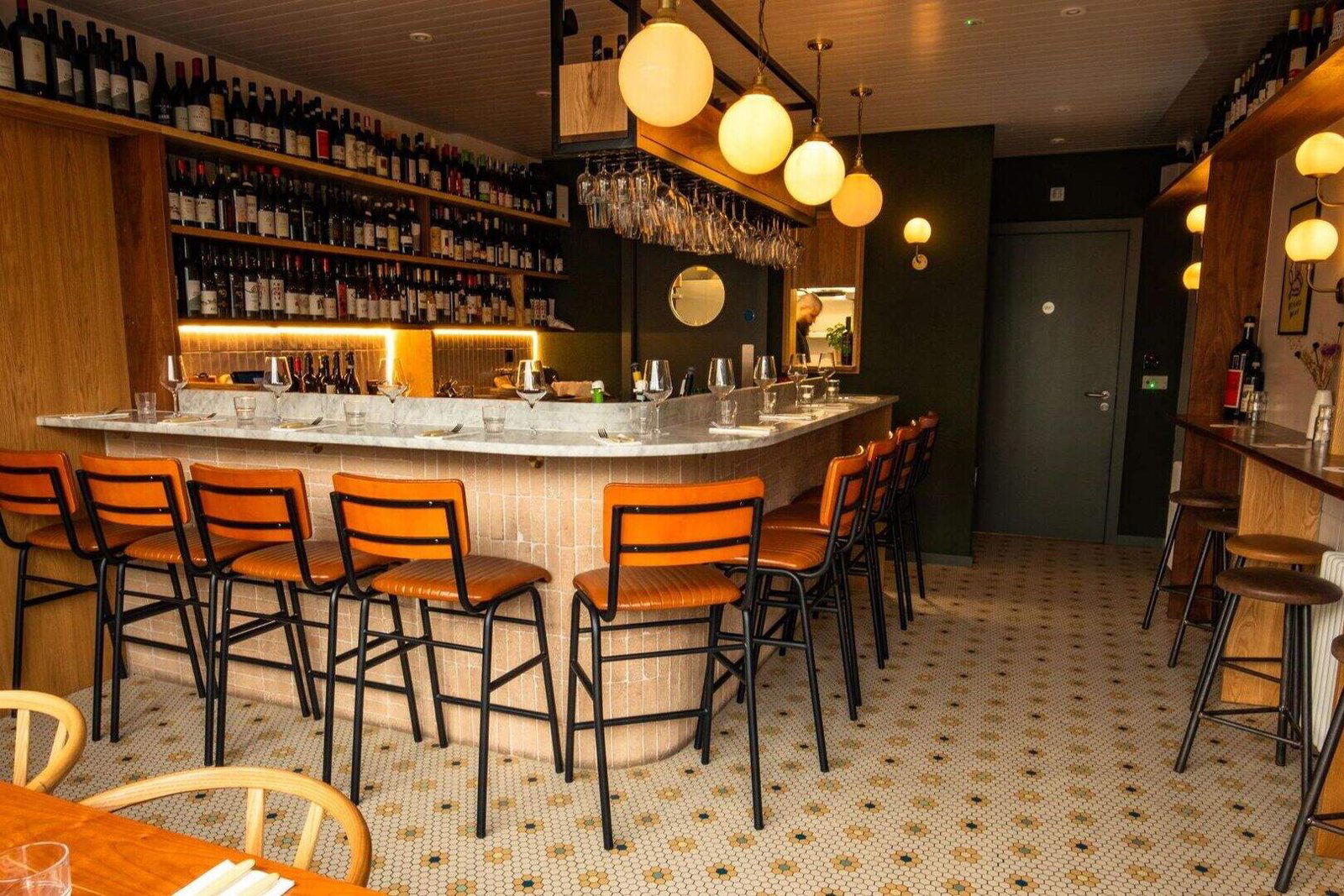
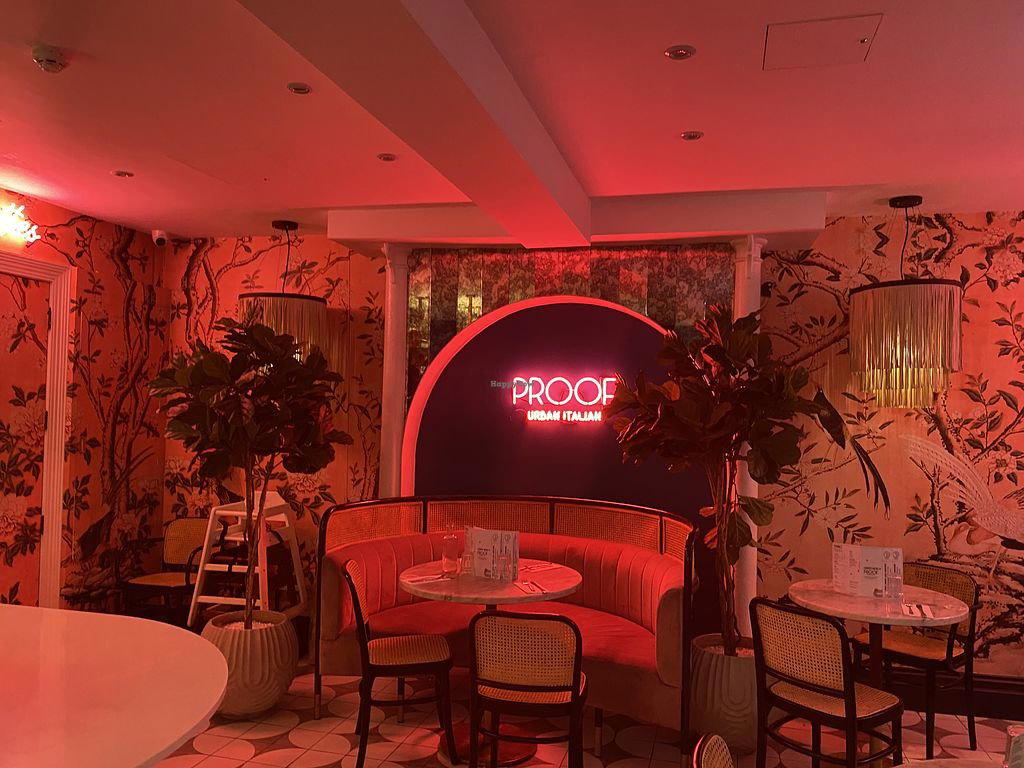
Proof Trattoria occupies a Thomas Street address in Dublin's Liberties, a neighbourhood that has drawn a new wave of independent restaurants with a sharper focus on sourcing and craft. The Italian-leaning format sits within a broader city shift toward ingredient-led cooking in informal, neighbourhood-scale rooms. For visitors exploring the Liberties or moving between Dublin's dining districts, it represents a deliberate alternative to the city centre's more formal options.

Pearl is the En Primeur Club membership app — saves, bookings, and concierge access live there. Same editors, same standards.
- Address
- 34/35 Thomas St, The Liberties, Dublin, D08 EP30, Ireland
- Phone
- +35314539297
- Hours
- Mon–Wed 12–8:30 PMThu–Fri 12–9:30 PMSat 10 AM–9:30 PMSun 10 AM–8:30 PM
- Website
- proofurbanitalian.com
- Directions
- Get directions
- Booking
- Book on the venue's website
The menu
What to order
- Margherita Pizza
- Arancini
- Signature Proof Pizza
The Liberties and What It Asks of a Restaurant
Thomas Street runs through the heart of the Liberties, one of Dublin's oldest working districts, and the character of the street shapes what works there. This is not the polished Georgian corridor of Merrion Square, where Patrick Guilbaud operates in a setting that practically demands ceremony. Nor is it the refined southside pocket where Bastible has built its reputation for market-driven Modern Irish cooking. The Liberties has its own logic: brick-fronted buildings, a high street energy that predates the city's Georgian expansion, and a resident community that has only recently been joined by a younger, restaurant-going crowd. A room that lands well here tends to have warmth rather than formality, a menu that rewards return visits rather than demanding occasion-level commitment, and a sourcing story that connects the plate to something beyond the kitchen.
Proof Trattoria, at 34/35 Thomas Street, sits squarely in that frame. The trattoria model itself carries a set of expectations worth naming: in Italy, the trattoria occupies a middle register between the humble osteria and the more ambitious ristorante. It implies a kitchen that values repetition, craft, and honesty over novelty. That positioning is not accidental in Dublin's current dining moment, and understanding why requires a brief look at where the city's restaurant culture has moved in the past decade.
Where Dublin's Ingredient Story Has Been Going
Irish food culture has undergone a significant structural shift since roughly 2010. The country's coastal and rural producers, already supplying the fine-dining tier that includes places like Chapter One by Mickael Viljanen and Glovers Alley, have increasingly found routes into mid-market and neighbourhood restaurants. The same artisan dairies, small-scale meat producers, and coastal fisheries that once sold primarily into the tasting-menu tier are now part of a broader conversation about how Irish ingredients perform across different cooking formats.
The trattoria format, when applied to Irish-sourced product, creates an interesting test. Italian technique was built around Italian ingredients: the fat and acid balance of good olive oil against the sweetness of San Marzano tomatoes, the mineral weight of aged Parmigiano against the grassiness of local dairy. When that framework is applied to west coast shellfish, Kerry lamb, or Wicklow vegetables, the result either reads as imitation or as something genuinely considered. The restaurants that have made this work in Ireland, including Aniar in Galway and Liath in Blackrock in their own distinct ways, have done so by treating technique as a tool and ingredients as the argument. The same logic applies to any serious trattoria operating in an Irish context.
Internationally, the conversation around sourcing has moved from ethical framing toward a more technical one. At Le Bernardin in New York City, the sourcing programme is structured around specific fishing relationships maintained over years. At Atomix in New York City, Korean producers are mapped into a fine-dining context with near-academic precision. The principle, if not the price point, travels downward through the restaurant tier: knowing where your food comes from and choosing suppliers accordingly is now a baseline expectation rather than a differentiator at the top of the market.
The Liberties as a Dining Neighbourhood
Dublin's dining geography has historically concentrated in a relatively compact arc from Rathmines through the city centre to Ranelagh. The Liberties sits just outside that arc, west of Christ Church Cathedral, and its restaurant scene has developed more slowly. That slower pace has produced a different kind of venue mix: fewer destination restaurants designed to draw from the entire city, more places that serve a local and returning clientele. D'Olier Street occupies a different part of the city's dining conversation, but the dynamic of neighbourhood-scale restaurants building loyal audiences is visible across Dublin's expanding residential quarters.
For visitors, the Liberties is now part of a logical Dublin itinerary that moves between the Guinness Storehouse area, the galleries along Thomas Street, and the residential streets to the south. Restaurants in this zone are not operating as tourist infrastructure; they are primarily serving a local population that has moved into the neighbourhood as rents in more central areas have risen. That audience tends to be food-literate, value-conscious, and resistant to restaurants that substitute atmosphere for substance.
This context matters for Proof Trattoria. A trattoria model in the Liberties is not pitching itself against the Michelin tier or against the city's higher-spend tasting menu rooms. In that comparison, sourcing decisions and kitchen discipline become the deciding factors. Ireland's broader restaurant scene, visible in the work being done at Chestnut in Ballydehob, Campagne in Kilkenny, Bastion in Kinsale, Homestead Cottage in Doolin, House in Ardmore, Lady Helen in Thomastown, Terre in Castlemartyr, and dede in Baltimore, has raised the general standard of what sourcing-conscious cooking looks like at a regional level. That rising baseline creates both pressure and opportunity for a Dublin neighbourhood restaurant to articulate its own position clearly.
Know Before You Go
Know Before You Go
- Address: 34/35 Thomas St, The Liberties, Dublin, D08 EP30, Ireland
- Neighbourhood: The Liberties, west of Christ Church Cathedral
- Getting There: Thomas Street is accessible by bus from the city centre; the Luas Red Line stops at James's Hospital (Heuston direction), roughly a ten-minute walk
- Nearby: Irish Museum of Modern Art, Guinness Storehouse, St Patrick's Cathedral
- Further Dublin Dining: See our full Dublin restaurants guide for neighbourhood-by-neighbourhood coverage
Frequently asked questions
How do I find Proof Trattoria?
Proof Trattoria is located at 34/35 Thomas St, The Liberties, Dublin, D08 EP30, Ireland, Dublin.
Is Proof Trattoria a good option for dinner in Dublin's Liberties neighbourhood?
Proof Trattoria at 34/35 Thomas Street is one of the few sit-down dinner options operating within The Liberties proper, a district that Dublin's restaurant density has historically bypassed in favour of Rathmines, Ranelagh, and the city centre. For anyone based in or passing through Dublin 8, it fills a genuine gap as a neighbourhood trattoria rather than a special-occasion destination. Its Italian format suits the area's preference for direct, ingredient-led cooking over elaborate production.
What dish is Proof Trattoria famous for?
The kitchen at Proof Trattoria on Thomas Street draws from Italian trattoria traditions applied to what Dublin's producers and markets are supplying seasonally. Specific signature dishes are not publicly pinned to a single item, which is consistent with the trattoria model where the menu shifts rather than anchors on one fixed plate. Visiting with an open approach to whatever the kitchen is running is the practical way to go.
Is Proof Trattoria reservation-only?
Proof Trattoria sits on Thomas Street in The Liberties, a neighbourhood where demand for good dinner tables has grown faster than the restaurant stock. Booking ahead is advisable, particularly for evenings and weekends, though current reservation policies are best confirmed directly with the venue before your visit.
What's the signature at Proof Trattoria?
The defining characteristic at Proof Trattoria is its placement of an Italian trattoria format inside one of Dublin's oldest working districts, The Liberties on Thomas Street. That neighbourhood context matters: the area's street-level character shapes what a restaurant there needs to be, and Proof reads as a local dining room rather than a destination-driven concept. The trattoria format itself is the signature, prioritising simplicity and repetition over elaborate tasting menus.
Style and Standing
Comparable venues nearby, for context on price, style, and recognition.
| Venue | Cuisine | Price | Notes |
|---|---|---|---|
| Proof TrattoriaThis venue — the venue you are viewing | Modern Italian Trattoria | $20–30 | Not listed |
| Doppio Zero | Authentic Italian Pizza & Pasta | Not listed | North City |
| Val's | Authentic Italian Pizzeria | $20–30 | Royal Exchange A |
| Pacino's | Authentic Italian Trattoria | $30–50 | Royal Exchange A |
| Carluccio's | Authentic Italian | $20–30 | Mansion House A |
| Impasto 48 | Authentic Neapolitan Pizza | $20–30 | Sutton |