

A Michelin Plate-recognised Indian restaurant inside Tai Kwun's restored Central Magistracy, Prince and the Peacock brings coastal spice traditions, coconut, tamarind, curry leaf, to one of Hong Kong's most architecturally distinctive dining addresses. Priced at the accessible end of Central's mid-range, it sits in a small comparable set of Indian kitchens receiving serious critical attention in the city.
Pearl is the En Primeur Club membership app — saves, bookings, and concierge access live there. Same editors, same standards.
- Address
- 2/F, Central Magistracy, Tai Kwun, 1 Arbuthnot Rd, Central, Hong Kong
- Phone
- +852 2154 6104
- Website
- themagistracyhongkong.com
- Directions
- Get directions
 Saves & bookings on Pearl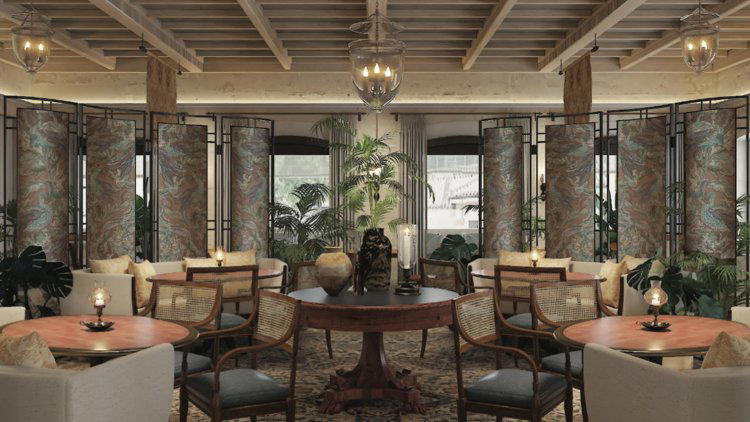
A Colonial Courtyard Reframed by Coastal Indian Flavour
Tai Kwun occupies the former Central Police Station compound on Arbuthnot Road, a cluster of nineteenth-century colonial buildings that the Hong Kong Jockey Club spent a decade and roughly HK$3.8 billion restoring before reopening in 2018. The Central Magistracy block, where Prince and the Peacock sits on the second floor, once held courtrooms and holding cells. Today the stone corridors, high ceilings, and layered institutional history set a context that few dining rooms in Hong Kong can match. Arriving at the compound after dark, when the courtyard is lit and the surrounding granite walls hold the ambient noise of Central's hill streets at a distance, the architectural weight reads differently than it does at lunch, more theatrical, more deliberate.
That setting matters because Indian restaurants in Hong Kong have historically competed on value density and familiarity, clustered around Tsim Sha Tsui and Chungking Mansions in Kowloon, where the South Asian community anchors the demand. Prince and the Peacock occupies a different category: a mid-range address in a heritage precinct, positioning Indian cooking not as a neighbourhood staple but as a destination choice for Central's dining crowd. The Michelin Plate recognition in both 2024 and 2025 confirms that the kitchen is operating at a level the guide considers worth noting.
The Case for Coastal Spice Traditions in a Hong Kong Context
The editorial angle that makes Prince and the Peacock interesting to watch is not the Tai Kwun address alone, but what the kitchen is doing with the coastal register of Indian cooking. South Indian and Goan seafood traditions, built around coconut milk, curry leaf, tamarind sourness, and kokum's fruity acidity, are among the more technically layered in the subcontinent, and they translate well to a Hong Kong palate already calibrated to seafood-forward cooking and clean acid finishes. The repertoire running from Kerala fish curries through Goan recheado and xacuti to Tamil-style chettinad preparations represents a different culinary logic than the Punjabi and Mughal-lineage dishes that dominate the global Indian restaurant export.
This is worth noting in the context of how Indian fine and mid-fine dining has developed internationally. Restaurants like Trèsind Studio in Dubai and Opheem in Birmingham have built their reputations partly by interrogating which Indian regional traditions deserve more serious treatment outside India. In Bangkok, both INDDEE and Haoma have applied similar logic in an Asian market context. The coastal spice traditions fit particularly well in cities where diners already understand coconut-based curries and tamarind-soured broths through local culinary reference points, Hong Kong's own Cantonese kitchen uses sweet-sour balancing and coconut in ways that create a shared flavour language.
In Hong Kong specifically, the comparison that sharpens Prince and the Peacock's position is its relationship to Chaat and Leela, the two Indian addresses that have attracted critical attention in the city at a higher price tier. Chaat, housed in the Rosewood, operates at the $$$ to $$$$ register and targets the hotel dining circuit. The restaurant's $$ price positioning means it occupies different territory: more accessible, less ceremony-heavy, and sitting inside a heritage cultural site rather than a luxury hotel. The question the kitchen answers at this price point is whether coastal Indian cooking can hold its own against the mid-range competition in Central without the support of a hotel infrastructure behind it.
Central's Mid-Range Register
Central's dining scene at the $$ tier runs from reliable Cantonese lunch counters to international casual concepts, with a smaller cohort of destination-quality mid-range kitchens that attract both local professionals and internationally mobile visitors. The restaurant's. For comparison, Central's higher-end addresses like Amber, Caprice, and 8½ Otto e Mezzo Bombana operate at the $$$$ tier with the full Michelin star infrastructure. The restaurant's Michelin Plate at $$ represents a different value proposition entirely.
The Tai Kwun compound itself functions as a cultural and F&B destination, with gallery programming, a cinema, and multiple dining options across the site. This means a meal at the restaurant fits naturally into a longer evening in the precinct, with the courtyard available for pre- or post-dinner drinks and the heritage architecture providing a frame that reinforces the restaurant's departure from a standard Hong Kong dining room. It also means the foot traffic mix skews toward culturally engaged visitors and local professionals rather than the hotel-captive audience that many Central fine-casual operations depend on.
Where Prince and the Peacock Sits Against Its Peers
| Venue | Cuisine | Price Tier | Michelin Recognition | Setting |
|---|---|---|---|---|
| The restaurant | Indian (Coastal) | $$ | Plate 2024, 2025 | Heritage, Tai Kwun |
| Chaat | Indian | $$$ | 1 Star | Hotel, Rosewood |
| Leela | Indian | $$ | , | Standalone |
| 8½ Otto e Mezzo Bombana | Italian | $$$$ | 3 Stars | Standalone, Central |
| Caprice | French Contemporary | $$$$ | 2 Stars | Hotel, Four Seasons |
Planning Your Visit
The restaurant is located on the second floor of the Central Magistracy at Tai Kwun, 1 Arbuthnot Road, Central. The compound is accessible on foot from Central MTR (Exit D1 or D2) and sits on the mid-levels escalator corridor, making it a practical stop when moving between Central and SoHo. Given the 4.8 rating and the limited capacity typical of heritage-building conversions in Tai Kwun, booking ahead is advisable, particularly for weekend dinners. The $$ pricing positions it within reach of a mid-budget evening out in Central without requiring the commitment of a full tasting-menu format.
For readers tracking the global Indian restaurant circuit, the relevant comparisons extend beyond Hong Kong: Jamavar in Dubai, Musaafer in Houston, Rania in Washington D.C., and Avatara in Dubai represent different approaches to the same question of how Indian regional cooking travels and at what price tier it finds its audience.
What Should I Eat at Prince and the Peacock?
Given the editorial angle of coastal spice traditions, the dishes most worth ordering are those drawing from South Indian and Goan registers: preparations built around coconut, curry leaf, tamarind, and kokum. These are the flavours that define the kitchen's distinct position within Hong Kong's Indian dining offer, separating it from the Punjabi and North Indian repertoire that remains more common at this price tier. The Michelin Plate recognition across two consecutive years (2024 and 2025) signals consistent performance, and at the $$ price point the value argument for the coastal seafood preparations is strong in Central's mid-range. The heritage setting, the compound courtyard, and the architectural context of the Central Magistracy reward arriving early enough to take in the full environment rather than treating the meal as a direct transaction.
Price and Recognition
Comparable venues nearby, for context on price, style, and recognition.
| Venue | Cuisine | Price | Awards | Notes |
|---|---|---|---|---|
| Prince and the PeacockThis venue — the venue you are viewing | Central, Royal Indian Fine Dining | $$$ | Michelin Plate | Not listed |
| Mâm Amis | Central, Modern Vietnamese-French Fusion | $$$ | Michelin Plate | Not listed |
| Leela | Not listed | $$$ | Not listed | Causeway Bay, Modern Indian with imperial and regional influences |
| La Volta | Wan Chai, Handcrafted Italian Pasta | $$$ | Michelin Plate | Not listed |
| Sếp | Not listed | $$$ | Michelin Plate | Central, Modern Indochine Vietnamese with Wood-Fired Grill |
| Jija | Not listed | $$$ | Michelin Plate | Yau Tsim Mong South, Modern Yunnan & Guizhou Bistro |
Recognition history
Dated appearances from independent guides and award organizations, with the underlying list record or original source where available.
Michelin Plate
Michelin
SCMP 100 Top Tables Restaurants
SCMP 100 Top Tables
Michelin Plate
Michelin
Michelin Plate
Michelin
Continue exploring
More in Hong Kong
Restaurants in Hong Kong
Browse all →
Bars in Hong Kong
Browse all →
At a Glance
- Elegant
- Ornate
- Sophisticated
- Classic
- Date Night
- Special Occasion
- Business Dinner
- Private Dining
- Terrace
- Historic Building
- Hotel Restaurant
- Sommelier Led
- Skyline
Current opening hours
- Monday
- 6–11 PM
- Tuesday
- 6–11 PM
- Wednesday
- 6–11 PM
- Thursday
- 6 PM–12 AM
- Friday
- 6 PM–12 AM
- Saturday
- 6 PM–12 AM
- Sunday
- 6–11 PM
Hours can change for holidays and private events. Last verified .
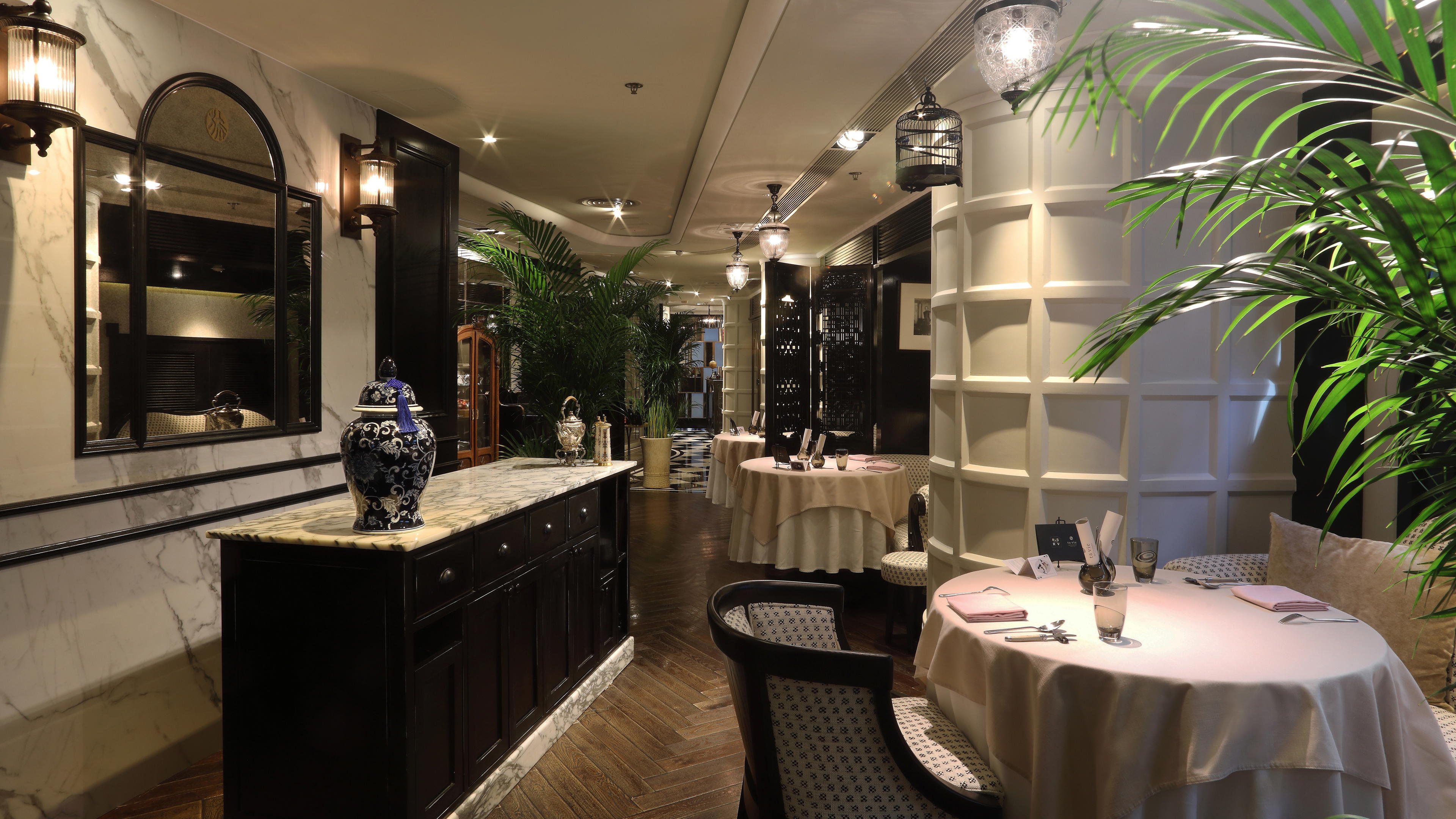
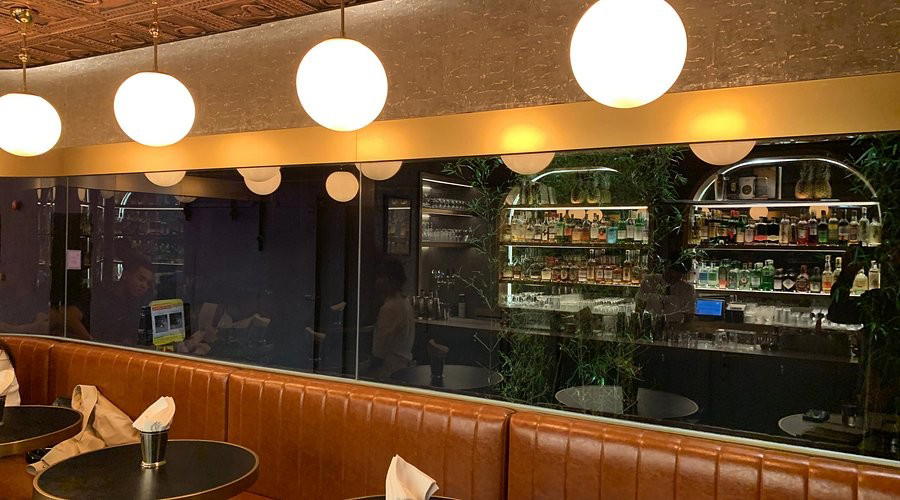
Ornate and regal with grand colonial architecture, lively Indian motifs, elegant decor, and warm lighting creating a royal atmosphere.