On the edge of La Cala, Palermo's oldest harbour, Porta Carbone occupies a stretch of the waterfront where fishing boats and market stalls have defined the rhythm of the city for centuries. The address places it squarely in especially historically dense quarter among the Sicilian capital, where the smells of the sea and the noise of the street arrive before any menu does. It is a reference point for understanding how Palermo eats closest to its source.
Pearl is the En Primeur Club membership app — saves, bookings, and concierge access live there. Same editors, same standards.
- Address
- V. Cala, 62, 90133 Palermo PA, Italy
- Phone
- +39 091 323433
- Website
- facebook.com
- Directions
- Get directions
 Saves & bookings on Pearl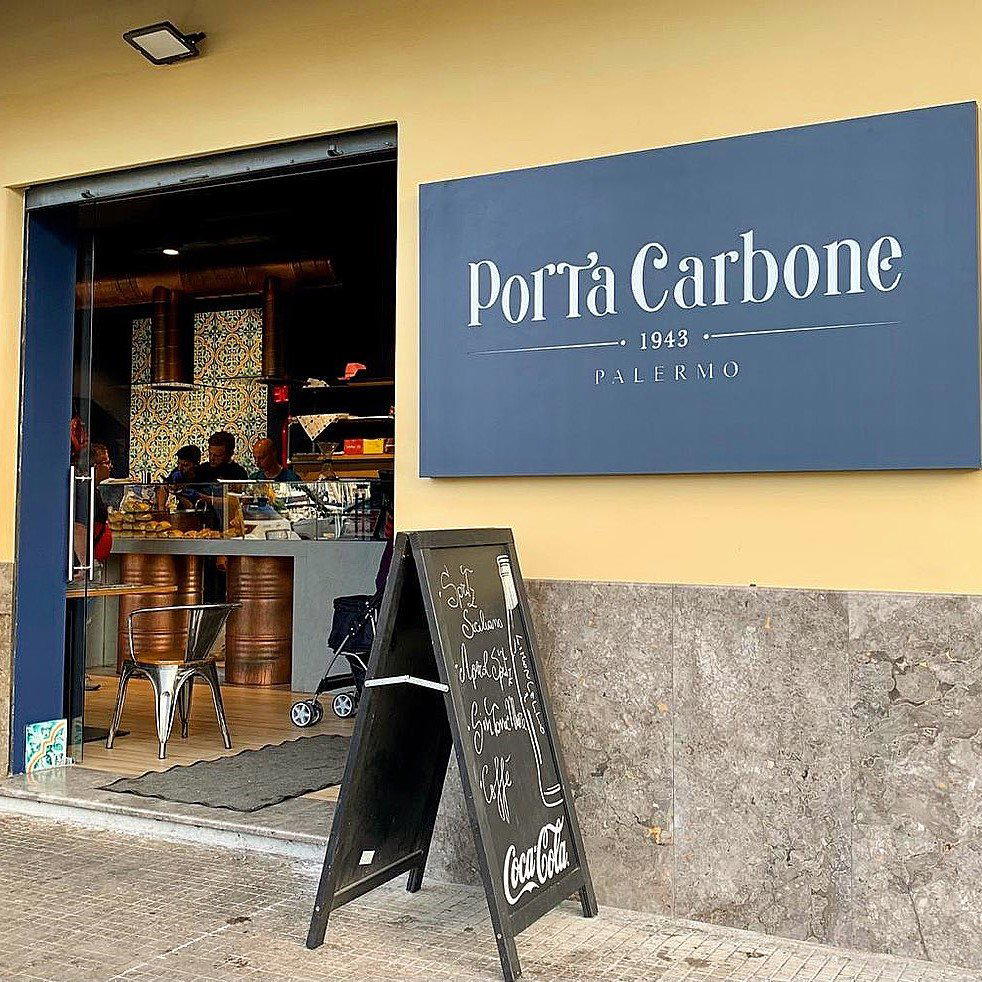
Where the Harbour Meets the Table
La Cala is the original beating heart of Palermo's relationship with the sea. The small harbour, tucked inside the city's historic centre, was once the principal port of the entire city, and the streets radiating from it, including Via Cala, carry that commercial and sensory weight into the present. Arriving at Porta Carbone means passing through Palermo's harbour district: salt air, the sound of water against stone, and a market city that has never entirely separated its eating habits from its trading ones.
The restaurant sits at number 62 on Via Cala, a position that places it a matter of steps from the waterline and within the gravitational pull of the Ballarò and Vucciria market traditions that have shaped Palermo's food culture for longer than any restaurant has existed. In a city where the distinction between street food and table food is genuinely porous, an address this close to the historic port carries an implicit argument about provenance and directness.
The Sensory Register of La Cala
Palermo operates on a different sensory frequency from most Italian cities. The Norman, Arab, and Spanish layers of its architectural history produce an urban texture that is simultaneously compressed and theatrical, narrow vicoli opening without warning onto baroque piazzas, the sound bouncing differently depending on whether you are inside a loggia or exposed to the harbour wind. Via Cala, running along the eastern edge of the old city toward the sea, sits on the boundary between the enclosed medieval grid and the open water.
What this means in practice, for anyone eating in this neighbourhood, is that the external environment does not stay outside. The light at La Cala is particular: low and angled in the early evening, reflecting off the water and the limestone facades in a way that changes the perceived colour of everything from bread to wine. The ambient noise layer includes boats, the faint residue of the morning market, and the ordinary percussion of a working Palermitan street. These are not background details; in a city as environmentally intense as Palermo, they are part of the eating experience in a way that a closed, climate-controlled dining room elsewhere would eliminate.
For context on how other kitchens in the city work within this broader Sicilian tradition, Mec Restaurant and A' Cuncuma represent two distinct approaches to the same source material, one rooted in formal Sicilian idiom, the other more creative in its interpretation. Porta Carbone's waterfront position suggests a third orientation: proximity to the raw ingredient itself.
Palermo's Eating Tradition and Where This Address Fits
Sicily's culinary identity is built on a layering of influences that no single menu can fully represent. Arab sugar and spice routes, Norman hunting traditions, Spanish baroque excess, and the grinding poverty of the interior that produced a frugal, ingredient-driven peasant cooking, all of these run beneath the surface of what appears on plates across the island. In Palermo specifically, the port tradition adds another current: a seafood culture that has always valued immediacy over transformation, the catch cooked simply and eaten close to where it landed.
This stands in contrast to the highly worked, technique-heavy registers you find at Italy's leading fine dining addresses. Restaurants like Osteria Francescana in Modena or Le Calandre in Rubano operate in a mode where intervention and intellectual architecture are central to the proposition. The Sicilian waterfront tradition runs in the opposite direction. At its most coherent, it asks the ingredient to carry the weight, with technique serving as a frame rather than a subject.
It is a tradition worth understanding on its own terms before reaching for the fine-dining comparison. Even within Palermo's street food register, the focaccia shops around San Francesco offer a window into how seriously this city takes its simplest products. The Ancient Saint Francis Focaccia Shop and Antica Focacceria San Francesco are useful calibration points: in Palermo, even bread is a position statement.
Placing the Address in Palermo's Dining Geography
Palermo's restaurant scene has always been geographically expressive. The Vucciria quarter, the Kalsa, the Liberty-era streets of the new city each carry different culinary registers, and knowing which neighbourhood you are eating in tells you something about what to expect before you sit down. Via Cala is not a gallery district or a tourist promenade. It is a working street on a working harbour, and the restaurants that choose this address are making a statement about what they value.
For those building a broader Italian itinerary, it is worth calibrating expectations. The cooking traditions of Palermo's waterfront differ substantially from what you encounter at Uliassi in Senigallia or Quattro Passi in Marina del Cantone, both of which bring a fine-dining sensibility to coastal ingredients. The Sicilian approach, particularly in this part of Palermo, tends to be less mediated and more reliant on market-driven supply chains that shift daily rather than seasonally. Separately, pizza-focused addresses like AMMODO show how Palermo has absorbed mainland Italian influences into its own idiom. The full picture of eating in the city is mapped in our Palermo restaurants guide.
Planning a Visit
Via Cala sits in the historic centre, within walking distance of the Quattro Canti and the main market districts. The address is easy to find but the surrounding streets are narrow enough that arriving by car is inadvisable; the closest practical approach is on foot from the central historic zone or by taxi to the waterfront. Given the harbour-adjacent position, the neighbourhood is at its most atmospheric in the early evening, when the light off La Cala is at its most particular and the market noise has settled into something closer to ordinary residential sound.
For those planning a wider circuit of Italian dining beyond Sicily, destinations from Enoteca Pinchiorri in Florence to Enrico Bartolini in Milan, Piazza Duomo in Alba, Reale in Castel di Sangro, Dal Pescatore in Runate, and Atelier Moessmer Norbert Niederkofler in Brunico. For international reference points in coastal and ingredient-led cooking, Le Bernardin in New York City and Lazy Bear in San Francisco represent different but instructive approaches to the same underlying question of how much to let the raw material speak.
Peers Worth Knowing
Comparable venues nearby, for context on price, style, and recognition.
| Venue | Cuisine | Price | Notes |
|---|---|---|---|
| Porta Carbone - CalaThis venue — the venue you are viewing | Sicilian Street Food - Pani Ca' Meusa | $ | Not listed |
| AMMODO - La pizza di Daniele Vaccarella | Modern Italian Pizza | $$ | Via Empedocle Restivo |
| Da Umberto | Sicilian Street Food | $ | Ballaro |
| Sapurito Cucina Povera e Pizza | Ristorante tipico Siciliano Palermo centro | Traditional Sicilian Cucina Povera and Pizza | $$ | Politeama |
| Ristorante Quattro mani | Modern Sicilian | $$$ | Kalsa |
| Frittola di Ballarò | Traditional Sicilian Frittola Street Food | $ | Ballarò |
Continue exploring
More in Palermo
Restaurants in Palermo
Browse all →
Bars in Palermo
Browse all →
Hotels in Palermo
Browse all →
Wineries in Palermo
Browse all →
At a Glance
- Lively
- Energetic
- Late Night
- Casual Hangout
- Waterfront
- Beer Program
- Waterfront
- Street Scene
Current opening hours
- Monday
- 7:30 AM–10 PM
- Tuesday
- 7:30 AM–10 PM
- Wednesday
- 7:30 AM–10 PM
- Thursday
- 7:30 AM–10 PM
- Friday
- 7:30 AM–10 PM
- Saturday
- 7:30 AM–12 AM
- Sunday
- 11 AM–10 PM
Hours can change for holidays and private events. Last verified .