On a narrow street in Palermo's historic centre, Ancient Saint Francis Focaccia Shop occupies a position that tells you something about how Sicilian street food survives: not through reinvention, but through stubbornness. The focaccia tradition here is tied directly to the produce and grain culture of the island, and the address on Via Alessandro Paternostro places it steps from the Piazza San Francesco d'Assisi, where this kind of eating has happened for generations.
Pearl is the En Primeur Club membership app — saves, bookings, and concierge access live there. Same editors, same standards.
- Address
- Via Alessandro Paternostro, 58, 90133 Palermo PA, Italy
- Phone
- +39 091 320264
- Website
- anticafocacceria.it
- Directions
- Get directions
 Saves & bookings on Pearl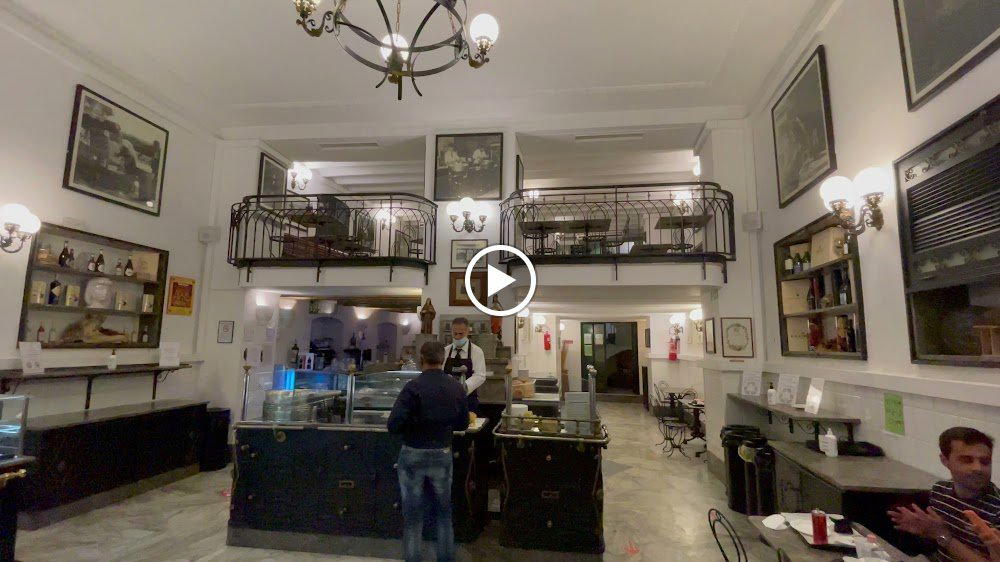
Where Palermo's Street Food Logic Begins
Approach Via Alessandro Paternostro from the direction of the Piazza Marina and you are already inside one of Palermo's oldest commercial corridors. The street narrows. The light shifts. The architecture compresses into the kind of layered limestone and wrought-iron that accumulates over centuries rather than decades. Before you read a sign, the smell of baked dough tells you where you are. This is the sensory grammar of Palermo's street food quarter, and Ancient Saint Francis Focaccia Shop fits into it without friction.
Sicilian focaccia is not the same product as its Genoese or Apulian counterparts, and understanding that distinction matters before you order. On the island, the tradition tends toward a denser crumb, a crust that holds up to outdoor eating in heat, and toppings drawn from whatever the surrounding agricultural calendar is producing. The geography of Sicily, volcanic soils in the east, coastal plain agriculture in the west, the ancient grain belts of the interior, creates ingredient conditions that do not exist elsewhere in Italy. A focaccia made with Sicilian durum wheat carries a different flavour load than one made with northern Italian soft wheat. The chew is different. The colour of the crust is different. These are not marketing distinctions; they are the product of soil chemistry and milling tradition.
The Sourcing Logic Behind the Bread
The ingredient sourcing question is one useful frame for understanding why a focaccia shop at this address matters within Palermo's eating culture. Sicily has been a grain-producing territory since antiquity, and the island's ancient wheat varieties, Timilia, Russello, Perciasacchi, have seen renewed attention from bakers and millers over the past two decades. These heritage grains are lower-yielding and more labour-intensive than modern commercial varieties, which is precisely why they disappeared from most production chains after the mid-twentieth century. Their return is driven partly by artisan bakers who have staked their identity on provenance rather than volume.
When a focaccia shop operates within walking distance of Palermo's central market infrastructure, the sourcing relationship between producer and baker becomes shorter and more legible. The Ballarò and Capo markets, both within the historic centre, have supplied this neighbourhood's food sellers for centuries. The seasonal produce that appears in a Palermo focaccia topping in October, wild fennel fronds, capers from the Aeolian islands, sun-dried tomatoes from the Belice valley, reflects a supply chain that has not been dramatically interrupted by industrialisation in the way that northern European food culture has. That continuity is the actual product being sold, as much as the bread itself.
For readers exploring the wider Palermo dining scene, Archestrato di Gela applies a comparable sourcing rigour to a different format, and A' Cuncuma shows how creative Sicilian cooking can be structured around the same island-produced ingredients at a sit-down register. The Mec Restaurant takes Sicilian sourcing into fine-dining territory at a considerably higher price point.
The Focaccia Tradition and Its Neighbourhood Context
The address places the shop adjacent to the Church of San Francesco d'Assisi, one of the city's significant medieval structures. That proximity is not incidental to the food culture here. The streets immediately around Palermo's historic religious buildings have functioned as commercial food corridors since the Norman period, and the focaccia-and-street-food tradition in this quarter predates the modern restaurant concept by several centuries. What survives in spots like this is a format that was never designed to be fashionable: it was designed to feed working people cheaply, quickly, and well.
That context sits in useful contrast to how focaccia has been repositioned elsewhere in Italy. In Milan and Rome, focaccia has been absorbed into the aperitivo format, served at marble counters at refined prices to office workers. In Palermo's historic centre, the product still operates closer to its original economic logic: a filling, portable, affordable piece of food that draws its quality from ingredient honesty rather than presentation. The comparison is worth making because it clarifies what you are actually choosing when you eat here versus eating a focaccia in a design-forward northern Italian context.
For those interested in how Italian cooking operates at the opposite end of the formality spectrum, Osteria Francescana in Modena and Piazza Duomo in Alba represent the tasting-menu pole of the same culinary tradition. Closer to street-food roots in format but operating at premium register, AMMODO - La pizza di Daniele Vaccarella in Palermo demonstrates what happens when southern Italian flatbread culture is taken seriously as a craft proposition. And the long-established Antica Focacceria San Francesco occupies the same neighbourhood with a longer documented history and a broader menu that includes sfincione and traditional Palermitan street food alongside focaccia.
Planning Your Visit
Via Alessandro Paternostro 58 sits in Palermo's historic centre, reachable on foot from the Quattro Canti intersection in under ten minutes. The neighbourhood is most active in the late morning and early afternoon, which aligns with when baked goods are at their freshest after an early-morning production run. No booking infrastructure is associated with this format of eating; the visit is walk-in by nature. Those combining the stop with wider exploration of the historic centre should factor in time at the nearby markets, Ballarò is a five-minute walk southwest, to understand the ingredient supply chain that feeds this kind of cooking in practice, not just in theory. For a broader picture of where this fits in Palermo's eating hierarchy, the full Palermo restaurants guide maps the city's dining options across price tiers and formats.
- pani cu' la meusa
- guastedda
- arancini
- panella
- pane ca meusa
- anelletti al forno
- sarde a beccafico
- cannoli
- cassate
Quick Comparison
Comparable venues nearby, for context on price, style, and recognition.
| Venue | Cuisine | Price | Notes |
|---|---|---|---|
| Ancient Saint Francis Focaccia ShopThis venue — the venue you are viewing | Sicilian Street Food | $ | Not listed |
| Porta Carbone - Cala | Sicilian Street Food - Pani Ca' Meusa | $ | Kalsa |
| La Braciera | Traditional Sicilian Pizza | $$ | Villa Lampedusa |
| FUD | Sicilian Street Food & Burgers | $$ | Olivella |
| Ristorante Quattro mani | Modern Sicilian | $$$ | Kalsa |
| Antica Focacceria San Francesco | Traditional Sicilian Street Food | $$ | Historic Center |
Continue exploring
More in Palermo
Restaurants in Palermo
Browse all →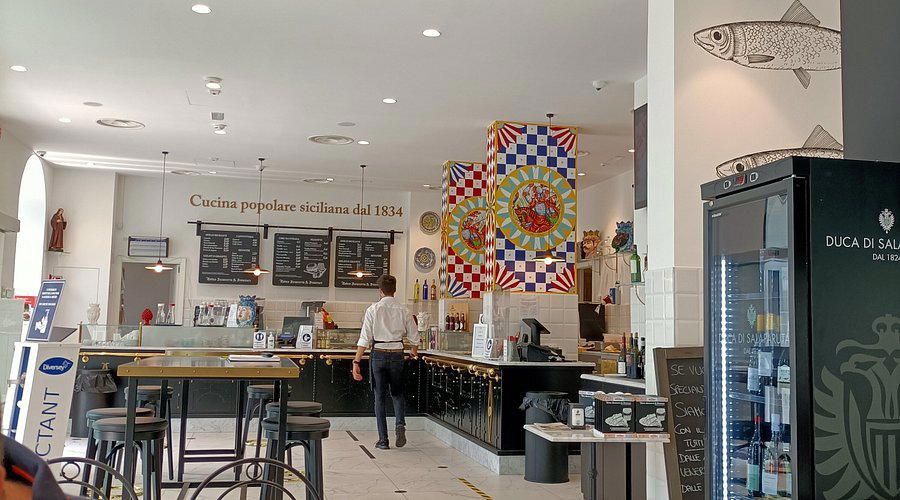
Bars in Palermo
Browse all →
Hotels in Palermo
Browse all →
Wineries in Palermo
Browse all →
At a Glance
- Well Known
- Rustic
- Lively
- Casual Hangout
- Solo
- Group Dining
- Family
- Historic Building
- Terrace
- Open Kitchen
- Local Sourcing
- Street Scene
Current opening hours
- Monday
- 11 AM–11 PM
- Tuesday
- 11 AM–11 PM
- Wednesday
- 11 AM–11 PM
- Thursday
- 11 AM–11 PM
- Friday
- 11 AM–11 PM
- Saturday
- 11 AM–11 PM
- Sunday
- 11 AM–11 PM
Hours can change for holidays and private events. Last verified .